
Calculating Capacity Degradation Rates Across Unshielded Engineering Workflows
Capacity degradation rates in unshielded workflows measure throughput loss caused by context switching, interrupt friction, and unbuffered task queues.
Baseline
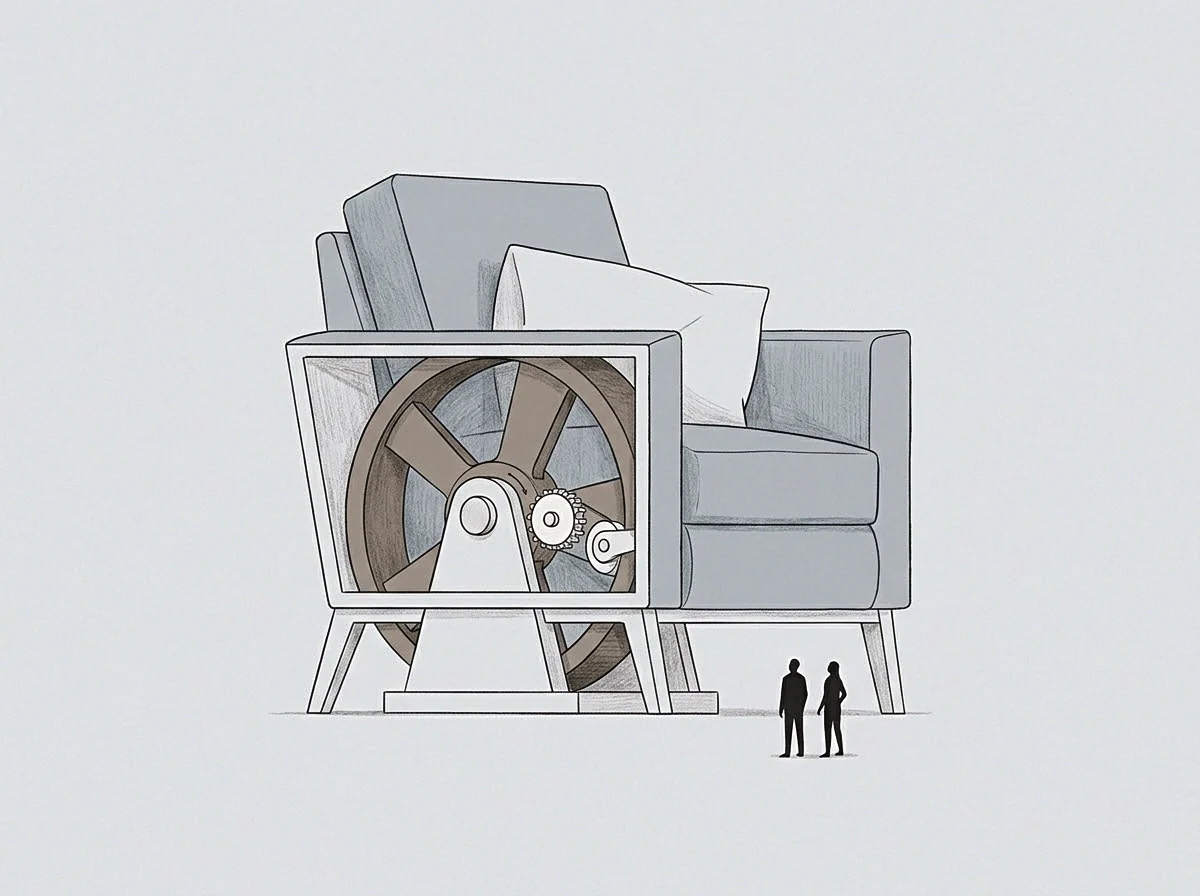
An engineering team operating without operational buffering exposes senior builders directly to incoming production escalations, user requests, and infrastructure alerts during deep work blocks. Commits continue to land in the repository, pull requests move through automated testing pipelines, and daily standup summaries indicate steady activity. Beneath those surface metrics, complex architectural tasks remain stalled for weeks.
The primary build engine consumes its high-value cognitive hours assembling temporary hotfixes and answering fragmented slack queries. Visible output numbers reflect motion rather than genuine progress.
Capacity measures operational availability. In software engineering systems, raw human hours do not equate to effective problem-solving throughput. Complex engineering problems demand sustained working memory state, where an engineer holds multi-layered component interactions, boundary conditions, and execution branches in mind simultaneously.
When an incoming operational event pierces an ongoing engineering task, that working memory state drops immediately. The engineer handles the escalation, resolves the immediate issue, and attempts to rebuild the original context state. That restoration process incurs an operational tax that never appears in raw time-tracking software.
When operational routing lacks isolation barriers, cognitive context restoration consumes a larger share of available engineering hours than raw task execution.
The total expense of unshielded work acts as a multi-attribute vector combining direct time spent on operational interrupts, cognitive context state destruction, structural code quality degradation, and mental energy depletion. Measuring only direct time spent on an alert creates a false metric. An alert requiring fifteen minutes of manual intervention often destroys ninety minutes of active problem solving velocity.
The true capacity degradation rate represents the speed at which an engineering unit loses its ability to execute complex architecture deliverables under sustained operational friction.
Interrupts reset context state. When engineering units fail to separate system maintenance duties from core product development, operational friction expands until simple code modifications demand heavy coordination effort. Senior engineers spend their cognitive prime hours managing queue chaos rather than building core primitives.
Treating unshielded execution as a zero-cost operational model turns active build hours into fragmented triage periods and destroys senior engineering throughput.

Rig
The structural setup supporting an engineering workflow determines how context switching behaves under load. When an organization builds no defensive barrier between external stakeholders and engineering seats, every inbound request acts as an immediate queue insertion. Unshielded queues degrade exponentially.
In an unshielded arrangement, individual engineers must manually evaluate, prioritize, and respond to incoming operational demands while attempting to execute scheduled feature architecture.
| Execution Regime | Mean Interrupt Frequency | Context Restoration Penalty | Weekly Deep Work Yield | Capacity Degradation Rate |
|---|---|---|---|---|
| Unshielded Direct Routing | 14 interrupts per day | 23 minutes per event | 8 hours | 0.42 per week |
| Batch Shielded Routing | 3 interrupts per day | 12 minutes per event | 24 hours | 0.11 per week |
| Fully Buffered Queue | 0 mid-sprint interrupts | 0 minutes per event | 34 hours | 0.02 per week |
The structural metrics illustrated above demonstrate how operational queue mechanics dictate actual output quality. In an unshielded direct routing model, an engineer facing fourteen context breaks during a standard workday loses the vast majority of effective cognitive capacity to context restoration overhead. The primary cause rests in the non-linear relationship between task switching frequency and cognitive context state decay.
Once interrupt intervals drop below the threshold required to achieve deep working state, output drops to superficial routine tasks.
Operational queues require deliberate structural design. When teams implement batch shielded routing or fully buffered queues, dedicated triage roles absorb operational noise, preserving continuous deep work windows for the primary build unit. The explicit inclusion of a context preservation clause converts unpredictable support allocations into fixed operational boundaries.
Valve
Unbuffered engineering systems experience rapid operational decay when incoming workload volume surges past baseline expectations. Without load shedding mechanisms, engineering attention disperses across competing operational fires, leading to severe throughput degradation.
Where does the capacity drain manifest first under high context switching?
Context loss surfaces across distinct operational vectors within an engineering team. Identifying these specific decay paths enables structured interventions before delivery velocity drops entirely.
- Primary context decay occurs when an active mental model of system architecture clears from working memory during an unscheduled operational escalation.
- Queue backlog expansion creates secondary stress where pending pull requests sit without review while context toggles continuously.
- Recovery friction accumulation adds progressive latency to every subsequent task transition performed throughout the remainder of the working day.
- Operational debt compounding converts temporary hotfixes into permanent architecture choices under sustained interrupt pressure.
An unshielded workflow without load shedding forces the primary build engine to act as its own queue manager.
The deployment pipeline stalls because senior technical time goes toward operational noise rather than scheduled architecture delivery.
Rate
Calculating the true capacity degradation rate demands a structured mathematical sequence rather than subjective estimation. In high-density silicon microprocessors running without protective cooling heat sinks, continuous thermal accumulation triggers dynamic frequency scaling, lowering active clock speeds to prevent physical hardware destruction. Engineering units operating under unshielded context switching experience an identical throttling phenomenon.
Continuous operational interrupts heat the cognitive system, forcing engineers to reduce execution depth to survive the workday.
Cognitive task switching research validates this performance loss pattern. Established findings resting on controlled task switching latency trials demonstrate that forced context shifts induce measurable execution delays and elevated error frequencies. When engineering attention toggles repeatedly between distinct domain contexts, task completion latency increases non-linearly.
- Record baseline deep work hours available across the engineering unit prior to interrupt exposure.
- Map the total count of context interruptions occurring during active build cycles over a five-day observation window.
- Calculate the context restoration duration for each event using measured recovery intervals.
- Divide total lost context hours by baseline deep work capacity to derive the net weekly degradation figure.
Internal operational friction accumulates on an ordinal scale long before monetary prices or explicit project delay figures reach management visibility. An engineering leader observing elevated pull request review times, decreased code commit complexity, and quiet frustration during planning sessions witnesses early capacity degradation. Tracking these early ordinal signals provides actionable telemetry before schedule failures manifest externally.
Interrupt frequency determines context quality far more than total shift duration.
Context state preserved during early build cycles yields higher long term capability than attempt recovery during late shift hours.
Reserve
Maintaining operational reserve margin forms the primary defense against systemic engineering capacity collapse. When operational queues run at full capacity without explicit safety buffers, even minor operational spikes trigger acute context switching cascades across the entire engineering roster. Operating without reserve buffers consumes the foundational capacity required to resolve underlying technical debt.
Calculating degradation rates involves minor uncertainty regarding individual psychological tolerance variations across different engineering personnel. The exact threshold where individual engineering burnout converts to collective systemic team failure remains difficult to predict precisely across varying organizational cultures, forcing operators to maintain conservative safety margins above observed degradation rates. Conservative operators assume an operational loss factor of at least thirty percent when designing delivery schedules for unshielded engineering environments.
Engineering capacity lost to unshielded operational triage rarely shows up on project dashboards until deliverable dates pass.
Converting ordinal context depletion into cardinal pricing models protects the long term health of the development unit. When engineering teams quantify the exact hour costs of unshielded operations, commercial leads can accurately price client service level agreements, include support buffer roles in contract negotiations, and set realistic delivery timelines. Stating context preservation expenses upfront prevents covert operational debt accumulation.
Whether organizations can sustain competitive delivery velocities while forcing technical talent to absorb unshielded operational triage remains an open empirical question across modern software operations.