Meaning
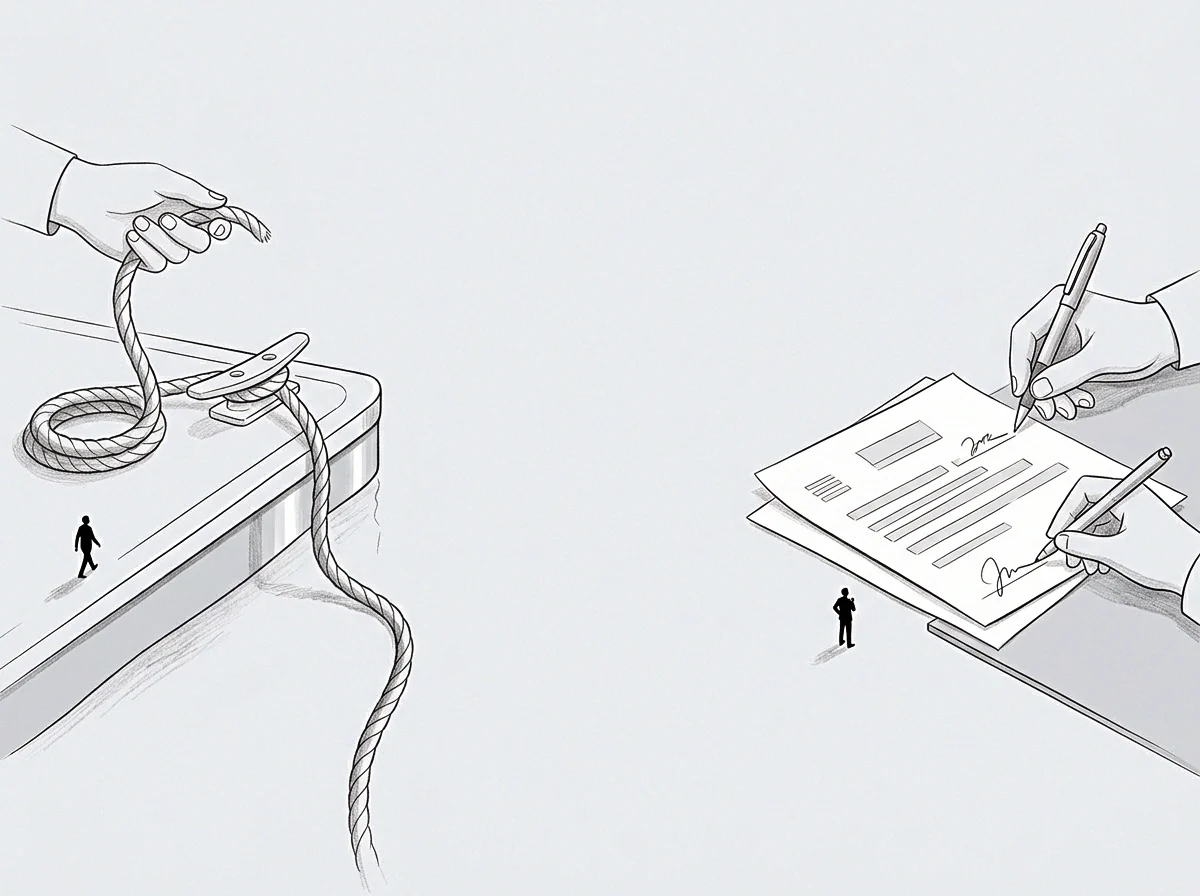
Emergency regulatory interventions that suspend all multilateral clearing and obligation transfers protect systemic integrity during severe operational failures. Known formally as a clearinghouse freeze, this administrative action locks pending transfers in place to prevent cascade insolvencies across participant clearing members. The mandate governs gross and net clearing obligations across central trading venues.
Authority ceases once regulatory bodies restore orderly market conditions and either resume settlement or commence statutory liquidation.
Settlement Halt
Administrative suspension severs the transmission of real-time funds across participant institutions. During a clearinghouse freeze, matched trades remain trapped in execution queues without progressing toward final legal discharge. Queued transfers lose instantaneous fungibility.
Operational managers must reclassify pending credits as encumbered receivables, resetting liquidity forecasts to zero for all stalled volumes.
Counterparty Exposure
Bilateral risk replaces centralized credit protection immediately upon the cessation of clearing functions. In ordinary operations, the central counterparty interposes itself to guarantee execution, but an active clearinghouse freeze forces participants to look directly at the underlying trading partner to evaluate default probability. Participant firms discover whether their nominal gains are backed by recoverable reserves or frozen inside an inaccessible resolution mechanism.
Tracking this exposure requires immediate calculation of gross obligations, separating secure bilateral contracts from those tied to failed entities. The attention and analytical energy needed to assess this sudden counterparty dispersion diverts executive capacity from ongoing operations. Uncertainty regarding loss allocation compounds the operational drag across every active commercial line.
Liquidity Shock
Working capital models experience acute disruption when cleared funds fail to arrive on schedule. The direct consequence of a clearinghouse freeze is an instantaneous cash deficit for market participants that rely on continuous intraday inflows to meet debt payments or operational payroll. Emergency credit facilities must bridge the gap until clearing authorities publish revised resolution timelines.
Suspended capital remains unavailable regardless of nominal balance sheet strength.