Meaning
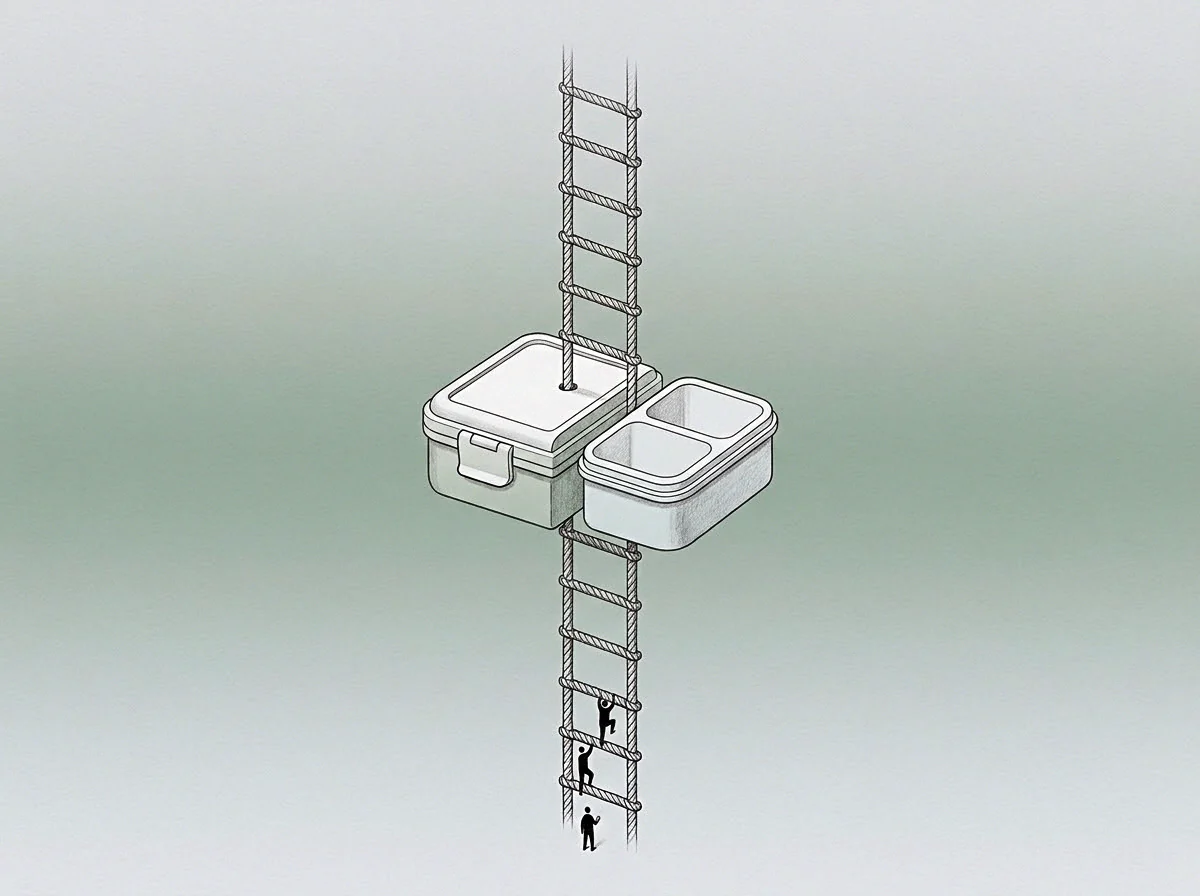
Least resistance measures the directional vector where operational drag against an established company baseline reaches zero. This ordinal scale quantifies the friction of administrative, technical, and commercial movement away from a prior corporate identity. Founders leaving a venture frequently mistake this low-friction path for strategic validation.
The measurement calculates the ratio between required mental capacity expenditure and achieved output speed. Boundaries for this metric sit where physical asset liquidation introduces independent physical constraints that bypass psychological inclination.
Operational Gradient
Behavioral vectors consistently point toward paths requiring the minimum expenditure of attention hours. This gradient operates independently of commercial return, creating false signals of market pull. When founders exit daily operational oversight, habits formed during the initial scaling phase dictate the trajectory of subsequent decisions.
Systemic inertia pulls capacity toward familiar technical domains while commercial realities demand unfamiliar adjustments. Energy expenditure drops precipitously whenever activities mirror previous operational routines, masking stagnation behind high activity rates.
Friction Vector
Administrative drag accumulates whenever a post-founding entity attempts to engage legacy markets without institutional backing. Measurement of this resistance relies on tracking the conversion rate of outbound inquiries into formal commercial agreements. High friction points manifest where corporate credibility is absent, requiring excessive attention hours per closed transaction.
Founders misinterpret this high resistance as a temporary market anomaly rather than a permanent structural boundary of unbranded operation. Correction requires shifting the directional vector toward environments where existing technical infrastructure absorbs the initial friction.
Capacity Allocation
Attention hours diverted toward low-resistance tasks reduce the capacity available for structural reinvention. This allocation pattern produces high internal velocity alongside zero net strategic displacement. Quantitative evaluation of this phenomenon involves charting the ratio of routine administrative output against novel commercial experiments over a standard operational period.
Decreased cognitive resistance consistently correlates with reduced long-term enterprise valuation growth. Strategic alignment requires imposing artificial friction upon familiar workflows to force capacity deployment into high-cost, high-yield territories.