Meaning
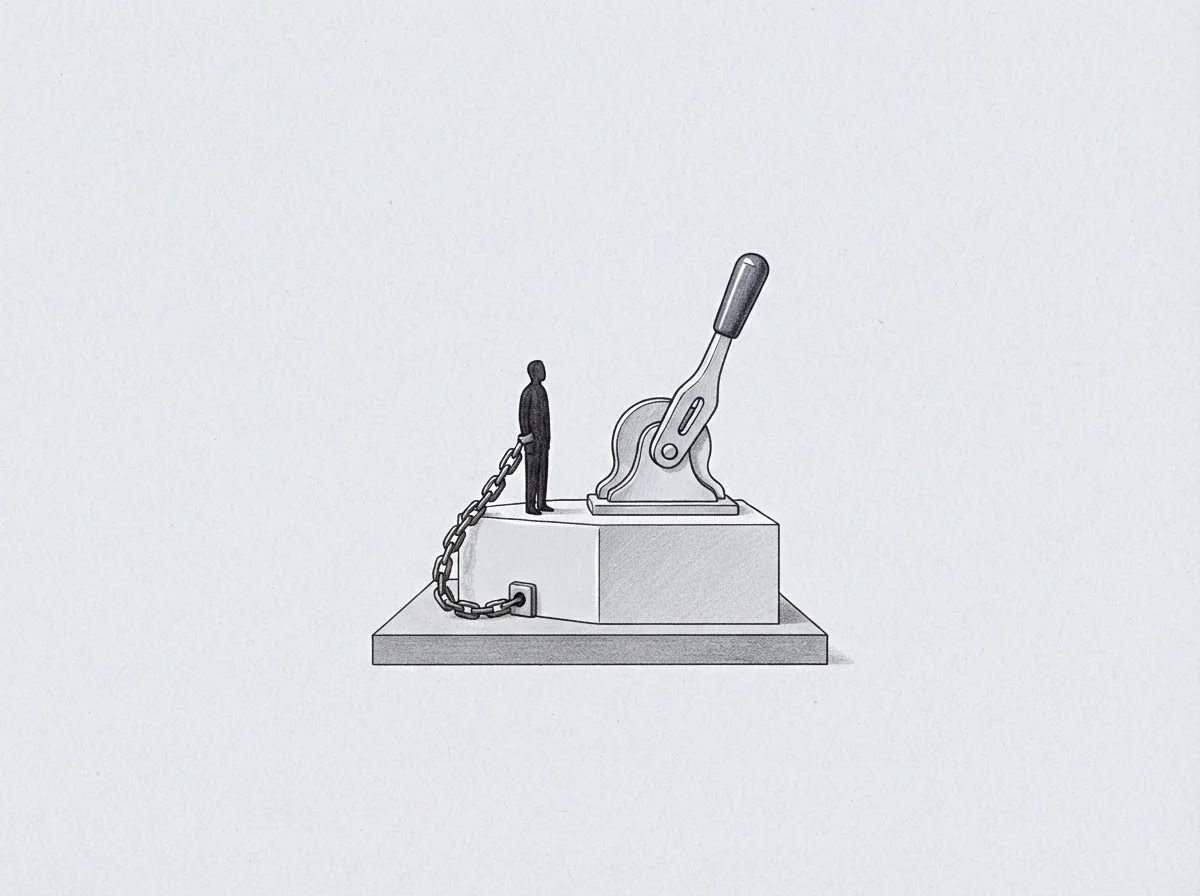
Operational friction accumulates across organizational boundaries when commitments outpace institutional capacity. A liability vector represents the trajectory of future obligations that pull against current reserves without generating immediate return. Post-founding leaders monitor this directional strain on ordinal scales ranging from manageable drag to terminal insolvency.
Unmanaged directional exposure converts latent obligations into forced liquidations before revenue compensates for the initial outflow.
Structural Friction
Expansion introduces hidden dependencies that convert routine operational steps into persistent drains on attention. Each new contract adds maintenance overhead that absorbs capacity long after the initial agreement concludes. Structural drag grows nonlinearly as headcount increases because communication channels multiply faster than output.
Personnel allocation shifts steadily from direct creation toward internal coordination as organizational mass accumulates.
Reserve Depletion
Financial runway diminishes as fixed obligations consume capital reserves at a predetermined rate. Attention capacity follows a parallel depletion curve when founders attempt to supervise every emerging complication directly. Energy reserves drop below baseline thresholds when continuous firefighting replaces strategic direction.
Capital preservation requires deliberate shedding of low-return commitments before reserves reach zero.
Vector Correction
Strategic realignment alters the trajectory of accumulated obligations by terminating agreements that drain disproportionate attention. Capacity recovery occurs when leaders delegate authority and establish strict filters for incoming commitments. Directional adjustment protects remaining reserves by matching outflow velocity directly to incoming revenue generation.
Corrective action stabilizes the operational baseline before negative momentum becomes irreversible.