Meaning
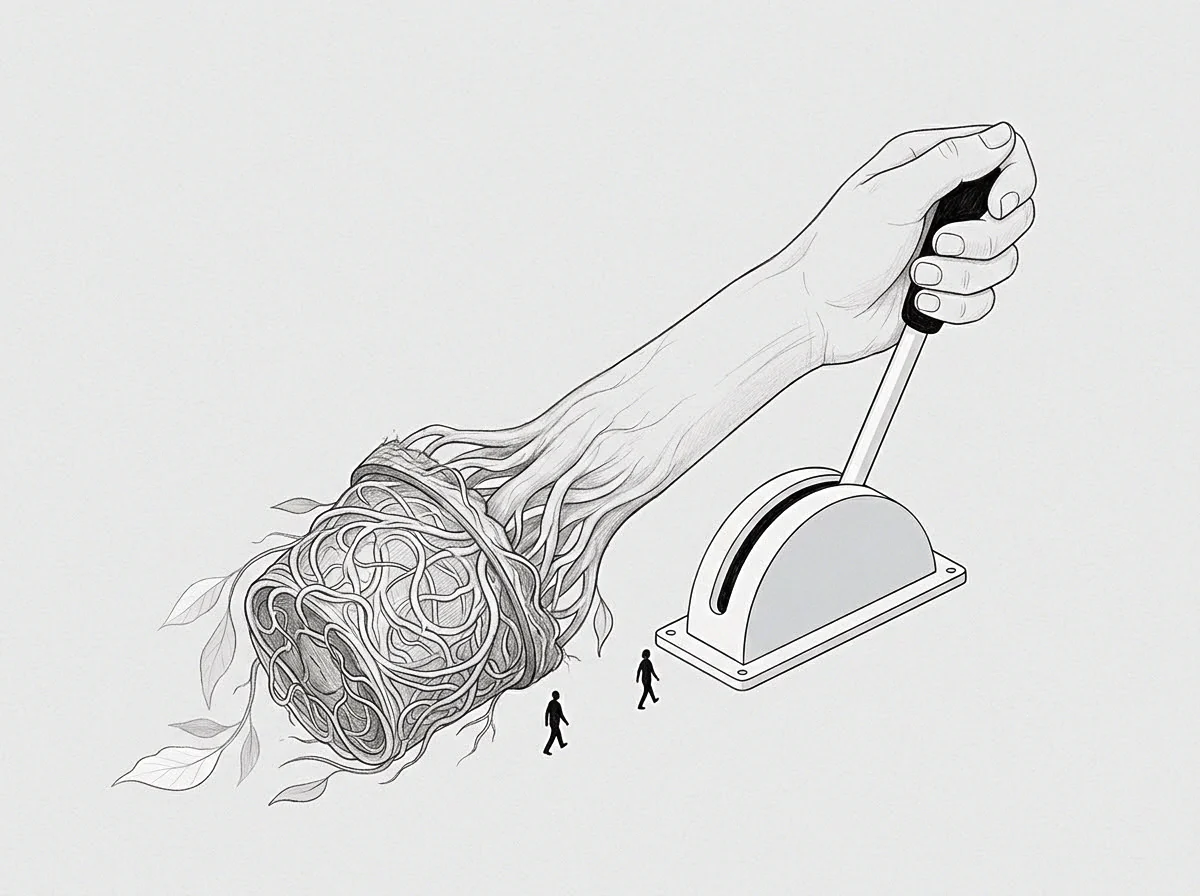
Cognitive alignment operates as the ordinal metric that maps psychological distance between past operating realities and present baseline conditions after departure from an enterprise. Mental state reconstruction sits on a scalar continuum ranging from total fixation on former operational parameters to full recalibration toward current ambient constraints. This instrument measures the gradient between retired authority structures and present agency without scoring personal performance or generating a normative judgment.
Quantifiable psychological drag constitutes the cost function here, registered in hours of attention diverted from current decisions toward past operational states. The boundary of application stops where clinical intervention begins, as the mechanism evaluates structural orientation rather than psychological pathology.
Cognitive Friction
Residual operational momentum generates constant resistance against fresh analytical work when prior responsibilities linger in memory traces. Mental state reconstruction calculates the energy cost required to sever automatic responses forged during the scaling phase. Past velocity metrics create false baselines that distort current capacity assessments unless systematic subtraction occurs.
Previous leadership habits persist as phantom signals, masking real feedback from fresh environments and producing persistent calibration errors.
Capacity Allocation
Attention capacity functions as a finite cardinal quantity distributed across competing internal demands after executive departure. Mental state reconstruction governs the reallocation of mental hours previously consumed by crisis management toward exploratory observation. Residual obligations demand hourly attention budgets that reduce available cognitive volume for new ventures.
This reallocation strategy compares historical time sinks against present productive output to eliminate invisible overhead costs.
Adjustment Horizon
Temporal distance from the operating seat dictates the rate at which baseline perception normalizes to independent status. Mental state reconstruction tracks the decay curve of former identity anchors over successive operational quarters. Gradual adaptation replaces reactive reflexes with measured responses calibrated to current resource limits.
Long term equilibrium emerges once historical operational memories cease to govern immediate tactical choices.