
Reconstructing Directional Attention Vectors When Systemic Cognitive Friction Outpaces Baseline Development Throughput
Reconstructing attention vectors requires isolating technical capacity behind hard operational bounds when systemic friction exceeds baseline throughput.
Decay
A continuous release pipeline breaks while three architectural reviews sit stuck in queue, forcing an engineering lead to spend seven hours untangling dependency logs instead of evaluating new core primitives. When operational friction outpaces software delivery, daily focus moves from long-term architectural targets to emergency response. This displacement forms an attention vector shift, where an engineering team’s energy shifts from forward progress to maintaining fragile infrastructure.
Every organization operates with a baseline throughput set by the unencumbered capacity of its technical staff. Friction comes from context switching, unmanaged technical debt, ambiguous directives, and redundant communication. When managing that noise takes more time than the buffer allows, intentional progress collapses and attention scatters across separate operational fires.
Systemic cognitive friction redirects focused technical energy into maintenance loops when operational noise consumes the available capacity buffer.
Operational Inertia Under Structural Interrupts
Interrupts break deep focus cycles, because a complex task requires significant context assembly before productive work starts. When an engineer faces repeated context switches during a single working cycle, the overhead of rebuilding mental state consumes more energy than executing the task. The organization pays for full-time engineering hours while receiving only a fraction of the capability output.
Operational inertia sets in when team members expect constant interruptions. Instead of starting deep structural improvements, engineers pick short tasks that survive fragmentation. This creates a local minimum in development velocity, replacing fundamental system design with shallow work.
Under high friction, attention degradation follows predictable patterns across organizational layers:
- Vector Dispersion occurs when developer focus splits across unrelated bug tickets, eliminating sustained attention on core primitives.
- Shortened Operational Horizon emerges when planning cycles shrink from quarterly roadmap delivery to daily incident triage.
- Defensive System Scaffolding manifests when engineers build redundant internal abstractions to protect local modules from unreliable dependencies.

Quantifying the Scuttled Velocity Offset
Development throughput is frequently mismeasured by counting closed tickets instead of structural capability gains. High-friction environments often show high ticket counts because minor workarounds are logged and resolved quickly. True progress drops despite those metrics, as capabilities remain static while maintenance overhead grows.
Cost is an ordinal vector of focused attention, stamina, baseline capacity, and clock hours, whereas price is the cardinal figure used to state resource consumption to external parties. When friction requires ten hours to achieve one hour of baseline advancement, internal costs climb sharply even if the billed price stays unchanged. Ignoring this gap leads to severe burnout and sudden operational paralysis.
Failing to track shifts in attention vectors causes steady capacity depletion, leaving senior engineering resources permanently absorbed by maintenance.
Shelf
Unfinished technical work acts as operational inventory sitting idle. When friction halts forward progress, partially completed features accumulate integration debt while waiting for engineering focus to return. The longer an architectural pull request sits unmerged, the higher the chance that underlying system dependencies shift, rendering the work obsolete before deployment.
Accumulated inventory creates psychological and operational weight. Developers retain partial cognitive state for unmerged code while handling immediate incident tickets, exhausting cognitive capacity faster than steady execution on a single project path.
Uncompleted system architecture accumulates integration friction in direct proportion to the elapsed time spent waiting on the operational shelf.
Inventory of Unfinished Architectural Work
Tracking open pull request lifespans reveals the structural health of a development loop. High-friction environments display a bimodal distribution in review lifespans: trivial patches merge within hours, while complex redesigns stay open for weeks. This pattern signals that the team lacks the uninterrupted focus blocks needed for deep architectural reviews.
The total cost of shelved work combines original construction hours with the ongoing maintenance hours spent on rebases and sync meetings. When systemic friction causes repeated delays, the internal cost of a feature can double its initial estimate before reaching production.
The table below compares two execution regimes under varying operational friction conditions, illustrating resource allocation shifts across development states.
| Execution Regime | Primary Attention Focus | Cognitive Load Profile | Throughput Vector Direction | Capacity Reserve Status |
|---|---|---|---|---|
| Baseline Flow State | New Primitive Architecture | Sustained Deep Work Blocks | Forward Velocity Alignment | Healthy Buffer (>20%) |
| Fragmented Patching | Incident Triage & Debugging | High Context Switch Rate | Lateral Scatter | Depleted Buffer ( |
| Systemic Lockup | Dependency & Process Alignment | Defensive Coordination | Circular Friction Loops | Negative (Overcapacity) |
Worked Situation: The Delayed Engine Rewrite
Take an engineering group of six developers building a real-time data processing engine. The original roadmap allocated four weeks of uninterrupted work to complete a memory-efficient state store. During execution, production database lockups occur twice weekly, requiring two senior engineers for six hours per incident, while customer integration requests add three emergency hotfixes per sprint.
After six weeks, the team has expended 1,440 total engineering hours, broken down as follows:
Hotfix patch development consumed 360 hours, production lockup triage took 288 hours, and integration rebase maintenance accounted for 216 hours. Meetings on client escalations consumed 180 hours. Architectural execution on the state store received only 396 hours, fragmented across short 90-minute blocks.
The internal cost vector reflects severe degradation: 1,044 hours went directly to friction management, while the state store engine sits partially completed on the shelf at 40 percent completion. The cardinal price billed to the client remains fixed at the six-week retainer contract figure, masking the fact that the team spent 72 percent of its energy maintaining operational stability rather than advancing baseline capabilities.
An external investor reviews the stalled engine roadmap and asks why four weeks of estimated work remains incomplete after six weeks of full engineering spend.

Gradient
Organizations naturally follow the path of least resistance under high stress. When cognitive friction makes forward progress exhausting, attention flows down the steepest structural gradient toward immediate, low-complexity tasks. Resolving a minor ticket provides quick feedback, whereas tackling an uncoupling effort requires sustained cognitive focus under constant interruption.
This drift causes teams to optimize for short-term task resolution instead of long-term systemic velocity. Effort routes around operational blockages, building manual workarounds rather than resolving the root cause of friction. Over time, those workarounds form an institutional routine that permanently consumes baseline throughput.
Organizations naturally redirect attention toward low-friction maintenance tasks when long-term technical execution experiences continuous interruption.
Path of Least Resistance in Reactive Environments
Systemic friction distorts developer incentives. When deep architectural work faces repeated interruptions, engineers stop proposing structural improvements. Driving changes through a high-friction organization carries a perceived cost that exceeds the perceived benefit of the technical advancement.
This shift in motivation represents an organizational adaptation to friction. Learning that complex initiatives fail due to process noise, engineers restrict focus to isolated bug fixes finished before the next interrupt arrives.

Can Local Optimization Restore Baseline Output?
Local optimizations often increase overall system friction rather than reducing it. When individual developers write local automation scripts to bypass broken central integration pipelines, maintaining those scripts adds operational friction across the broader group.
Breaking out of a high-friction local minimum requires a structured vector reconstruction sequence:
- Isolate two senior engineers from all operational interrupts, routing incoming incident tickets exclusively through a rotating operational engineer.
- Establish an explicit moratorium on non-critical feature deployments for two consecutive planning cycles to reduce integration overhead.
- Audit and retire fragile staging environments, replacing them with lightweight local test fixtures to lower context switching overhead.
- Decompose the core system bottleneck into independent tasks completed within single uninterrupted four-hour focus blocks.
Executing this sequence creates a policy threshold that shifts team energy back toward structural improvements, altering how the organization handles operational friction.
Draft
Reconstructing attention vectors demands clear communication regarding available capacity. Internal cost readings must be translated into explicit terms before negotiating operational targets with external stakeholders. When a team absorbs continuous friction without stating the ordinal cost, leadership assumes baseline throughput remains uncompromised.
Converting internal vector state into clear operational boundaries requires stating the exact price of friction as scuttled roadmap initiatives. Stating cost early protects focus, whereas stating cost three years later reads as an excuse for unfulfilled execution promises.
Stating operational cost early establishes a clear boundary that prevents external commitments from outpacing baseline development capacity.

Converting Internal Attention Vector to Stated Scope
A team experiencing high friction must state its reduced capacity in concrete operational terms. If systemic friction consumes 40 percent of available engineering hours, velocity calculations must reflect that tax directly during planning cycles. Hiding the tax behind uncompensated overtime leads to systemic capacity collapse.
Transmission translates multi-attribute internal costs (stamina, focus, clock hours) into simple cardinal figures that non-technical leaders can evaluate directly. The technical lead maps operational friction to delayed launch dates, showing how resolving pipeline instability increases feature delivery speed.
Transmission Protocol for Operational Capacity
Effective operational transmission states terms without emotional narrative. The technical leader presents attention allocation as an exact breakdown of capacity, showing the ratio of maintenance hours to baseline development hours.
This presentation converts abstract debates over productivity into a direct trade-off conversation regarding organizational priorities and systemic maintenance investments.
What specific baseline capability will the organization sacrifice if current operational friction levels remain unaddressed for another fiscal quarter?

Bound
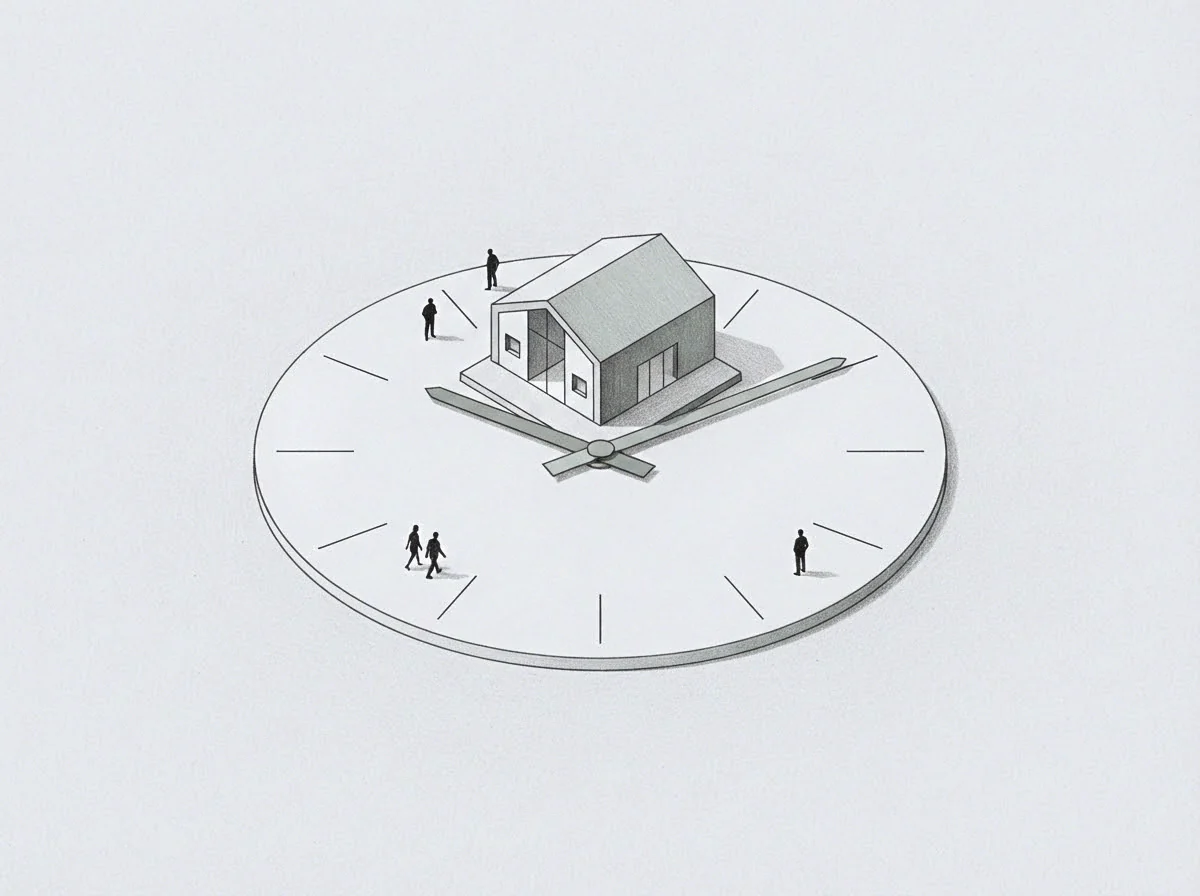
Establishing operational boundaries creates the structural framework needed for vector reconstruction. Boundaries define the minimum uninterrupted focus window required for technical staff to execute high-complexity architecture. Without explicit boundaries, external operational requests continuously erode the focus buffer needed to sustain baseline growth.
Setting explicit capacity bounds forces an organization to confront the reality of its operational overhead. When operational tasks exceed the allocated friction buffer under fixed parameters, incoming feature development halts automatically until the friction source is resolved or isolated.
Stated Allocation Thresholds Under Friction
An allocation threshold defines the maximum percentage of engineering capacity consumed by incident response and maintenance before triggering a mandatory freeze on new feature construction. Standard engineering operations maintain an overhead tax between 15 and 20 percent. When this tax passes 35 percent, the team enters a high-friction regime requiring immediate structural intervention.
Implementing a mandatory feature freeze upon crossing the 35 percent threshold prevents systemic operational debt from consuming baseline throughput. This policy shifts the responsibility of friction management from individual engineer endurance to institutional resource allocation.

The Recovery Boundary Condition
Reconstructing directional attention vectors requires sustained adherence to allocation bounds until system friction drops back within baseline tolerances. The organization maintains strict focus boundaries, directing surplus capacity toward removing core system blockages until the baseline velocity vector stabilizes at target levels.
Once structural fixes reduce operational friction below the 20 percent threshold, normal roadmap execution resumes. The team retains the structural monitoring routines established during recovery, ensuring that future spikes in systemic friction are recognized and addressed before directional attention vectors degrade again.