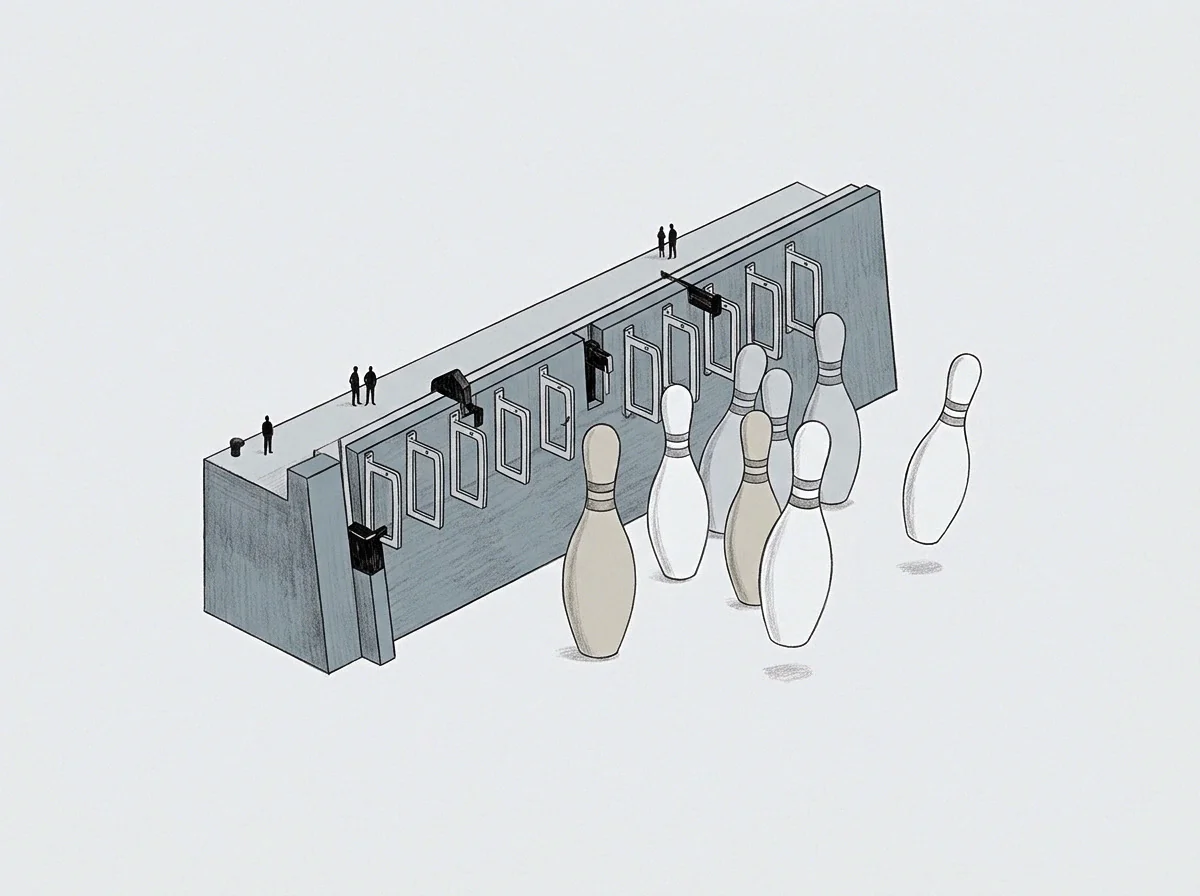
Meaning
Relative difficulty of moving from one step in a sequential workflow to the next measures the administrative or technical resistance within a system. Quantifying this ordinal friction involves ranking each transition point based on the manual effort, waiting time, and approval levels required to proceed.
Bottleneck Identification
Sequence analysis on a relative scale highlights the specific handoffs where projects or support tickets linger the longest. When ordinal friction is high at a particular stage, it suggests that the staff responsible for that step are overloaded or that the software interface is inefficient. Founders use these rankings to allocate automated tooling to the most restrictive points, which optimizes the return on internal development hours.
Throughput Speed
Execution times are heavily influenced by the presence of manual steps and bureaucratic sign-offs within the daily workflow. High ordinal friction slows down the entire pipeline of the organization and increases the attention cost of the team. Reducing these step-to-step barriers enables the company to respond faster to market changes.
Organizational Simplification
Workflow designs must minimize the number of transitions where work shifts between different departments or individual staff members. Removing unnecessary approval steps eliminates the coordination delays that typically plague growing companies. This streamlining maintains high execution speed.