Meaning
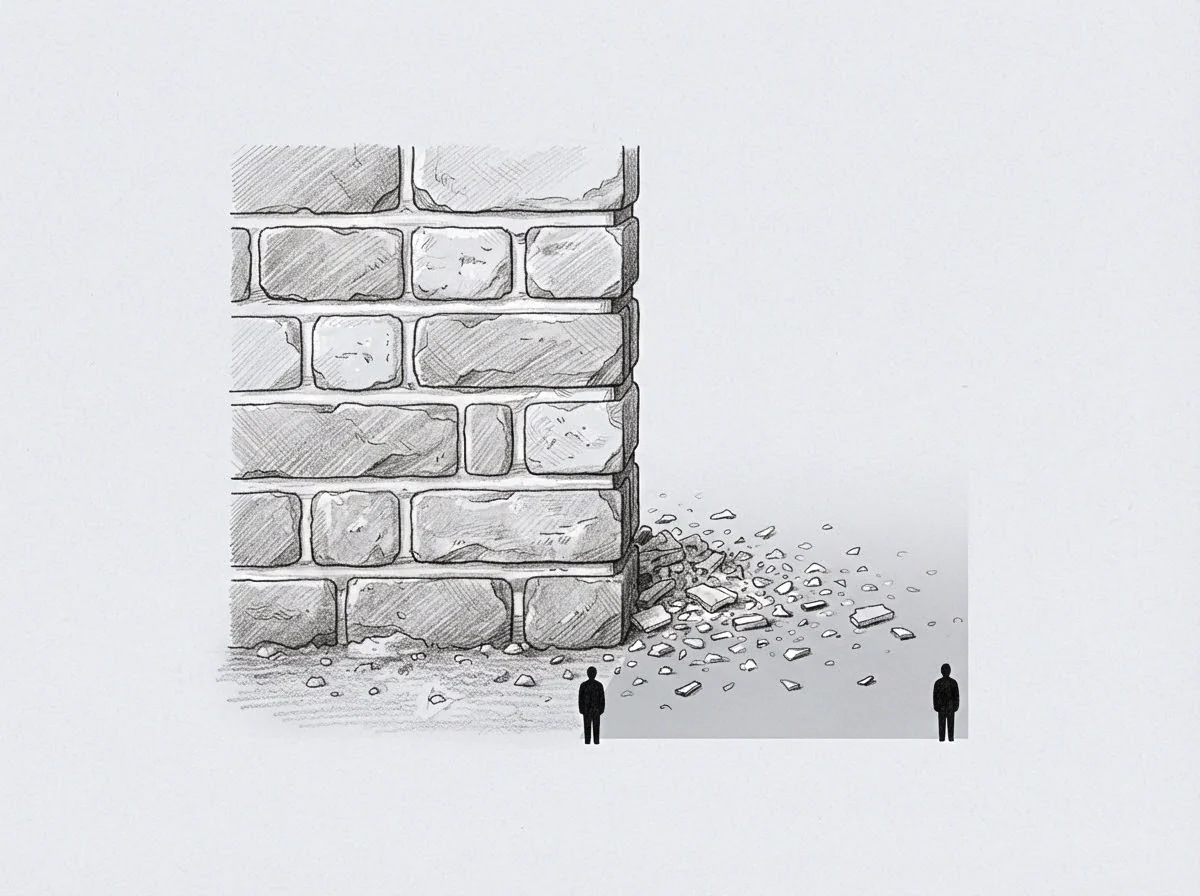
An abrupt, non-linear shift in the underlying operational mechanics of a system invalidates existing predictive models and historical trend extrapolations. Encountering a structural discontinuity marks a point where previous governing equations cease to describe operational outcomes due to architectural breaks, regulatory interventions or extreme market shifts. The concept defines the boundary conditions where standard incremental optimization fails.
Mechanistic Rupture
Phase transitions occur when continuous input changes push an operational architecture beyond its elastic limit, producing sudden qualitative changes in system behavior. A structural discontinuity causes sudden step-function changes in marginal costs, delivery latency or infrastructure reliability. Standard regression models built on pre-break data completely lose predictive power across the transition.
Regime Adaptation
Managing operations through fundamental breaks demands the immediate suspension of standard optimization heuristics. When a structural discontinuity occurs, operators must rapidly recalibrate baseline assumptions and construct entirely new behavioral models tailored to the new operating regime. Insisting on pre-break operating policies during structural transitions accelerates capital destruction.
Detection Challenge
Distinguishing between extreme statistical outliers and genuine systemic breaks requires real-time monitoring of underlying parameter distributions. If a sudden operational shock is misclassified as a transient variance rather than a structural discontinuity, leadership risks applying temporary dampening solutions to permanent architectural shifts. Verifying structural breaks requires confirming that fundamental system relationships have permanently altered.