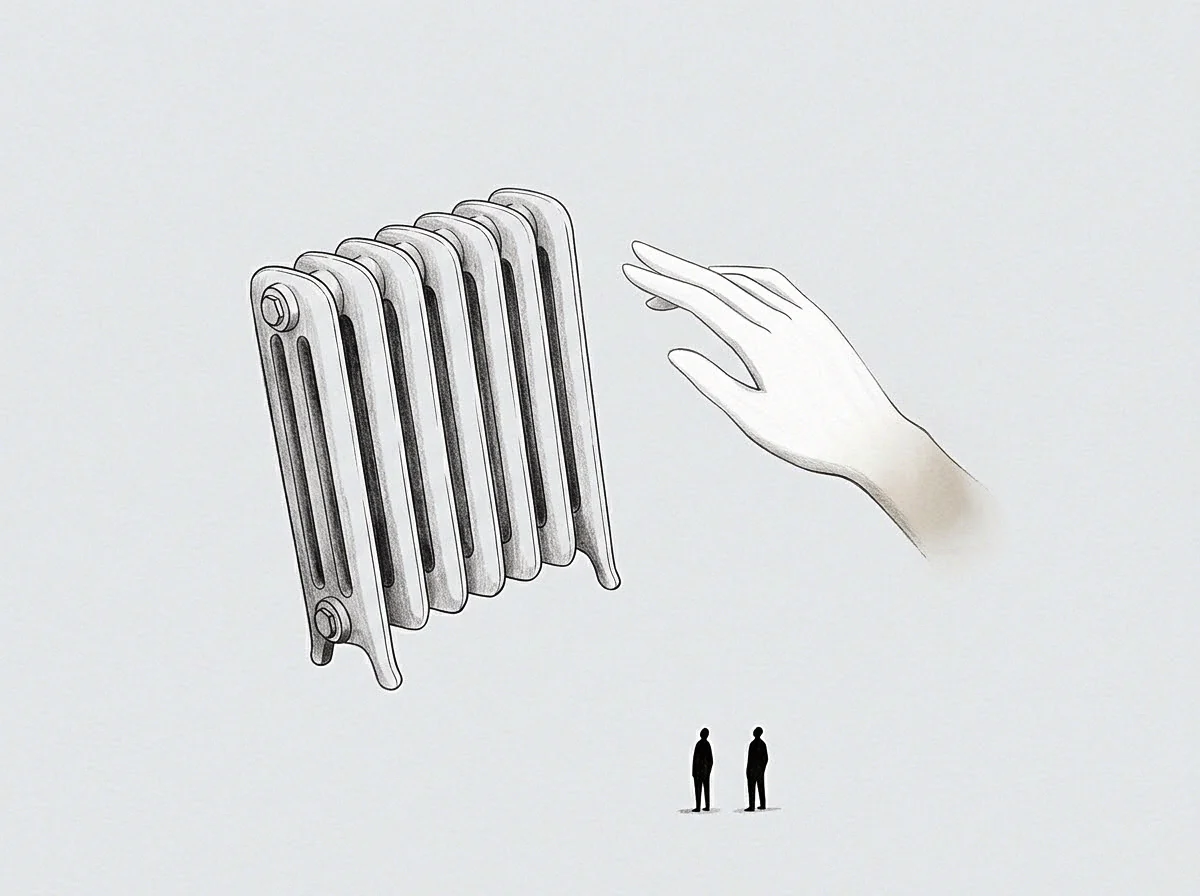
Meaning
The suction thermal gradient is a continuous directional measurement that tracks how heat energy moves across a boundary under negative pressure conditions. Founders apply this ordinal metric to evaluate thermal stability without scoring operational performance against subjective benchmarks. Energy loss appears as a vector below the established baseline rather than an error in the calculation.
This gradient stops applying when systems reach thermal equilibrium or when pressure drops below operational thresholds.
Energy Drift
Heat migration across pressurized boundaries creates friction that drains founder attention over sustained intervals. The gradient measures the speed of this energy loss by comparing interior chamber temperatures against exterior ambient readings at fixed intervals. Higher numerical readings signal that insulation layers are failing under sustained load.
Corrections require physical adjustments to seal integrity rather than software recalibrations.
Capacity Cost
Maintaining negative pressure while managing thermal divergence consumes finite human capacity in hours diverted from product development. The cost rises exponentially as the gradient widens because operators must intervene more frequently to prevent system failure. Financial price remains distinct from this capacity cost since capital cannot purchase extra operational hours once attention runs thin.
Thermal Equilibrium
Stabilization occurs when the gradient flattens toward zero and energy transfer matches the ambient dissipation rate. This state signals that the mechanical arrangement is holding its integrity without requiring constant founder oversight. Subsequent decisions rely on these stable baseline readings to establish predictable operating parameters for future production cycles.