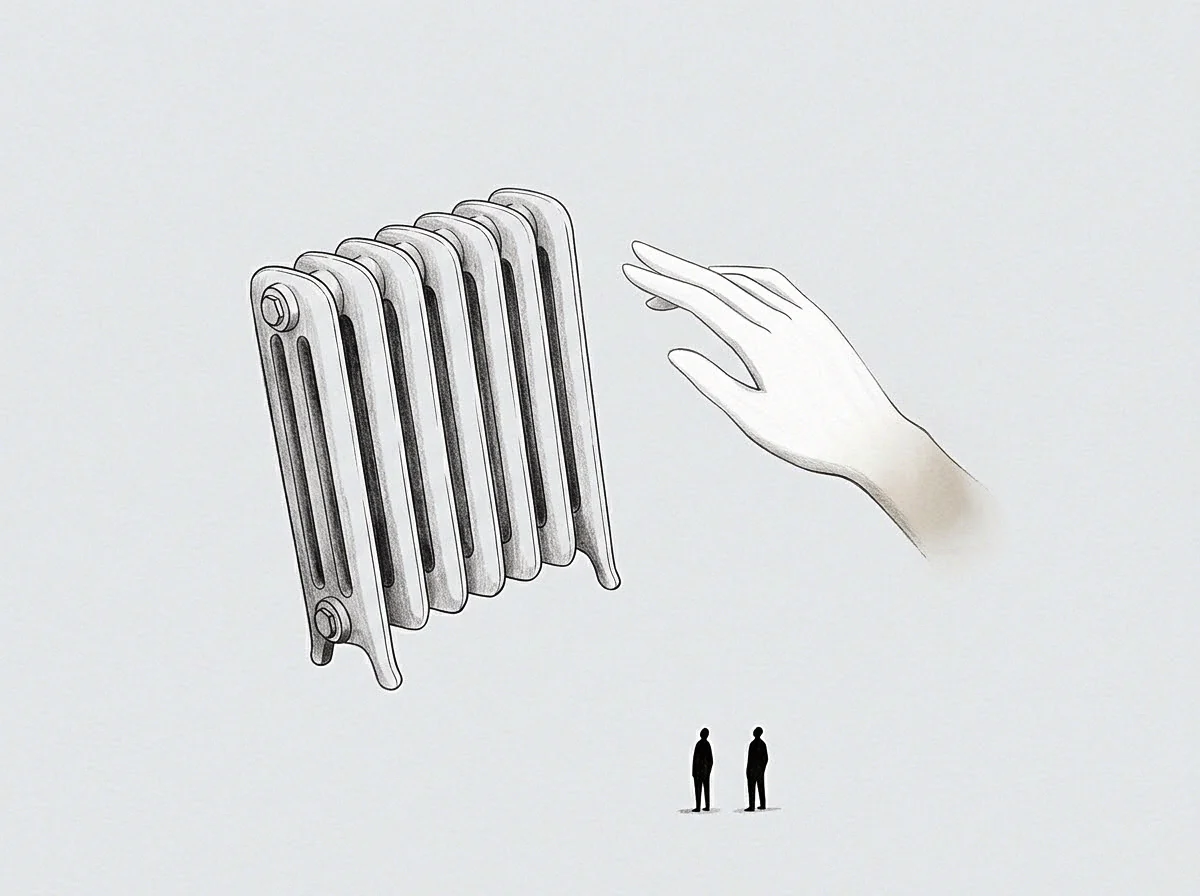
Meaning
Preferential flow channeling through heat exchange equipment describes the hydrodynamic condition where fluid traverses from inlet to outlet along paths of minimal hydraulic resistance without exchanging intended thermal energy with heat transfer surfaces. Cooling towers, shell-and-tube heat exchangers, plate chillers and geothermal loops monitor thermal short circuiting to explain unexpected reductions in overall heat rejection rates. The phenomenon is quantified on an ordinal scale of bypass severity or through cardinal ratios comparing actual heat transfer against theoretical plug-flow performance.
Diagnostic identification combines tracer dispersion tests and residence time distributions. The condition stops existing when uniform flow is achieved and fluid residence time across the chamber becomes homogenous.
Hydraulic Channeling
Internal geometric imperfections, damaged baffles, missing seals and maldistributed nozzle headers encourage fluid streams to take the path of least physical resistance. Once fluid establishes a low-friction bypass path, momentum preserves that preferential corridor while adjacent heat transfer volumes stagnate. In cooling towers, thermal short circuiting occurs when warm water cascades down open perimeter gaps, bypassing packed fill media entirely.
Fluid passing through bypass routes exits with its thermal content largely intact, failing to drive the intended heat transfer. Velocity imbalances perpetuate these corridors unless active physical flow resistance is introduced across the conduit.
Transfer Penalty
Premature effluent discharge suppresses the effective logarithmic mean temperature difference governing heat exchange. Because thermal short circuiting leaves large portions of the exchange surface starved of active fluid flow, plant capacity falls while fluid pumping power remains fully committed. Secondary cycles suffer higher return temperatures, reducing turbine condenser efficiency and forcing refrigeration chillers to work against elevated condensing heads.
Thermodynamic degradation appears as increased operational expense per megawatt of rejected heat.
Baffle Correction
Mechanical flow redistribution restores uniform velocity profiles across packed beds and tube bundles. Remedying thermal short circuiting requires inserting perforated diffusion plates and repairing perimeter seal strips. Proper baffle spacing forces cross-flow patterns that disrupt localized velocity channels.