
Calculating Total Contract Cost Across Attention Residue And Unscheduled Exchanges
Unpriced unscheduled exchanges generate persistent attention residue, converting high nominal contract margins into uncompensated cognitive and operational loss.

Desk
A fixed fee stated on a proposal measures only the financial transaction that passes between two bank accounts. The physical reality of technical execution demands a multi-attribute cost vector that includes direct execution hours, active capacity, internal capability gains, and cognitive attention. When an agreement specifies monetary settlement without bounding operational access, the financial price reflects only a fraction of the actual resource expenditure.

Contractual Price and Cognitive Expenditure
Commercial agreements regularly isolate direct labour hours while treating cognitive focus as an infinite pool. The price conceals the vector. Standard accounting captures the cardinal figure paid for a deliverable, yet it misses the ordinal cost borne by the practitioner responsible for delivery.
An operator working under loosely defined interaction terms experiences continuous demand fragmentation, where the nominal margin on paper conceals severe internal depletion.
The discrepancy between stated price and real expenditure emerges from how operational requests enter an organization. Scheduled milestone reviews allow an engineer or strategist to batch contextual intake and preserve execution blocks. Random inbound queries demand immediate cognitive reorientation.
The work required to answer a simple status question takes two minutes of keyboard entry, but the context destruction required to leave deep work and re-enter it consumes a far larger share of daily output.
The monetary price stated on a service agreement records the financial transaction while masking the operational capacity consumed to deliver it.
When an agreement fails to quantify communication boundaries, the client treats rapid access as a zero-cost feature included in the base rate. The operator absorbs the friction internally. Over a multi-month project lifecycle, the accumulated friction degrades total capacity, reducing the firm’s ability to take on parallel client commitments.
The project appears profitable on a cash basis, yet leaves the delivery team unable to execute subsequent commitments without severe burnout.
The client expects immediate access because no clause in the agreement assigned a financial or operational penalty to unstructured inquiries.

Switch
Human working memory relies on persistent neural activation to maintain the complex schemas needed for deep problem solving. When a worker pauses execution to read an incoming notification, active task representations do not vanish instantly. They linger in memory, occupying limited processing capacity while the worker attempts to process the new request.

Cognitive Fragmentation in Operational Retrospectives
This persistent activation across context shifts is known as attention residue. Field studies in cognitive ergonomics show that clearing residual task context requires anywhere from fifteen to twenty-five minutes after an interruption ends. An operator subjected to ten unscheduled messages across an eight-hour shift never reaches deep cognitive processing.
The capacity drops quietly. The output degrades in quality, error rates climb, and the time required to complete primary tasks doubles.
Attention splits under interruption. The hidden penalty of frequent context shifting manifests across three explicit operational failure modes:
- Task residue retention keeps inactive problem models running in working memory, reducing the immediate processing bandwidth available for current problem solving.
- Execution gradient flattening occurs when frequent breaks in concentration remove the natural momentum required to solve non-trivial architecture challenges.
- Context reconstruction latency forces workers to spend substantial time re-reading code, documents, or logs to restore their previous focus state after an alert.
Interrogations consume focus. A practitioner who maintains high responsiveness to external messaging creates an illusion of high productivity. In practice, rapid response times correlate with shallow task execution and elevated emotional strain.
The primary deliverable suffers while administrative coordination absorbs the team’s best mental energy.
High responsiveness during complex execution cycles creates an operational environment where attention residue permanently degrades deliverable quality.
Calculating the true expenditure of a project requires measuring these recovery windows alongside direct execution time. Ten separate five-minute interruptions do not cost fifty minutes of operational availability. They consume nearly three hours of high-value cognitive capacity.
Unstated interaction terms systematically transfer this recovery burden onto the service provider without compensation.
Unbounded messaging channels destroy deep focus far faster than explicit scope expansions.
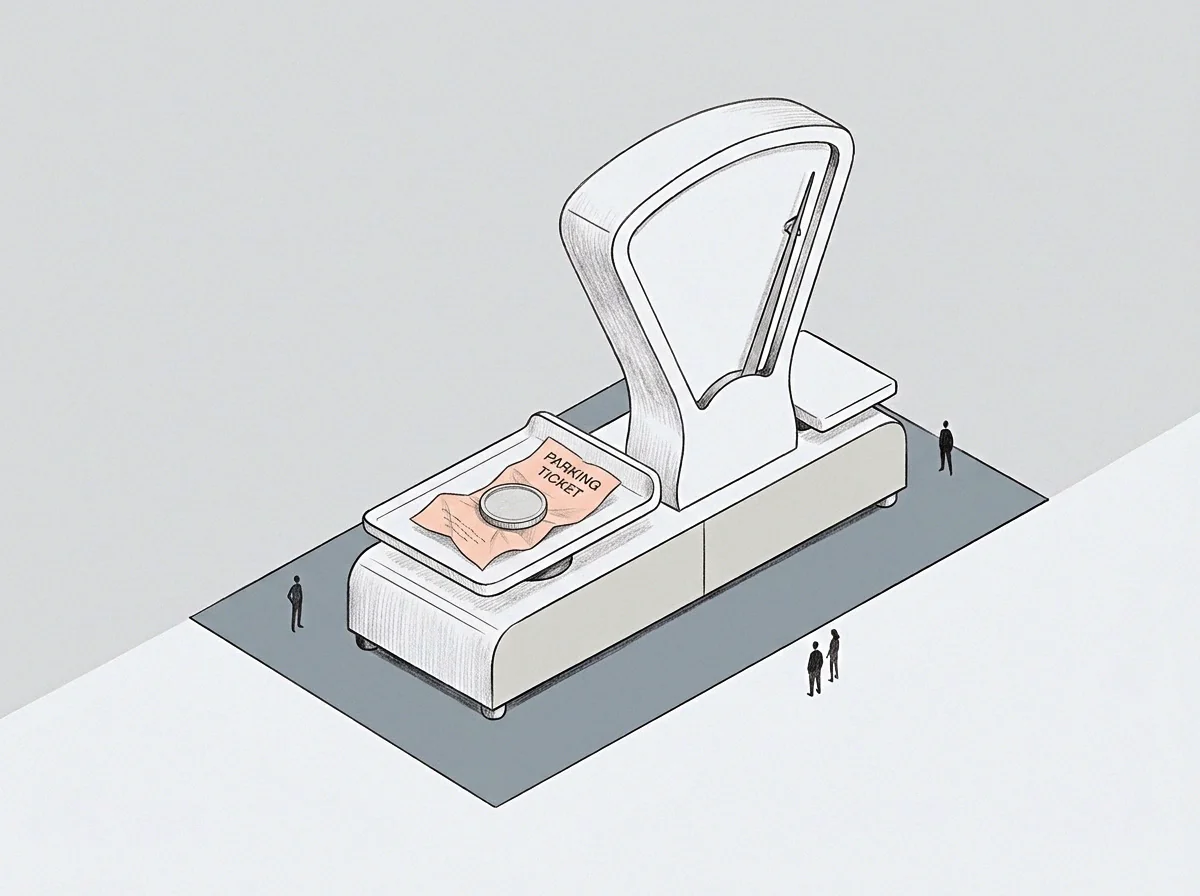
Leak
Unscheduled interactions behave like unmetered resource drains inside an operational environment. When a client or stakeholder initiates an unplanned phone call, ping, or urgent status request, they bypass prioritized queues. The team drops active baseline initiatives to address immediate incoming stimuli.

Unscheduled Structural Interruption
Consider a typical software build contract spanning six months. Assume a two-person development team working at a nominal billing rate of one hundred fifty dollars per hour. In Scenario A, the client submits all inquiries through a scheduled semi-weekly sync and a single asynchronous tracking portal.
In Scenario B, the client sends average daily messages across instant messaging channels, expecting replies within twenty minutes.
In Scenario A, the team experiences zero unscheduled context breaks. Daily productive deep-work time averages six hours per person. In Scenario B, the team logs twelve unscheduled exchanges daily.
Direct response time totals thirty minutes per day, but associated residue windows consume an extra two hours of productive focus per person. Over twenty working days per month, Scenario B destroys eighty hours of developer capacity per person. The contract absorbs the loss.

Channel Variance and Interruption Vectors
Different communication channels inflict varying degrees of cognitive context destruction. Asynchronous tracking tickets allow workers to batch responses during natural task transitions. Synchronous messaging and unscheduled calls break active concentration states forcefully, maximizing residual drag.
| Interaction Channel | Direct Duration | Residue Window | Daily Capacity Drag | Monthly Vector Burden |
|---|---|---|---|---|
| Batch Asynchronous Portal | 15 minutes | 0 minutes | 0.25 hours | 5.0 hours |
| Instant Messaging Thread | 5 minutes | 20 minutes | 2.50 hours | 50.0 hours |
| Unscheduled Voice Call | 20 minutes | 25 minutes | 3.75 hours | 75.0 hours |
| Emergency Slack Ping | 2 minutes | 15 minutes | 1.70 hours | 34.0 hours |
The table demonstrates how shorter direct interactions often carry disproportionately large secondary penalties. The shift destroys momentum. An unscheduled voice call lasting twenty minutes incurs an operational drag nearly fifteen times greater than a batched asynchronous update.
When service contracts allow unconstrained access across high-friction channels, project margins vanish into context recovery.
Unconstrained access across real-time communication channels converts fixed-price profitability into uncompensated operational overhead.
Failing to establish channel constraints early forces delivery teams to choose between constant friction and client dissatisfaction. The vector remains negative. Practitioners who normalize constant availability train counterparties to deliver unscheduled interruptions whenever minor ambiguity arises.
Unmanaged access patterns turn high-margin deliverables into low-margin administrative survival exercises.
Invoice
Translating internal cognitive costs into cardinal terms requires rigorous baseline measurement. A firm must quantify how much capacity vanishes into administrative overhead before establishing accurate price floors. Without ordinal data on attention expenditure, contractual pricing remains a speculative guess.

How Does Unpriced Interrupt Overhead Shift Contract Margins?
To accurately capture contract expenditure across unscheduled interactions, delivery organizations follow a precise audit sequence:
- Operational baselines capture average daily task completion rates prior to contract onset.
- Unscheduled exchanges receive log timestamps to track interruption frequency across execution blocks.
- Residual recovery time is added to direct interaction duration to yield true hours consumed.
This tracking methodology reveals the true cost vector. A project billed at fifty thousand dollars might show twenty thousand dollars in direct engineering hours. On paper, the margin stands at sixty percent.
When the operational audit incorporates eighty hours of monthly residue drag over four months, an additional twenty-four thousand dollars of unbilled capacity was consumed. The actual margin drops to twelve percent.
The vector moves downward. Standard financial accounting treats this invisible capacity drain as general operational inefficiency. Operational analysis identifies the exact cause: unpriced access terms inside the commercial agreement.
The operator bears the cost.
Decomposing total contract cost into monetary expenditure and attention residue converts hidden cognitive friction into visible margin adjustments.
Research in organizational ergonomics confirms that persistent unpriced demands create severe psychological contract breaches between operators and clients. When team members realize their mental capacity is continuously sacrificed to appease unplanned client requests, voluntary retention drops. Replacing an experienced engineer costs between fifty and one hundred percent of their annual salary, a cardinal expense directly traceable to unmanaged daily context switches.
A explicit communication policy clause that caps unscheduled messaging windows shifts the financial responsibility for real-time access back onto the client.

Anchor
Preventing capacity erosion requires explicit boundary architecture designed before work commences. Establishing clear protocols for inquiry intake protects operational focus while establishing realistic counterparty expectations. The scope shifts without notice when communication channels remain unmonitored.

Ex-Ante Boundary Setting
Contracts must explicitly state communication protocols alongside technical specifications. Defining dedicated daily response windows forces counterparties to evaluate whether an inquiry justifies interrupting deep work. The invoice arrives late.
When clients realize an instant message will receive a response during the next designated window rather than within five minutes, non-essential queries naturally consolidate into batched asynchronous summaries.
Establishing these boundaries early changes counterparty behavior. The client reads the silence. When an organization defines clear access rules, clients treat the delivery team’s time as a scarce, valuable resource.
When access is unrestricted, the client treats operator attention as an ambient commodity.
The fundamental challenge remains open for growing firms: how can a service business scale its revenue without allowing the volume of unscheduled coordination exchanges to grow faster than core execution capacity?