
Converting Cognitive Context Switching Into Contractual SLA Penalty Tariffs
A contractual penalty tariff converts cognitive context switching into billed recovery hours, pricing unscheduled disruptions to protect delivery velocity.
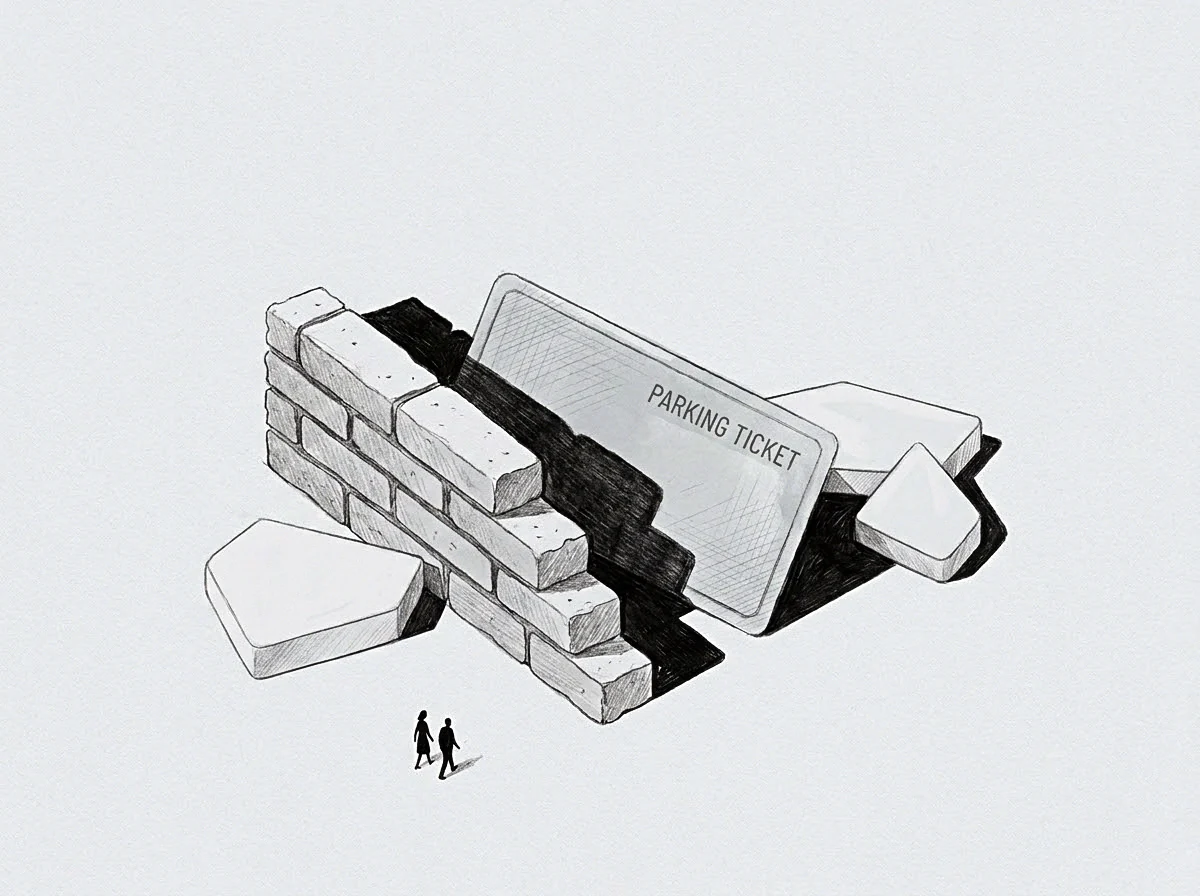
Seat
An operator is managing three dedicated client workstreams when an unscheduled emergency escalation arrives through an unmonitored messaging channel, requesting immediate triage on a low-severity database indexing configuration. Processing that single interruption consumes twelve minutes of direct reading and typing, yet the primary architectural task remains stalled for eighty minutes while short-term working memory reassembles the prior execution state. The client perceives twelve minutes of vendor attention.
The vendor expends ninety-two minutes of productive engineering capacity.
Context fragmentation imposes an unpriced drain on technical delivery. An interruption breaks cognitive continuity, forcing workers to reconstruct internal models of code, system topology, or legal terms from scratch. Traditional service level agreements ignore this friction, measuring only cardinal milestones like initial ticket acknowledgment time or raw uptime percentages.
The unrecovered expenditure stays entirely on the vendor side of the desk.
A contractual tariff attached to unscheduled interruptions prices the recovery time rather than the visible interaction window.
Service relationships without structural protections subsidize client disorganization. When an enterprise client faces zero financial consequence for breaking an engineering team’s operational rhythm, interruptions escalate in frequency. The vendor absorbs this operational penalty until delivery margins vanish or senior technical staff leave the seat.

Structural Mechanics of Attention Fragmentation
Cognitive ergonomics demonstrates that resuming complex problem-solving following an intrusion requires a measurable recovery window. Attention functions as an ordinal reserve. Diverting it across competing tasks creates an immediate residual state known as attentional residue, wherein cognitive capacity remains tethered to the interrupting event long after the interaction terminates.
Converting this loss into a binding contractual tariff requires formalizing the distinction between planned batch communications and spontaneous intrusions. The contract defines permissible interruption vectors, establishes explicit rate boundaries, and applies automatic monetary surcharges to out-of-band demands. The client retains the liberty to interrupt deep execution, provided the invoice reflects the systemic degradation of delivery velocity.
Unscheduled requests generate systemic delivery delays across unrelated contract deliverables.

Drag
Contractual service levels historically treat vendor time as a fluid, infinitely divisible utility. That premise fails whenever work involves high cognitive complexity. Software architecture, data modeling, security auditing, and systems design operate under high setup thresholds, where thirty uninterrupted minutes yield more output than four fragmented fifteen-minute intervals.
Quantifying this friction requires isolating the exact components of operational interruption. The direct conversation represents the smallest part of the total expenditure, while system reload and state reconstruction constitute the primary economic drain.
- Direct Interruption Interval measures the cardinal elapsed minutes spent reading, answering, or attending the unscheduled event.
- Attentional Residue Phase spans the recovery period during which working memory clears the interruption and re-establishes execution context.
- Collateral Schedule Delay captures the secondary slippage inflicted upon parallel contracted milestones when priority task execution halts.
Contract terms that permit continuous interruption convert high-skill technical retainers into chaotic reactive support desks.

Which Interruption Patterns Warrant Commercial Penalties?
Clients introduce drag through several recognizable communication habits, each degrading project throughput differently. Distinguishing between acceptable priority shifts and unstructured noise establishes the factual basis for commercial penalty assessment.
The table below compares standard communication behaviors against their operational disruption profiles, specifying the commercial remedy applied under a structured penalty tariff schedule.
| Communication Class | Channel Profile | Cognitive Recovery Penalty | Contractual Remedy |
|---|---|---|---|
| Scheduled Review | Weekly milestone video call with pre-distributed agenda | Zero unexpected reload overhead | Covered under base retainer pricing |
| Batched Ticket Queue | Asynchronous ticketing platform with twenty-four-hour response window | Minimal within defined batching blocks | Standard hourly baseline billing |
| Emergency Production Halt | Designated incident bridge for complete infrastructure outages | High disruption accepted under critical protocol | Standard emergency call-out premium |
| Ad-Hoc Real-Time Ping | Direct message asking for immediate technical clarification | Extreme state reload penalty across active tasks | Tiered context-switch tariff per occurrence |
| Mid-Sprint Priority Swap | Direct request to reassign active engineers before sprint completion | Total destruction of existing sprint context | Fixed scope re-baselining penalty plus hourly reload fee |
Without pricing these behaviors directly, the vendor will inevitably absorb every minute of client hesitation as uncompensated project delay.

Tariff
Drafting an actionable interruption tariff requires translating non-linear cognitive friction into definite commercial terms. A flat hourly rate fails because it charges only for the duration of the message exchange, leaving the ninety-minute recovery window unbilled. The tariff must function as a structural disincentive, discouraging erratic communication while compensating the vendor when disruptions occur.
An effective penalty schedule operates on tiered thresholds. The initial unscheduled interruption within a billing period incurs a modest administrative charge. Subsequent interruptions within the same period scale exponentially, reflecting the compounding breakdown of operational momentum.
An escalating penalty schedule forces client organizations to filter internal queries before pushing them to external specialists.
When an enterprise account manager realizes that sending four separate instant messages costs more than consolidating requests into a single daily briefing, organizational behavior shifts. The tariff aligns financial incentives with operational discipline.

Mathematical Construction of Disruption Penalties
A rigorous service level agreement establishes baseline communication parameters: designated platforms, maximum daily message allocations, and mandatory asynchronous response windows. Any communication delivered outside these channels triggers the contractual tariff automatically.
- Threshold Definition establishes the agreed communication pathways and defines an unscheduled contact event.
- Tariff Tiering applies a flat base disruption fee plus a multiplier tied to the seniority of the interrupted technical staff.
- Invoicing Integration records each out-of-band contact on the monthly invoice with exact timestamps and initiating client user identifiers.
Separate fees for urgent questions protect focal time, though they can conflict with perceived collaboration under a retainer.

Measure
Establishing commercial validity requires transparent, automated tracking of out-of-band events. Manual time tracking creates internal administrative drag, exacerbating the friction the contract seeks to eliminate. Modern enterprise operations require automated auditing tools integrated into communication infrastructure.
Ticketing integrations, chat webhooks, and calendar telemetry log interruptions without manual intervention. When a client tags a vendor engineer in a real-time chat room outside designated office hours, the system generates an immutable record. That event registers the initiator, timestamp, and active task assignment displaced by the notification.
Transparent measurement infrastructure removes emotional dispute from monthly penalty billing statements.
Disputes diminish when penalty records provide granular telemetry. The client receives an itemized breakdown showing how three ad-hoc queries delayed a critical staging deployment by twelve aggregate hours, justifying the applied tariff.

Establishing Objective Baselines
Enforcement succeeds only when the vendor maintains rigorous internal discipline. The vendor must honor agreed response windows and refrain from using ad-hoc channels for non-critical internal coordination. Operational symmetry builds the contractual legitimacy necessary to collect penalty revenue.
If the vendor routinely answers out-of-band messages within two minutes without logging the penalty, the contractual clause atrophies through established custom.
Whether tracking algorithms can reliably separate genuine technical emergencies from routine inquiries without human arbitration remains an open operational problem.
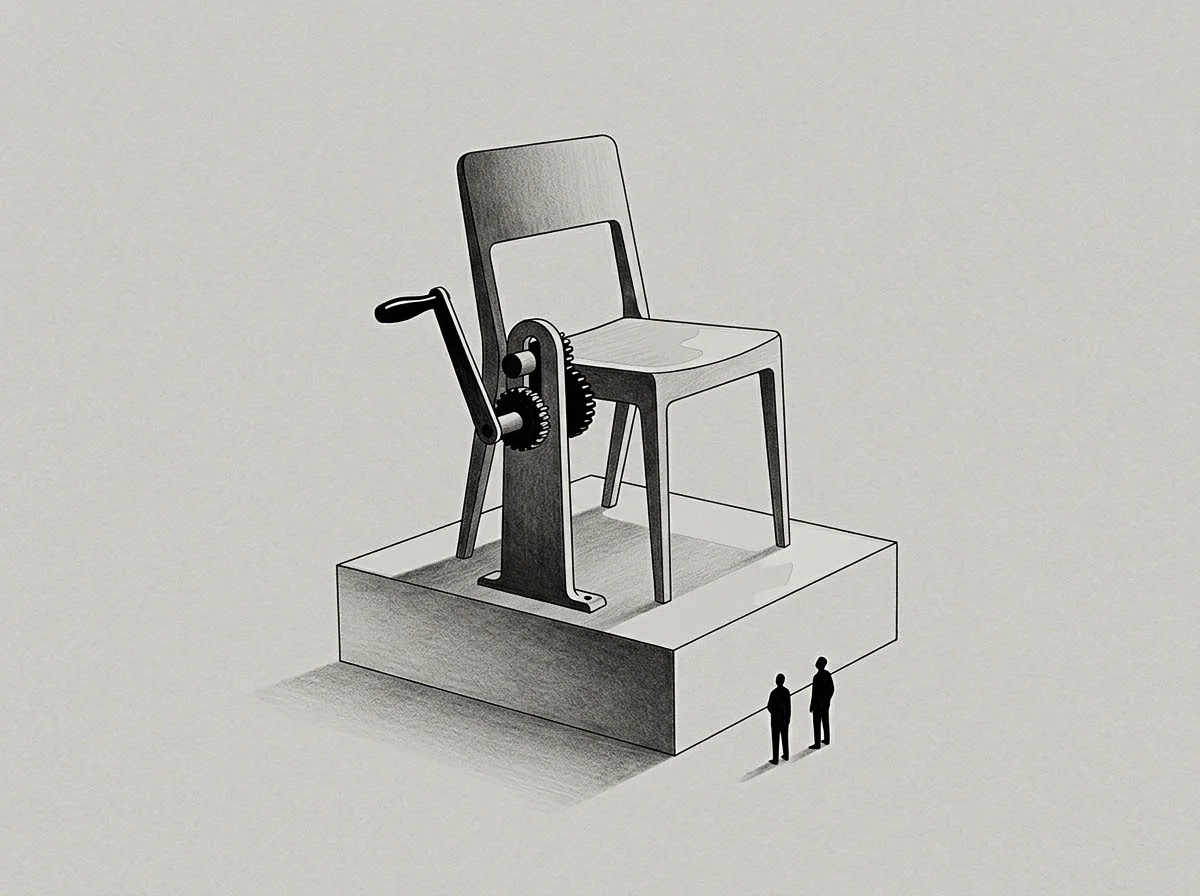
Form
The operational move culminates in the contractual language itself. Inserting a context-switching penalty clause demands precision regarding definitions, triggers, remedies, and dispute processes. The language avoids ambiguous phrasing about reasonable cooperation, establishing explicit quantitative boundaries.
A functional clause identifies authorized communication channels, response time bands, disruption unit costs, and monthly invoice credit offsets. The vendor grants priority attention only under defined incident conditions, while standard work remains protected behind asynchronous firewalls.

Standard Disruption Protection Language
The contractual framework incorporates specific terms that bind client execution behavior to financial outcomes. The provision operates as an agreed damages schedule rather than an arbitrary punitive measure.
Under a typical arrangement, client requests classified outside pre-approved sprint tickets or scheduled agile rituals constitute context-switch events. Each event triggers an agreed recovery unit tariff added to the monthly billing cycle. The client retains full authority to request immediate priority reallocations, provided the disruption unit fee accompanies each instruction.
Section 8.4 of the Master Services Agreement provides that each unscheduled communication initiating outside authorized ticketing channels adds a three-hundred-dollar disruption fee to the subsequent invoice cycle and extends impacted delivery milestones by four business hours.