
Establishing Service Limits Inside Professional Service Retainer Contracts
Service retainer limits stabilize margins by converting unpriced capacity consumption into explicit ordinal cost vectors and automated cardinal overage fees.

Leak
Professional service retainers often begin with a structural asymmetry between open-ended availability and fixed monthly revenue. A client secures access to senior advisory personnel, assuming that strategic guidance includes operational troubleshooting, urgent messaging, and continuous document review. The service firm views the retainer fee as compensation for a specific volume of monthly capacity.
When contracts fail to state the precise boundaries of that capacity, routine daily communication consumes the firm’s available output without triggering additional fees. Unpriced tasks expand to fill whatever bandwidth the provider leaves exposed.
Margin drops when hours expand. A retainers contract without explicit volume ceilings creates an implicit guarantee of infinite access. The internal cost to the firm is rarely visible on the day a minor request arrives.
A thirty-minute telephone call, a brief review of a slide deck, or a quick technical audit appears negligible when evaluated in isolation. Aggregated across a quarter, these unbilled requests degrade the firm’s ability to serve other billable accounts or invest in internal capabilities.
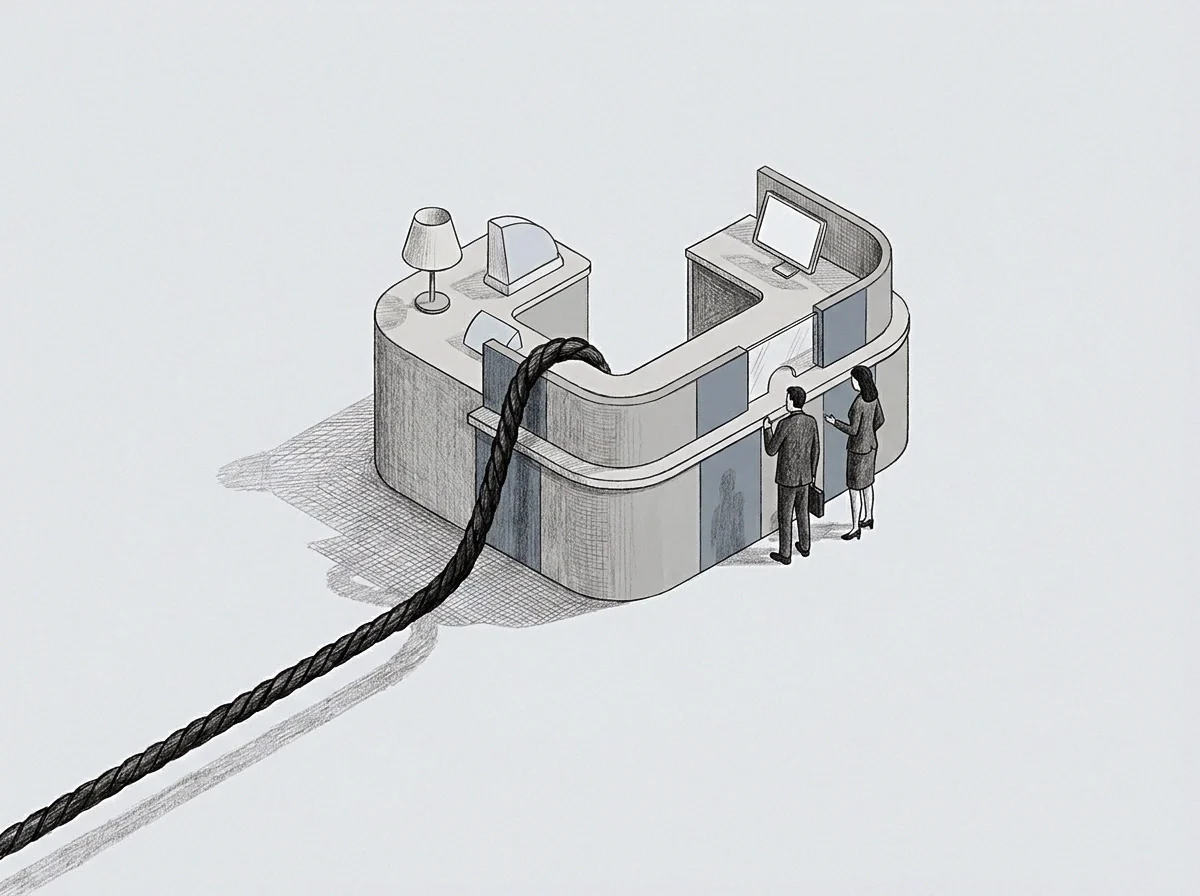
Capacity Consumption Across Unpriced Requests
Workplace demands tend to expand until external resistance stops them. In advisory and professional service arrangements, clients routinely route secondary operational problems to external advisors because the marginal financial cost of doing so appears to be zero. The retainer fee has already been paid, which makes every incremental inquiry feel free to the purchaser.
The firm absorbs this load through silent trade-offs. Senior partners spend early morning hours answering non-critical electronic mail rather than executing higher-leverage strategic work. Attention becomes fragmented across dozens of micro-tasks that never register on formal project plans.
The cumulative cost vector reflects lost focus, delayed deliverables for other accounts, and personal exhaustion among core personnel. Unpriced work expands continuously.
Uncapped advisory arrangements convert available partner hours into nominal baseline expectations whenever response windows remain unspecified.
This dynamic alters the relationship dynamics over time. As the firm absorbs extra volume without adjustment, the client comes to baseline this elevated output as the standard service level. Any subsequent attempt to establish limits is perceived by the client as a reduction in service quality rather than a correction of scope creep.
Stating explicit capacity parameters early prevents this baseline drift before informal habits become contractual expectations.
Failing to define operational boundaries inside retainer agreements forces the service provider to absorb expanding workload vectors until internal margin collapses completely.

Clock
Time tracking across advisory engagements reveals how rapidly unpriced commitments accumulate. Consider a typical arrangement where a boutique engineering advisory firm enters a twelve-month retainer contract with an enterprise client for eight thousand dollars per month. The contract specifies strategic guidance for system architecture but leaves the maximum monthly hour allocation undefined.
Both parties sign under different implicit assumptions regarding what the monthly fee secures.
During the third month of the engagement, the client initiates a core infrastructure migration. The advisory firm’s senior specialists are pulled into daily operational stand-up meetings, emergency troubleshooting channels, and vendor evaluation panels. Over thirty days, the firm logs fifty-four hours of senior specialist time against the account.
At standard commercial rates of three hundred dollars per hour, the financial value of the rendered labor equals sixteen thousand two hundred dollars, double the retainer fee paid.

Tracking Allocation Versus Consumption
The internal accounting of this overage demonstrates how ordinal costs manifest before cardinal financial losses are recorded on invoices. The senior specialist spent thirty-four unbudgeted hours on client operational issues, which directly forced the postponement of a proprietary tool development project that would have increased internal automation.
- Initial retainer months establish an unmonitored baseline where low-friction inquiries consume five to eight unaccounted hours per week.
- Project inflection points trigger acute volume spikes, forcing senior personnel to reallocate bandwidth from internal growth to client maintenance.
- Continuous unbilled overages exhaust team capacity, leading to staff turnover and declining service responsiveness across all active accounts.
The opportunity cost of deferred internal tool development cannot be recovered. The capacity was burned in real time, leaving the firm with less internal infrastructure and lower operating margins than planned. Hours carry real costs.
An unmonitored time balance converts senior partner availability into administrative debt within two billing cycles.
When the advisory firm attempts to address the disparity during the quarterly review, the client points to the contract’s ambiguous description of ongoing operational support. Because no tracking mechanism was shared monthly, the client has no visibility into the volume consumed and perceives the firm’s sudden boundary enforcement as retroactive fee inflation.
“The retainer was understood to cover whatever support the executive team required to keep the migration on schedule.”

Threshold
Defining clear service tiers and consumption limits transforms abstract availability into measurable operational units. Contracts that rely on vague terms like reasonable access or ongoing consultation invite constant interpretation disputes. A structured retainer agreement establishes specific quantitative gates that delineate baseline support, included overage buffers, and hard caps that require formal contract amendments.
The structural design of service boundaries requires choosing appropriate metrics for the work being performed. While hourly caps are common, alternative units such as task counts, story points, or defined review cycles often align better with output-based advisory services. The table below outlines how different service limit models operate across commercial retainers.
| Boundary Model | Primary Unit | Operational Trigger | Client Friction Level | Administrative Load |
|---|---|---|---|---|
| Fixed Hourly Cap | Logged Labor Hours | Reaching 100% of allocated monthly hours | Moderate during month-end overage reconciliation | High due to detailed daily time tracking |
| Task Queue Limit | Active Work Items | Exceeding concurrent open ticket allowance | Low because work items are visible in real time | Low through automated project boards |
| Tiered Response Window | Service Level Agreement | Requesting sub-four-hour turnaround times | Moderate when priority requests incur surcharges | Medium via ticket prioritization logging |
| Deliverable Allocation | Completed Artifacts | Submitting requests beyond monthly milestone quota | Low due to clear artifact count limits | Low by tracking final approved assets |

Categorizing Work Vectors Across Retainer Bands
Service limits must distinguish between routine maintenance and strategic initiatives. Routine maintenance includes scheduled status calls, standard monthly reporting, and asynchronous inquiries that fit within predetermined response windows. Strategic initiatives involve multi-stakeholder workshops, custom architectural design, and emergency incident resolution that require concentrated focus blocks.
Retainers demand boundaries. Establishing explicit categories prevents clients from slipping large strategic projects into routine advisory retainers. When a requested work item falls outside the agreed maintenance scope, the contract must automatically route that item into a separate project estimation workflow.
A soft ceiling without an automated overage trigger produces friction during every end-of-month invoice reconciliation.
Effective limit enforcement depends on real-time feedback loops rather than retroactive accounting. Sending an automated notification when a client reaches eighty percent of their monthly allocation gives the client the option to prioritize remaining tasks or approve an overage budget before work halts. Silence creates false assumptions.
Inserting a hard stoppage clause at one hundred twenty percent of monthly allocated capacity halts non-critical task queue execution until additional budget authorization is signed.

Conversion
Translating internal capacity constraints into client-facing pricing rules converts subjective effort into cardinal financial terms. When an advisory firm tracks hours internally, it measures an ordinal cost vector comprising partner attention, team exhaustion, and missed secondary opportunities. The client, however, reads only the cardinal figure on the monthly invoice.
Bridging this gap requires transparent conversion formulas established in the master service contract.
Overage mechanisms perform two distinct functions in professional services contracts. First, they compensate the firm for the additional resource deployment required to absorb excess client demand. Second, they act as a rationing mechanism that forces client executives to evaluate whether a low-priority request justifies incremental financial spend.
Unpriced tasks consume partner hours.

When Do Overage Triggers Convert To Billing?
Financial conversion should occur automatically once predefined allocation thresholds are crossed. Relying on discretionary partner decisions to bill or forgive overage hours introduces inconsistent enforcement and signals to the client that contract limits are negotiable terms.
- Cardinal Rate Multiplier sets overage billing rates at a premium above standard hourly rates to compensate for unscheduled capacity disruption.
- Scoped Overrun Reserve pre-authorizes a floating monthly budget buffer that absorbs minor overages without requiring formal contract amendments.
- Asynchronous Processing Fee converts high-frequency chat channel demands into fixed per-incident charges when daily message thresholds are breached.
- Rollover Expiration Term dictates that unused monthly hours expire at billing cycle end to prevent massive seasonal liability accumulation.
Price reflects converted cost. Establishing predictable overage calculations eliminates the awkward negotiations that occur when a provider submits an unexpectedly high invoice at month end. The contract specifies the conversion mechanics, making overage charges a routine mathematical outcome of client consumption choices.
Price adjustments introduced after capacity is spent create resentment, while overage terms established before signing structure natural boundaries.
In physical labor environments, machine wear is factored into operating costs. In intellectual work, cognitive capacity degrades under continuous task-switching. Contracting mechanisms that price rapid turnaround and high-frequency messaging reflect the real physical cost of maintaining constant operational readiness.
Whether client teams accept steep overage rates as a incentive to discipline their scope requests or view them as punitive measures remains dependent on how early the fee schedule was introduced.

Gate
Long-term contract stability rests on contractual governance mechanisms that maintain equilibrium as business environments shift. A retainer agreement is not a static purchase order; it is a dynamic operational framework that regulates the interaction between two commercial entities over extended periods. Without automated reset mechanisms, retainer contracts gradually decay into unviable arrangements that favor one party at the expense of the other.
Friction indicates misalignment. Periodic alignment reviews built directly into the agreement schedule permit systematic scope renegotiation without implying contractual failure. Establishing quarterly audit milestones allows both parties to examine historical consumption vectors, review overage frequency, and adjust baseline fees to reflect actual operational realities.

Contractual Setpoints and Reset Mechanisms
Contractual setpoints act as natural circuit breakers against continuous scope growth. When consumption exceeds allocated limits for two consecutive billing cycles, the contract can specify an automatic conversion to a higher baseline retainer tier. This mechanism shifts the burden of scope enforcement from interpersonal negotiation to standardized contract execution.
Consider the physical operating limits of heavy machinery. Engineers design mechanical governors to prevent engines from operating above thermal tolerance limits for prolonged periods, knowing that continuous overheating leads to catastrophic structural failure. Professional service firms require analogous structural governors to protect human intellectual capital from chronic overload.
Baseline expectations shift. Research into organizational contract design suggests that clear boundary enforcement increases long-term account retention by preventing the sudden relationship breakups that occur when providers silently burn out on unprofitable accounts. Stated terms preserve commercial relationships.
Overrun fees clarify boundaries. The strategic value of a well-structured retainer limit lies not in maximizing overage revenue, but in encouraging disciplined collaboration between service providers and client organizations.
Contractual governance functions best when limits are treated as ordinary operational filters rather than emergency interventions.
Contractual governance functions best when limits are treated as ordinary operational filters rather than emergency interventions.