
Evaluating Ordinal Cost Vectors Against Cardinal Commitments During Cash Crises
Cash crises force exact dollar debts against internal resource rankings, requiring conversion of operational capacity into verified liquidity to preserve survival.

Crunch
Bank accounts drop below thirty days of operating capital before the leadership team notices the fundamental misalignment between their financial debts and operational trade-offs. Cash reserves reflect cardinal figures that decrease by exact dollar amounts with every clearing transaction. Vendor invoices, payroll runs, and debt service demands require hard currency figures.
Internal operational decisions rely on an entirely different scale. Executives rank engineering priorities, customer support response delays, and delayed product additions on an ordinal scale of relative pain. This divergence creates immediate operational paralysis when liquidity dries up.
Financial obligations permit no ranking ambiguity. A creditor expects exact dollar figures on precise settlement dates. Meanwhile, internal resource allocation operates through multi-component vectors where attention, capability, time, and stress are weighed relative to one another.
During liquidity strain, leadership frequently attempts to substitute internal operational sacrifices for hard currency settlements. They increase working hours, delay infrastructure repairs, and defer executive compensation. These internal adjustments absorb operational damage without reducing external monetary claims.
Ordinal priorities preserve internal capability only when operational debt remains disconnected from immediate legal enforcement.
When cash becomes scarce, cardinal commitments take absolute precedence because external counterparties possess legal mechanisms to halt business operations. A landlord issues a lease default notice regardless of how much engineering focus was redirected toward product development. A payroll provider refuses to process direct deposits without settled funds on account.
Ordinal cost vectors represent real organizational consumption, yet they carry zero legal tender value toward cardinal liabilities. Failing to recognise this structural separation leads directly to rapid insolvency, as internal teams burn remaining operational capacity to defend positions that creditors can liquidate instantaneously.

Array
Evaluating an internal loss requires breaking it down into distinct components rather than forcing it into a single dollar figure. An operational decision consumes attention, burning staff hours, exhausting technical capability, and depleting team capacity simultaneously. Each element carries its own magnitude.
An executive team might choose to run a manual verification process for six months to avoid paying fifty thousand dollars for an automated software license. On paper, the financial balance sheet appears preserved. In reality, the vector of operational consumption points sharply upward.
Ordinal evaluation measures whether the trajectory of these combined vectors moves in a constructive direction. If technical capability increases while hours spent remain stable, the choice generates positive long-term momentum despite immediate monetary losses. When liquidity contracts, however, leadership loses the luxury of waiting for long-term capability growth.
The components of the internal resource vector begin to compete directly against cash preservation. The operator must decide which internal functions to starve first based on their relative structural importance.
- Structural vector miscalibration occurs when executive teams treat engineering hours as a cardinal figure, assuming double the personnel will deliver software in half the calendar time during cash stress.
- Attention exhaustion cascades develop when executive leadership monitors financial burn rates without tracking cognitive bandwidth, causing critical decision errors across operational domains.
- Silent capability degradation manifests during extended cash conservation efforts, as key staff redirect focus from systemic long-term improvements to temporary manual workarounds.
Every operational compromise carries an internal price tag that accumulates off the financial balance sheet. When a core system maintainer resigns after months of sustained overtime, the business loses accumulated institutional knowledge that money cannot quickly replace. Internal sacrifices must be ranked continuously to ensure critical operational capabilities remain intact.
A resource sacrifice made without a defined ordinal ranking default leads directly to arbitrary asset destruction.

Bench

Navigating Solvency Stress Across Resource Types
Managing operational capacity under solvency pressure requires mapping fixed external claims against flexible internal allocations. External creditors operate under rigid legal frameworks where payment amounts and due dates remain absolute. Internal teams operate under flexible working arrangements where priority shifts dynamically based on immediate survival needs.
The operational bench—representing core technical staff, proprietary tools, and institutional processes—functions as the ultimate buffer against total liquidation.
| Commitment Type | Measurement Scale | Enforcement Vector | Organizational Impact |
|---|---|---|---|
| Senior Debt | Cardinal Currency | Legal Injunction and Liquidation | Immediate Loss of Corporate Control |
| Vendor Invoices | Cardinal Currency | Service Suspension and Collections | Operational Interruption and Supply Failure |
| Deferred Payroll | Cardinal Currency | Statutory Claims and Resignations | Rapid Atrophy of Key Talent |
| Internal Priority Shifts | Ordinal Vector | Implicit Executive Arbitration | Gradual Capacity Degradation |
The table demonstrates how external liabilities enforce immediate operational halts while internal trade-offs absorb pressure quietly over extended periods. Executives often misuse this buffer, draining internal staff capacity to satisfy short-term vendor demands. Solvency forces immediate translation.
Cash defines absolute boundaries. When liquid reserves approach zero, ordinal ranking systems must serve one primary objective: defending the core revenue-generating machinery of the firm while negotiating debt restructuring.
Consider an enterprise software firm with eighty thousand dollars in monthly recurring revenue and one hundred thousand dollars in monthly cash expenses. The business faces a cash runway of twenty days with thirty thousand dollars in senior debt due at the end of the month. The leadership team faces two choices.
Option one involves executing immediate staff layoffs to eliminate the twenty-thousand-dollar monthly deficit, which damages product maintenance capability and increases customer churn over six months. Option two requires renegotiating the senior debt schedule while deploying internal engineering capacity to build a custom feature for an enterprise customer willing to pay a fifty-thousand-dollar upfront fee.
Unstated operational trade-offs transform temporary liquidity shortages into permanent capability atrophy.
Under option two, the internal resource vector shifts heavily. Engineering focus moves entirely away from core product maintenance toward bespoke customer delivery. The short-term monetary vector rises by fifty thousand dollars, satisfying the immediate debt payment.
The capability vector for the core product halts. The team accepts an ordinal loss in long-term product competitiveness to resolve an immediate cardinal debt crisis. Stating this sacrifice early prevents unexpected operational breakdowns when the custom project completes.
An executive who understands vector decomposition evaluates whether the custom build permanently compromises core infrastructure. If the custom code fits within the existing software architecture, the capability loss remains bounded. If the custom code creates technical debt that requires three months of rework, the true cost of surviving the debt payment exceeds the cash received.
The contractual covenant stating immediate default upon missed debt payments remains the primary constraint that forces this trade-off.
Conversion

Can Ordinal Allocations Satisfy Fixed Debts?
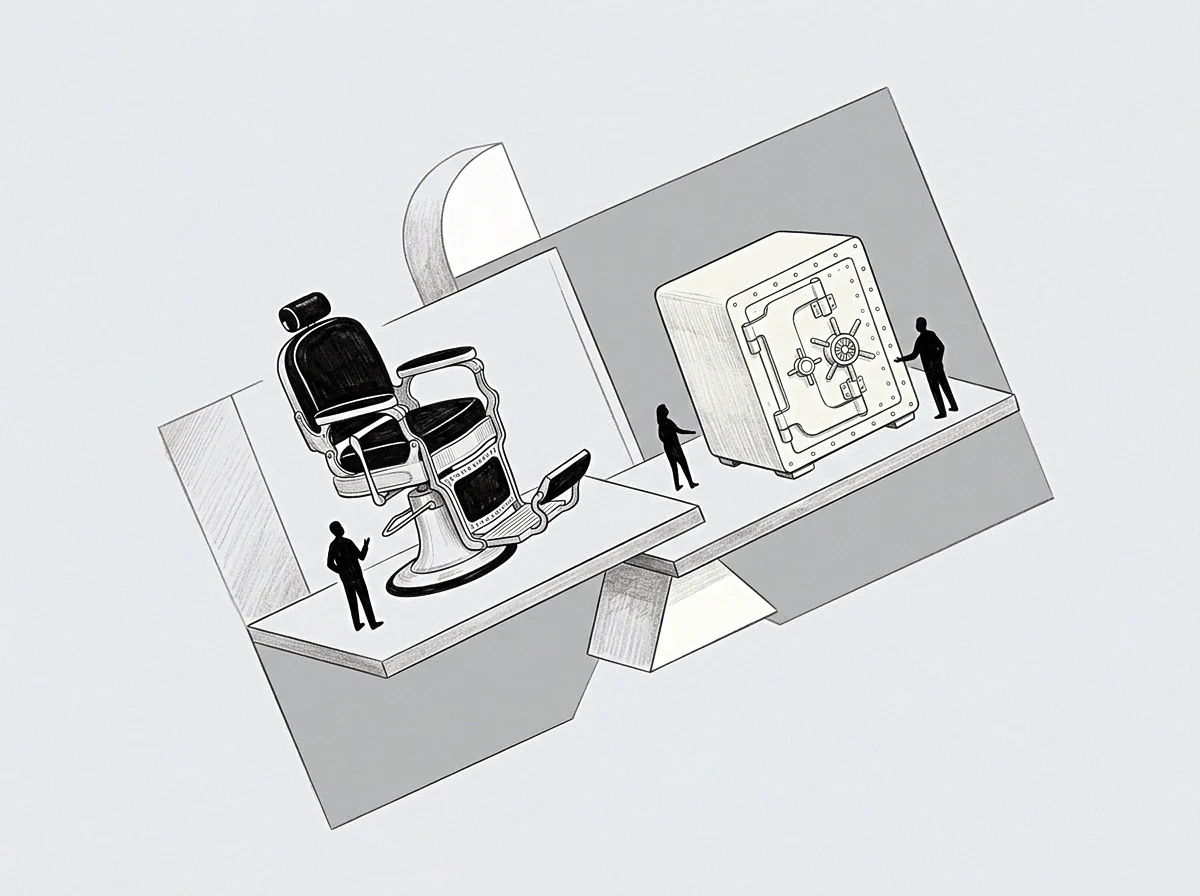
External creditors care nothing for internal operational vectors. A bank holding a defaulted credit line will not accept extra engineering hours or improved operational documentation in lieu of cash interest payments. Translating internal priority vectors into cardinal settlement figures requires converting flexible operational capacity into verifiable commercial value.
The process of converting internal priorities into external debt resolution follows a structured progression during restructuring negotiations:
- Quantify core operational assets capable of generating immediate cash flow through asset sales or pre-paid customer agreements.
- Aggregate all uncommitted internal staff hours and reallocate them exclusively toward direct revenue-generating service contracts.
- Establish a minimum ordinal threshold for internal operational preservation below which business operations become unviable.
- Present creditors with a structured settlement proposal offering partial cardinal payment backed by verified operational continuity.
Numbers govern external debt. Vectors track internal trade-offs. Priority shifts under pressure.
Creditors count dollars exclusively. When an executive approaches a supplier to request extended payment terms, the supplier evaluates the proposal solely on financial recovery likelihood. Offering a supplier early access to new product features or priority service level agreements can occasionally bridge the gap between cardinal demands and cash availability.
A cardinal concession offered without an ordinal cost limit accelerates creditor demands.
Successful debt workouts occur when leadership demonstrates to creditors that aggressive liquidation will yield less cash recovery than allowing the business to operate under reduced capacity. The counterparty agrees to defer immediate monetary claims because continued operation preserves their long-term recovery value. The creditor states plainly that payment schedules must resume the moment minimum operating cash flow returns.
Block
Protecting the core operational foundation requires hard boundary limits during a financial panic. When cardinal commitments threaten to consume every internal resource, leadership must draw a line around the essential technical and human assets needed to rebuild. Allowing debt demands to erode these core assets ensures business failure even if temporary solvency is achieved.
Internal rankings remain invisible. Attention depletes before liquidity. Silence accelerates contractual breach.
Time converts to cash. Terms dictate final recovery. Setting structural guardrails ensures that internal sacrifices remain bounded.
An operator establishes clear rules regarding maximum acceptable overtime, minimum product quality standards, and non-negotiable core staff retention protocols. These boundaries prevent short-term panic from destroying long-term enterprise value.
Cash exhaustion stops operations immediately while organizational degradation accumulates unnoticed over months.
Navigating cash crises requires continuous calibration between what must be paid in hard currency and what can be absorbed through internal resource reallocation. Executives who evaluate operational sacrifices as multi-component vectors maintain control over their organization’s trajectory during periods of severe financial distress. They convert internal capability into financial liquidity deliberately, protecting the essential operational bench required to achieve long-term commercial recovery.