
Isolating Senior Engineer Capacity During Continuous System Outages
Engineering capacity isolation during persistent outages requires physical structural blast walls separating frontline containment from root cause remediation.
Tax
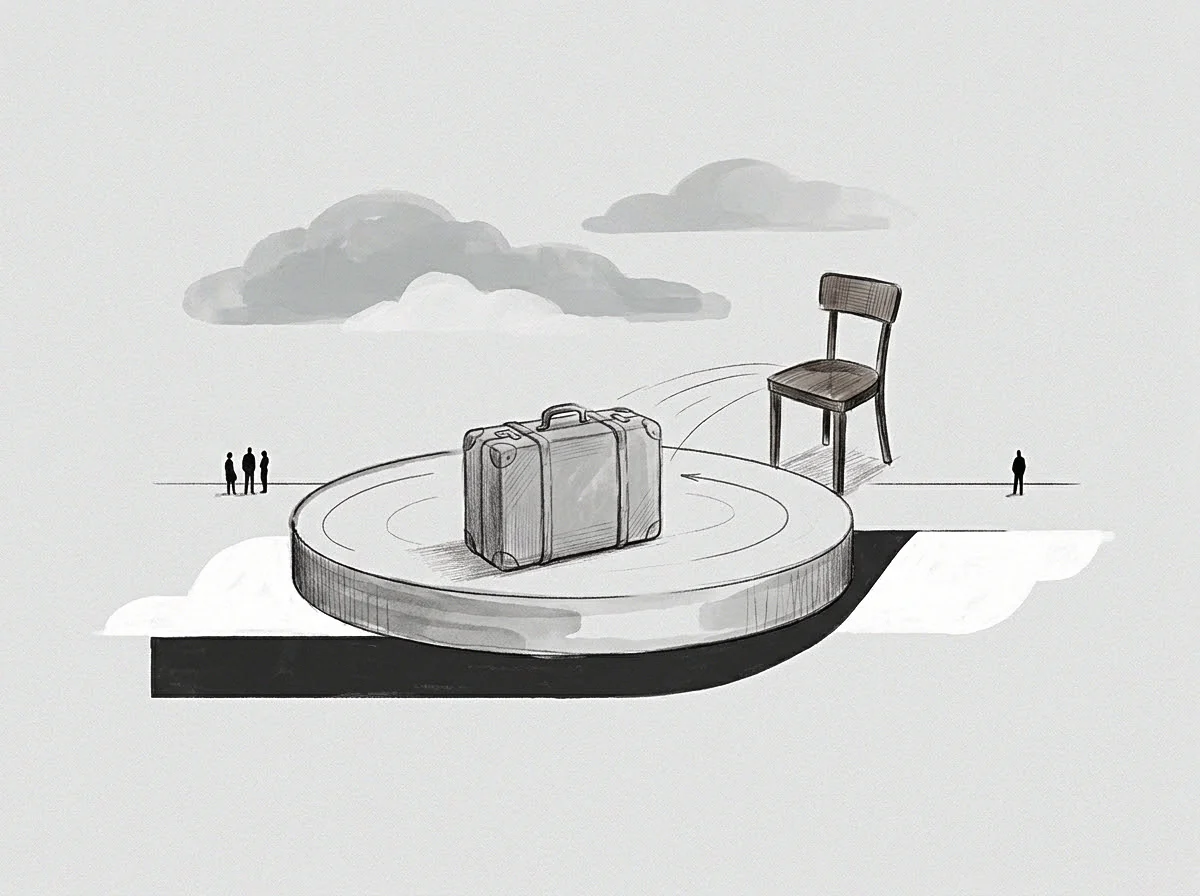
A continuous system outage consumes attention at a fixed rate while producing zero progress toward stability. At four in the morning, an alert fires for the third time in twelve hours, summoning the same systems architect who designed the data pipeline two years prior. The engineer sits in a cold room, screens illuminating three terminal sessions and a rolling telemetry graph that refuses to settle.
Every ten minutes, another pager notification interrupts the diagnostic trace, resetting the mental working memory required to isolate the failure. This interruption penalty represents an ordinal cost that cardinal incident metrics fail to record. A single incident duration counter ticks upward linearly, yet the cognitive deficit compounds exponentially with every page.
Incident commander rosters frequently mask this expenditure by categorizing senior engineering time under general operational support. When production systems suffer cascading failures across consecutive weeks, organizations experience an unpriced extraction of their deepest technical reserves. The attention surface of the most capable builders becomes entirely occupied by transient triage, extinguishing their ability to execute structural repairs.
Junior operators observe the panic, escalating even routine database lock contentions to the staff level out of procedural caution. The senior engineer absorbs the systemic friction, acting as a human shock absorber for architectural debt that should be halted at the organizational boundary.
The operational tax extracts three distinct components simultaneously: direct production hours, cognitive capacity, and long-term technical sovereignty. Direct hours spent clearing corrupted message queues cannot be repurposed for architectural remediation. Cognitive capacity degrades under chronic sleep disruption, introducing subtle logical defects into subsequent patches deployed during the incident window.
Technical sovereignty vanishes as the engineer transitions from proactive system design to reactive damage limitation. Organizations that compute incident damage solely through service credit refunds and direct downtime figures ignore the liquidation of their engineering core. The highest cost lands directly on the attention vector of the principal technical staff.
System outages extract deep technical attention long before cardinally measured service credits register business failure.
Attempting to resolve structural rot through continuous heroics creates an unstable feedback loop. The more efficiently an experienced practitioner stabilizes an unstable distributed database, the longer the executive layer delays funding the required migration. The practitioner absorbs the entire volatility of the software architecture personally.
This dynamic creates an unstated operational subsidization where individual vitality pays for corporate latency. The organization perceives the incident response as free labor because the engineering payroll remains static regardless of whether the staff engineer writes new capabilities or restarts dead JVM instances all weekend.
Survival in this environment demands an intentional operational severance. The organization either isolates its deep capability assets from the immediate firefighting cycle or surrenders its capacity to build out of the failure mode. Maintaining a single team for continuous triage and structural fixes ensures both efforts degrade simultaneously.
Quarantine
Separating triage from remediation requires establishing physical and procedural blast walls around senior technical staff. Operational triage functions as an open work queue with unbounded demand, naturally consuming every unit of attention placed in its path. Senior practitioners exposed to this queue inevitably default to servicing incoming alerts because the immediate pain of an active outage overrides the delayed benefit of root cause elimination.
Halting this attrition requires an absolute boundary that severs senior staff from production write access during containment phases. The quarantine establishes an operational circuit breaker that preserves analytical bandwidth at the explicit expense of real-time escalation speed.
Structural Partitioning of Triage Functions
Effective partitioning establishes two separate, non-communicating operational units during an ongoing outage cycle. The incident response cell retains authority over immediate containment maneuvers, while the isolation cell focuses strictly on structural defects. The isolation cell receives zero direct alerts from production monitoring systems, preventing attention disruption from recurring threshold excursions.
All incoming status requests, telemetry updates, and executive demands route through a dedicated technical buffer.
- Containment cell manages operational degradation through deliberate service throttling, rollbacks, and capacity shedding without attempting deep diagnostic isolation.
- Isolation cell examines frozen post-mortem data artifacts, core dumps, and architecture logs without access to live customer escalations.
- Communication airlock translates executive inquiries into standardized status packets, preventing stakeholders from directly contacting isolation engineers.
Consider an enterprise database cluster undergoing recurring transaction deadlocks under heavy parallel writes. In a traditional unpartitioned structure, the principal database engineer spends eighteen hours manually terminating orphaned connections and advising support staff on customer workarounds. Under a quarantined architecture, the containment cell executes a read-only lock across non-critical tables to preserve basic data integrity.
The principal engineer remains isolated in a staging environment with a replicated disk image, building a deterministic fix for the concurrency race condition. Live service capabilities degrade noticeably during this interval, yet the absolute duration of the vulnerability decreases by weeks.
Quarantining senior capacity deliberately accepts immediate customer friction to prevent perpetual operational degradation.
The isolation protocol encounters severe organizational resistance the moment containment efforts stall. Stakeholders instinctively demand the involvement of the company’s most tenured engineer on active war rooms, conflating presence with resolution velocity. Yielding to this pressure breaches the quarantine, returning the organization to the baseline failure pattern where senior hours are converted into low-leverage triage activity.
The cost of maintaining the quarantine is immediate, visible stakeholder discomfort; the cost of breaching it is permanent platform fragility.
The isolation cell must retain absolute autonomy over its research timeline. Forcing isolated engineers to supply hourly status updates to executive leadership reintroduces the identical interruption overhead the structure was designed to eliminate. The isolation unit reports exclusively upon delivery of a validated remediation artifact ready for progressive deployment.
Partition
Decoupling operational firefighting from permanent remediation requires formal division across system access layers, operational tooling, and governance schedules. When systems fail continuously, the administrative friction of coordinating work between frontline responders and isolated senior staff determines platform survival. Without rigid procedural barriers, technical escalation paths naturally route around operational policies toward the individual with the highest historic competence.
Constructing functional partitions demands deliberate degradation of escalation channels to shield isolated capacity from systemic panic.
Architectural Allocation Matrix
Organizations must assign explicit responsibilities, operational horizons, and tooling access to each technical tier during an outage period. The following matrix governs the division of technical labor during extended system instability.
| Operational Tier | Temporal Horizon | System Write Authority | Primary Performance Objective |
|---|---|---|---|
| Frontline Incident Response | Zero to Two Hours | Full Production Mitigation | Service Availability Stabilization |
| Secondary Triage Responders | Two to Twenty-Four Hours | Staging and Config Reversion | Traffic Routing and Customer Isolation |
| Quarantined Engineering Cell | One to Fourteen Days | Local Sandboxes and Staging Only | Deterministic Defect Eradication |
The partition enforces a strict operational handover protocol. When an active incident extends beyond two hours without successful containment, the frontline incident response team forfeits the right to request live intervention from the quarantined tier. Instead, frontline responders must enact predefined traffic-shedding mechanisms or degrade dependent service tiers down to baseline operational limits.
This operational protocol forces the organization to swallow cardinal revenue loss in the short term, deliberately preserving the ordinal attention vector of the quarantined engineers who are resolving the architectural root cause.
The cost of this strict boundary falls directly upon operational support managers who must explain degraded service capabilities to enterprise counterparties. Support leads face direct customer friction when advanced features remain disabled for hours. The arrangement preserves engineering sanity by transferring the immediate emotional volatility of the incident away from software architects and into commercial relationship channels.
The organization trades external commercial convenience for internal technical integrity.
Degrading system functionality through automated circuit breakers prevents the unchecked consumption of human engineering reserves.
Enforcing the partition breaks down whenever executive management overrides technical blast walls during high-visibility client demonstrations or quarterly reporting closures. If executive leaders bypass the communication airlock to demand personal intervention from a quarantined staff engineer, the entire defensive structure collapses. Once an engineer is pulled back into live incident response, other teams interpret the partition as optional, triggering a cascading re-engagement of all senior personnel across subsequent minor anomalies.
A functional partition requires technological enforcement in addition to managerial guidelines. Revoking production SSH keys and database administrative credentials from quarantined staff during remediation cycles removes the temptation for heroic, uncoordinated production interventions. The engineer can only write and verify code within an isolated diagnostic sandbox.
Shift
Reallocating operational burden across the engineering hierarchy requires an intentional transfer of triage accountability to junior and mid-level engineers. This operational realignment is frequently mischaracterized as an abandonment of platform safety. Transferring frontline triage forces the broader engineering organization to encounter the direct friction of their architectural choices.
When senior staff permanently absorb all operational pain, system complexity grows unchecked because the engineers introducing features never experience the maintenance debt they create.
Can Distributed Triage Functions Protect Core Architects?
Distributing incident response responsibilities horizontally builds widespread organizational resilience while terminating reliance on individual heroism. Mid-level engineers possess sufficient technical literacy to execute structured runbooks, interpret distributed tracing spans, and manage targeted rolling restarts. Shielding senior staff requires establishing rigid operational thresholds where lower-tier responders are explicitly authorized to let secondary systems fail rather than escalating to isolated architects.
The platform must be allowed to fail loudly within defined parameters to expose the true cost of unaddressed complexity.
Consider a distributed messaging architecture processing payment events alongside analytical usage telemetry. Under continuous database write stalls, mid-level responders routinely escalate to principal architects to resolve deadlocks. Under a shifted triage structure, mid-level staff follow a mandatory operational rule: immediately sever analytical message consumption to preserve payment processing capacity.
The operational rule requires zero deep architectural expertise to execute, arresting system degradation within minutes. The principal architect remains entirely undisturbed, continuing the complete rewrite of the underlying write scheduler.
The shifted operational model redistributes psychological weight across the entire department. Mid-level responders build rapid diagnostic capabilities by directly managing system boundaries under pressure. Senior engineers transition from reactive system saviors to strategic technical mentors who construct the tooling, diagnostic instruments, and operational playbooks utilized by the frontline cell.
This redistribution prevents the intellectual stagnation that occurs when experienced builders are reduced to permanent operational custodians.
The consequence of failing to execute this shift is the quiet resignation of the most talented engineers. Senior practitioners routinely leave organizations not because of platform complexity, but because of perpetual unpredictability in their personal schedules caused by broken escalation trees. The company loses decades of institutional context, leaving the fragile production architecture in the hands of engineers who lack the background to stabilize it.
A team that refuses to let mid-level staff handle production volatility will soon have no senior staff left to manage architectural survival.
Operational runbooks must be strictly updated after every containment cycle to expand the technical scope of the frontline cell. Any failure signature that requires senior intervention more than once must be codified into an automated remediation script or a deterministic junior operational procedure before the incident is formally closed.
Wall
Constructing permanent organizational resilience against systemic outages requires erecting immutable structural boundaries between product delivery, operational maintenance, and capital investment. When platform instability becomes chronic, standard engineering velocity metrics lose all validity. Continuing to evaluate senior technical personnel against sprint burndown charts or feature release timelines while production infrastructure collapses is managerial negligence.
The organization must erect a firm operational wall that halts feature intake until the underlying stability debt is cardinally eliminated.
The mechanical implementation of this policy operates through a strict stability budget: if production systems exceed four hours of aggregate critical degradation within a rolling thirty-day window, one hundred percent of senior engineering capacity automatically reallocates to infrastructure stabilization. Product management access to senior staff terminates instantly. This rule is absolute, leaving no room for executive negotiation or sales exemptions.
Feature roadmaps freeze completely, forcing the commercial business layer to share the operational pain historically borne solely by the engineering staff.
A typical failure pattern emerges when product executives argue that freezing feature intake forfeits crucial market advantage to competitors. The counter-position demonstrates that features deployed atop an unstable, collapsing software platform generate negative enterprise value through data corruption, customer attrition, and compounding technical maintenance costs. A software feature that cannot run on a predictable, resilient foundation represents a liability rather than an asset.
The structural wall forces the commercial organization to align its commitments with the physical reality of the computing environment.
The cost of this policy falls upon the product leadership team, who must explain postponed commercial deliverables to clients and market analysts. Commercial teams resist this discipline aggressively, attempting to redefine outages as minor operational anomalies to evade the automatic capacity freeze. Maintaining the wall requires unequivocal backing from executive leadership who understand that platform collapse destroys enterprise equity far faster than delayed feature releases.
A senior engineer shielded behind an institutional wall recovers the cognitive capacity required to design permanent architectural remedies. The engineer moves from patching memory leaks to restructuring the memory management subsystem itself. Uninterrupted attention allows the practitioner to trace multi-threaded race conditions across thousands of lines of asynchronous logic, validating formal mathematical properties that prevent entire classes of runtime failures.
Isolating engineering attention represents a profound capital protection strategy for the enterprise.
The organization either enforces the operational wall systematically through programmatic controls and explicit governance, or the production infrastructure will enforce its own boundaries through total platform exhaustion. The engineering capacity will be isolated; the only choice is whether it occurs through deliberate organizational strategy or through the uncoordinated departures of exhausted staff.