
Measuring Operational Debt Vector Created by Emergency Hotfix Deployments
Emergency hotfix deployments generate multi-axis operational debt vectors that trade immediate availability for persistent downstream friction and cognitive drag.
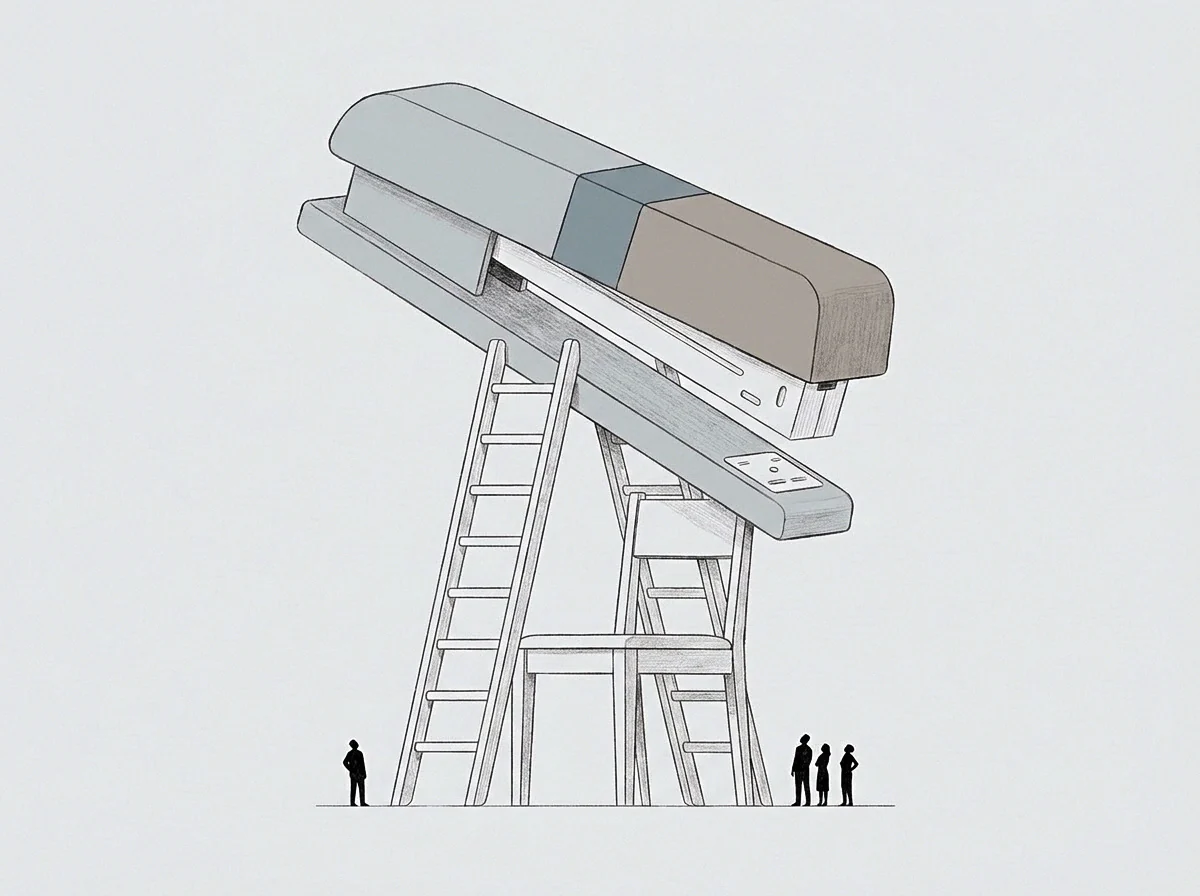
Breach
An operator patches a production system at two in the morning to arrest an active failure. The command line accepts the bypass, telemetry stabilizes, and the immediate incident ticket closes with a nominal resolution duration of twenty-two minutes. That figure enters the reliability log as a cardinal metric of recovery speed.
The true cost of the intervention remains uncalculated because the bypass fractured the deployment invariants, skewed downstream data contracts, and consumed the cognitive capacity of two staff engineers who spent the subsequent six hours verifying whether data corruption occurred. The invoice for the repair shows zero dollars in vendor expense. The internal cost registered as a sharp reduction in engineering throughput across the entire weekly release cycle.
Emergency hotfix deployments create an immediate operational debt vector whose components occupy distinct scales. A cardinal count of production incidents captures only the point of contact. The vector generated by an unverified intervention contains at least four simultaneous orthogonal components: architectural divergence, downstream cognitive load, release verification latency, and latent defect propagation.
Because these dimensions occupy ordinal and cardinal registers at once, classical accounting methods fail to track their cumulative acceleration.
Engineers evaluate an emergency intervention by asking whether the customer facing failure stopped. Measurement theory establishes that treating this binary outcome as an index of total operational health constitutes an improper operation on an ordinal threshold. The system returned to availability while its internal configuration moved to an unstable state.
An emergency patch is an explicit trade of unquantified future organizational capacity for instant stability.
A hotfix stabilizes outward availability while expanding the internal state space that future releases must verify.
The operational cost lives in the altered topology of the production platform. When a team deploys code outside normal continuous delivery pipelines, automated validation stages are bypassed. The production environment ceases to mirror the version control repository.
That discrepancy persists until a formal reconciliation occurs. The human cost registers next: the team loses trust in their release instrumentation, introducing manual sanity checks that linger long after the initial incident concludes.
The recovery process does not end when service traffic normalizes. Unreconciled patches introduce silent state variations that alter the response profile of future deployments. One intervention creates an operational vector with a non-zero magnitude across multiple maintenance axes.

Ledger

Components of the Operational Vector
Decomposing the operational debt vector requires isolating its mathematical constituents before converting them into organizational cost. The vector contains both cardinal metrics and ordinal ranks that cannot be combined into a single scalar index without discarding information. The following dimensions constitute the minimum basis required to describe the operational deficit created by an out-of-band hotfix:
- Architectural Divergence measures the graph distance between the state recorded in source control repositories and the configuration running in production containers, which expands when direct database mutations or skipped migration scripts decouple the infrastructure from its written definitions.
- Verification Friction tracks the ordinal increase in steps required to validate routine mainline merges, manifest as manual sanity testing and extended pipeline runtimes after standard automated test assumptions become invalid.
- Cognitive Load Imposed quantifies the hours of focused engineering attention consumed by root-cause investigations, post-deployment monitoring, and forensic log analysis, drawing attention away from roadmap feature work.
- Latent Fault Probability defines the statistical likelihood of secondary regressions introduced by truncated testing intervals, where changes made under stress miss edge cases in dependent services.
These components do not advance in isolation. A single emergency hotfix introduces small variations across all four dimensions simultaneously. When multiple hotfixes occur inside the same development quarter, the components compound non-linearly.
The cumulative weight of this operational debt acts as an unstated tax on team capacity, slowing delivery cadence even as nominal headcount increases.

Ordinal Friction and Cardinal Accounting
Cardinal metrics such as mean time to recovery dominate operational dashboards. These figures record time elapsed between incident trigger and service restoration. They fail to record the subsequent friction introduced into the continuous integration environment.
The time spent executing the hotfix is cardinal; the resulting friction in the engineering pipeline is ordinal, expressed as a ranking of release difficulty rather than a fixed sum of minutes.
Converting ordinal friction into a cardinal price requires examining engineering hours diverted from planned initiatives. When an out-of-band patch alters a database schema without updating integration tests, every subsequent release encounters unexplained failures. The engineering team ranks the stability of the release pipeline as lower than before the incident.
They compensate by introducing manual approval checkpoints. Each manual checkpoint demands three to five hours of senior engineering review per deployment batch.
The price of the original twenty-minute hotfix is therefore paid across three months of retarded release velocity. The cardinal representation of this cost emerges on the payroll ledger as delayed product deliveries. The root cause remains hidden within the unreconciled operational debt vector.

Friction
The Asymmetry of Emergency Interventions
Every hotfix alters the systemic baseline through an asymmetric trade. The benefit of the patch arrives immediately, localized to the specific service that failed. The cost distributes broadly across time, space, and organizational roles.
The operator resolving the incident receives credit for minimizing downtime. The downstream infrastructure maintainers absorb the operational debt when the next regular release pipeline breaks against undocumented environment mutations.
The table below models this structural tension across two standard production incident response modes, showing how debt components distribute across distinct organizational horizons.
| Intervention Mechanism | Direct Time to Restore | Pipeline Reconciliation Overhead | Downstream Cognitive Drag | Secondary Failure Exposure |
|---|---|---|---|---|
| Direct Production Hotfix | Low cardinal duration, typically fifteen to forty-five minutes | Severe ordinal degradation; manual drift synchronization across multiple staging environments | Sustained high attention demand over multiple weeks; team manual scrutiny increases | Elevated; untested peripheral edge cases bypass upstream integration test suites |
| Automated Rollback to Stable Release | Moderate cardinal duration, dependent on deployment artifact size | Negligible disruption; environment matches declarative infrastructure state precisely | Transient attention demand confined strictly to post-incident forensic evaluation | Minimal; returns application topology to historically verified operational state |
The data demonstrates why the hotfix remains an intoxicating intervention for operators under pressure. The direct time to restore appears superior when evaluating only the cardinal duration of the outage. The systemic debt vector generated by direct production patching, however, exhibits massive drag across pipeline maintenance, cognitive bandwidth, and secondary system exposure.
The automated rollback sacrifices twenty minutes of initial recovery speed to preserve pipeline predictability and prevent operational debt accumulation.

Cognitive Exhaustion as an Unpriced Magnitude
Attention represents the most perishable asset within a technology organization. When an emergency hotfix executes under incident conditions, the personnel involved experience intense allostatic strain. This psychological load degrades subsequent analytical judgment for thirty-six to forty-eight hours.
Cognitive research confirms that attention cannot be instantly reallocated to deep architectural tasks following high-stress crisis resolution.
Emergency interventions purchase thirty minutes of current uptime by confiscating three days of focused engineering analysis.
An operator forced to trace unexpected side effects of a quick patch expends significant cognitive capacity reconstructing what happened during the incident. When documentation is missing, that mental reconstruction consumes full workdays. The cost lands directly on the engineer’s creative and analytical reserve, resulting in rushed code reviews, skipped edge-case testing, and further downstream incidents.
The cost landed entirely on the engineering lead’s cognitive capacity, terminating their planned architectural refactoring for that sprint.

Room
Forensics of the Post-Incident Analysis
Consider a typical mid-sized engineering organization supporting twenty microservices with two primary database instances. Assume the core authorization cluster fails at midnight due to unexpected token payload size growth, causing authentication timeouts across all dependent consumer applications. The on-call engineer connects directly to the production cluster, bypasses the version-controlled pipeline configuration, and raises the memory threshold directly on the container instances via an ad-hoc administrative shell script.
The immediate error rate drops to zero. The cardinal metric records an outage duration of thirty-eight minutes. The ticket closes, and the on-call engineer sleeps.
Within this typical situation, the declarative state in the infrastructure repository still states the container memory allocation as two gigabytes, while the active cluster operates at eight gigabytes. The stage is set for silent systemic drift.
Two weeks later, an unrelated service update triggers a rolling redeployment of the cluster from mainline source control. The orchestration engine provisions new nodes using the repository configurations, automatically downscaling the memory back to two gigabytes. The entire application crashes during peak business hours.
The organization now experiences an outage twice as severe as the first, initiated not by a new software bug, but by the unreconciled operational debt vector created by the midnight hotfix fourteen days earlier.
Does Immediate Mitigation Preclude Methodical Debt Accounting?
Engineers often defend emergency patches by asserting that immediate customer impact supersedes process compliance. This defense conflates the necessity of rapid mitigation with the subsequent evasion of debt reconciliation. Halting customer disruption is mandatory during critical failures; abandoning the intervention before recording the introduced operational drift is an act of organizational avoidance.
A rigorous engineering practice isolates the hotfix into a temporary holding state. The patch is recognized not as finished software, but as an active liability. The operational debt vector begins accumulating interest the moment the out-of-band deploy finishes.
If the team does not allocate the immediate subsequent sprint capacity to merge the fix into mainline version control and execute exhaustive test suites, the debt vector expands its magnitude.
The debate in the field centers on whether emergency changes should be forbidden entirely or rigorously governed through debt tracking. Operational reality demands fast bypass capabilities during novel catastrophic failures. The failure of leadership lies in allowing the Cardinal recovery speed to serve as the sole success metric, ignoring the multi-dimensional cost profile left in the wake of the fix.
A system cannot heal until the difference between the running production state and the recorded source code reaches zero.
When an organization tolerates undocumented emergency mutations, it creates a covert operational contract. The counterparty is the software platform itself. The platform accepts the sloppy intervention today, and exacts payment in recurring instability tomorrow.
The terms of that covert contract are never negotiated; they are discovered when the next deployment fails in production.

Gauge

Constructing the Operational Debt Metric
Quantifying an operational debt vector requires establishing a reproducible mathematical relationship between out-of-band interventions and engineering throughput. Let the operational state of a deployment platform be described across three discrete vectors: Configuration Drift, Test Integrity Ratio, and Deployment Cadence Degradation. We construct an ordinal scoring profile that translates these dimensional changes into an actionable signal for engineering directors.
Configuration drift can be modeled as the divergence metric between production container images and source-controlled deployment manifests. When this divergence is greater than zero, the probability of regression during automated redeployment escalates exponentially. The calculation relies on observable system states rather than subjective post-mortem opinions.
To measure the human component of this vector, teams must track the recovery ratio between hotfix execution hours and subsequent pipeline stabilization hours. Empirical observation in production systems demonstrates that for every single hour spent deploying an out-of-band hotfix, the engineering team requires an average of five to eight hours of downstream effort to backport changes, update automated integration fixtures, and synchronize dependent environments. When this reconciliation ratio falls below one, operational debt is compounding.

The Boundary Conditions of Operational Debt Measurement
This debt calculation model rests on specific structural assumptions. It assumes that the engineering organization utilizes automated deployment pipelines and declarative infrastructure configurations. In environments reliant entirely on manual server management, the distinction between a hotfix and a standard release collapses, rendering configuration drift continuous and unmeasurable.
The model further assumes that test suites accurately reflect production traffic patterns. If the automated test suite already possesses low coverage or exhibits flaky intermittent failures, the degradation of test integrity caused by a hotfix cannot be isolated from background baseline noise. The metric loses its diagnostic precision when the underlying release platform lacks baseline stability.
Under conditions of deep architectural uncertainty, an engineering team cannot reliably forecast the secondary fault distribution of an emergency patch. When teams face this analytical limit, they must treat every emergency production modification as a full release rollback candidate. The team converts the unknown multi-dimensional vector into a single unambiguous operational choice: either reconcile the patch through the complete continuous delivery pipeline within forty-eight hours, or pull the code entirely from production servers.
The cost of that intervention landed on the deployment team, whose planned sprint capacity was fully consumed by forensic log analysis.