
Measuring Senior Engineering Skill Degradation During Extended Product Freezes
Extended product freezes erode senior engineering diagnostic acuity and architecture skills, converting temporary operational savings into heavy post-freeze recovery costs.
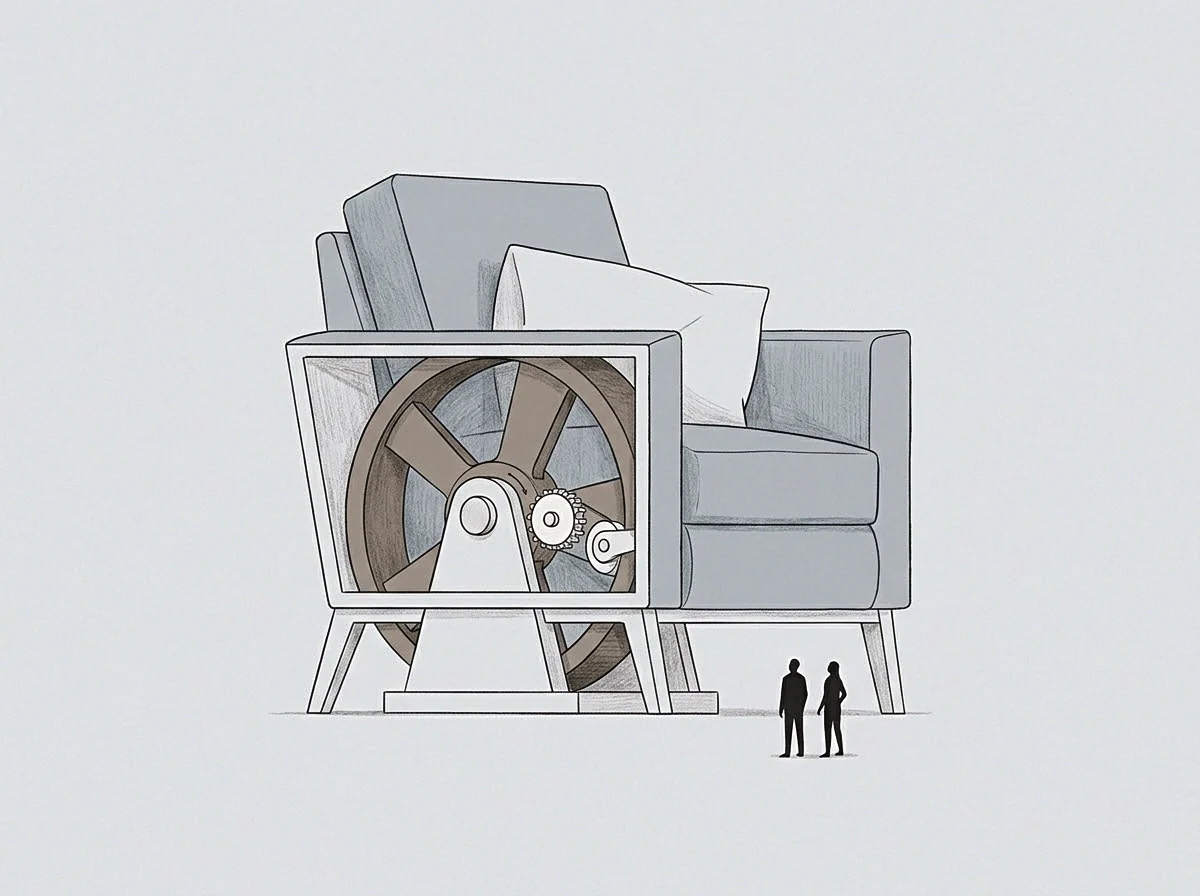
Rust
An extended product freeze changes the daily demands placed on an engineering team. Feature development stops, structural refactoring pauses, and production deployments shrink to urgent security patches. The work shifts from novel system synthesis to passive infrastructure maintenance.
Senior engineers spend their hours reviewing static configuration files, processing routine dependency bumps, and monitoring unchanged services. The visible output remains stable because operational metrics stay flat, while the underlying capability vector quietly degrades.
Engineering skill consists of distinct components operating on different decay curves. Procedural memory for command-line flags and deployment scripts persists through inaction. High-order architectural reasoning, spatial visualization of distributed state changes, and rapid diagnostic synthesis deteriorate rapidly without continuous friction.
When complex design tasks disappear, the mental models used to evaluate multi-service edge cases lose their resolution.
Organizations often misinterpret low error rates during a freeze as evidence of sustained capability. System stability during a feature hold reflects low risk injection rather than high engineering proficiency. The true cost accumulates invisibly in the capacity component of the vector.
As senior staff adapt to low-complexity maintenance loops, their cognitive setpoints drift toward defensive routine.
System stability during an extended release pause indicates low code modification risk rather than maintained engineering execution depth.
Decoupling operational uptime from engineering proficiency reveals the core mechanism of skill erosion. Senior technical personnel maintain baseline system knowledge through passive reading, but their ability to construct novel abstractions requires active iteration. Deprived of generative problem-solving, the mind simplifies complex system assumptions into static heuristics.
Re-engaging those abstractions later requires substantial rebuilding time that conventional velocity metrics fail to capture.
Routine operations maintain static familiarity while diagnostic reaction times double.

Gauge
Measuring capability loss requires moving away from cardinal velocity metrics toward ordinal diagnostic scales. Standard productivity measures, such as commit volume or ticket closure rates, mask skill degradation during a hold. A senior engineer handling three complex architectural tickets per week during active development may complete twenty low-risk dependency updates per week during a freeze.
A simple count of completed tasks suggests higher output, even though the cognitive load per task has dropped dramatically.
Ordinal measurement evaluates the depth of diagnostic reasoning applied to unexpected system failures. Placing an engineer in front of a controlled, non-deterministic defect exposes the real resolution of their current system model. Diagnostic vectors track three specific magnitudes: time to isolate the failure boundary, accuracy in predicting side effects across microservice boundaries, and the structural safety of the proposed fix.
| Evaluation Dimension | Active Feature Building State | Extended Freeze State | Impact on System Vector |
|---|---|---|---|
| Failure Boundary Isolation | Direct root-cause identification using mental telemetry models | Superficial symptom patching via trial-and-error logging | Increased time spent tracing operational state failures |
| Cross-Service Side Effect Prediction | Immediate mapping of concurrent data pipeline updates | Delayed recognition of downstream schema dependency breaks | Elevated risk of unintended regressions upon unfreeze |
| Structural Patch Safety | Clean interface abstractions minimizing state mutation | Localized inline logic additions increasing debt | Decaying structural integrity of core code repositories |
Evaluating senior engineering capability across extended holds involves tracking structural metrics rather than surface output. Observational drift manifests across four sequential operational behaviors:
- Diagnostic Abstraction Decay manifests when engineers debug failures by adding verbose logging statements across multiple layers rather than reasoning directly from telemetry patterns.
- Architectural Hesitation appears during design sessions as an inability to evaluate trade-offs between asynchronous event stores without relying on external design templates.
- Defensive Scope Reduction occurs when senior staff actively avoid modifying legacy core components, favoring external wrapper services to minimize personal failure exposure.
- Contextual Memory Erosion shows up as an increased reliance on internal documentation for domain logic that engineers previously understood without reference materials.
Structural measurement relies on periodic diagnostic baseline trials. Introducing controlled failures into pre-production environments provides an objective snapshot of current diagnostic capability. Comparing execution records over six-month intervals reveals whether isolation speed and patch quality remain intact or drift toward superficial remediation.
Tracking the time required to locate a synthetic fault across distributed services measures retained diagnostic acuity during operational pauses.
Relying on raw ticket throughput to evaluate senior technical health masks severe cognitive atrophy until active feature development resumes.
Clock
Decay rates follow a predictable time vector that accelerates as a product freeze stretches beyond ninety days. During the first thirty days of a release halt, engineering focus remains sharp as teams clear residual backlog items and document existing technical debt. Cognitive load remains high because staff still hold active mental models of recent feature architectures.
Capability metrics show minimal change during this initial phase.
Between thirty and ninety days, procedural drift begins. Senior engineers complete maintenance tasks rapidly, but their engagement with high-level design concepts drops. Attention shifts from forward-looking software architecture to passive infrastructure support.
The mental map of internal system dependencies starts losing fine details, specifically around rare race conditions and edge-case error handling loops.
How Quickly Does Complex System Recall Dissolve?
Beyond ninety days, the retention curve drops sharply across three distinct calendar phases:
- Days 91 through 180 bring a noticeable drop in context-switching efficiency. Engineers take longer to move between different codebases, relying heavily on step-by-step operational playbooks for routine operations.
- Days 181 through 270 mark the transition to defensive maintenance habits. Senior staff stop proposing structural improvements, executing only explicit work items assigned through maintenance queues.
- Days 271 and beyond result in structural context loss. Rebuilding the mental model required to add complex features to core services takes up to forty percent of the original design time.
The time required to recover lost engineering capability does not mirror the duration of the freeze. Rebuilding complex synthesis skills requires an active feature development period roughly equivalent to half the duration of the freeze itself. An eight-month halt in new feature construction consumes four months of recovery time before the team regains its former diagnostic and architectural throughput.
Skill recovery timelines scale non-linearly with the length of the product freeze, demanding substantial onboarding friction upon resumption.
What portion of senior engineering capacity dissolves permanently when product freezes exceed twelve continuous months?

Vault
Consider a practical engineering arrangement involving two senior infrastructure specialists assigned to a core database platform. The platform handles high-throughput financial transactions, requiring deep expertise in memory management, concurrency locks, and custom storage engines. The organization institutes a mandatory nine-month product freeze to reallocate capital toward corporate restructuring.
Feature requests pause, infrastructure modifications freeze, and the engineers shift entirely to compliance reporting, server patch application, and database configuration audits.
Assume both engineers maintain identical working hours throughout the freeze, logging forty hours per week. Their task allocation changes completely. Prior to the freeze, sixty percent of their hours went to structural coding, twenty percent to system architecture design, and twenty percent to operational support.
During the freeze, operational support absorbs eighty percent of their attention, while regulatory compliance documentation takes the remaining twenty percent.
By month six of the freeze, the ordinal cost vector shows massive structural shifts despite stable payroll expenses. Money spent on salaries stays constant, but the capability component of the vector turns negative. The capacity component is fully consumed by routine administrative reporting, leaving zero attention available for complex system synthesis.
The engineers continue to fulfill their stated job requirements, yet their specialized proficiency in concurrency lock optimization quietly degrades through disuse.
At month ten, the freeze lifts, and the team receives a mandate to implement a multi-region database replication feature. The project plan assumes immediate restoration of pre-freeze productivity. The initial pull requests reveal immediate friction.
The engineers select overly complex thread locking strategies, fail to anticipate deadlocks under high load conditions, and take three times longer to isolate test failures than their historical baseline predicted.
The system experiences two major production outages during the first month of unfreezing due to oversight of edge-case synchronization errors. The monetary cost of these outages, combined with the delayed delivery schedule, far exceeds the operational savings achieved during the product freeze. The organization paid full cardinal salaries for ten months while permitting the core capability vector of its senior engineering talent to deteriorate past the point of immediate recovery.
Maintaining full salary allocations while restricting engineers to administrative maintenance trades long-term technical capability for temporary release stability.
The team completed every assigned maintenance task on schedule, but the system fell apart the moment new code touched production.

Price
Converting internal ordinal skill degradation into cardinal monetary figures requires analyzing post-freeze recovery costs. Ordinal metrics track relative losses in diagnostic resolution, system visualization, and architectural speed. Cardinal conversion assigns direct dollar amounts to those losses by calculating increased refactoring hours, extended project schedules, production incident cleanup, and senior staff turnover rates following a freeze period.
Senior engineer retention represents one of the largest cardinal costs associated with extended holds. High-performing technical talent evaluates personal market value based on capability growth and exposure to modern technical challenges. When an organization freezes feature construction for extended periods, the capability vector flattens while external industry standards continue to advance.
Senior engineers recognize this divergence as a career liability, prompting increased voluntary attrition.
Replacing a senior engineer who departs during or immediately after a freeze involves direct recruitment fees, sign-on compensation, and onboarding ramp times. Onboarding a new senior engineer into a legacy codebase during an active post-freeze delivery push costs significantly more than retaining existing context. The lost domain knowledge forces the organization to pay a premium for external candidates who require months to build the mental models the former employee spent years acquiring.
A second major cardinal cost appears in post-freeze defect density. When teams resume rapid feature delivery after long periods of routine maintenance, initial code quality drops. Error rates in newly deployed microservices spike as engineers adjust to complex design loops.
Resolving production bugs under aggressive launch deadlines requires emergency hotfixes, expensive infrastructure scaling overrides, and potential customer service-level agreement payouts.
Organizations must account for the true price of product freezes before using them as financial buffer mechanisms. Reducing short-term deployment risk through feature holds generates heavy deferred liabilities across the engineering asset base. Translating ordinal capability loss into cardinal pricing models provides executive leadership with an accurate summary of what an extended pause actually costs over a multi-year operating horizon.
When the freeze duration clause exceeds two financial quarters, the cost of lost engineering capability surpasses the operational savings achieved by halting product releases.