
Preserving Core Operational Capacity Under Severe Cash Constraints
Preserving operational capacity during severe cash constraints requires substituting monetary payments with explicit non-monetary vectors of time and attention.
Vector
Payroll balances dropping below thirty days of operating cash force an immediate reclassification of resource allocation. Cash depletion alters how an organization maintains output, converting bank balances into non-monetary obligations borne directly by staff and equipment. When money stops absorbing operational friction, the burden transfers to human attention, working hours, and physical asset limits.
Operational stability under capital constraints depends on recognizing that operational output is not a single monetary total, but a set of distinct physical dimensions operating simultaneously.
Every operational process carries distinct properties that move independently when financial liquidity contracts. A firm experiencing capital scarcity continues executing work by shifting weight across five underlying components of operational output:
- Execution Velocity measures the physical rate at which throughput moves through production pipelines, directly affected when automated tooling gives way to manual intervention.
- System Latency Tolerance reflects the buffer time spent waiting for external vendor inputs when standard service tiers are downgraded to zero-cost defaults.
- Attention Density captures the cognitive focus required from technical leaders to manage manual workarounds that software subscriptions previously automated.
- Supplier Credit Drift tracks the temporal extension between receiving operational inputs and settling accounting obligations with key counterparties.
- Structural Asset Margin defines the remaining operational life of capital assets when non-essential maintenance schedules are suspended.
A reduction in available capital forces an enterprise to substitute cash with attention and time. While a balance sheet figure can drop to zero instantly, non-monetary reserves degrade on staggered schedules. Measuring these non-monetary reserves allows an operator to predict capacity failure before cash reserves exhaust completely.
A temporary contraction in liquidity converts automated production overhead into direct cognitive labor long before delivery commitments collapse.
When capital runs short, maintaining active product lines shifts from financial optimization to ordinal resource ranking. Managers routinely mistake monetary expenditure for actual capability, assuming that stopping software payments destroys operational capacity. Operational capacity resides in the underlying workflow, whereas cash merely reduces the internal effort needed to execute that workflow.
Stating the exact hours consumed by manual workarounds reveals whether an operational unit can survive capital starvation or collapse under cognitive exhaustion. The open measurement problem remains whether non-monetary overhead can be sustained across extended financial droughts without causing permanent personnel attrition.
Shelf
Depleting financial reserves degrade operational functions along predictably different timelines. Stopping vendor payments causes immediate service termination in cloud computing environments, whereas deferring software refactoring produces no visible output failure for six months. Understanding this temporal variance allows leadership to stagger cutbacks without causing immediate structural collapse.

Ordinal Degradation Sequences
Functions inside an enterprise do not decay at uniform rates. Direct customer fulfillment mechanisms require immediate cash inputs to preserve transaction flow, whereas internal compliance, routine maintenance, and strategic development can absorb cash starvation over extended windows. The operational lifespan of a function without monetary support determines its placement in the sequence of cutbacks.
Assume an enterprise software company facing a seventy percent reduction in cash runway. Ranking every operational asset by its failure horizon under zero funding sets the sequence for spending cuts. Direct hosting infrastructure fails in thirty days without cash.
Customer support operations sustain performance for sixty days using existing staff before burnout accelerates turnover. Internal tool development can survive twelve months of complete starvation while preserving existing operational capacity.
| Operational Capability | Primary Resource Dependence | Failure Horizon Under Cash Cut | Structural Preservation Potential |
|---|---|---|---|
| Cloud Infrastructure Hosting | Monetary Capital | 30 Days | Low |
| Direct Customer Support | Human Attention | 60 Days | Medium |
| Core Product Maintenance | Technical Skill | 180 Days | High |
| Regulatory Compliance Systems | Administrative Time | 365 Days | High |
Decay Horizons Across Functions
Each capability vector exhibits a specific shelf life once funding ceases. Equipment and paid software services stop functioning immediately when invoice payments stop. Human networks, internal documentation, and core technical skills retain utility long after financial liquidity vanishes.
Operating under cash constraints means sacrificing short-shelf-life services to protect long-shelf-life capabilities.
Deferring maintenance on high-durability operational assets converts short-term balance sheet stability into concentrated future repair expenses.
Systematic starvation of secondary operational units protects primary delivery channels. When leadership cuts expenditure across all departments uniformly, high-durability assets receive unnecessary capital while short-shelf-life dependencies suffer immediate failure. Targeted resource allocation preserves operational readiness by funding short-shelf-life dependencies and allowing durable internal capabilities to operate on structural reserves.
The practical operational rule demands preserving short-horizon technical dependencies while allowing high-durability internal functions to run unmanaged until capital returns.
Load
Monetary deficits convert directly into cognitive strain on key operators. When cash no longer pays for external labor or automated tooling, internal leaders absorb the operational deficit by extending working hours and increasing task switching. This conversion mechanism carries strict physical limits set by human endurance.
How Much Capacity Transfers to Attention?
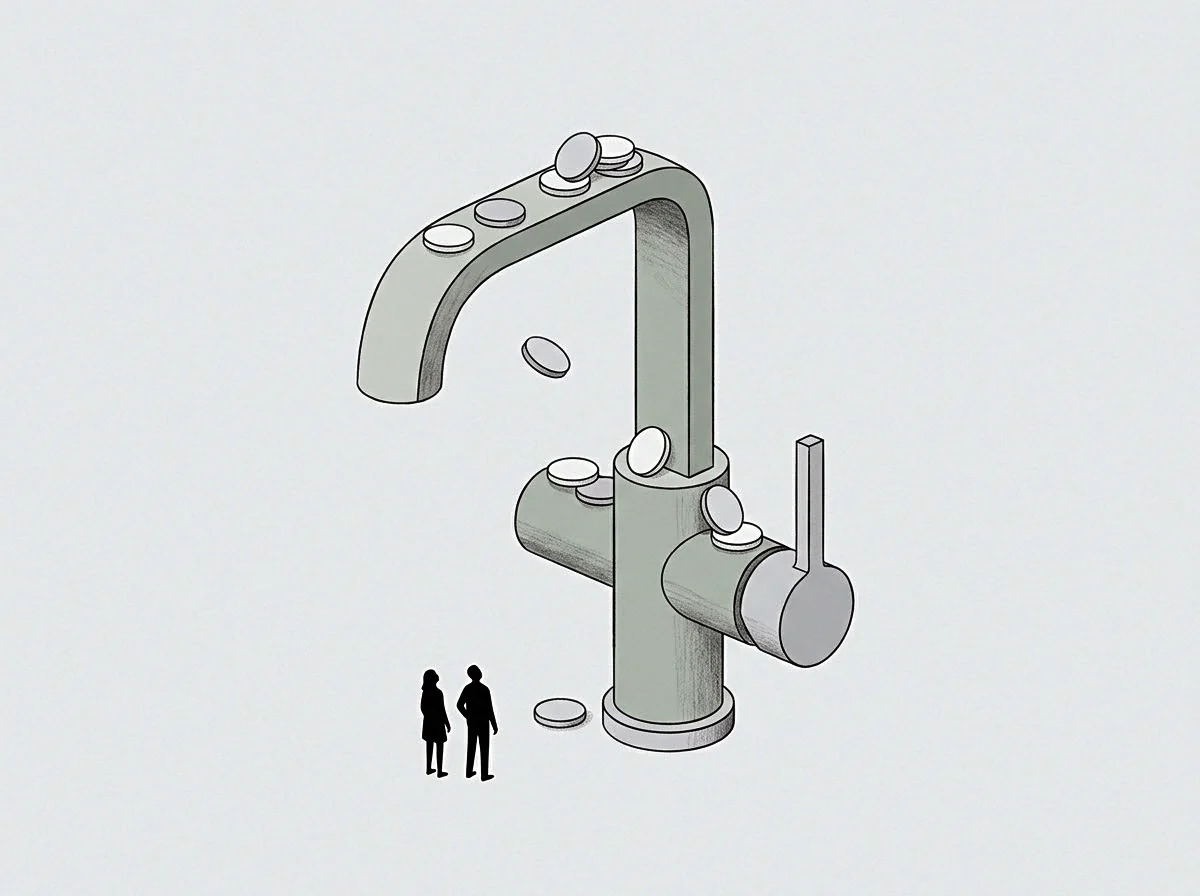
Consider an enterprise software firm operating with three months of cash reserves remaining. Leadership cuts monthly cash expenditure from eighty thousand currency units to twenty thousand currency units by terminating third-party contractor agreements and reverting infrastructure management back to two primary technical architects. The physical workload expands instantly.
The two technical architects absorb forty additional hours per week of low-level system maintenance previously handled by external contractors. Their weekly allocation of focus shifts from high-value engineering to basic system stabilization. Within sixty days, customer feature requests stall, bug resolution latency increases by three hundred percent, and personal cognitive fatigue causes critical configuration errors in production environments.
The monetary savings on paper appear as forty thousand currency units preserved per month, but the hidden cost manifests as impaired operational execution and elevated risk of system downtime.
System capacity under extreme cash conservation is limited by the attention span of the key engineers holding manual processes together.
Shifted cognitive burdens create hidden liabilities across enterprise workflows. As technical leaders spend energy patching operational gaps, long-term operational resilience declines. A firm can operate on manual workarounds temporarily, but prolonged reliance on key individuals to bridge capital deficits causes total system failure when those individuals inevitably exhaust their capacity.
The financial savings realized by substituting capital with founder labor evaporate the moment a key operator reaches complete exhaustion.
Margin
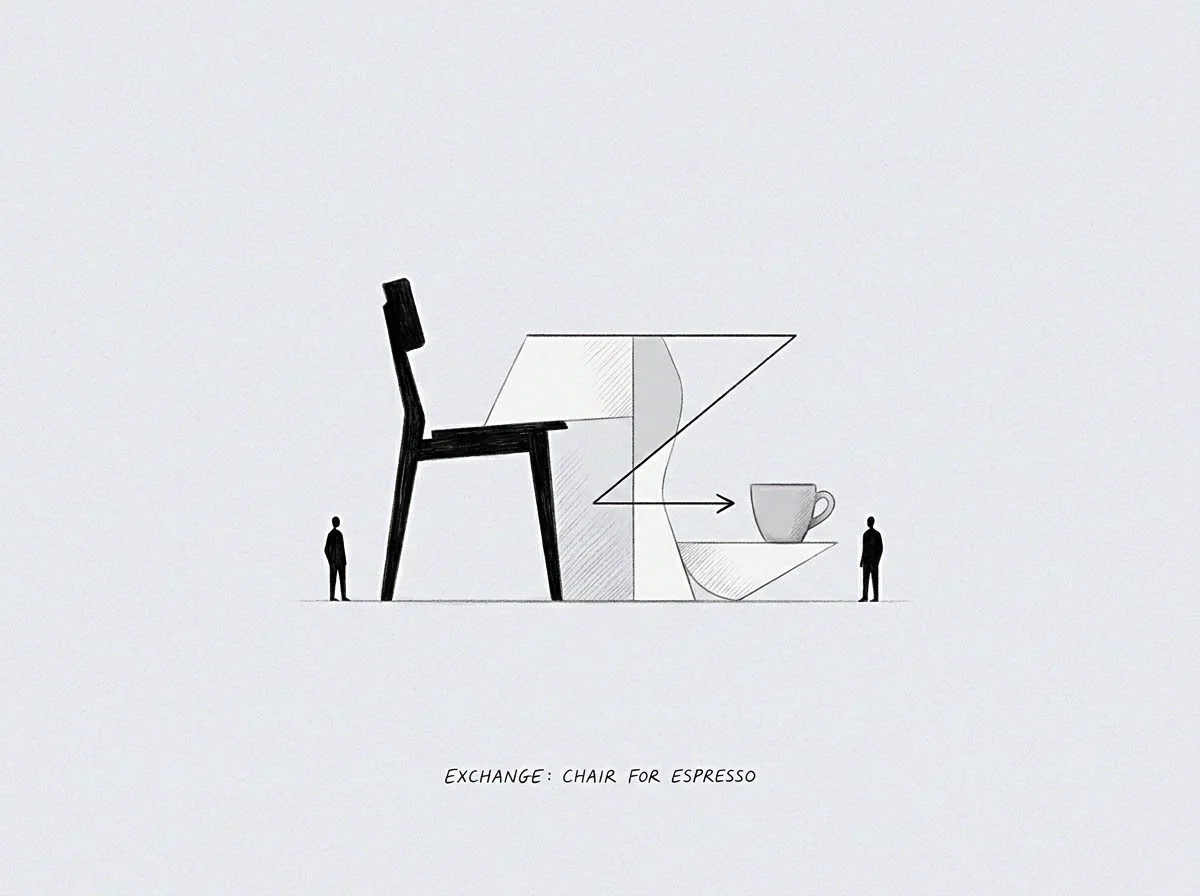
Surviving severe capital limits requires restructuring contractual commitments with external counterparties. Vendors, employees, and customers frequently value non-monetary assurances, payment timing flexibility, or equity upside higher than immediate cash settlements. Establishing explicit terms based on non-monetary value preserves operational throughput without draining liquid bank balances.
Contractual Term Restructuring
Negotiating extended payment terms or modified deliverable schedules prevents operational shutdowns caused by cash illiquidity. Vendors often accept alternate terms rather than suffer complete customer default or cancellation.
- Extended settlement windows granted in exchange for contract duration extensions allow the enterprise to defer current cash outlays without sacrificing essential operational tooling.
- Volume guarantees or future purchase rights traded for immediate price reductions reduce short-term cash outlay while preserving future supply lines.
- Feature delivery prioritization adjustments offered to enterprise clients in return for upfront annual payments generate immediate liquidity without debt service costs.
- Equity-based incentive structures offered to key personnel in lieu of cash bonuses maintain core alignment while preserving operational capital reserves.
Counterparties accept non-monetary arrangements when the proposed alternative provides predictable future value or reduces their own operational downside risk. Presenting structured terms early prevents counterparty panic and preserves supply chain continuity.
Clear contractual adjustments proposed before payment defaults occur protect operational continuity far better than reactive cash conservation tactics.
When enterprise managers communicate financial constraints transparently and offer structured non-monetary compensation, key partners usually maintain operational delivery schedules. A major supplier agreed to extend payment terms from thirty days to ninety days once the customer guaranteed long-term contract exclusivity. Counterparties routinely accommodate payment delays provided the customer presents a defined timeline before the invoice due date passes.
Desk
Maintaining a functional baseline under severe liquidity limits requires strict enforcement of minimum execution setpoints. The operational baseline is the minimum combination of personnel, infrastructure, and delivery speed required to fulfill primary customer commitments without causing structural decay. Operating below this baseline destroys core organizational capabilities, rendering future capital recovery useless.
Establishing the operational setpoint demands identifying which processes generate immediate revenue or retain critical intellectual property. Every non-essential activity is suspended. Technical documentation, general marketing initiatives, and long-term research projects stop completely during liquidity crises.
Capital and attention concentrate entirely on maintaining the core revenue generation engine.
Resource concentration requires setting explicit operational boundaries. The operator defines the absolute minimum quality standard acceptable to customers and cuts all excess service delivery polish. Software updates shift from feature expansion to basic security patching.
Customer success teams focus exclusively on high-value accounts, providing self-service tools for lower-tier clients. Operating at minimal operational thresholds preserves core capabilities while reducing burn rate to absolute minimum levels.
When cash constraints ease, rebuilding operational depth proceeds in reverse order of degradation. High-durability assets and internal capabilities that were starved during the liquidity contraction are re-funded before expanding overhead or entering new markets. This disciplined recovery structure ensures that foundational systems are fully restored before the enterprise attempts new operational growth.
Maintaining operational continuity under severe financial pressure relies entirely on protecting the core delivery engine at all costs, ensuring that the enterprise survives to capitalize on future liquidity opportunities.