
Pricing Cognitive Interruption In Technical Service Contracts
Pricing cognitive interruption requires contractual surcharges and minimum billing windows that convert unpriced task reconstruction latency into cardinal fees.

Break
An engineer sits three hours deep in the architecture of a distributed database when an emergency incident ticket arrives. The notification demands seven minutes of typing to confirm that a secondary replica lagged behind its primary write log. The engineer types the response, closes the ticket, and turns back to the editor.
The architecture is gone. The working memory containing thirty variable states, buffer assumptions, and concurrency edges has collapsed, leaving only static code that takes forty minutes to reconstruct. The monthly retainer contract records seven minutes of billable labor.
Technical service agreements routinely bill time as a continuous, fungible fluid. A minute spent reviewing a pull request is treated as identical to a minute spent recovering from an unscheduled voice call. Cognitive science measures a distinct reality: the human prefrontal cortex holds active task representations through persistent neural firing patterns across distributed networks.
When an external demand forces an immediate task redirection, those patterns undergo catastrophic interference. The worker suffers attention residue, an operational state where cognitive capacity remains anchored to the interrupted problem while attempting to engage a new demand.
Attention residue persists long after a minor diagnostic question receives a complete written answer.
Context reconstruction operates on an exponential decay curve. Returning to deep engineering work requires reloading mental schemas, verifying previously held invariants, and re-establishing spatial representations of systemic execution paths. Laboratory observations establish that resuming an interrupted complex programming task takes an average of fifteen to twenty-three minutes, accompanied by elevated error rates in code committed immediately following resumption.
When contracts fail to price this disruption, the service firm absorbs the loss internally. The technical staff exhausts daily working capacity on transition friction, leaving complex client commitments delayed or structurally fragile.
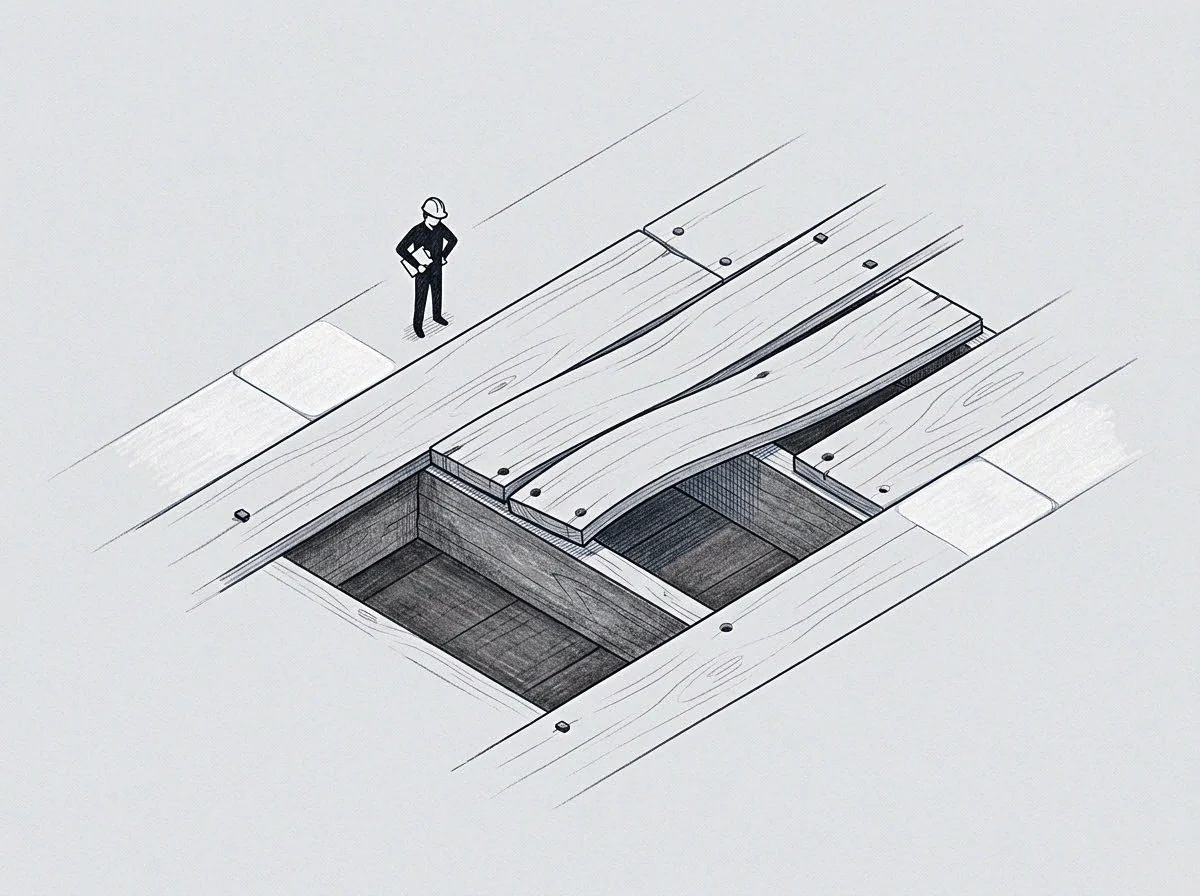
Working Memory Decay and Schema Eviction
Mental models operate under strict biological limits. Miller and subsequent working memory researchers documented that conscious processing manages roughly four distinct conceptual chunks simultaneously during active problem solving. Complex technical services, such as kernel debugging, distributed infrastructure configuration, or advanced financial modelling, require engineers to stack these chunks into hierarchical mental structures.
An unscheduled interruption acts as an eviction event. Sensory inputs from incoming chat notifications replace the volatile registers of human attention, wiping clean the transient pointers necessary to evaluate interdependent code branches.
The structural toll expands when interruptions occur during high cognitive workload phases. Interrupting a specialist during low-load periods, such as routine dependency updates, produces modest recovery overhead. Interrupting that same specialist during the final synthesis of an algorithmic routine generates systemic damage.
The worker often forgets latent edge conditions, introduces silent security regressions, or abandons optimal design paths in favor of expedient implementations to relieve mental fatigue.
Clients who purchase fractional technical expertise believe they are buying isolated increments of minutes. A contract that permits unbounded access through collaborative chat platforms tacitly grants the buyer an unpriced option to clear the specialist prefrontal cache at will. Uncompensated operational exhaustion follows, shifting the economic burden of the engagement onto the contractor staff through unbilled recovery hours and accelerated professional attrition.
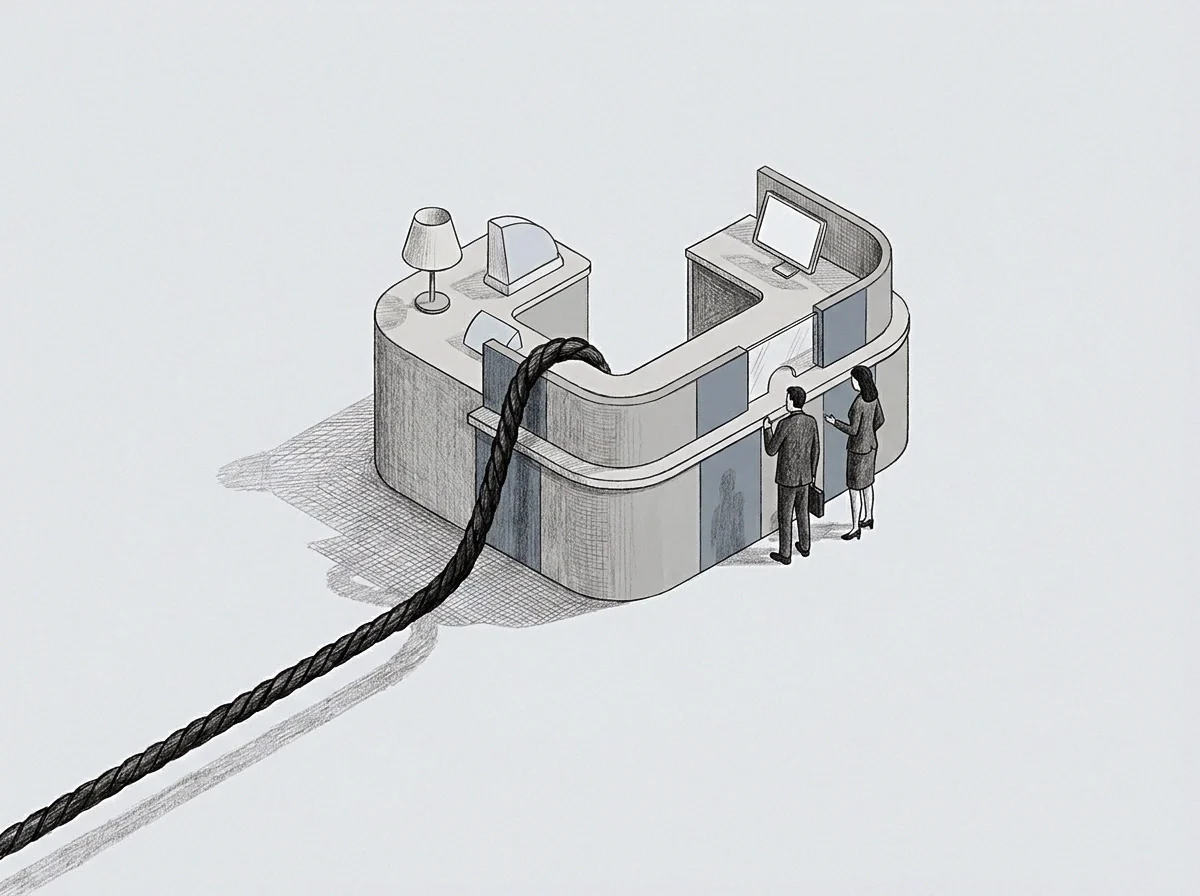
Weight
Measuring the real decrement of cognitive interruption requires separating ordinal burden from cardinal accounting units. Cardinal pricing uses discrete currency units, such as an hourly rate of two hundred dollars. Ordinal cost exists as a ranked hierarchy of internal losses: the depletion of working stamina ranks higher than missed administrative deadlines, which in turn ranks higher than lost recreational downtime.
Traditional time tracking enforces a cardinal fiction by asserting that five six-minute interruptions equal one half-hour of focused labor.
Internal operational debt accumulates along multiple axes simultaneously. Every interruption introduces a vector containing five distinct components: lost primary task duration, reconstruction latency, emotional disruption, error probability multiplication, and schedule displacement. An organization attempting to evaluate vendor sustainability through simple time entries misses the compounding nature of these attributes.
One interruption can destroy an entire four-hour focus block, even when the logged interaction spans less than five hundred words of chat text.
A rapid response window converts uninterrupted development blocks into fragmented administrative latency.
The table below contrasts how identical operational interruptions affect cardinal invoicing and internal ordinal capacity across standard technical service arrangements.
| Disruption Pattern | Direct Interaction Time | Reconstruction Latency | Ordinal Vector Impact | Billed Contract Equivalent |
|---|---|---|---|---|
| Production Alert Triaged | 12 minutes | 35 minutes | Working capacity drained; primary sprint stalled | 0.2 hours billable |
| Ad-hoc Client Chat Ping | 4 minutes | 22 minutes | Volatile cache cleared; focus fractured | 0.0 hours unbilled |
| Midday Status Interrogation | 15 minutes | 28 minutes | Deep focus eliminated; routine tasks substituted | 0.25 hours billable |
| Urgent Architectural Pivot | 45 minutes | 90 minutes | Deep structural invariants lost; fatigue induced | 0.75 hours billable |

The Distortion of Blended Hourly Rates
Blended rates disguise cognitive depletion. When an agency quotes one flat hourly price across architecture, development, and reactive support, the client experiences zero economic deterrent against frequent interruptions. The buyer treats access to senior engineers like access to a persistent streaming utility.
The supplier absorbs the reconstruction overhead, paying senior staff for forty hours of physical attendance while realizing fifteen hours of high-value synthesis.
True operational expenditures resist simple averaging. In statistical mechanics and decision theory, taking the arithmetic mean of ordinal states yields mathematically invalid outputs. If an incident response leaves an engineer cognitively incapacitated for the remainder of an afternoon, assigning an accounting entry of thirty minutes fundamentally lies about organizational capacity consumption.
The remaining three hours of the workday yield diminishing marginal productivity, characterized by shallow administrative tasks or high-defect output that requires subsequent remediation.
Protecting technical margins requires making this non-linear toll visible to the client. The buyer must understand that summoning an engineer out of deep work carries an immediate systemic tax that exceeds the duration of the conversation. Unscheduled interruptions consume volatile attention blocks faster than standard project milestones.
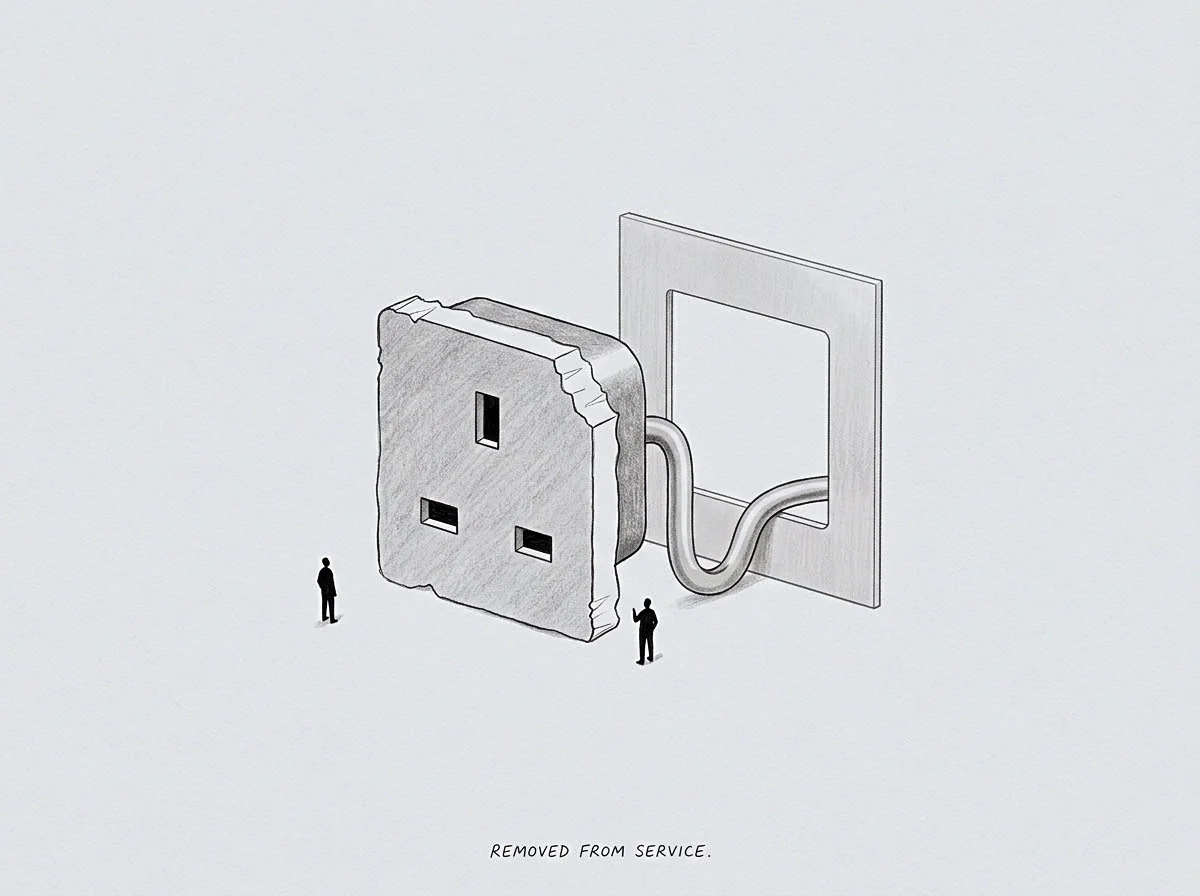
Wire
The physical routing of communication establishes the boundaries of cognitive integrity. Modern client engagements typically link through persistent messaging channels, shared issue trackers, and direct notification webhooks. These connections act as live transmission lines that deliver client urgency straight to the specialist monitor.
When a client types a question into a shared room, the physical wire brings the external interruption across the organizational boundary without friction.
Every communication channel imposes an implicit response latency expectation. A message delivered via collaborative chat implies an expected turnaround under thirty minutes, triggering continuous background vigilance in the recipient. Human attention cannot fully submerge into complex problems when a portion of executive monitoring remains dedicated to polling incoming channels for critical signals.
This anticipatory scanning state, known in occupational psychology as cognitive alerting, prevents the brain from entering stable theta-wave flow states necessary for dense technical synthesis.
Continuous availability guarantees fractured technical architecture.
Consider an enterprise infrastructure team supporting three external corporate clients under standard service agreements. The physical workspace contains dual monitors: one displaying deep Kubernetes cluster manifest refactoring, the other displaying two vendor chat feeds. Every notification chime physically shifts ocular fixation and triggers an autonomic orienting reflex.
The engineer spends the morning shifting glance paths, processing ambient questions, and verifying cluster configurations that were already verified ten minutes prior.
Asynchronous Buffers and Queue Isolators
Decoupling the direct communication line requires introducing physical and procedural friction. High-performing engineering firms deploy queue isolators, positioning a designated triage operator or account coordinator between the client and the technical core. This coordinator operates as an air-gapped buffer.
The client transmits requests freely into the buffer, but messages cross the internal wire to technical specialists only during predefined batch synchronization windows.
Technical architecture demonstrates the necessity of message brokers to prevent traffic spikes from taking down downstream relational databases. Human technical capacity requires identical isolation. Without a buffering mechanism, the client directly injects arbitrary concurrency spikes into fragile biological processing nodes.
The resulting pipeline stalls mirror system thrashing, where an operating system spends more CPU cycles swapping memory pages between disk and RAM than executing actual application logic.
Engineering leadership frequently attempts to solve this challenge through cultural agreements, pleading with clients to respect quiet hours. Contractual arrangements override polite intentions. When the commercial agreement fails to penalize live pings, the client inevitably reverts to the path of least personal resistance: asking the immediate question on the open wire and expecting an immediate answer.
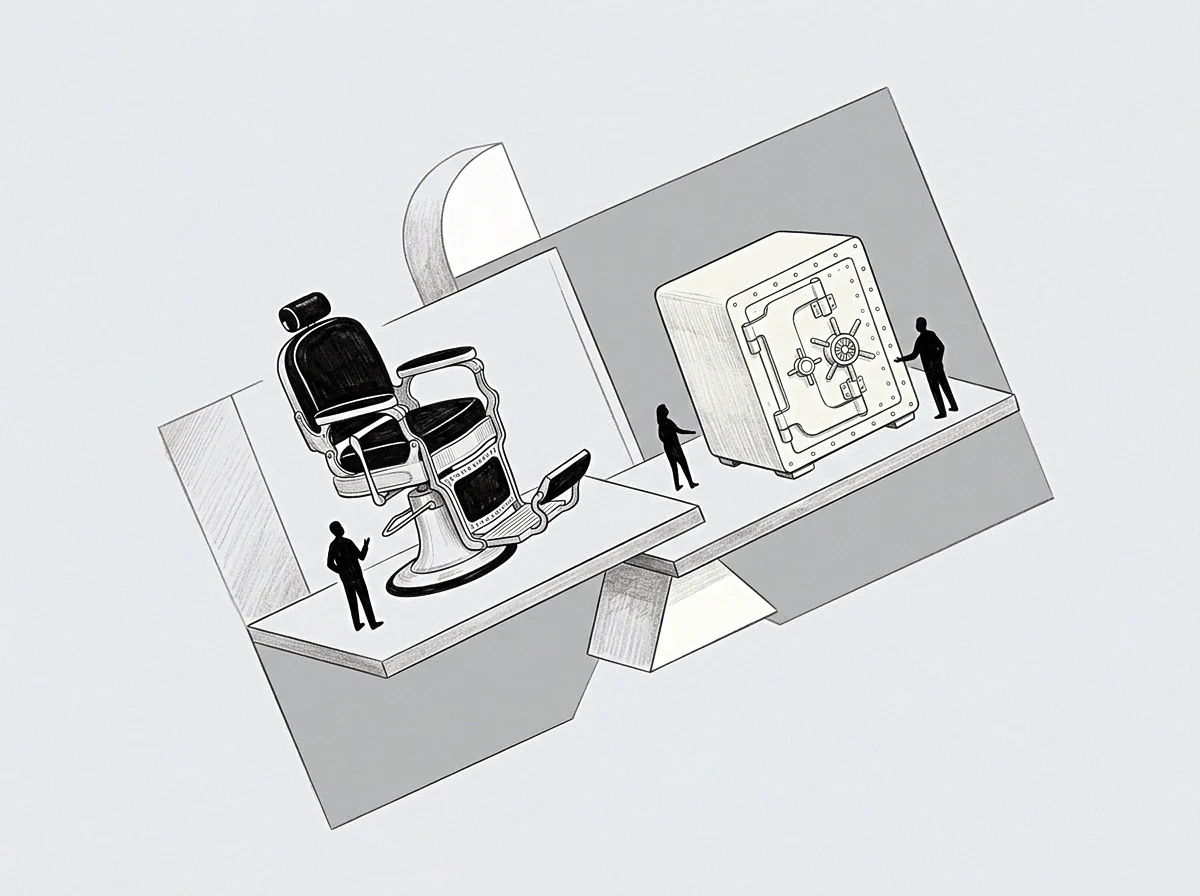
Levy
Direct economic pricing of cognitive interruption converts hidden internal operational deficits into cardinal invoice line items. If a technical service contract charges purely by logged task minutes, the buyer receives an unearned subsidy at the vendor expense. To realign commercial incentives, the contract must establish structural levies that penalize unscheduled task switching and reward batched asynchronous communication.
A primary contract mechanism is the minimum billing increment for unscheduled disruptions. If a client triggers an emergency escalation or demands an immediate mid-sprint consultation outside agreed review sessions, the contract bills a mandatory minimum of two hours, regardless of whether the actual call lasts four minutes. This pricing structure establishes an immediate cardinal hurdle that forces client stakeholders to evaluate whether an issue warrants the disruption charge.
Trivial inquiries migrate naturally into asynchronous ticketing queues.

Which Structural Terms Absorb Interruption Overhead?
Structured agreements employ targeted commercial clauses to establish operational insulation. Five specific contractual mechanisms govern interruption pricing across technical engagements:
- Interruption Premium Multiplier applies an elevated rate, typically two to three times baseline professional fees, to any technical engagement initiated outside scheduled architectural sprints.
- Batching Window Commitments mandate that client queries receive formal technical analysis during specific daily processing windows, insulating deep focus hours from ad-hoc incursions.
- Emergency Escalation Thresholds define precise system failure parameters, establishing steep financial charges whenever a client marks a non-critical request as an emergency.
- Reconstruction Surcharges append a fixed forty-five-minute recovery fee to every ad-hoc voice call or instant-response chat request accepted by lead technical staff.
- Communication Channel Restrictions designate email and structured issue tickets as standard contract conduits, applying a recurring platform access fee for real-time chat integrations.
Mandatory minimum billing windows eliminate low-value context switching without requiring emotional negotiations.
Implementing these levies changes client behavior systematically. In corporate psychology, price signals communicate boundaries more clearly than polite administrative requests. When a non-technical project owner understands that posting a direct ping to an enterprise architect incurs an immediate two-hundred-dollar surcharge, the project owner pauses to aggregate questions into a single consolidated email.
The cognitive capacity of the architectural team remains intact, protecting delivery timelines across all workstreams.
A standard objection during contract negotiation asserts that interruption levies harm client relationships. Empirical experience demonstrates the contrary. Buyers respect structured service parameters that correlate with predictable project velocity.
The dispute occurs only when levies remain unstated during initial sales discussions and appear unexpectedly on later billing statements.
The contract specifies that any unscheduled interaction requiring specialist task switching automatically bills an initial one-hour focus recovery fee prior to recording execution time.

Pact
Structuring the service agreement requires translating cognitive reality into defensible commercial prose. Technical service firms must abandon defensive posture during contracting and articulate context preservation as an essential quality control measure. A client purchasing critical infrastructure engineering, custom compiler development, or cryptographic protocol audit services has an acute economic interest in preventing cognitive depletion.
High-defect software and missed delivery milestones trace back directly to fragmented attention.
The commercial agreement must formalize cognitive service level agreements. Traditional contracts govern system uptime, response deadlines, and dispute escalation trees. A modern technical service pact governs communication cadences, allowable interruption frequencies, and asynchronous protocol adherence.
If the client violates agreed communication protocols by paging engineers for status checks during deep development cycles, the contract releases the service firm from associated sprint delivery deadlines.
Negotiating these parameters requires presenting the operational cost vector with clinical precision. Service leaders state clearly that a specialist team cannot sustain deep focus while maintaining fifteen-minute response times on public channels. The client must select one of two commercial arrangements: dedicated reactive incident triage, billed at premium rates with no long-term feature delivery targets, or dedicated architectural construction, shielded behind asynchronous communication gates with strict interruption surcharges.
Defending the Boundary Against Scope Drift
Commercial contracts fail through gradual erosion rather than sudden collapse. A client partner begins with courteous adherence to ticket systems, transitions to occasional chat questions, and eventually demands direct phone access for minor updates. When the service firm tolerates this drift without enforcing the contractual recovery surcharge, the original contract boundaries disintegrate.
Enforcement demands mechanical execution. Account managers must apply the interruption surcharge to the very first ad-hoc breach. If an account lead excuses early violations to preserve cordiality, the vendor tacitly consents to unpriced attention theft.
Billing the recovery fee immediately, paired with a calm reference to the contractual terms, teaches the client organization to respect technical focus as a finite, billable asset.
Does an absolute contractual quarantine on real-time client communication ultimately diminish vendor competitiveness against lower-cost firms that offer continuous unshielded availability?