
Ranking Workstations and Enterprise Commitments During Liquidity Contraction
Liquidity contraction forces enterprises to rank workstation capital assets against fixed contractual software obligations based on direct operational output.

Seat
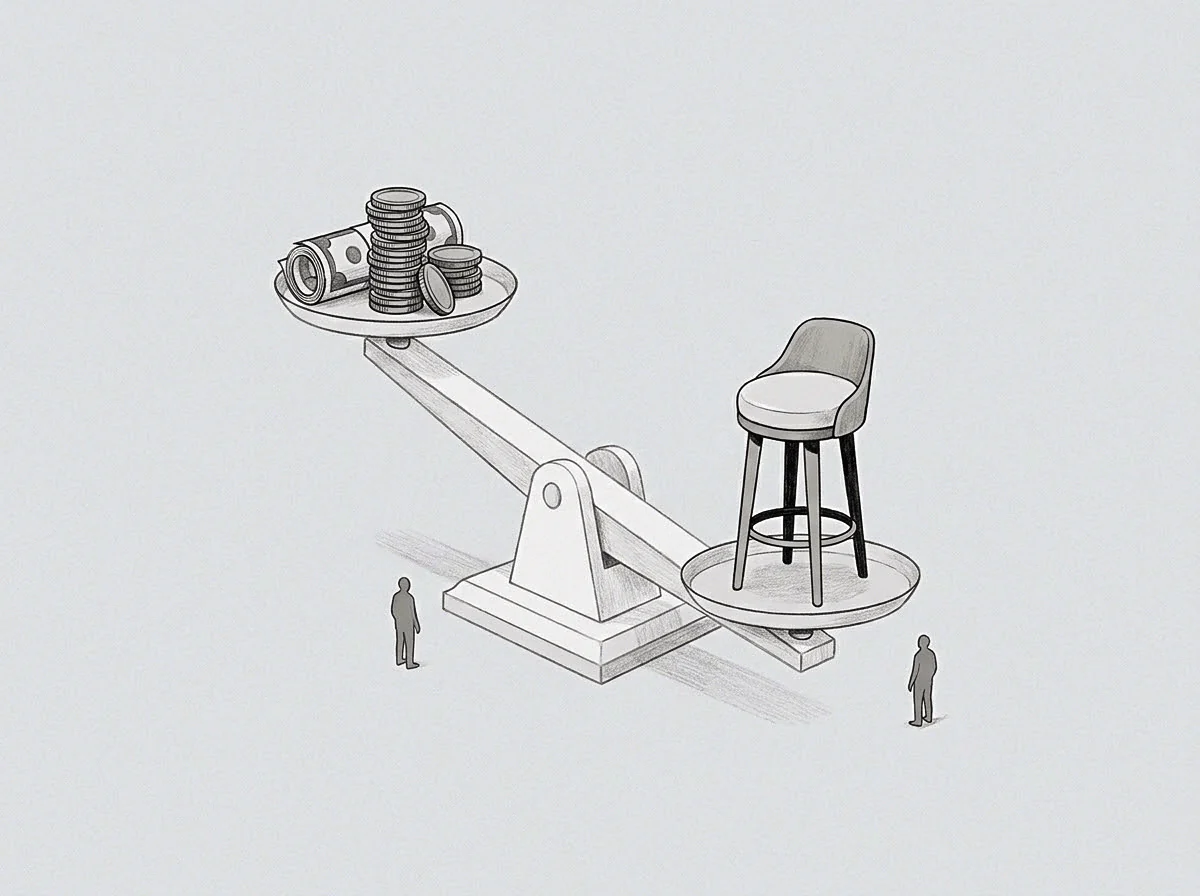
An unscheduled reduction in a credit facility forces an immediate audit of cash outflows within twenty-four hours. Financial directors routinely confront the friction between physical workstations and enterprise commitments when capital access contracts. Physical workstations represent localized capital compute power, developer velocity, and direct operational output capacity.
Enterprise commitments represent fixed cardinal liabilities, multi-year software licensures, reserved cloud infrastructure floors, and recurring vendor retainers. The reserve balance falls.
When capital flows freely, enterprise software commitments accumulate alongside hardware provisions without explicit prioritization. Software seat licenses expand to accommodate theoretical growth projections, while physical desktop rigs and engineering workstations are refreshed on automated schedules. Liquidity contraction destroys this equilibrium by introducing a rigid cash ceiling.
Management faces a choices between funding physical equipment that directly produces output and servicing long-term vendor contracts that penalize cancellation. Direct capabilities remain intact.
Workstation allocations carry an immediate ordinal cost structure. A high-performance engineering terminal directly dictates local build execution speeds, graphics rendering throughput, and developer hours spent waiting on local processing tasks. Withholding a workstation update directly penalizes employee output capacity.
Conversely, enterprise software agreements often contain idle capacity, locked baseline minimums, and unused tier buffers negotiated during expansive market phases. The liquidity margin collapses.
Liquidity contraction exposes the operational distance between fixed multi-year software obligations and physical local computing assets.
Rebalancing these two categories requires examining how output moves through physical seats versus software contracts. Software account managers maintain that multi-year minimum commitments remain non-negotiable regardless of internal staff reductions.
Anchor
Enterprise minimum commitments function as operational anchors that pull cash reserves downward during revenue contractions. These agreements convert flexible software usage into permanent cardinal liabilities. While physical hardware assets can be repurposed, paused, or sold on secondary markets, contractual minimums obligate the enterprise to disburse cash regardless of internal workload volume.

Contractual Baselines and Fixed Cardinal Outflows
Enterprise software vendor structures intentionally decouple contract cost from active internal capacity. Multi-year commitments often secure discounted per-seat pricing by imposing contractual spending floors. During liquidity contractions, headcount reductions decrease the active utility of these platforms, yet the cardinal billing baseline remains static.
The debt facility closes.
- Unused Seat Obligations where software licenses paid for departed staff generate zero operational velocity.
- Cloud Consumption Floors that mandate minimum monthly bills regardless of actual computational traffic or application workload.
- Multi-Year Escalation Clauses raising annual contract totals during periods when top-line enterprise revenue declines.
- Restricted Reallocation Terms preventing the transfer of surplus user licenses to different operational divisions.
Reference-class forecasting research on vendor commitment overestimation, resting on enterprise software procurement samples across mid-market tech firms between 2018 and 2022, demonstrates that operators overestimate long-term software utilization by an average of forty-two percent. This finding would be moved by long-term data showing software license elasticity scaling dynamically with real-time usage volumes under non-linear pricing models. Capital allocation shifts inward.
A contractual consumption floor transforms variable operational expenditure into a fixed financial liability during revenue drops.
An unexamined software consumption floor forces the liquidating enterprise into technical insolvency during sudden revenue declines.

Tally
Evaluating local computing hardware against external enterprise services requires separating immediate technical throughput from financial flexibility. A dollar spent on local compute capacity yields immediate physical output, whereas a dollar spent on an enterprise contract often purchases contractual peace rather than functional velocity.
Decomposing the Multi-Attribute Output Vector
A cost is never a single cardinal number; it is a vector comprising developer hours spent, capital consumed, attention drained, and capability gained. The operational vector stalls. Upgrading a workstation seat increases developer throughput while retaining capital asset value on the balance sheet.
Paying an enterprise software renewal protects a business relationship while draining liquid reserves without increasing internal capability. Engineering throughput drops third quarter.

Does Contractual Priority Override Immediate Capacity?
Financial directors often default to servicing legal contracts first while freezing local hardware purchases for engineering teams. This hierarchy privileges external liability reduction over internal operational speed. When workstation hardware ages past functional efficiency, compile times lengthen, local machine failures rise, and engineering capacity degrades.
The software vendor insists.
- Identify physical assets that directly generate immediate product throughput and local computing power.
- Measure the exact monthly cash drain of each software commitment against actual team usage figures.
- Calculate the operational velocity loss caused by withholding workstation upgrades from active technical staff.
- Rank all commitments by their immediate impact on internal output rather than contractual penalty magnitude.
The multi-attribute utility theory finding on cognitive trade-off decay under financial stress, measured in laboratory experiments with executive decision-makers under acute budget caps, shows that operators simplify multi-vector comparisons into single cardinal figures when cash reserves drop below sixty days. This finding would be moved by field evidence demonstrating that algorithmic financial modeling overrides subjective ordinal preference weighting during severe liquidity shocks.
Preserving direct output capacity takes precedence over servicing underutilized enterprise software licenses during revenue compression.
A contractual reduction clause in vendor agreements permits proportional commitment scaling whenever physical workstation count drops.

Tier
Consider a mid-sized engineering enterprise operating under a thirty percent drop in quarterly credit reserves. The enterprise holds one hundred twenty active engineering workstations and maintains four hundred thousand dollars in annual cloud and software minimum spend commitments. Local workstation capital investments total one hundred fifty thousand dollars every three years.
When cash flow drops, management must decide whether to defer workstation hardware updates or default on enterprise software minimum spend clauses.

Quantifying Asset Productivity Against Enterprise Overhead
The operational reality demonstrates that physical workstation degradation creates compounding internal losses. Withholding hardware upgrades saves immediate capital, but slows every software engineer by an average of forty-five minutes per day in local build times. Across eighty engineers, this daily time loss accumulates to four hundred hours of lost production capacity every week.
The vendor refuses terms. Capacity drops immediately.
| Evaluation Metric | Local Workstation Capital | Enterprise SaaS Commitments |
|---|---|---|
| Cash Outflow Structure | One-time cardinal expenditure with residual secondary market value | Recurring monthly cash outflow tied to multi-year contracts |
| Operational Output Coupling | Direct alignment with immediate engineering compile speed and capacity | Indirect alignment dependent on total active user seats utilized |
| Flexibility Under Drawdown | High ordinal control through deferral of replacement cycles | Low control constrained by strict termination penalties and floors |
| Scalability Vector | Linear scaling mapped directly to active headcount changes | Step-function scaling with mandatory baseline commitment thresholds |
The quarterly budget closes. The claim that keeping hardware upgrade cycles below thirty-six months yields a net positive output vector even when incurring high early-termination penalties on enterprise cloud tiers cannot be fully defended across all software architectures. Under this uncertainty, an operator calculates the direct developer compile time lost per week before authorizing contract termination fees.
When cash reserves contract below operational baselines, local compute hardware yields higher marginal throughput per dollar than locked enterprise software commitments.
The decision remains open whether preserving enterprise software relationships outweighs the permanent productivity loss of running obsolete workstation hardware during extended market downcycles.

Shear
Strategic renegotiation requires shifting the dialogue with enterprise software vendors from contractual obligations to operational facts. Vendors operating in contracting markets prefer reduced recurring cash payments over total corporate client insolvency. Presenting explicit headcount reductions and internal workstation consolidation data establishes a factual boundary during contract restructuring negotiations.
Hardware depreciates predictable baseline value.

Converting Operational Vectors Into Contractual Realignment
Transmitting internal financial constraints to enterprise software suppliers demands converting internal capability metrics into cardinal negotiation points. An enterprise reducing its physical engineering seats from one hundred to sixty requires a corresponding reduction in software tier obligations. The invoice arrives weekly.
When vendors refuse voluntary commitment restructurings, management evaluates the legal and operational costs of contract default against the immediate death of core product development capability. Cash controls take priority.
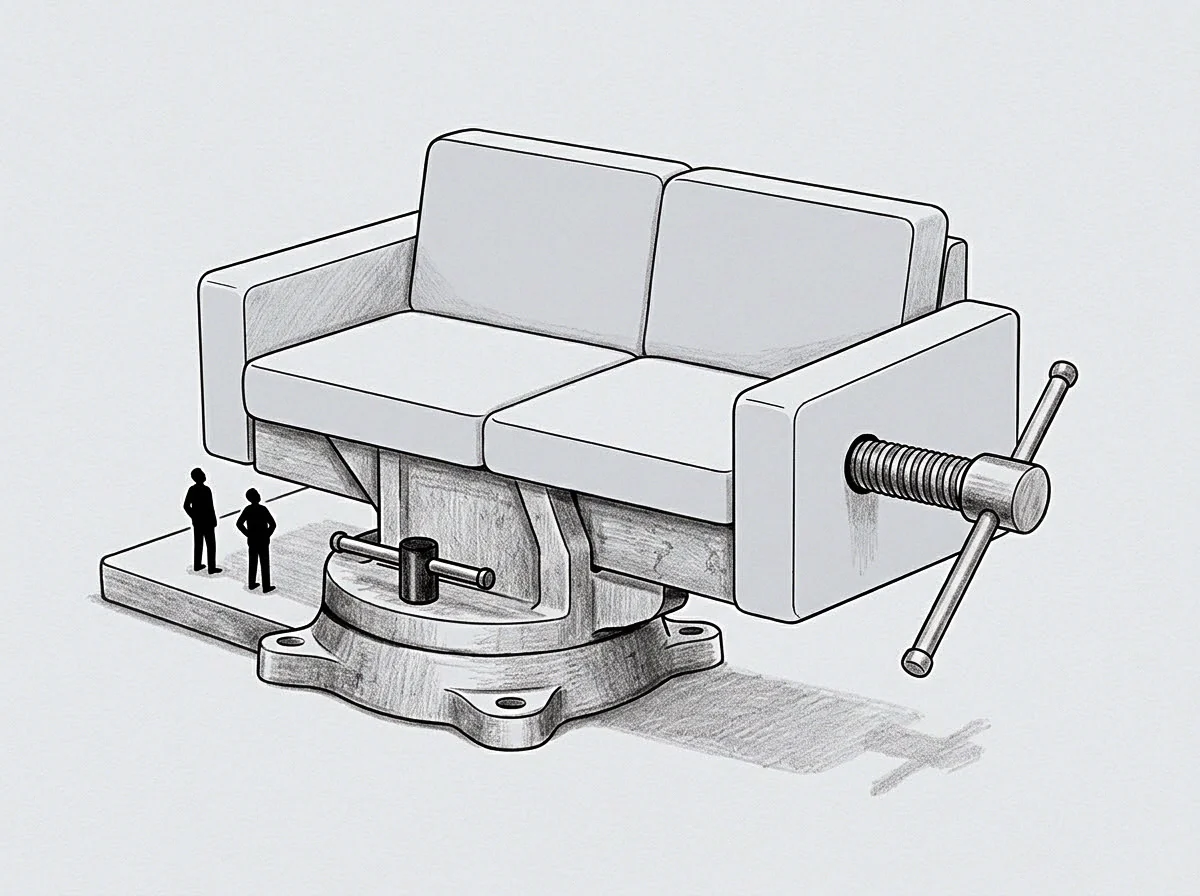
Workstation provisioning can be scaled down dynamically by repurposing high-spec physical machines across surviving core team members. Enterprise software terms, by contrast, shear liquidity away from productive assets unless actively severed or renegotiated. Engineering velocity governs survival.
Vendor concessions on monthly commitment floors protect organizational liquidity during deep revenue contractions.