
Trading Future Intellectual Capacity Against Immediate Commercial Liquidity Demands
Trading intellectual capacity for cash exchanges non-fungible future problem-solving agency for short-term liquidity, eroding proprietary advantage.

Toll
The invoice arrived on Monday. Payroll was due in four days, and the bank balance showed twenty-two thousand dollars against an immediate payroll obligation of fifty-eight thousand. An enterprise prospect offered a seventy-thousand-dollar payment on the single condition that the technical staff build a bespoke reporting pipeline tailored to the buyer’s legacy database.
The founder signed the agreement by dinner. Cash resolved the immediate deficit. Three senior engineers suspended work on the core algorithmic compiler to write custom data ingest scripts.
Trading future cognitive output for current cash is the standard survival motion of undercapitalized ventures. The exchange presents itself as a temporary bridging maneuver, an inconvenient pause in deep technical development that will supposedly resolve once cash flow stabilizes. That stabilization rarely restores what was surrendered.
When technical teams abandon autonomous research to fulfill client-specific deliverables, the organization incurs a qualitative drain: cardinal liquidity gained at the cost of an ordinal decline in problem-solving capacity.
When short-term liquidity deficits force bespoke service commitments, engineering attention shifts from foundational architecture toward client-specific patch deployment.

Immediate Cash Extraction Against Cognitive Reserves
Every commercial commitment exacts an operational tax on discretionary intellect. When capital reserves dwindle, the executive impulse prioritizes contracts that yield immediate deposits, regardless of how far those contracts diverge from the proprietary roadmap. The transaction appears balanced because fifty thousand dollars of incoming capital offsets fifty thousand dollars of operational burn.
That symmetry is deceptive. The capital arrives as a cardinal figure, easily tallied and spent, while the intellectual capacity surrendered lives on an ordinal vector that defies balance-sheet accounting.
A software engineering group capable of designing distributed storage protocols possesses a finite daily reservoir of high-order synthesis. Forcing that group to parse poorly documented client schemas degrades executive function. Lost momentum shows up immediately, but the deeper injury is the cognitive reconfiguration of the team.
Engineers trained on systemic breakthroughs adapt their working habits to short-cycle client appeasement. The venture survives the fiscal month by pawning the mental depth required to achieve structural independence.

The Mechanics Of Structural Diversion
Structural diversion operates through incremental contractual capture. A software company agrees to build one specialized connector for a major logistics partner to secure an upfront license fee. That single connector introduces unpredictable edge cases, necessitating continuous bug fixes, emergency patches, and weekly integration reviews.
Within two quarters, half the engineering roster functions as an outsourced technical department for the client.
The compromise looked minor initially. The contract met payroll during an acute capital squeeze, and the founders assumed original architectural research would resume once revenues crossed an arbitrary threshold. That threshold recedes as the maintenance overhead of the custom deployment expands.
The client consumes the team’s working memory through service-level agreements and urgent support tickets.
The external customer expects immediate answers because they paid for full engineering availability.
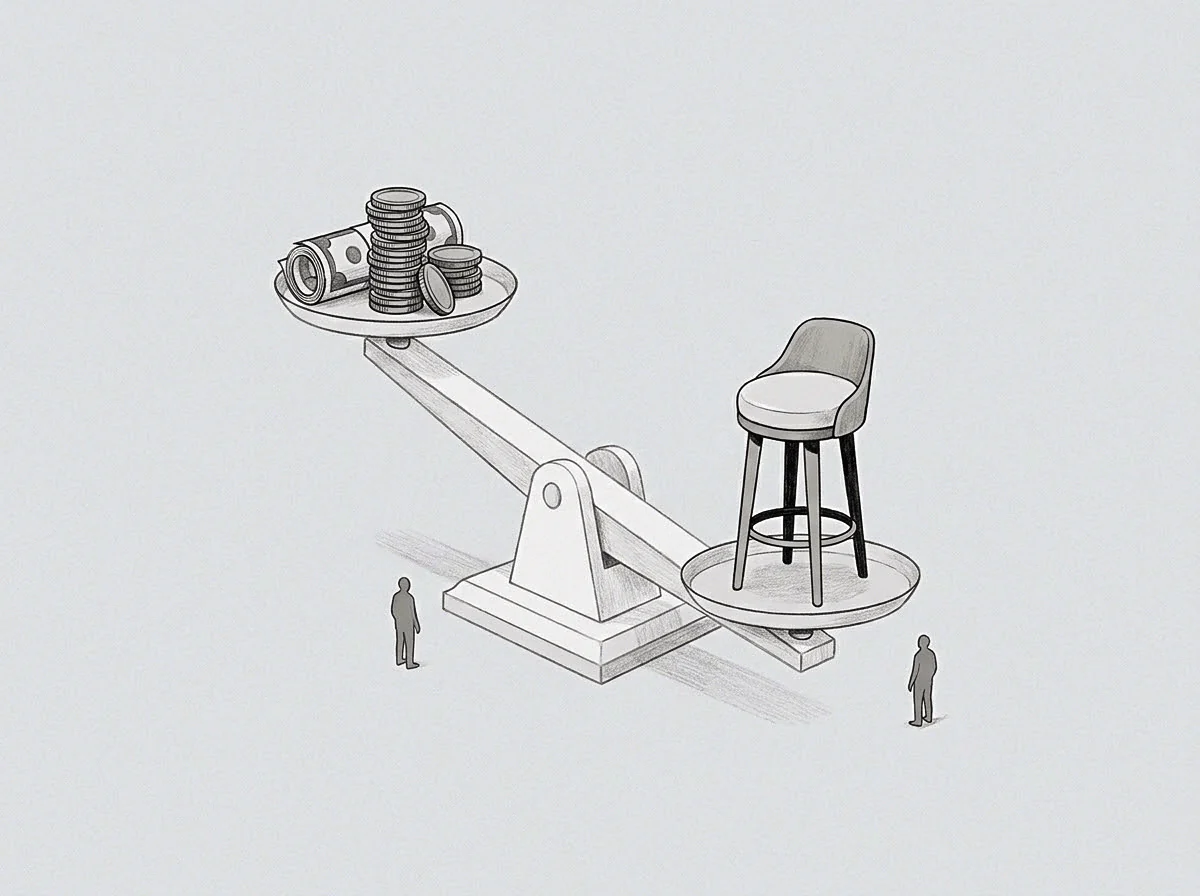
Shelf
Cognitive reserves behave like an inventory of perishable mental capacity. Unlike finished physical inventory sitting on warehouse racks, intellectual capacity decays when forced into trivial, repetitive loops. An engineering group cannot place its conceptual grasp of complex systems into cold storage while performing contract data entry for three months, expecting to retrieve that capacity pristine when the bank account recovers.
The mental models rust, conceptual context evaporates, and the technical edge dulls.
Complex synthesis requires uninterrupted continuity. Redirecting an enterprise’s best minds toward immediate commercial salvage jobs dismantles the analytical habits that produced the proprietary advantage. Experimental velocity collapses as the team writes custom connectors, consuming cognitive inventory to generate transactional margin and leaving the pipeline empty of novel work.
- Context fragmentation fractures unbroken working memory, forcing engineers to rebuild conceptual models after every client interruption.
- Domain narrowing constrains future software architecture to the peculiar legacy schema of a single external buyer, which permanently halts lateral product exploration across subsequent quarters.
- Cognitive exhaustion drains discretionary analytical energy. The team retreats into mechanical bug patching rather than inventing proprietary algorithms.

Cognitive Inventory Depletion Under Transactional Pressure
Studies on cognitive bandwidth under acute financial strain establish that resource scarcity imposes a persistent tax on executive control. Research evaluating decision quality across variable income cycles among agricultural producers demonstrates that pending financial shortfalls measurably reduce fluid intelligence, independent of physical stress or baseline education. That finding rests on longitudinal cognitive testing across harvest windows in rural agrarian populations.
The observed bandwidth reduction would fail to hold in technical environments if high-earning white-collar professionals possessed personal reserves that insulated their cognitive processing from corporate capital shocks. In practice, operational panic inside an undercapitalized venture produces identical bandwidth suppression. The fear of missing Friday payroll limits the executive horizon to twenty-four hours.
Under acute liquidity pressure, the founder and the engineering leads lose the capacity for abstraction. Every problem is evaluated solely through its ability to generate an invoice within ten business days. This operational panic consumes the shelf of latent intellectual property: the team stops asking how a system scales across ten thousand nodes, asking only how to satisfy the corporate auditor by Thursday morning.
A team occupied with urgent custom integrations ceases to formulate novel architectural hypotheses.

The Ordinal Drain On Problem Architecture
Technical capability exists on an ordinal scale where higher-order competencies subsume lower-order tasks. A team that can architect novel database engines can easily assemble client web interfaces, but the inverse is false. Reassigning high-order talent to low-order transactional tasks causes an atrophy of higher capabilities.
The capacity to hold twenty interdependent distributed systems variables in mind degrades rapidly without daily exercise.
The team loses the collective rhythm necessary to challenge deep architectural bottlenecks. Talented practitioners who joined the enterprise to solve difficult technical puzzles grow disillusioned by endless routine integrations, departing for environments that respect cognitive potential. The venture retains only those operators comfortable with repetitive maintenance.
The intellectual inventory on the shelf degrades from rare creative power to generic implementation labor.
Work directed by urgent invoices inevitably produces ordinary results.

Mortgage
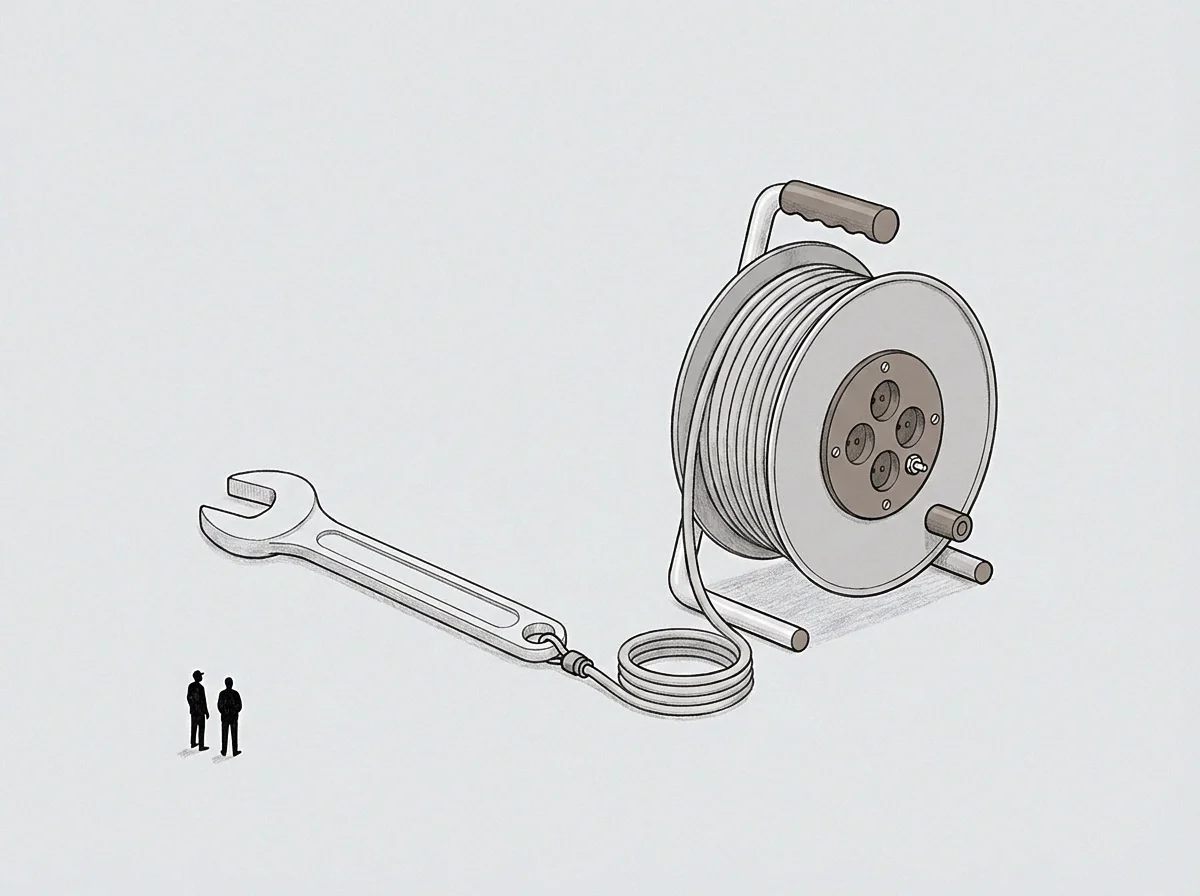
Encumbering future intellectual capacity mirrors a predatory real estate lien. The company receives a lump sum of immediate cash today, in exchange for signing away its future intellectual agency. The contract specifies hours, deliverables, and service milestones, yet the unstated collateral is the proprietary software roadmap itself.
Every milestone completed for a paying enterprise sponsor represents an asset lien against the company’s autonomous development.
The enterprise cannot pivot, explore novel markets, or refactor its codebase while chained to commercial deliverables. The mortgage payments are demanded in engineering sprints. When a founder realizes that the original product vision has become obsolete, the contractual commitments prevent the team from altering course.
The venture is legally and operationally pledged to execute another company’s roadmap.
Does Retainer Revenue Arrest Complex Problem Solving?
Retainer agreements create the illusion of financial security while quietly extinguishing transformative innovation. Empirical software engineering studies examining developer telemetry establish that task-switching and interruption lag introduce exponential completion delays into architectural refactoring. These findings rest on granular IDE logs and version control telemetry across hundreds of professional developers working in fragmented issue environments.
The observed productivity collapse would be invalidated if asynchronous development tools and automated test suites completely eliminated the resumption penalty of complex cognitive context. Modern development tooling has failed to eliminate that resumption friction. A software engineer switching between an enterprise client’s support tickets and a core compiler refactoring suffers an efficiency penalty that compounds across sprints.
The predictable recurring cash flow of an enterprise services retainer acts as an intellectual anesthetic. It dulls the urgency to build defensible, differentiated assets. The company prioritizes client happiness over systemic performance.
In heavy industrial manufacturing, shipbuilders facing capital shortfalls sometimes defer routine dry-dock machinery overhauls to push through immediate repair jobs for visiting merchant ships. That expedient choice clears short-term debts while quietly warping the yard’s primary dry-dock alignment over successive operating seasons. Commercial software development follows an identical structural pathology when client retainers consume all deep architectural cycles.
| Operational Route | Immediate Cash Realization | Intellectual Vector Trajectory | Long-Term Autonomy Impact |
|---|---|---|---|
| Bespoke Services Retainer | High and immediate | Declines toward client maintenance tasks | Severely restricted by custom SLAs |
| Dilutive Equity Capital | Moderate and delayed | Preserves full focus on core architecture | Reduced cap-table ownership |
| Extreme Operational Austerity | None, minimizes burn | Slowed but completely autonomous | Maintains uncompromised product ownership |
| Non-Dilutive Research Grants | Low to moderate | Maintains high technical ambition | Encumbered by academic milestones |

Encumbrance Rates Across Development Cycles
The rate of cognitive encumbrance accelerates as client codebases diverge from the main product branch. What begins as a single configurable module morphs into a hard fork. Engineers spend forty hours a week maintaining backwards compatibility for an outdated client installation.
The venture’s intellectual output is entirely consumed by debt service on past cash infusions.
Breaking this cycle requires terminating profitable service arrangements to liberate development bandwidth. Few leadership teams possess the discipline to walk away from predictable retainer cash to pursue speculative intellectual advancement. The mortgage becomes a perpetual servitude.
The venture survives as an agency wearing the marketing costume of a technology venture.
The contract specifies that all custom connectors become the client’s sole intellectual property upon delivery, leaving the developer with uncompensated operational overhead.

Draft
Consider a venture formed to develop an autonomous database engine, operating with six engineers on an initial seed fund. Assume the venture holds one hundred and twenty thousand dollars in cash reserves, with monthly operating expenses running at forty thousand dollars. Three months of runway remain before insolvency.
A regional financial institution offers a three-hundred-thousand-dollar contract to develop an automated fraud reconciliation module. The customer demands that four of the six engineers dedicate eighty percent of their daily time to the client’s internal compliance protocols for nine consecutive months.
Cash arrived on schedule. The company secures nine months of solvency without surrendering equity. Now observe the ordinal vector of technical capability over that duration.
The core database project requires novel distributed consensus algorithms, a problem demanding uninterrupted mathematical analysis and continuous iterative prototyping. Under the contract, the four assigned engineers spend their morning hours attending bank security reviews and their afternoons writing SOAP interfaces for mainframes.
Commercial liquidity bought with specialized engineering hours always consumes more intellectual capital than the invoice replaces.

A Model Of Bilateral Capability Conversion
The trade appears rational to an accountant observing the venture from outside. The cash balance rose from one hundred and twenty thousand dollars to four hundred and twenty thousand dollars, extending corporate existence by nearly a year. The hidden cost is the absolute arrest of proprietary capability accumulation.
The two unassigned engineers cannot advance the consensus engine alone because the architectural dependencies require full team synthesis. Autonomy slipped away week by week.
The exact velocity at which bespoke client code permanently suppresses technical generalization remains unquantified across software economics literature. When empirical data is incomplete, a prudent operator acts on qualitative indicators, establishing strict firewalls to prevent client projects from exceeding twenty percent of total engineering hours. In the absence of such boundaries, the venture becomes an outsourced integration shop.
The founders assume they are funding research via consulting, yet the consulting work devours the mental capacity needed to build the product.

Compounding Deficits In Architectural Autonomy
By month six of the nine-month arrangement, the financial institution requests specialized audit reporting tools. The four engineers are now deeply embedded in the client’s proprietary taxonomy. When the contract finally concludes, the team attempts to return to the distributed consensus engine.
They discover that the open-source software ecosystem has moved past their original design choices. Competitors have published papers solving the problems they abandoned nine months prior.
The four engineers suffer from cognitive fatigue and outdated conceptual frameworks. They possess deep expertise in a regional bank’s compliance rules, an asset with zero market value outside that specific institution. The three hundred thousand dollars has been spent entirely on salaries during the engagement.
The company stands in the same financial position as nine months earlier, but with depleted intellectual reserves and an obsolete technical premise. Recovering lost technical momentum is improbable once an engineering cohort’s baseline curiosity has been ground down by external compliance routines.
Margin
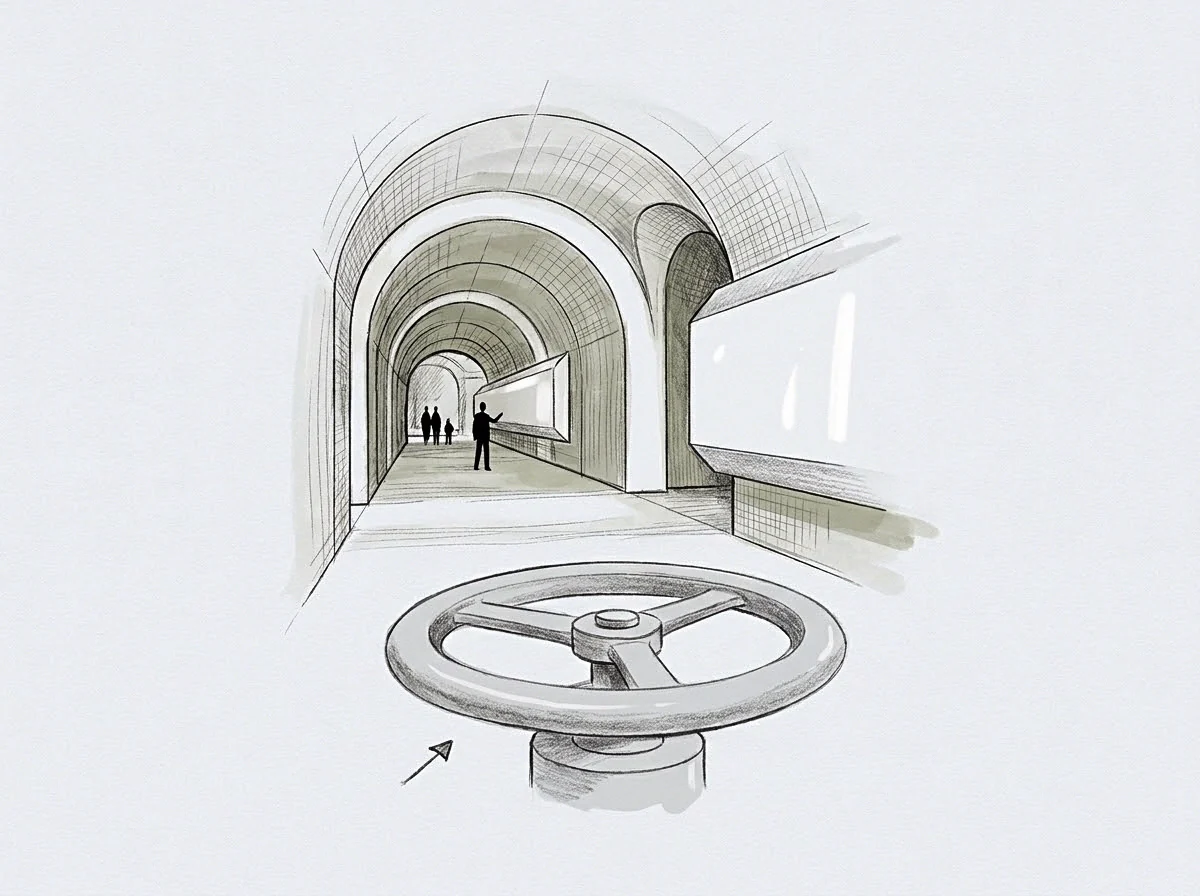
Protecting intellectual reserves during severe cash contractions requires absolute clarity regarding contractual boundaries. Founders must distinguish between harmless operational compromises and catastrophic cognitive surrenders. Taking on a simple marketing sponsorship or renting out excess office space preserves technical bandwidth.
Diverting senior technical talent into bespoke client engineering directly destroys the future intellectual engine of the firm.
When an enterprise must accept client funding to survive, it must construct rigid operational firewalls. Non-core contract work should be ring-fenced, executed by temporary contractors or junior developers, leaving the senior technical architects insulated from customer noise. If the client contract demands the direct involvement of core inventors, the price must reflect not merely standard hourly billing rates, but the operational penalty of intellectual stagnation.
A strict intellectual property reservation clause prevents client customisation requests from seizing underlying core software assets.

Preserving Autonomous Intellectual Reserves
Operational margins exist to defend thought from interruption. When an organization eliminates its slack to squeeze out short-term cash flow, it burns its seed corn. Great architectural breakthroughs do not occur during back-to-back client escalations.
They happen in the quiet intervals between development cycles, when engineers possess the mental freedom to explore non-obvious optimizations and experiment with unproven concepts.
Leadership that fails to defend this buffer ends up operating an undifferentiated service business. The economic rewards in modern industry flow disproportionately to owners of scalable, proprietary assets, not to vendors of hourly implementation labor. Preserving intellectual capacity is an aggressive commercial imperative.
When cash demands threaten to overwhelm the team, the operator must treat cognitive attention as the scarcest, most irreplaceable asset in the enterprise.
- Explicit intellectual carveouts separate client deliverables from internal foundational algorithms, barring custom logic from polluting the proprietary repository.
- Hard hourly ceilings restrict billable client obligations to twelve hours per engineer each week. This protects uninterrupted research blocks.
- Mandatory sunset provisions terminate bespoke maintenance agreements after six months, restoring full focus to core product synthesis.
Contractual Firewalls For Engineering Attention
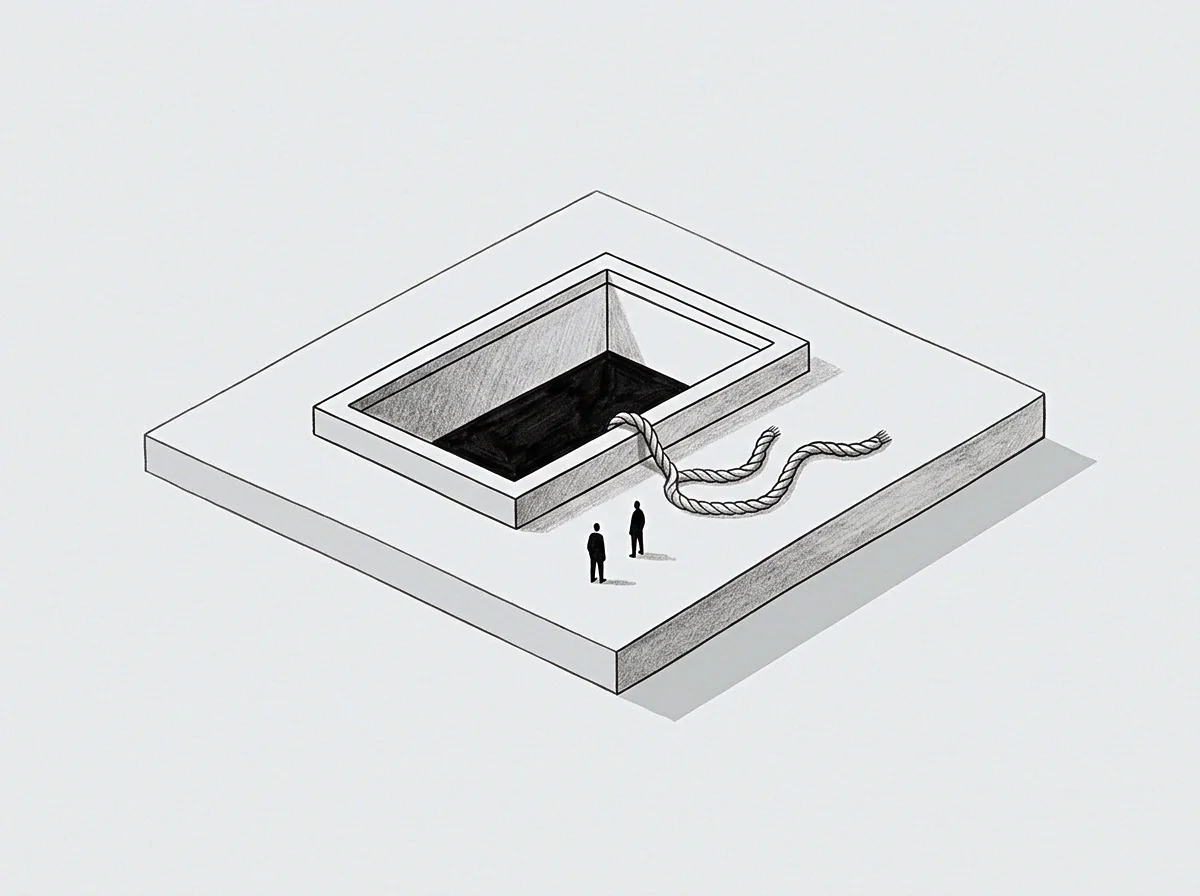
Implementing legal firewalls protects the development team from scope creep. A well-constructed commercial contract limits the number of weekly meetings, defines exact acceptance criteria, and penalizes the customer for operational disruptions. If the customer requires custom configuration, they must supply their own integration staff.
The venture provides an API, not an outsourced workforce.
Refusing to establish these boundaries results in the complete liquidation of the venture’s innovative potential, transforming promising technical enterprises into hollowed-out service appendages that perish the moment their single anchor client terminates the agreement.