
Reading Signal Drift Over Long Windows in Unfamiliar Operating Environments
Signal drift over long windows is detected by introducing active perturbations into the system to verify that reporting instruments compute rather than cache.
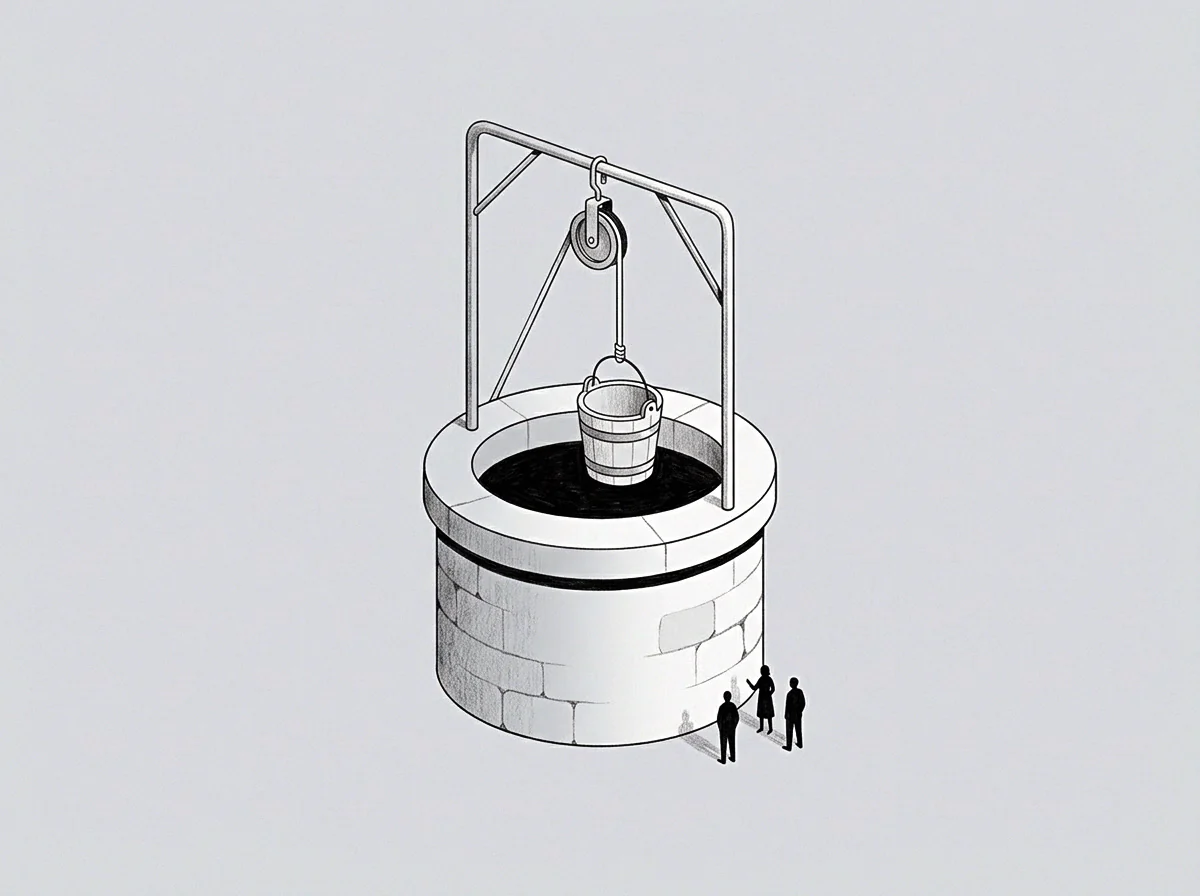
Sensor
An instrument operating in unfamiliar territory records numbers that look like stability while the environment silently moves underneath it. A machine monitoring pressure inside a deep-sea borehole registers nominal resistance because the sensor membrane has hardened rather than because the surrounding formation holds steady. The output stays steady while the physical fact decays.
The operator reading the display accepts the calm dial as confirmation of health. In unfamiliar operating environments, an unchanging reading over a long observation span represents the primary indicator of failure rather than proof of equilibrium.
A reference class provides the baseline against which a reading gains meaning. Moving outside established boundaries strips that reference away. When an operator records thirty daily observations showing flat adoption or stable latency in a new market, that flat line carries ambiguous information.
The measurement apparatus might be capturing real continuity. Alternatively, the collection method has detached from the underlying phenomenon. The cached interpretation treats stability as safety because safety looked like stability in the preceding environment.
A reading that refuses to vary across uneven conditions exposes the failure of the gauge rather than the stability of the terrain.
Differentiating sensor degradation from genuine system stillness demands an input that forces variance. A live computation responds when the surrounding conditions shift, producing a corresponding alteration in recorded values. A cached response returns identical values regardless of environmental perturbations.
When seasonal traffic drops forty percent across an entire territory while conversion tracking records zero change in buyer behavior, the measurement loop has separated from the world.

Perturbation Tests for Latent Failure
Detecting sensor detachment across long spans involves active probe insertion. The operator introduces a known, artificial variance into the operating system and tracks its propagation to the recording dashboard. Failure to register the artificial disturbance demonstrates that the reporting instrument has frozen.
- Artificial impulse testing verifies that an intentional five-percent drop in upstream catalog inventory generates an immediate alteration in category checkout velocity within twenty-four hours.
- Counter-phase verification uses an inverted operational schedule across alternate locations to demonstrate that recorded engagement reflects local rhythms rather than automated query scripts.
- Secondary witness telemetry introduces an independent, uncalibrated observer alongside primary monitors to determine whether sudden divergence exposes decay in the legacy gauge.
Long spans amplify small errors in zero-point calibration. A sensor that drifts upward by a tenth of a percent each week generates an impressive growth narrative over eighteen months while underlying volume contracts. The error accumulates invisibly because local observers evaluate the week-on-week change, which sits inside the margin of noise.
Trust belongs to the rate of response to external shocks rather than to the smooth surface of the trend line.
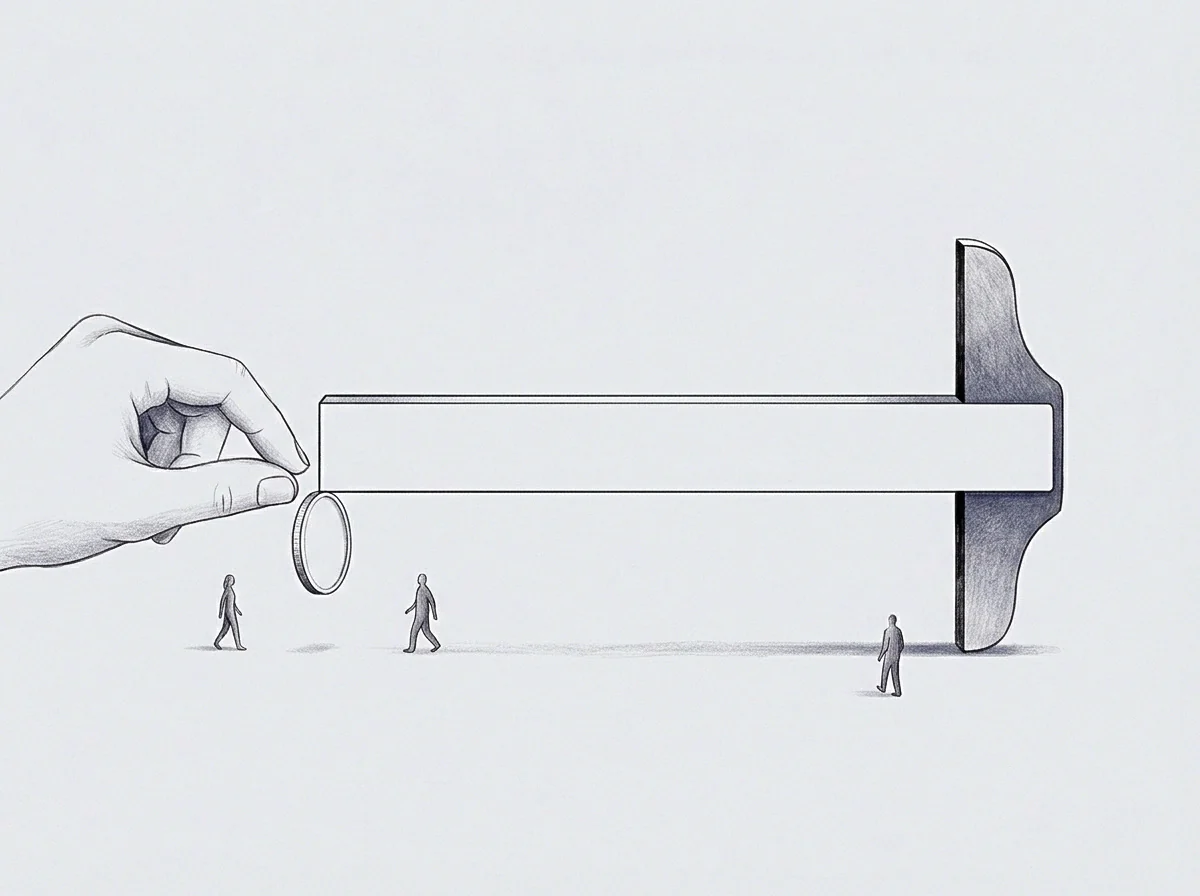
Horizon
Time distorts feedback loops by uncoupling an action from its visible consequence. In a compact window of two weeks, a price increase produces immediate transactional data: either buyer volume drops or revenue expands. In a window stretching past eighteen months within a foreign regulatory jurisdiction, the early data often stays tranquil while secondary institutional effects slowly organize.
The delayed response registers as consent until the full legal consequence arrives at once.
Consider an overseas logistics expansion planned on an eight-quarter observation window. The local operator records steady shipping turnaround times through the first four quarters, reporting operational parity with home facilities. The home baseline rested on predictable municipal maintenance schedules, standard labor turnover, and uniform equipment replacement lead times.
In the new environment, parts inventories deplete over twelve months without domestic replenishment options. The primary operational metrics show zero stress through month eleven because existing spare components absorb daily wear. In month thirteen, the stock hits zero, turnaround times triple in six days, and emergency air freight consumes the operational margin for the entire year.
A long window hides consumption of unmeasured reserves. The machinery continues producing output while its components wear down, generating steady operational signals until the precise point of structural break. The operator mistook the consumption of inherited slack for sustainable operational velocity.

Attenuation of Distant Consequences
Signals weaken across time through intermediate filtering layers. Local managers translate ambiguous operational strain into reassuring corporate summaries before sending reports across operational divisions. The translation removes the qualitative friction: the awkward conversation with local port directors, the informal payment delays, the unwritten labor disputes.
What reaches executive desks is a cardinal metric stripped of its ordinal context.
A metric severed from qualitative friction converts slow operational depletion into sudden catastrophe.
The field demonstrates that organizations under-predict the variance of multi-year outcomes when working without local historical distributions. Estimators default to their domestic baseline, treating the unfamiliar territory as a minor adjustment on a solved equation. The real distribution contains fatter tails, structural bottlenecks, and discontinuous regulatory jumps.
Relying on short-cycle confidence inside a long-window commitment leaves an organization exposed to sudden systemic insolvency when the unmonitored baseline shifts beneath the capital allocation.
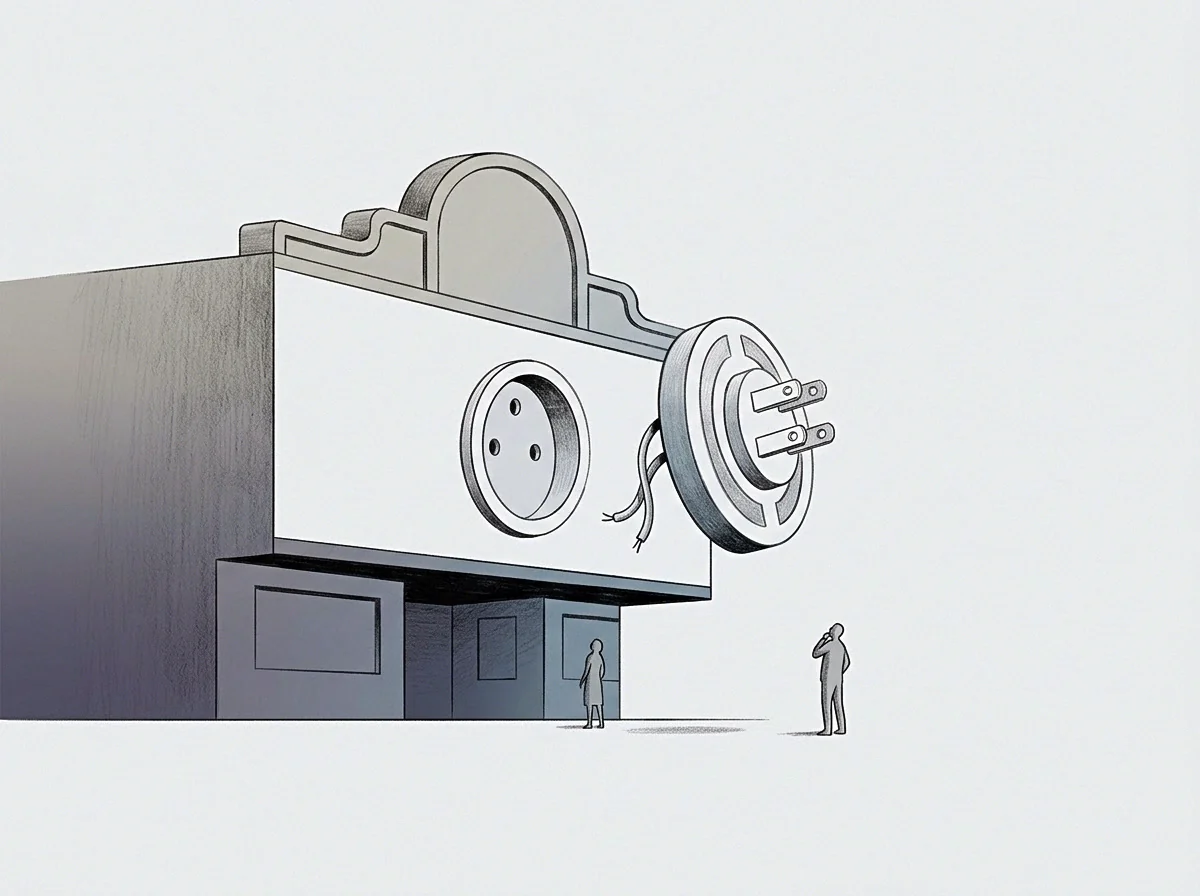
Seat
The person occupying the operating chair determines what information enters the recording record. An executive placed in an overseas territory on a three-year rotational assignment faces incentives distinct from an owner whose capital remains tied to the entity indefinitely. The rotational operator requires smooth cardinal metrics that demonstrate linear progression during their specific tenure.
Adverse ordinal shifts that mature in year four impose zero personal professional penalty on the temporary occupant.
Observation bias in prolonged projects stems from this alignment mismatch. The occupant selects indicators that show rapid initial settlement. When vendor disputes emerge over local licensing, the operator reclassifies recurring operating costs as one-time setup expenses to preserve operational margins on paper.
The dashboard reports compliance. The ground reality accumulates unresolved claims that the next occupant will inherit.
The table below examines how operational indicators behave depending on whether the monitoring window aligns with a temporary seat or an indefinite operational horizon.
| Signal Domain | Two-Year Rotational Horizon | Ten-Year Capital Horizon | Observed Failure Mode |
|---|---|---|---|
| Vendor relations | Price concessions secured via delayed payment terms | Contract stability secured via predictable payment schedules | Suppliers cut delivery priority during local material shortages |
| Regulatory compliance | Informal waivers accepted to maintain monthly schedule | Statutory filings completed through formal administrative channels | Unrecorded tax assessments surface three fiscal periods later |
| Workforce retention | Overtime deployed to mask baseline attrition rates | Apprenticeship buffers maintained to stabilize skill transfer | Institutional memory disappears when key leads depart simultaneously |
| Infrastructure wear | Preventative maintenance intervals deferred to cut current expense | Routine maintenance executed on mechanical run-hour schedules | Catastrophic machine failure halts facility output unexpectedly |
Power over the reporting instrument alters the instrument itself. When headquarters requests confirmation that local operations match home-office cultural norms, the person in the seat edits out the informal compromises that keep local distribution moving. The resulting documentation portrays an operation running on domestic rules.
In reality, survival depends on an intricate web of personal relationships that the formal structure does not recognize. The home office reads its own reflection rather than the operating environment.
They told us our numbers looked acceptable right up until the facility stopped shipping.

Vector
Direction of travel carries greater operational information than instantaneous magnitude. A division reporting ten million dollars in annual recurring revenue seems robust when viewed in isolation. When that figure sits at the end of a trajectory that fell from twenty million across eight quarters, the ten million indicates distress.
In unfamiliar territories, operators routinely mistake cardinal position for vector health. They evaluate where the company stands today rather than computing the rate and acceleration of the baseline drift.
Computing an accurate delta requires an unambiguous reference zero. In established domestic settings, that zero is anchored by thousands of comparable enterprises operating under identical legal, tax, and labor frameworks. In an unfamiliar market, the reference zero must be built from observed transactions over time.
A common error involves adopting the domestic zero-point as an absolute standard, which causes the analyst to misread the delta entirely.
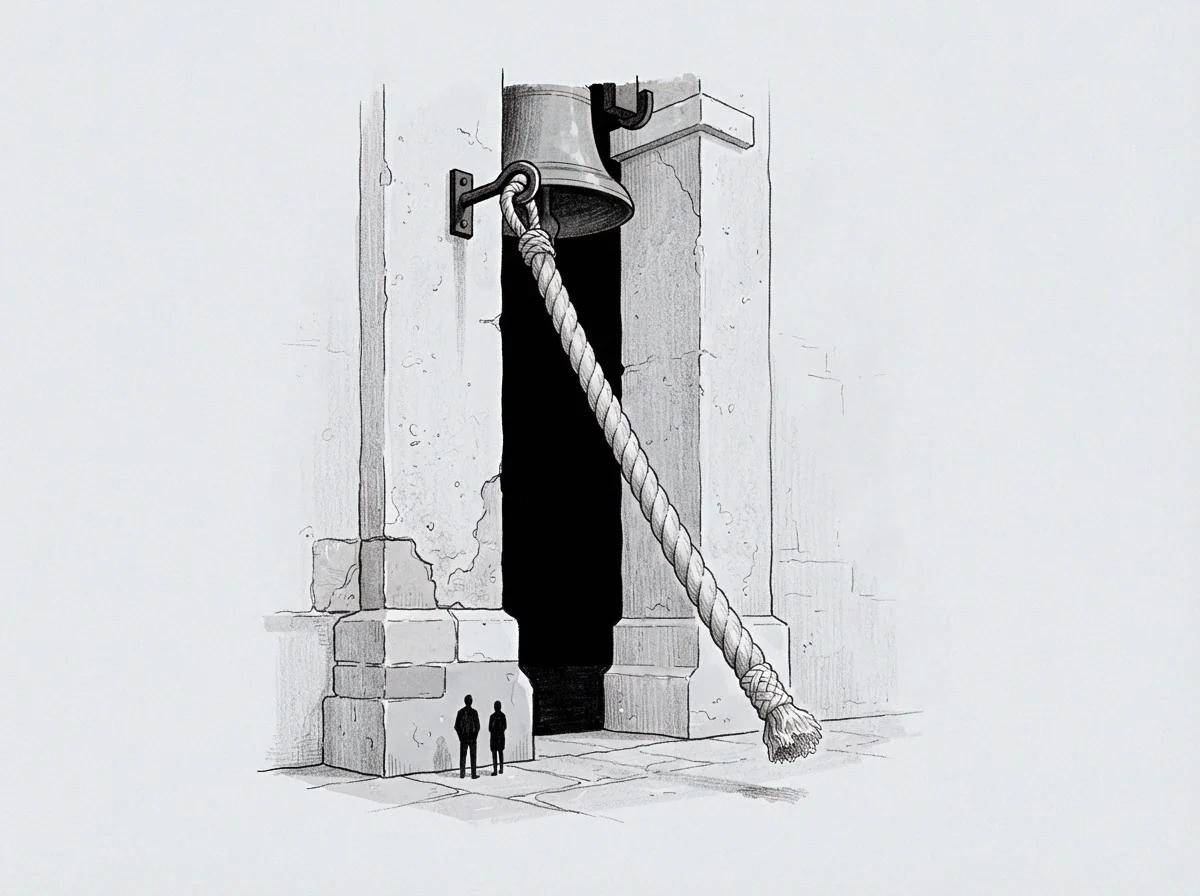
Separating Signal From Structural Noise
Every operational territory possesses ambient fluctuations. A thirty-percent variance in delivery timing represents a crisis in central Germany; the identical swing represents Tuesday morning in coastal West Africa. Evaluating an unfamiliar environment through imported thresholds generates endless false alarms or disastrous complacency.
- Local ambient noise mapping records raw operating variation across an initial six-month period without intervention to calculate baseline environmental volatility before setting performance targets.
- Relative velocity tracking measures company progression against the average transaction speed of local peer organizations rather than against domestic headquarters milestones.
- Ordinal strain scoring monitors the non-monetary effort required to complete standard administrative transactions over time to detect rising systemic resistance before it impacts monetary ledgers.
The operational environment operates as an active system that responds to corporate presence. Entering a market changes supplier pricing behavior, alerts domestic competitors, and alters local wage demands. The baseline is never static.
Tracking vector delta means accounting for the background displacement caused by the organization itself.
A contract clause that ties capital replenishment strictly to cardinal revenue milestones without adjusting for sovereign currency depreciation converts an operational success into an automatic equity liquidation.

Ground
Grounding an abstract metric in physical reality protects against dashboard drift. The desk that tracks server load, sales volume, and customer acquisition costs from thousands of miles away can easily drift into hallucinated stability. The figures balance.
The charts show orderly curves. Yet out on the loading dock, pallets sit unpackaged under leaking warehouse tarps because the regional transport union called a quiet work slowdown that the local reporting software classifies as standard transit buffer.
Physical reality possesses no caching mechanism. A tangible object is either on the truck or on the floor. Steel either holds the specified load or bends under tension.
When operational telemetry conflicts with the physical state of the equipment, the physical state is correct every time. The operator who refuses to walk the floor inevitably falls victim to administrative fiction.
A discipline peer offers protection against cached corporate interpretations. An internal observer shares the firm’s specific blind spots and corporate vocabulary. A discipline peer from outside the organization, possessing deep exposure to the local operating terrain, looks at the identical balance sheet and loading manifest and immediately spots the missing costs.
They recognize that an unstated customs processing line item represents an upcoming administrative halt rather than operational efficiency.
A physical inspection of material inventory punctures the comforting narrative generated by automated operational reporting.
Calibrating judgment in an unfamiliar environment demands repeated contact between prediction and outcome. The operator states an operational forecast in unambiguous terms, documents the baseline, waits for the observation window to close, and compares the forecast to physical facts. Speed in generating an answer often signals memory retrieval rather than genuine situational computation.
When a complex environmental question receives an instantaneous, confident reply, the responder is almost certainly consulting a domestic mental model that does not map to the ground beneath their boots.
A prolonged project in an alien operating domain consumes capital, focus, and human endurance. The primary risk is quiet drift: the slow, unrecorded divergence between what the dashboard displays and what the operational environment enforces. Countering that drift requires constant calibration against tangible physical evidence, deliberate perturbation of dead-end reporting channels, and the humility to build a fresh reference class from ground-level reality rather than relying on inherited domestic certainty.