
Calculating Baseline Friction and Fixed Overhead Limits Across Scale Downsizing
Baseline friction is calculated by isolating invariant fixed overhead from volume-dependent variable costs to establish the minimum expenditure floor.
Rig
Operational contraction exposes an asymmetrical relationship between throughput volume and structural cost. When revenue or workload contracts by half, total operating expenses rarely follow the identical line. Variable expenditure drops in direct step with volume, while the foundational architecture retains its absolute cost mass.
The baseline friction coefficient measures the energy consumed simply to hold an enterprise open, independent of active customer transactions or expansion targets.
Calculating this friction requires isolating variable inputs from invariant commitments. Standard financial statements mask structural drag by allocating overhead across units of output. In a contracting environment, output drops faster than administrative commitments expire, causing unit costs to climb even as total activity declines.
Isolating the real operational baseline demands removing volume-dependent vendor fees, project-based labor, and transaction charges to reveal the permanent expenditure floor.
The mathematical representation of baseline friction operates along a clear axis. Let total operating cost be defined as the sum of variable friction multiplied by volume plus the fixed overhead limit. As volume approaches zero, the cost curve flattens into an absolute floor.
This floor represents the structural drag of the corporate container itself.
The baseline friction coefficient measures the minimum energy expended to maintain operational readiness at zero transaction volume.
An operator calculating scale contraction calculates two distinct slopes. The first slope traces the reduction of variable input costs per unit of reduced output. The second slope maps the rising ratio of fixed costs against the reduced base.
Where these lines cross marks the structural limit of effective downsizing.
Attempts to force contraction below this structural limit generate immediate system drag. Processing speeds drop, administrative loops multiply, and core leadership capacity converts into maintenance effort. Corporate entities retaining high fixed overhead during volume drops experience rapid liquidity depletion through unabsorbed baseline drag.

Toll
Fixed overhead consists of obligations bound to time rather than activity. Commercial real estate leases, statutory filing requirements, core infrastructure maintenance, and regulatory compliance fees exist regardless of transaction velocity. Reductions in team headcount or client count leave these structural obligations untouched until contract terms lapse or assets are liquidated.
Calculating fixed overhead limits requires mapping every absolute commitment against its termination horizon. A six-month severance liability behaves differently from a three-year lease commitment. Categorizing these obligations by time to unwind reveals the true velocity at which downscaling can occur without triggering insolvency penalties.
When an organization contracts, the proportion of leadership attention absorbed by fixed obligations increases. Administrative drag operates as a constant mass. Reducing operational volume without altering this mass concentrates administrative overhead onto a smaller revenue base, shifting focus from core value generation to system maintenance.
Fixed structural commitments define the absolute floor beneath which operational downscaling creates immediate system failure.
- Invariant Asset Commitments long term real estate leases, heavy machinery debt service, and specialized facility maintenance fees that require formal legal restructuring to discharge.
- Regulatory Compliance Baseline mandatory statutory filings, annual independent auditing requirements, minimum corporate counsel retainers, and regulatory licensing fees.
- Core Infrastructure Overhead persistent software system licensing, foundational network hosting hosting fees, and data retention storage charges required to keep company records operational.
- Contractual Severance Liabilities accrued employee termination entitlements, executive buyout agreements, and contractor notice period penalties triggered by workforce contractions.
Mapping these commitments establishes the physical boundaries of contraction. Downsizing within existing boundaries reduces operational velocity without releasing structural capital. Realizing true efficiency gains through scale downscaling demands targeted elimination of fixed assets before variable reductions exhaust liquidity reserves.
Preserving fixed structural commitments while stripping variable operational capacity inevitably accelerates capital burn.

Drain
Take an enterprise operating at twenty million dollars in annual expenditure with a sixty percent variable cost component and a forty percent fixed overhead floor. Assume market demand drops by fifty percent over a single quarter, forcing an immediate operational restructuring. The operator faces two distinct structural moves: proportional variable reduction or immediate fixed structural liquidation.
Proportional reduction leaves the eight-million-dollar fixed overhead intact while cutting variable expenditure from twelve million dollars to six million dollars. Total expenditure drops to fourteen million dollars against ten million dollars in remaining revenue, leaving a four-million-dollar annual deficit. The system suffers from unabsorbed baseline friction, burning cash despite a fifty percent cut in variable operations.
Structural liquidation targets the underlying overhead container itself. The operator vacates leases, terminates enterprise software contracts, and consolidates regulatory entities, reducing the fixed overhead floor from eight million to four million dollars. This move realigns the cost structure with reduced volume, restoring operating balance at the lower scale.

Where Do Fixed Operational Commitments Set the Scale Floor?
The table below compares the structural metrics of an enterprise across three distinct scale configurations, illustrating how baseline drag intensifies when fixed overhead remains unadjusted during scale downsizing.
| Operational Configuration | Variable Cost Ratio | Fixed Overhead Floor | Baseline Drag Index | Structural Liquidity Runway |
|---|---|---|---|---|
| Peak Scale (Base Case) | 0.60 | $8,000,000 | 0.40 | 24 Months |
| Unadjusted Downsize | 0.30 | $8,000,000 | 0.80 | 7 Months |
| Structurally Amputated Core | 0.30 | $3,500,000 | 0.35 | 18 Months |
The comparative data highlights the structural wall. An organization that cuts variable headcount while retaining its original infrastructure doubles its Baseline Drag Index. The cost of carrying legacy container capacity eats through liquid reserves three times faster than a fully amputated core model.
Unabsorbed fixed overhead acts as a compounding tax on remaining operational throughput during downscaling events.
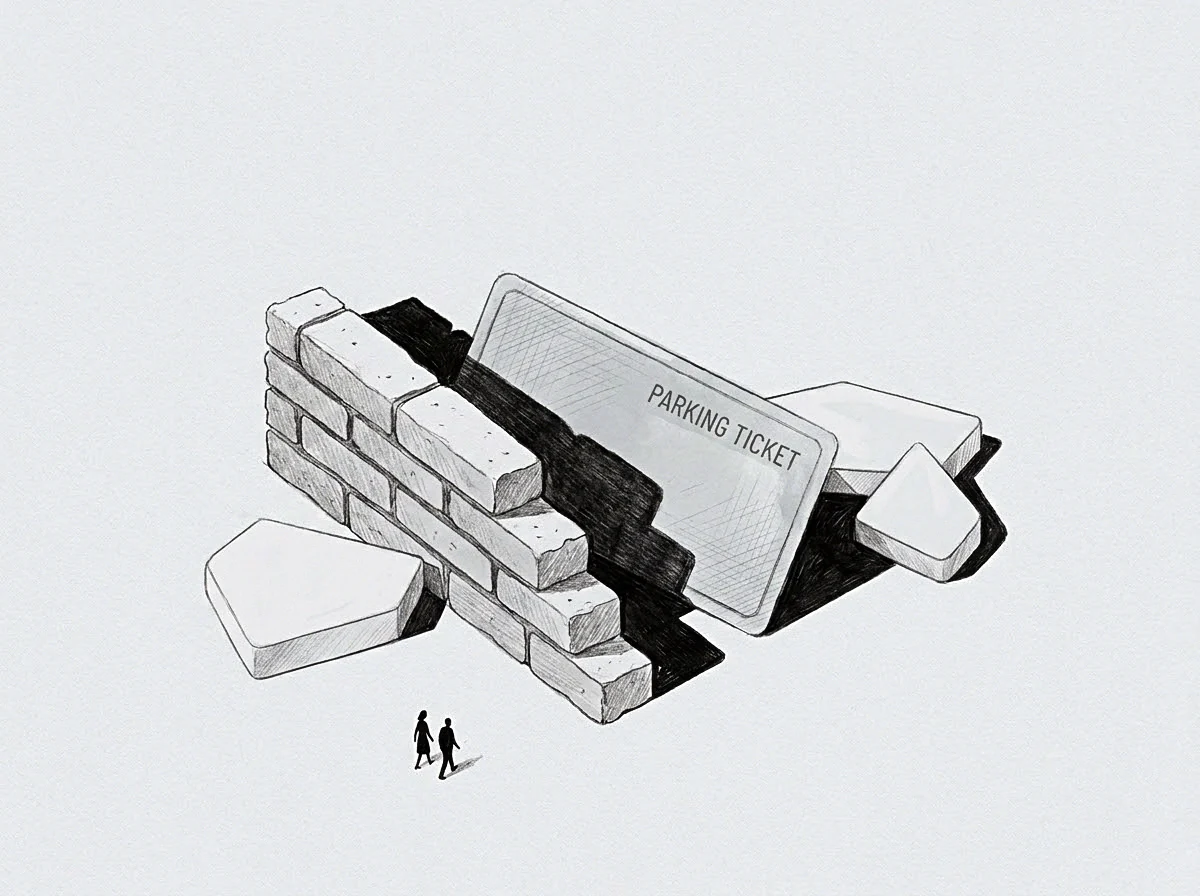
The lease terms forbid early termination without full payment of the remaining term capital.
Mass
Systemic drag escalates exponentially when administrative processes designed for high volume survive into reduced operations. Processes require governance loops. Approvals, compliance checks, reporting cycles, and status updates consume constant energy regardless of the transaction values moving through them.
In a downscaled entity, these loops consume a higher fraction of total human effort.
Downscaling requires process elimination alongside headcount reduction. Retaining big-company governance on a small-company operational base creates severe operational gridlock. The energy spent reporting on operations rivals the energy spent executing them.
Calculating residual process drag involves auditing the path of a single work unit through the organization. The operational gradient tracks the ratio of active processing time against administrative wait time.
- Count every individual approval required to execute a operational purchase order under the reduced scale regime.
- Measure the total elapsed calendar days spent waiting for internal sign-offs against actual work execution hours.
- Calculate the ratio of compliance documentation hours to direct customer delivery hours across all operational units.
- Identify legacy reporting routines that feed no active decision making loops within the contracted management structure.
Eliminating process mass demands setting structural thresholds. Operational parameters define the exact boundary where administrative friction overrides functional utility.
Contracts containing explicit minimum volume clauses alter the baseline friction formula by converting variable vendor expenses into absolute fixed obligations once volume drops below the threshold.

Span
Downscaling completes when the baseline friction matches the operational scale. The new model establishes its boundary where fixed overhead fits entirely within baseline transaction yields. Operating at this baseline demands continuous monitoring of structural drag indicators to prevent overhead expansion from creeping back into the reduced container.
Discomfort during downscaling signals active structural realignment. The friction experienced while breaking established operational patterns measures the energy needed to reset organizational habits. Maintaining a lean structural footprint requires declining non-essential commitments that add persistent fixed costs to the baseline.
The contracted system operates with higher clarity and lower structural drag. Fixed overhead limits set a firm boundary for long term sustainability, preserving execution velocity at reduced scale.