
Evaluating Boundary Shifts in Anisotropic Operational Trajectories Under Non Gaussian Noise
Boundary shifts in anisotropic trajectories occur when non-Gaussian noise drives state vectors along coordinates of lowest directional restitution.
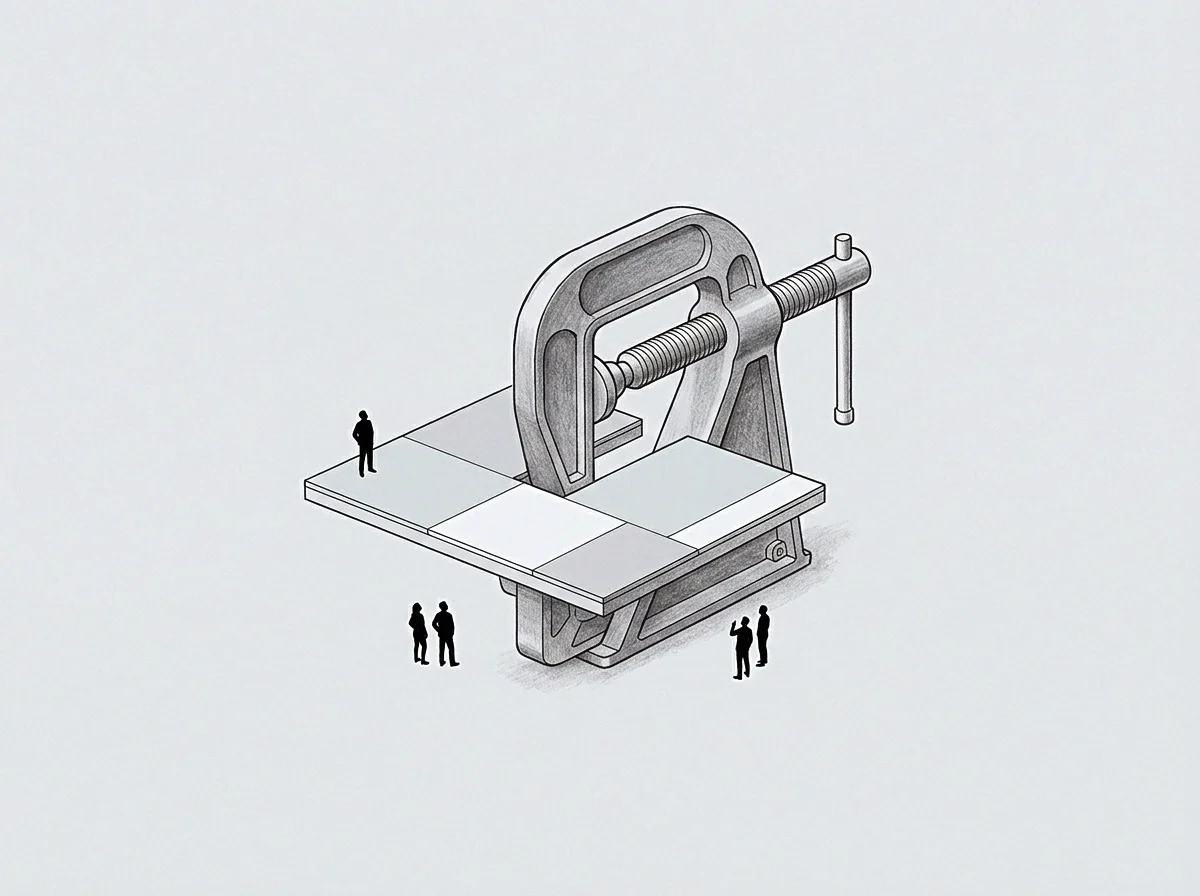
Margin
An operator tracking capital allocation across two divergent operational corridors observed a persistent displacement between projected throughput and realised settlement. While nominal volatility metrics showed parity, the execution perimeter drifted outward along the capital-intensive corridor at twice the rate of the labour-intensive one. Standard linear Gaussian assumptions predicted symmetric expansion around the nominal trajectory.
In practice, non-Gaussian shocks, specifically heavy-tailed demand spikes and asymmetric vendor delays, deformed the viable operating boundary into an eccentric ellipse.
Operational trajectories inhabit anisotropic state spaces where sensitivity to disturbance varies by directional axis. A perturbation along the inventory axis carries a linear carrying cost, whereas an equivalent shift along the regulatory compliance axis triggers exponential administrative friction. When external disturbances follow skewed, high-kurtosis non-Gaussian distributions, probability mass concentrates in extreme tails that hit these directional sensitivities unevenly.
A trajectory under heavy-tailed disturbance deforms along its softest directional stiffness long before nominal variance thresholds indicate instability.
Evaluating boundary shifts requires mapping how the viable envelope drifts away from nominal steady-state coordinates. This boundary marks the point beyond which recovery requires irreversible capital destruction or contractual default. Operators evaluating these transitions measure spatial deformation across each operational dimension, isolating where non-Gaussian kurtosis accelerates boundary erosion.
Boundary evaluation proceeds by calculating directional persistence rather than aggregate variance.
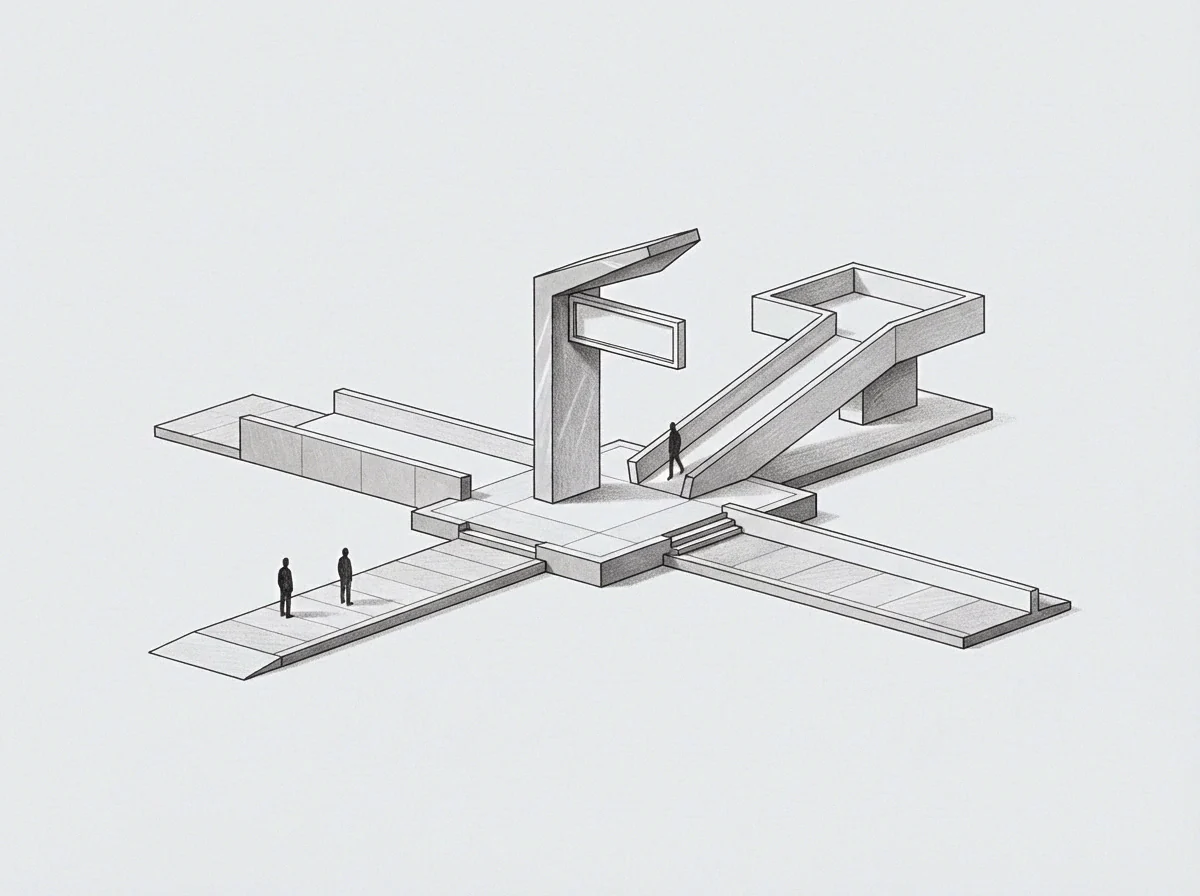
Track
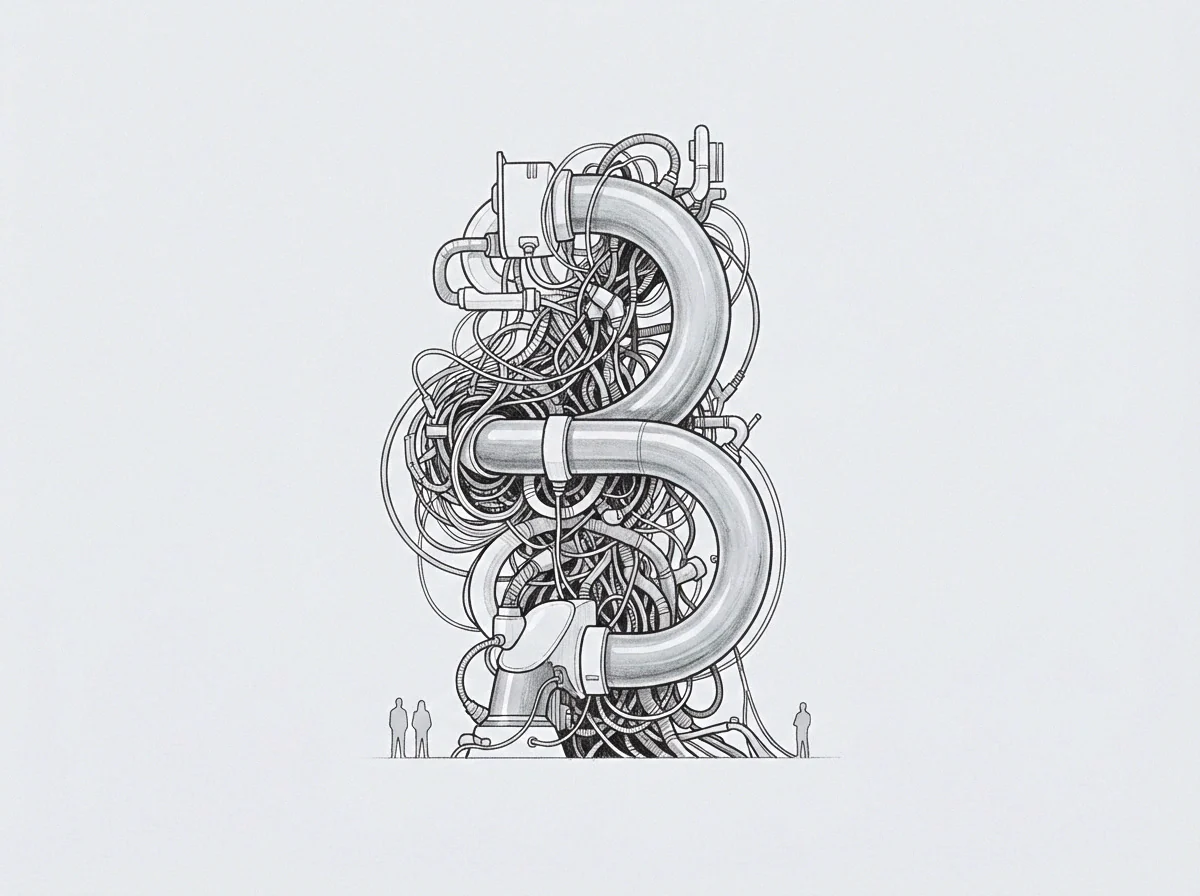
Directional Resistance Along Skewed Paths
Every operational track has distinct directional stiffness coefficients. In an automated supply pipeline, processing speed adjusts smoothly across nominal throughput fluctuations, while liquidity buffers absorb supply chain shocks through rigid, discontinuous capacity limits. When noise arrives as an asymmetric jump process, the operational point drifts toward the axis of lowest restitution.
The state vector moves along the path of least instantaneous resistance, accumulating latent exposure near constraints that look distant under Gaussian averages. A series of small positive inventory shocks maintains nominal stability, but a single negative liquidity shock of identical magnitude pushes the state vector across the solvency boundary. This asymmetry in system response alters the effective perimeter of viable operations.
A stated capacity limit loses operational validity when asymmetric shock arrival rates exceed system recovery velocity.
Tracking the operational envelope requires continuous measurement of the displacement vector against anisotropic resistance fields. The evaluation isolates three structural zones within the state space:
- Stable Restoration Zone defines the coordinate space where directional restitution forces exceed maximum instantaneous tail disturbances, allowing the trajectory to return spontaneously to the reference attractor without external capital intervention.
- Metastable Creep Corridor marks the region where asymmetric drag slows recovery velocities below disturbance arrival rates, causing the trajectory to drift systematically toward structural constraints.
- Irreversible Boundary Margin establishes the terminal coordinate threshold where operational momentum depletes remaining recovery reserves, converting temporary deviation into permanent capacity liquidation.
The system operator monitors time spent inside the metastable creep corridor. Extended dwell time there indicates boundary degradation even when no single shock breaches nominal tolerance limits. Continued drift toward the lower restitution axis signals that internal damping mechanisms have saturated under non-Gaussian load.
The buffer was sized for average cycle volatility rather than clustered settlement delays.
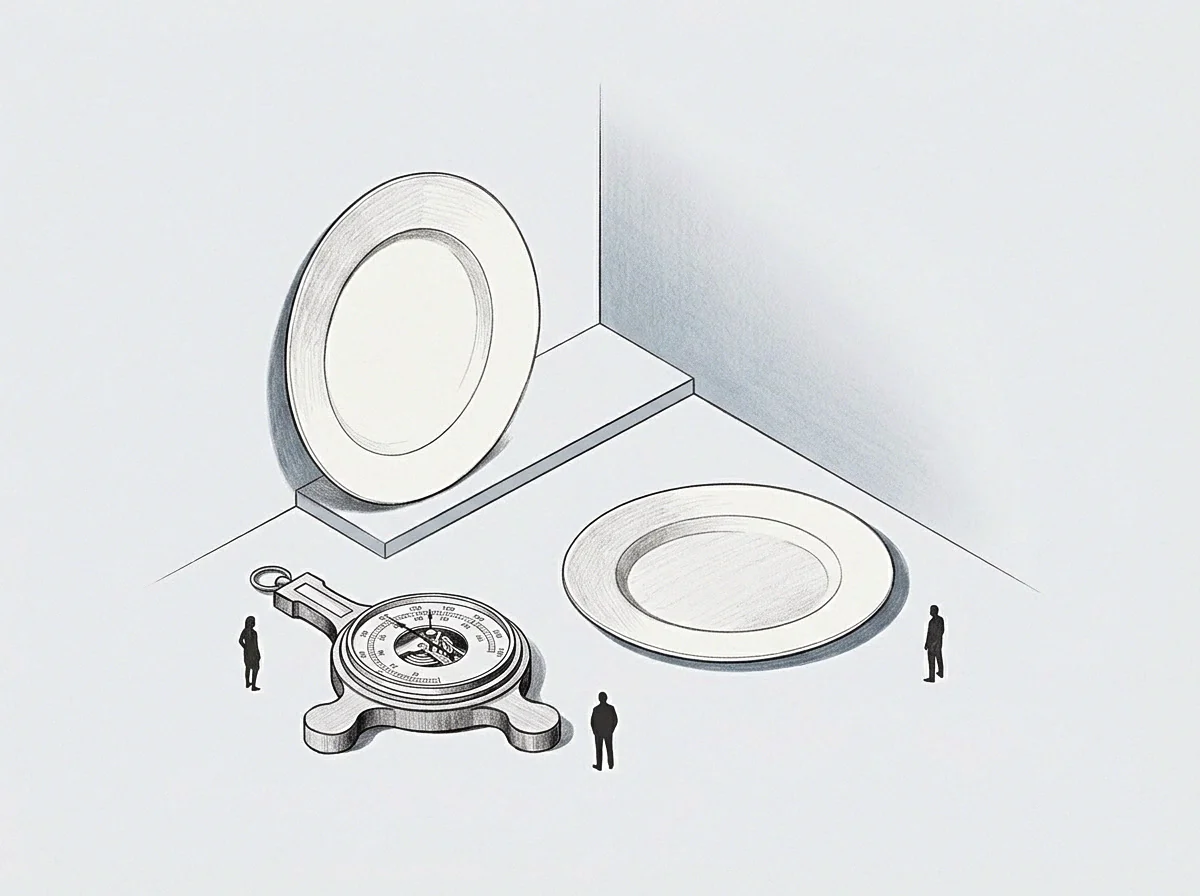
Asymmetry

Which Coordinate Deforms Under Skewed Volatility?
Identifying the primary coordinate of deformation requires decomposing the covariance structure under alpha-stable disturbance distributions. Standard quadratic metrics collapse directional skewness into symmetric variance figures, concealing the directional bias of heavy-tailed shocks. An operational path subject to Pareto-distributed delays undergoes boundary contraction along time-dependent commitments while maintaining apparent spatial stability along unit-cost dimensions.
The drift rate of the boundary reflects how noise asymmetry interacts with state-dependent feedback loops. Positive feedback in queue lengths amplifies tail events along specific directional vectors, creating localized boundary collapse while adjacent operational dimensions retain nominal safety margins.
| Operational Axis | Noise Profile | Directional Stiffness | Observed Boundary Shift Rate | Primary Failure Manifestation |
|---|---|---|---|---|
| Liquidity Clearing | Negative Skewed Alpha-Stable | Discontinuous Floor | Exponential Boundary Contraction | Settlement Settlement Freeze |
| Throughput Volume | Heavy-Tailed Pareto Jumps | Logarithmic Elastic | Linear Boundary Expansion | Buffer Exhaustion |
| Execution Latency | Bimodal Gaussian Mixture | Linear Damped | Asymmetric Outward Creep | SLA Default Clustering |
| Component Sourcing | Poisson Cluster Shocks | Rigid Structural Wall | Stepwise Perimeter Collapse | Line Stoppage Cascade |
Evaluating these shifts involves calculating the localized curvature of the safe operating envelope. Where the envelope flattens against a rigid operational wall, minor tail fluctuations produce immediate, non-linear boundary transitions. The operator measures the gradient of boundary position with respect to higher-order moments of the disturbance distribution.
A contract term specifying settlement within forty-eight hours converts operational latency into immediate capital depletion when clearance noise skews negative.
A contractual settlement window of forty-eight hours forces instantaneous liquidation when clearance latency exceeds two standard deviations, shifting the operational boundary inward across all connected trading corridors.
Basin

Attractor Geometry in Non-Euclidean Landscapes
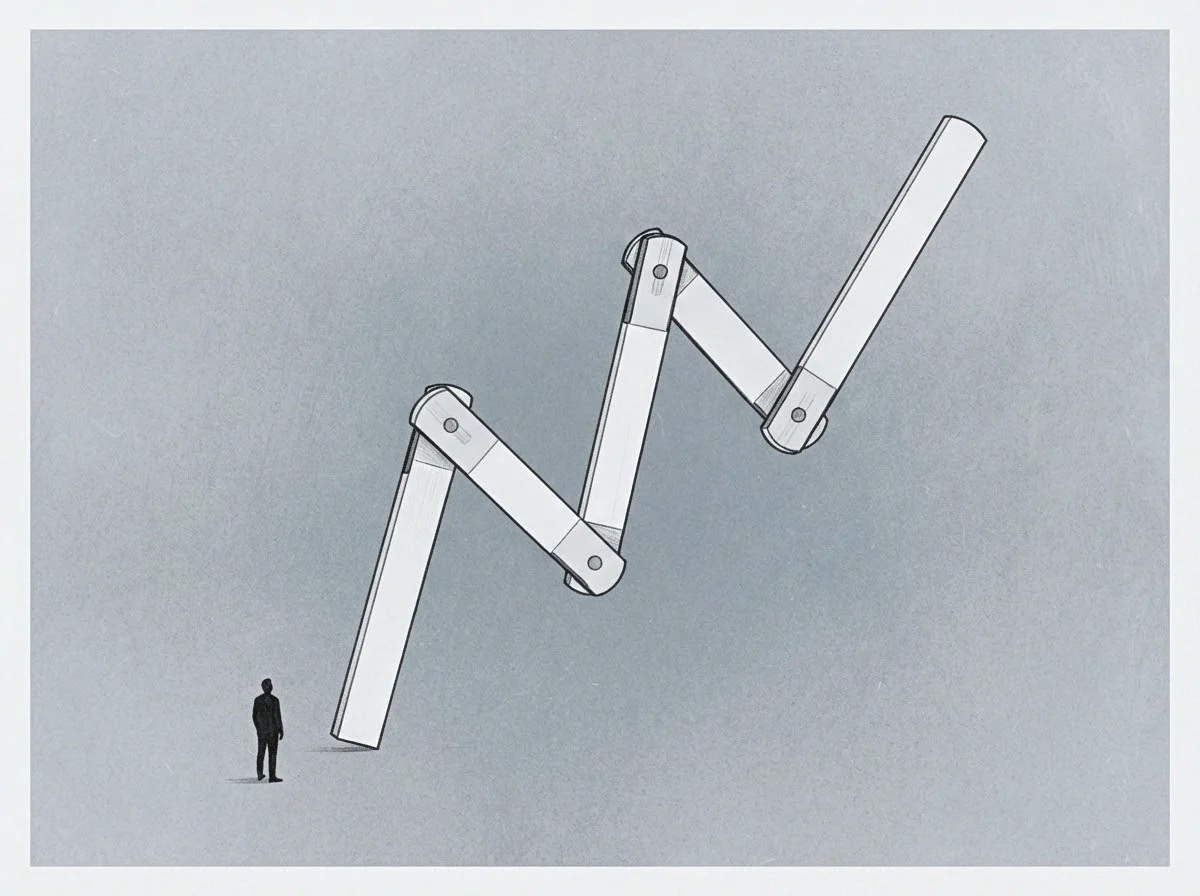
The basin of attraction defines the geometric volume within which an operational trajectory remains stable over extended execution windows. In anisotropic environments, basin boundaries do not conform to Euclidean spheres. They form narrow, warped manifolds whose cross-sections reflect the directional dissipation rates of the underlying enterprise architecture.
Non-Gaussian noise regimes alter the effective topology of the basin by eroding the potential barrier along specific saddle points. Instead of escaping through uniform diffusion across the perimeter, the trajectory exits through narrow energetic ravines carved by asymmetric disturbance sequences. The exit path corresponds directly to the direction of maximum operational stiffness mismatch.
Consider an enterprise managing automated order fulfillment with two primary state variables: working capital velocity and fulfillment throughput. The nominal control system maintains an attractor at high velocity and steady throughput. When customer cancellation shocks follow a lognormal distribution with extreme right-tail skew, the potential barrier defending the low-velocity boundary deteriorates rapidly, while the high-velocity perimeter remains intact.
The trajectory descends along the eroded potential slope, drawn into a low-velocity trap state. Standard monitoring systems fail to signal danger because the Euclidean distance from the nominal operating setpoint remains within historical tolerance bounds. The degradation occurs in the geometry of the barrier itself rather than the instantaneous position of the state vector.
The rate of boundary displacement accelerates as the state vector approaches the saddle point coordinate, raising the question of whether internal stabilization controls can alter their directional gain before the trajectory crosses the critical threshold into irreversible operational deceleration.

Yield
Dynamic Perimeter Calibration
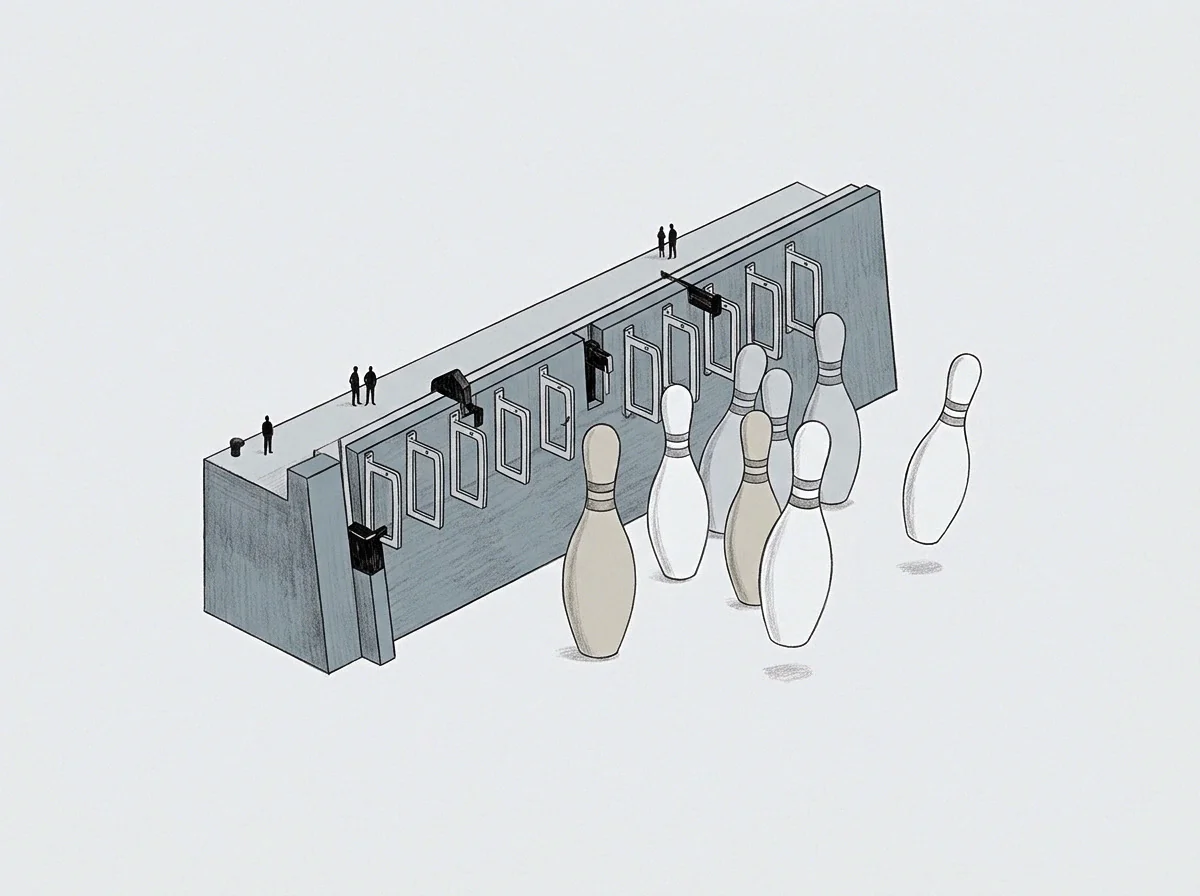
Calibrating operating boundaries under non-Gaussian noise requires moving away from static variance cushions toward directional yield metrics. The yield of an operational perimeter represents the maximum instantaneous deformation the boundary can sustain along a given state axis without inducing permanent structural dislocation. Systems operating with isotropic reserves waste capital defending rigid perimeters along low-sensitivity axes while leaving high-sensitivity corridors vulnerable to low-probability tail excursions.
Dynamic perimeter calibration establishes state-dependent reservation margins calculated from directional moment generating functions. When monitoring detects an increase in the third and fourth moments of the noise environment along a specific operational coordinate, the control system contracts the permissible domain along that coordinate while expanding tolerance along less sensitive dimensions.
Perimeter integrity depends on continuous realignment of directional yield thresholds against observed shock asymmetry.
Dynamic calibration shifts the operational calculus from static defense to active geometry shaping. The firm maintains stability by continually aligning its softest operational dimensions with the direction of incoming disturbance mass, rather than relying on brute capital reserves to resist heavy-tailed shocks.
Failure to align directional yield with shock anisotropy results in premature perimeter breach, forcing emergency capital reallocation at punitive liquidation rates while nominal buffer capacity on adjacent operational axes sits entirely unutilised.