
Dynamic Multi Dimensional Metric Transformation Across Variable Scale Operational Systems
Operational scale transforms cardinal counts into complex ordinal vectors requiring non-linear metric translation to prevent structural failure.
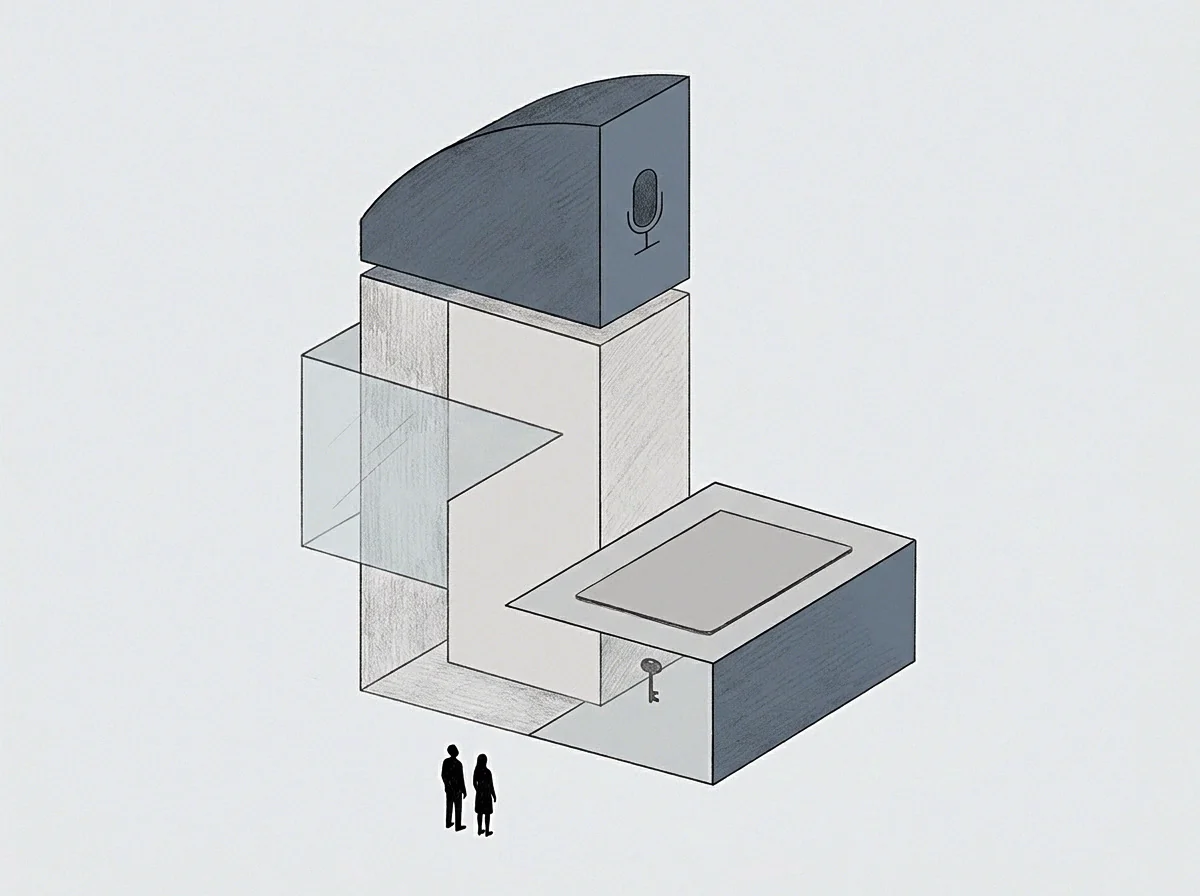
Slope
An operator monitors three direct line items for twelve months while unit volume quadruples, observing steady gross margins on the weekly ledger. Behind that stable output, the engineering work required to process each marginal transaction increases sixfold, absorbed entirely by unrecorded overtime across two senior staff members. The baseline numbers show stability because cardinal counters mask internal rate shifts.
When structural density increases, direct unit counts lose alignment with total operational drag. The slope computed from raw output flattens, while the underlying friction vector grows steep.
Rate shifts across functional layers distort central readings when unit expansion accelerates. Small operational setups rely on direct cardinal measurement, where one counted unit maps to one fixed allocation of human attention and computational capacity. As an organisation expands its throughput, interactions between internal components scale non-linearly.
The measurement plane rotates without notice. What registered as a linear cost axis at low volume converts into a compound ordinal curve at higher volume.
Scale alters the measurement plane.
A measurement system that ignores this rotation treats local noise as global trajectory. Operators who continue reading raw cardinal metrics during high-throughput phases encounter four distinct structural failure points:
- Cardinal saturation occurs when direct counts hit physical recording limits while hidden structural overhead continues to accumulate behind the recorded baseline.
- Axis misalignment develops when management tracks nominal activity metrics while the primary friction vector shifts to inter-departmental handoffs.
- Gradient masking emerges when rapid revenue expansion hides steep escalations in per-unit maintenance requirements across core software assets.
- Ordinal inversion takes place when high-volume routine output obscures severe degradation in low-frequency critical resolution capacity.
Local efficiency produces structural friction. A local baseline established during early operations provides zero predictive power once functional boundaries multiply. When unit volume doubles, the total internal surface area across which information must move increases exponentially.
Measuring individual output without adjusting for structural density creates an optical illusion of flat performance, obscuring the rapid consumption of reserve capacity.
Converting cardinal counts into ordinal rank vectors prevents high-volume operational noise from concealing localized throughput degradation.
Tracking operational state across shifting volume thresholds demands continuous recalculation of the baseline. When an organization scales, the primary axis of measurement must shift from simple count tallies to derived rate differentials. Failing to translate cardinal measurements into compound ordinal indices during operational expansion leads straight to catastrophic capacity depletion masquerading as stable productivity.
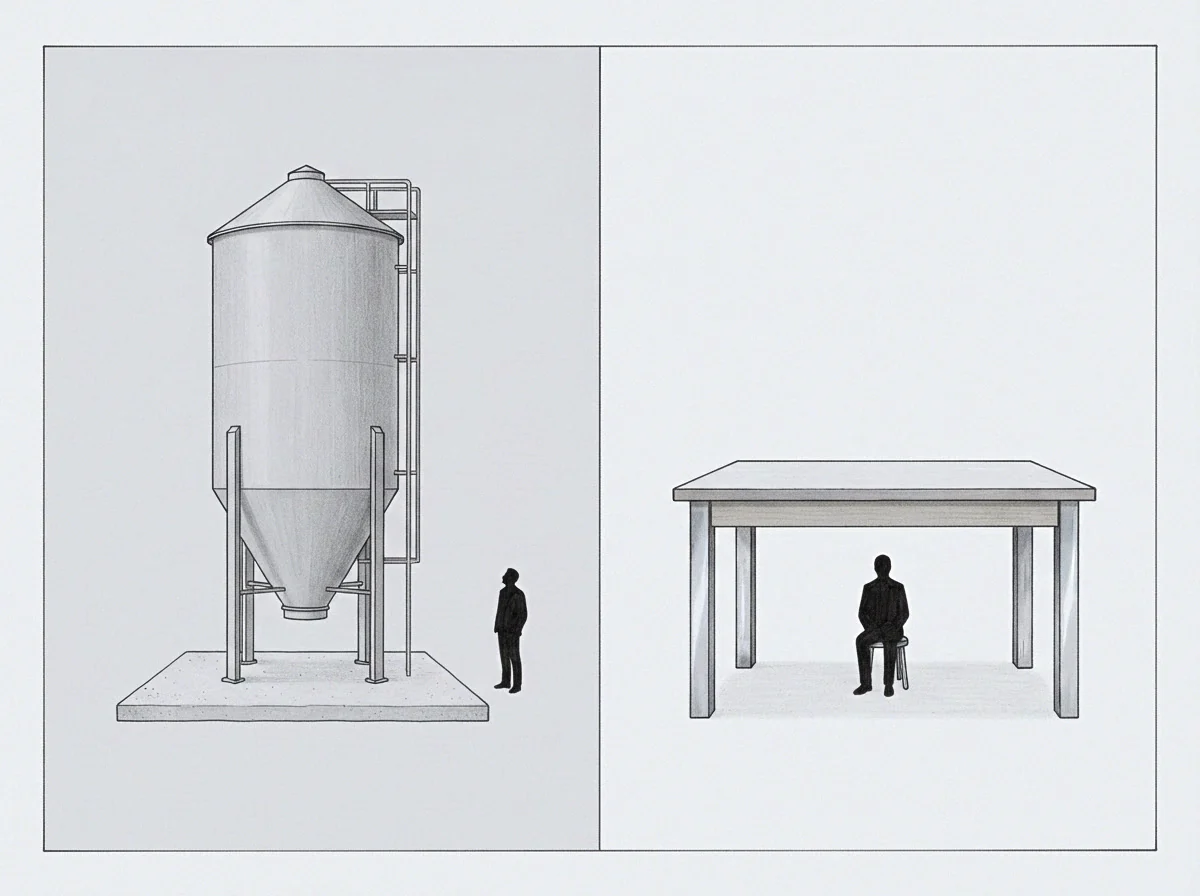
Gate

Boundary Conditions across Operational Magnitude Thresholds
Every operational architecture contains discrete magnitude gates where linear assessment models cease functioning. At low operational scales, human oversight resolves coordination errors through informal conversation, creating an unpriced buffer that absorbs process defects. When transaction frequency exceeds the manual threshold, that unpriced buffer collapses.
The system hits a boundary where informal adjustments no longer register on performance logs.
Raw count becomes ordinal index.
Crossing an operational gate requires altering how data vectors are structured before they feed into decision loops. A process that registers ninety-eight percent reliability across one thousand transactions presents severe instability when executed across one million transactions. The absolute count of failures scales from twenty to twenty thousand, overwhelming downstream remediation queues.
The cost of resolving each failure rises as backlog queue length expands.
- Establishing hard throughput limits for manual oversight mechanisms prevents unrecorded labor from distorting process efficiency metrics.
- Converting raw volume inputs into normalized log-scale indexes ensures early detection of exponential error accumulation.
- Mapping explicit departmental boundary conditions forces systemic friction to register as a cardinal expense rather than an unpriced delay.
Conversion errors compound silently. When management evaluates a multi-tiered organization using single-tier measurement tools, structural friction accumulates at division boundaries. Information passing through departmental interfaces undergoes implicit filtering.
Lower levels compress complex status vectors into simplified summary ratings to meet reporting expectations. By the time operational data reaches central executive view, the variance signal is suppressed entirely.
Process errors that appear negligible under low transaction volumes become structural blockages when execution frequency crosses magnitude gates.
Discomfort at the operational boundary marks active computation taking place within the organization. When an execution model reaches its physical ceiling, attempts to process higher volume through existing routines create rising administrative heat. The organization routes around structural blockages by adding temporary manual interventions, increasing latent complexity.
The term of validity for an unadjusted metric model expires the moment transaction volume crosses a tenfold magnitude threshold.

Plate
Evaluating multi-layer operational systems requires comparing metrics across distinct structural tiers. A single metric value carries completely different implications depending on whether it is measured at the execution interface or at the institutional governance level. Consider two logistics organizations operating across identical geographic regions over a three-year observation window.
Organization Alpha maintains direct cardinal metric tracking across all operational layers, while Organization Beta applies dynamic metric translation across functional scale tiers.
Friction marks the model limit.
Assume both organizations experience a three hundred percent increase in daily shipping order volume over twelve months. Organization Alpha attempts to scale its baseline metrics directly, measuring success by total orders dispatched per day and average resolution time per support ticket. Organization Beta alters its metric translation schema at the thirty-day mark, converting individual ticket tallies into a compound ordinal friction vector that weights ticket complexity against cross-departmental escalations.
| Operational Tier | Raw Cardinal Metric | Translated Ordinal Metric | Observed Systemic Drift |
|---|---|---|---|
| Execution Interface | Ticket Count (Units) | Resolution Velocity Vector | Hidden backlog accumulation in untracked queues |
| Divisional Management | Department Hours (Time) | Cross-Functional Drag Index | Escalation latency increasing by four hundred percent |
| Executive Governance | Gross Margin Percent | Capacity Consumption Gradient | Reserve margin erosion hidden by top-line revenue |
Organization Alpha reports steady gross performance metrics for six consecutive quarters while customer churn quietly doubles. The baseline operational logs show high ticket resolution speeds because support personnel split complex systemic complaints into multiple small tickets to satisfy raw speed quotas. The cardinal counter recorded rising productivity while the underlying customer experience deteriorated.
Local optimization created global structural degradation.
Rate changes alter structural slope.
Organization Beta detects the operational shift immediately through its translated metrics. By tracking the Cross-Functional Drag Index rather than simple department hours, leadership sees that resolving a customer issue now requires inputs from four distinct functional teams instead of two. The translated vector reveals that internal coordination costs are rising faster than order growth.
Organization Beta halts top-line expansion to re-architect its internal routing protocols, preventing margin collapse.
High magnitude masks small noise.
Ordinal vectors replace unit counts. When an operational model fails to account for structural scale, the operators on the floor experience chronic administrative exhaustion while executive dashboards display continuous green indicators. The frontline staff absorb systemic friction manually until capacity shatters.
A worked evaluation of this failure pattern demonstrates that single-dimensional metrics reward systemic self-deception by praising local speed at the expense of structural resilience.
A metric system that rewards local execution speed without measuring cross-functional drag guarantees systemic failure under scale expansion.
The operational reports show every department meeting its target hours, but completing a single customer order now requires four meetings and six handoffs.

Depth
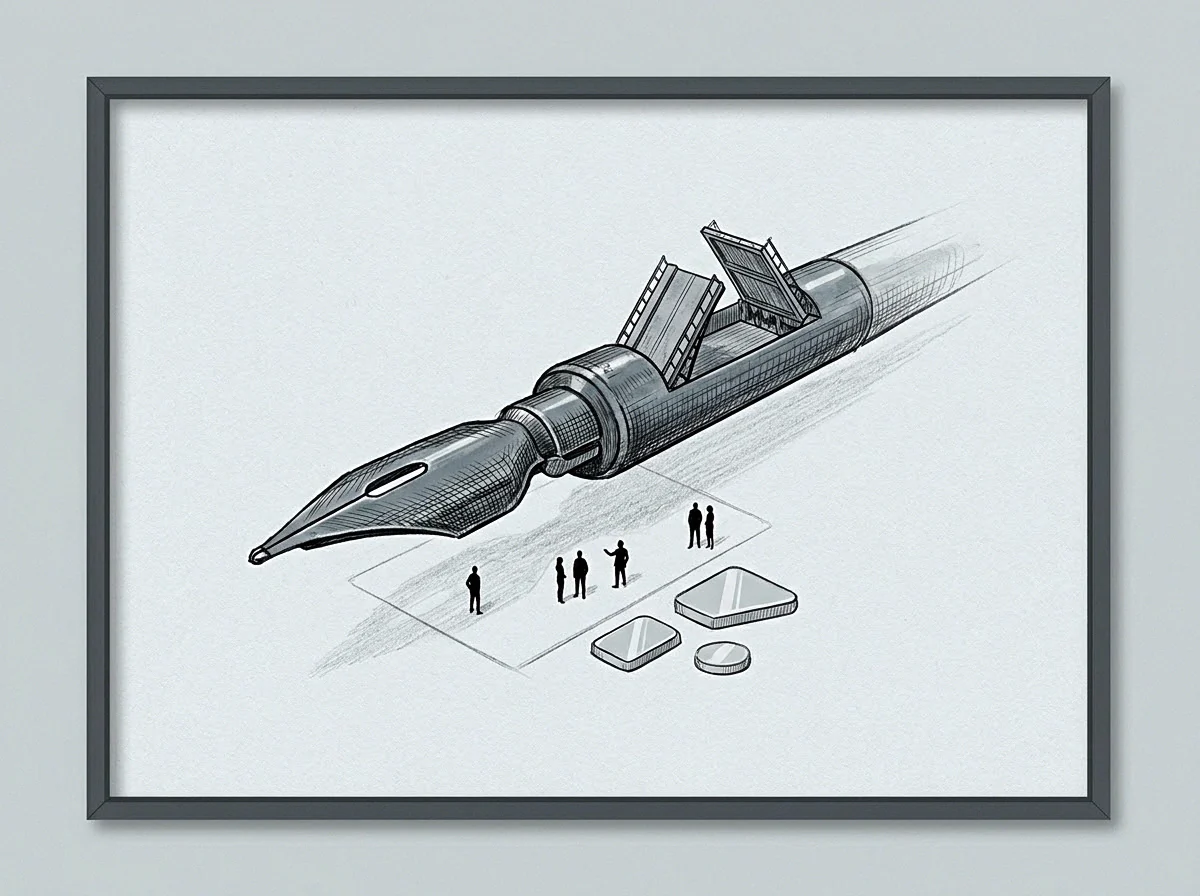
Which Structural Signal Identifies Latent Unspent Capacity?
Latent capacity leaves invisible residue. When a system routes around structural friction, unprocessed operational demands accumulate along the model boundary. Avoidance serves as an exact coordinate marker.
The specific tasks, cross-departmental reviews, or structural refactoring efforts that an organization continuously postpones indicate where current operational metrics fail to capture true systemic costs.
Measurement shifts redefine operational capacity.
The magnitude of avoided work mirrors the magnitude of unspent potential capacity within the organization. When an operational team consistently bypasses formal architectural standards to meet short-term delivery deadlines, the resulting technical debt represents an unpriced liability. This liability flattens the long-term growth gradient.
Measuring the volume of work actively avoided provides a precise reading of the model boundary wall.
Uncertainty surrounding complex metric transformation centers on the exact ratio between local metric distortion and global structural risk. Field observations demonstrate that high-velocity teams often maintain performance despite flawed metric systems, relying on unspoken cultural norms to correct operational misalignments. The precise point at which cultural compensation breaks down under scale expansion remains unquantified across management literature.
Under this uncertainty, a cautious operator treats every unexplained divergence between local outputs and central indicators as a warning signal of structural fatigue.
Mapping the wall of the current model requires tracking failure coordinates over time. Every operational breakdown, missed handover, and emergency manual intervention provides a data point that defines the outer boundary of the current execution system. Translating these error coordinates into a structural map enables leadership to redesign execution boundaries before expansion triggers wide systemic failure.
Systems converge on the path of least administrative resistance regardless of stated management priorities.