
Evaluating Vector Field Boundary Constraints When Operational Refusal Signifies Structural Model Exhaustion Across Systems
Operational refusal marks the exact boundary where an active system exhausts its dimensional capacity, requiring coordinate expansion rather than forced input.
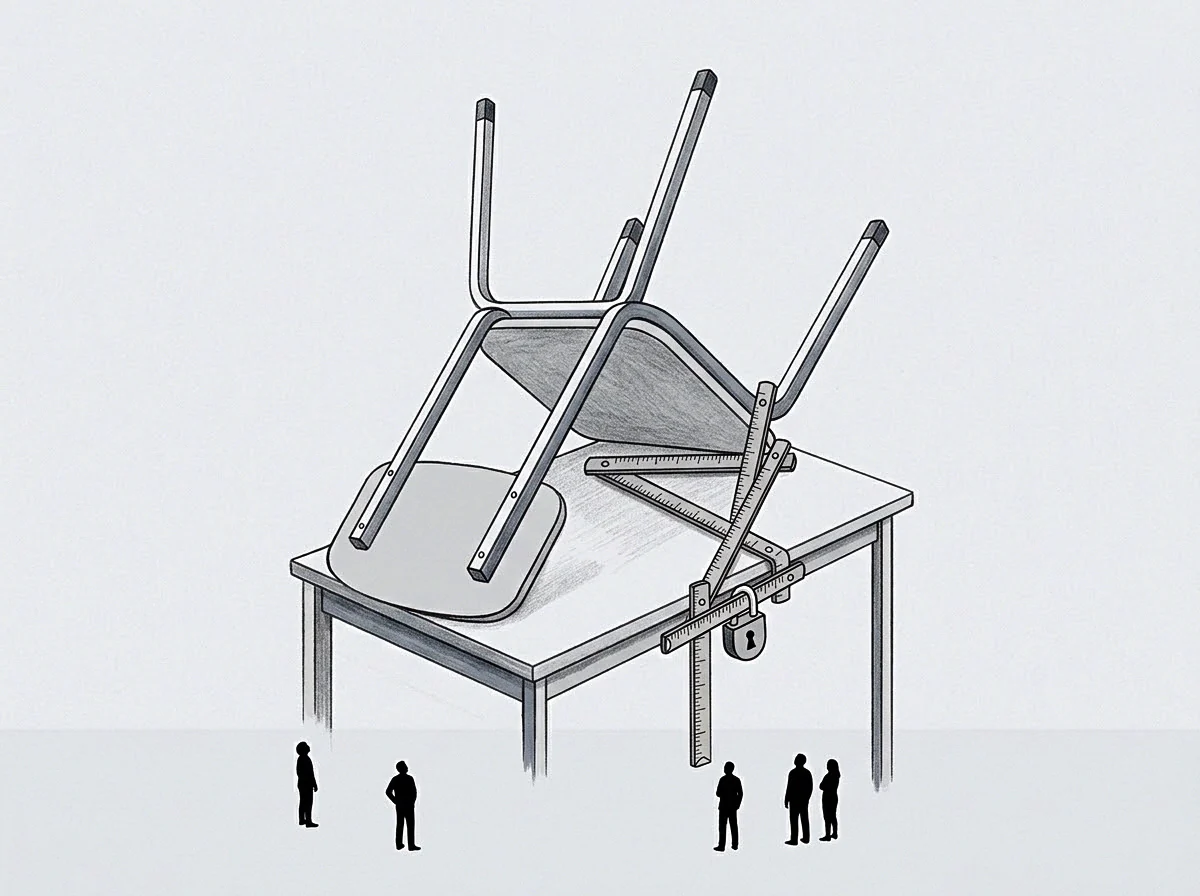
Seat
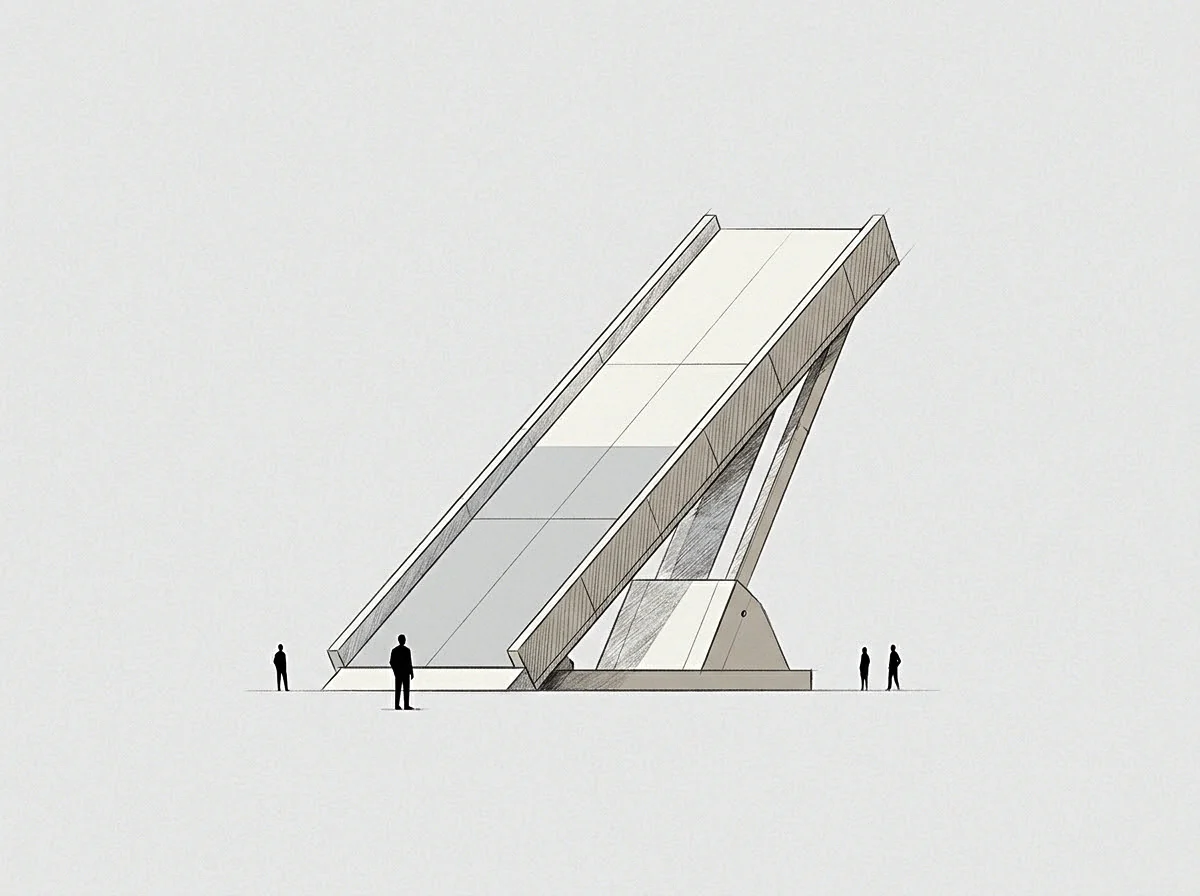
Zero Gradient at the Operational Boundary
A project operates at a recorded cash loss for eleven months while the directional derivative of customer commitment climbs along every measured line. The founder sits late at the desk, watching an error queue accumulate identical abort signals at the perimeter of the workflow. The operator has spent three weeks treating these signals as minor exceptions, patching call stacks, adjusting timeout constants, and logging retries.
The errors do not signal transient network instability. The system halts because the computational substrate has reached the geometric boundary of its coordinate space. At this perimeter, every forward step demands infinite energy, rendering the field incapable of directing further transformation.
When operational refusal manifests across repeated cycles under constant load, the underlying coordinates have collapsed to a singular boundary point.
Every system functions as an explicit vector field defined across a state space. The direction of operational flow traces the local gradient, pulling tasks toward stable basins. The boundary of that field represents the limit of what the current architecture can express.
When an operational unit refuses an instruction, the breakdown rarely stems from insufficient effort. The instruction projects outside the valid manifold. The operator observes rejection, timeout, or bureaucratic evasion because the model has no internal language for the required displacement.
The perimeter rejects inputs that cannot be evaluated within its existing topological basis.
The refusal marks the exact contour where the system runs out of descriptive room. Forcing work through an exhausted coordinate framework burns human stamina without altering system state. Staff work double shifts to rewrite identical tickets.
The ticket queue remains stationary. The field contains no vectors pointing into the desired configuration. The counterparty in this arrangement watches the operational freeze from across the conference table, observing that nothing proposed in the current schedule can settle the open balance.

Threshold
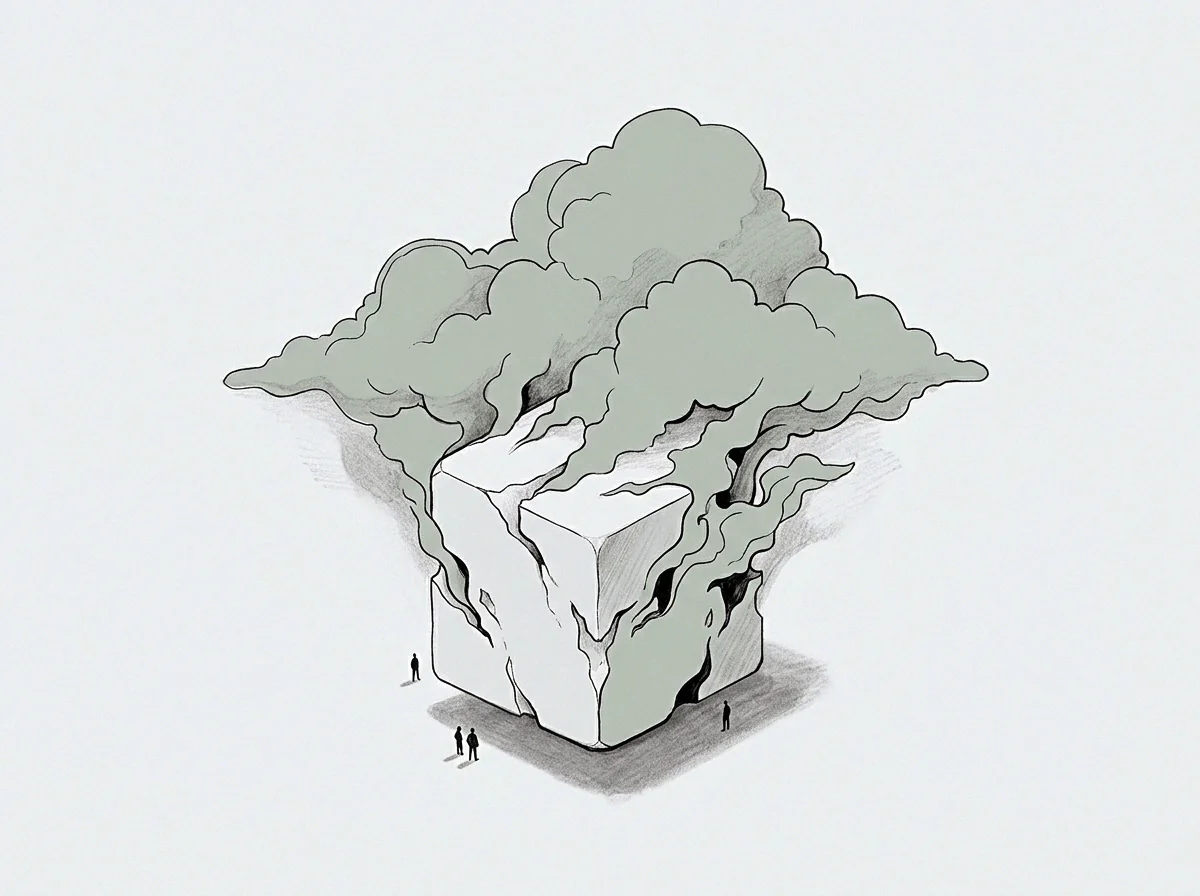
Mapping State Spaces Under Saturation
Vector field boundary constraints define the envelope wherein an enterprise or automated routine computes change. Within this envelope, inputs generate predictable displacements along a defined trajectory. As the boundary nears, the local resistance climbs nonlinearly.
The rate of change flattens to zero while internal tension spikes. In control theory, a system nearing a dead zone demonstrates high gain accompanied by zero state displacement. The machinery rattles violently while remaining pinned to a single coordinate.
Consider two operating arrangements evaluated across standard structural parameters.
| System Metric | Local Path Avoidance | Structural Model Exhaustion |
|---|---|---|
| Field Vector Velocity | Maintains high velocity along adjacent parallel tracks | Collapses toward zero across all available operational vectors |
| Resource Consumption | Shifts proportionally to alternative low-resistance tasks | Escalates asymptotically while net work output stalls |
| Error Signal Dispersion | Concentrates on specific contested tasks or specific personnel | Spreads symmetrically across previously stable internal components |
| Boundary State Reaction | Deflects smoothly around the localized institutional obstacle | Produces rigid refusal at every attempted point of contact |
State spaces saturate when their internal dimensions no longer encompass incoming environmental pressures. A software application designed for single-tenant transactions fails under distributed concurrency, not from procedural syntax flaws, but from spatial inadequacy. A company structured around bilateral agreements freezes when market liquidity requires instantaneous algorithmic clearing.
The operational refusal represents a mathematical assertion of completeness: the existing model has mapped all available configurations and discovered none that fulfill the external demand.
Boundary stiffness increases in direct proportion to the volume of unacknowledged operational deflection.
Operational units frequently misinterpret saturation as personal friction or cultural drift. An organization routes around an unaddressed problem for consecutive quarters, tracing convoluted circuits through committees to avoid naming an obsolete core architecture. The diversion consumes reserve capital.
The baseline vector field continues to degrade until every mundane assignment hits the wall. The wall consists of conditions the architecture refuses to evaluate because evaluating them dismantles its structural premises. The path of least resistance bends inward, locking the organization into a perpetual holding orbit.
A boundary pressed beyond its mathematical elasticity generates catastrophic shear rather than compliant deformation.

Refusal
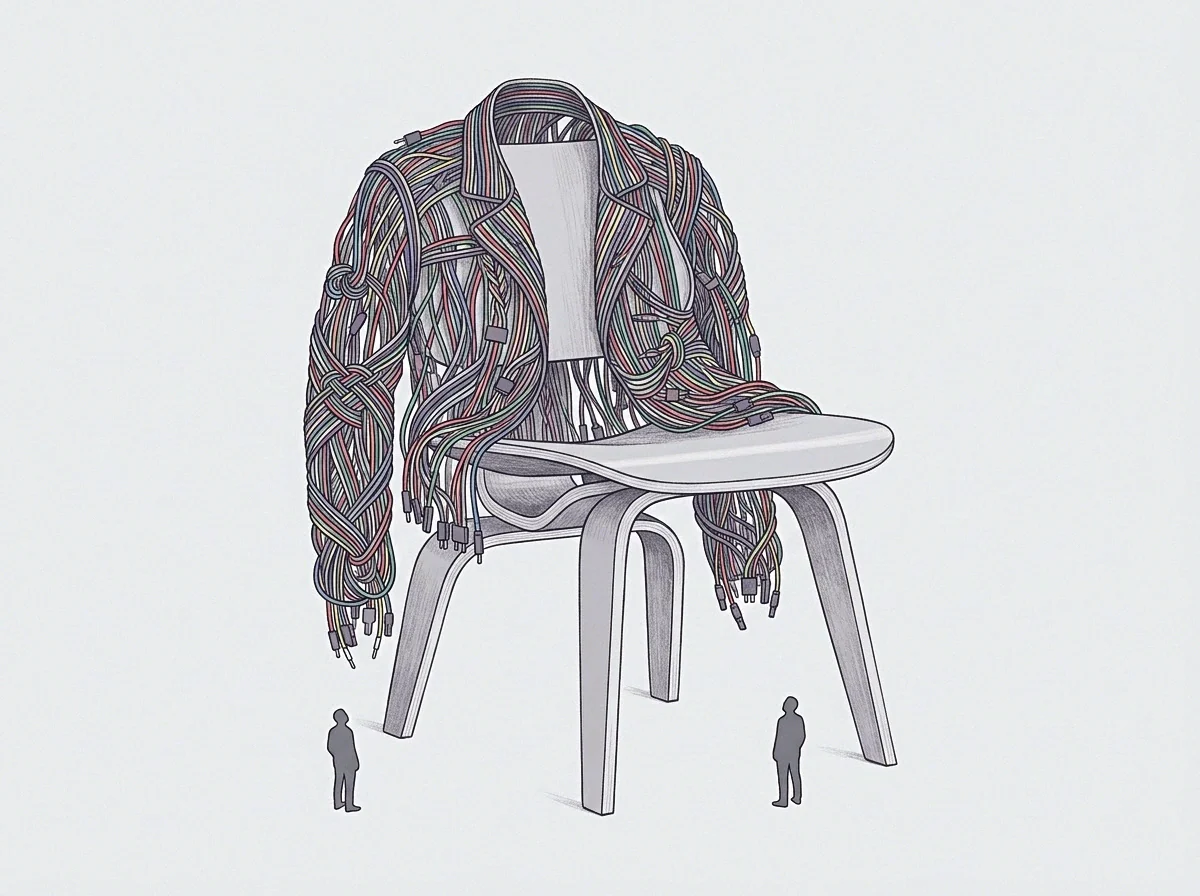
Which Invariants Persist Under Continuous Deflection?
The fundamental diagnostic challenge centers on distinguishing routine local resistance from genuine model exhaustion. Local resistance signifies an ordinary friction along a viable vector. The slope is steep, the ascent carries measurable cost, yet progression remains continuous.
Model exhaustion manifests through categorical stoppage across disparate nodes simultaneously. When three autonomous teams using different tools independently decline the same programmatic deliverable, the issue does not reside in personal alignment. The deliverable demands an operational state outside the manifold.
Refusal functions as an epistemic probe. It pinpoints the precise coordinates where the model fails to map reality. Systems deploy refusal mechanisms to preserve systemic cohesion against impossible inputs:
- Categorical operational avoidance emerges when functional teams route routines around a designated process step, building redundant shadow workflows to preserve baseline operational velocity without confronting the underlying systemic breakdown.
- Protocol truncation occurs whenever an automated orchestration routine drops execution frames early, preventing total system collapse by silently returning partial records under simulated completion headers.
- Syntactic ossification locks administrative groups into ritualized checklist verification, substituting mechanical process compliance for the actual calculation of impossible external variables.
Tracking the topology of avoidance exposes the exact geometry of the unspent structural volume. Whatever an enterprise circles around reveals the magnitude of its unmapped reality. A company that spends four hundred engineering hours per month debating the syntax of internal service definitions is not refining its tooling.
The company avoids calculating the terminal cost of its legacy database schema. The avoidance marks the coordinate. The size of the evasion equals the exact weight of the deferred migration.
Every sustained avoidance marks the precise boundary where computational capability terminates and operational denial begins.
When leadership misreads this structural refusal as an ordinary motivational deficit, executive pressure escalates while productive output plummets toward nominal zero. Supervisors mandate tracking software, log granular actions, and demand public status affirmations. Personnel burn out rapidly within the artificial squeeze.
The operational vector remains entirely flat because no programmatic route connects the present system configuration to the requested target. The enterprise expends irreplaceable balance sheet reserves fighting its own geometric boundary, achieving complete personnel depletion without advancing a single operational milestone.

Shear
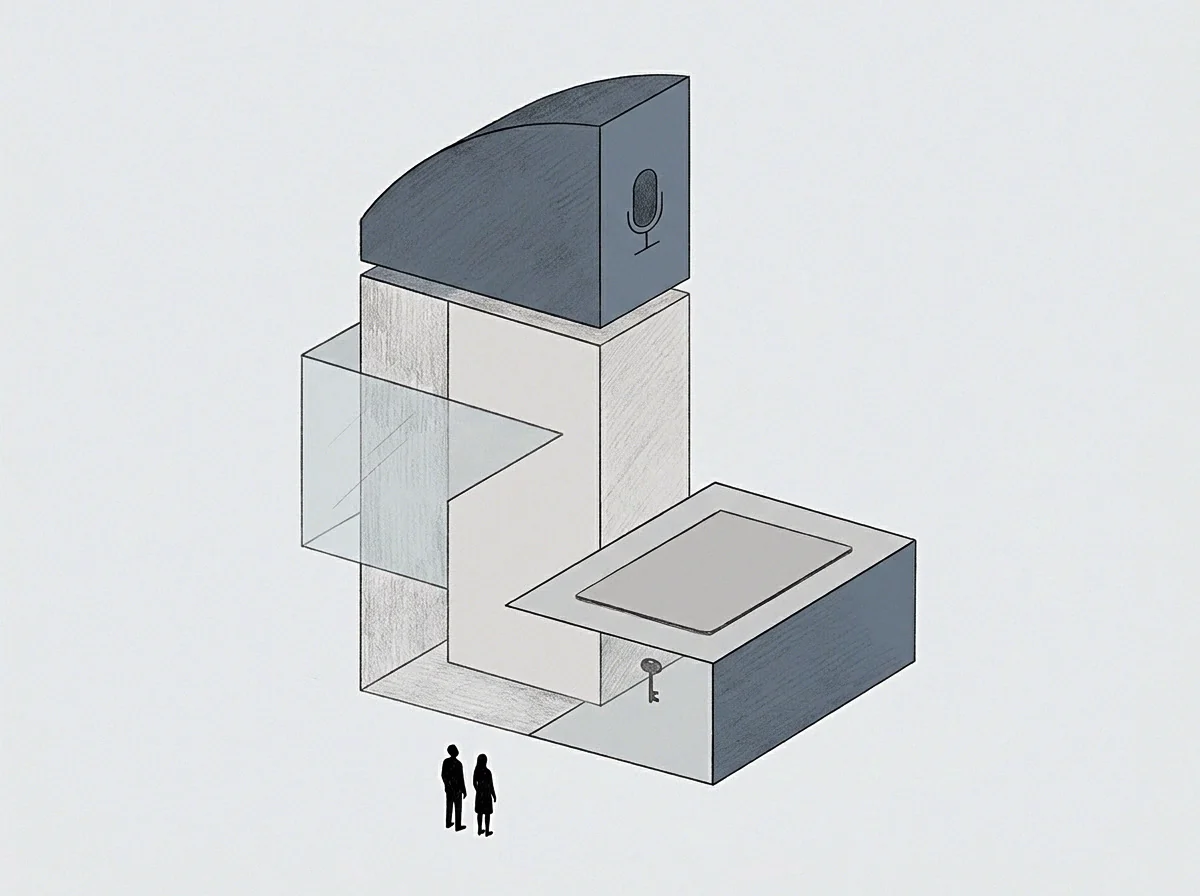
Deformation Along Asymmetric Subsystem Interfaces
Complex systems rarely fail symmetrically. Different subsystems embody distinct degrees of structural flexibility, leading to profound displacement differentials along their connecting interfaces. When environmental forces push a corporate apparatus toward its boundary, rigid subcomponents halt instantly while dynamic elements stretch to absorb the impact.
This differential velocity generates mechanical shear. The internal friction strips gears, breaks communication protocols, and dissolves unwritten operating conventions that previously held the enterprise together.
Consider an enterprise split into two interdependent divisions. The commercial division operates on a short feedback cycle, adjusting quotes and contract lengths daily based on market signals. The core technical division operates on an unyielding multi-year legacy architecture with quarterly deployment gates.
When client demand accelerates beyond the technical baseline, the commercial unit absorbs the pressure by inventing non-standard operational covenants. Contracts promise manual interventions. Project managers fill the technical void using ad-hoc spreadsheets.
The system appears functional from a distance, yet the operational debt accumulates along the seam.
- The frontline commercial team absorbs incoming variance by hand, manually transforming unmanageable client payloads into fragmented internal work items.
- Engineering queues accumulate an intractable backlog of custom reconciliation tickets, halting architectural maintenance to service urgent administrative band-aids.
- The operational interface ruptures entirely as custom workarounds collide with rigid security controls, generating systemic transaction freezes across the platform.
The friction generated along this internal fault line consumes immense organizational bandwidth. Engineers spend mornings arbitrating edge cases created by anomalous sales concessions. Account executives spend afternoons placating clients whose bespoke setups broke during maintenance sweeps.
This friction measures the exact computational tax of sustaining an exhausted model through human willpower. The human nervous system acts as an expensive patch for an invalid state space.
A specific operational freeze occurs when an explicit service contract mandates impossible throughput, shifting the burden of reconciliation entirely onto uncompensated administrative buffers until the interface defaults.

Reversal
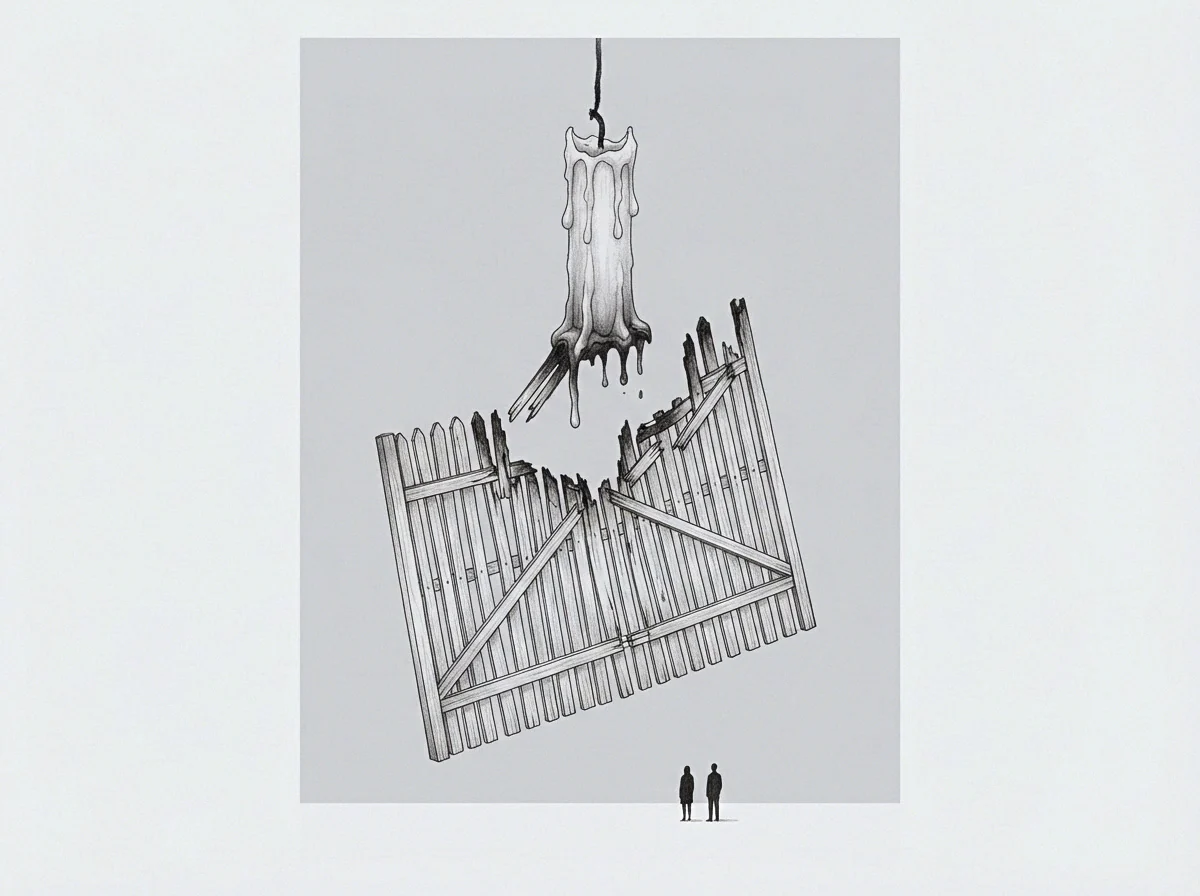
Mirroring the Boundary Vector to Expand Latent Volume
When an operational field hits absolute exhaustion, further forward force along the original trajectory yields zero displacement. Progress requires mapping the negative vector. Every boundary constraint that halts a process contains implicit data regarding the topology of the unexplored domain.
By calculating the gradient of refusal, an operator identifies the exact orientation of the latent volume sitting directly behind the wall. The wall is the edge of the current model, made visible by what the system declines to compute.
The operational move begins with an unyielding inventory of avoided coordinates. The operator stops forcing inputs into the frozen channels. The refusal is recorded as an accurate measurement rather than a structural failure.
If a machine subsystem consistently halts on high-dimensional relational queries, the resolution involves abandoning relational storage rather than tuning indexing parameters. If an operational staff repeatedly evades an administrative oversight cadence, the procedure itself possesses negative information density. The operator strips the dead requirement, liberating the cognitive capacity locked in evasion.
Reversing the vector transforms the obstacle into a directional beacon. The operator tracks the slope upward from the baseline of least resistance toward the unspent capacity of the organization. This ascent demands deliberate capital allocation.
Climbing costs money, attention, and immediate transactional comfort. It requires constructing a completely new coordinate space with expanded dimensionality, capable of evaluating the very variables that shattered the preceding framework. The new model incorporates the boundary conditions of the old model as interior foundational invariants.
System transformation succeeds only when the precise contour of historic operational refusal forms the primary structural axis of the replacement model.
The newly constructed manifold opens vectors that were previously locked. Operations move with renewed velocity because the new coordinate system provides native geometric pathways for current reality. The enterprise stops paying the immense frictional tax of operational denial.
The team recognizes the limits of the previous framework and operates freely within an expanded computational arena. Yet every expanded field eventually encounters its own external horizon. The cycle of boundary identification, refusal observation, and dimensional expansion remains the continuous operational condition of complex dynamic enterprises.
The fundamental inquiry remains whether an operating apparatus can intentionally detect its approaching structural boundary before operational refusal forces an involuntary systemic shutdown.