
Identifying the Structural Yield Point Where Organizational Baseline Recovery Requires Full Component Replacement
When operational stress permanently warps an organizational unit, baseline recovery fails, making complete modular replacement the only path to restored throughput.
Strain

Elastic Deflection and Permanent Set
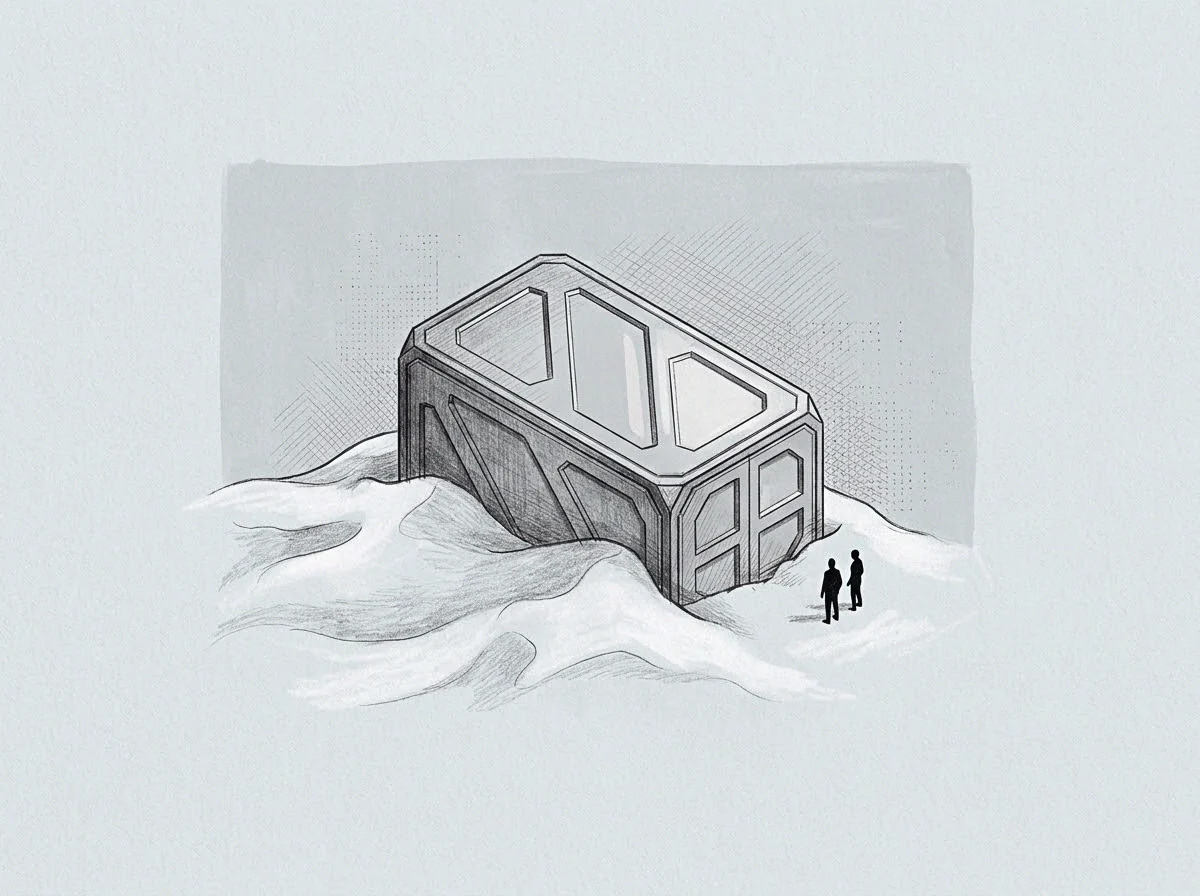
Every operating organization tolerates load by deforming. When external volume surges or a strategic mandate shifts deliverables, existing teams absorb the displacement through extended hours, deferred maintenance, and temporary coordination paths. In an elastic regime, the structure returns to its original operational state once the transient spike subsides.
The baseline remains intact because internal relations, accountability boundaries, and technical infrastructure have sustained no structural rearrangement. The energy expended during the surge dissipates into completed output, leaving the underlying architecture capable of identical future throughput.
Plastic deformation begins at the exact point where structural rearrangement becomes permanent. Under sustained operational tension, teams cease to revert to their reference performance levels after the load clears. Informal side channels established to bypass congested managerial review harden into standard operating pathways.
Documentation lapses become accepted institutional precedent. Key personnel quietly reduce their baseline discretionary exertion, having recalibrated their commitment downward to survive the sustained pressure. At this boundary, the organizational component has passed its structural yield point, entering a state where its internal mechanical properties are permanently altered.
When applied operational stress exceeds the elastic limit of an operating unit, restoring original inputs yields diminished baseline output.
The distinction governs capital allocation during performance declines. Remediation efforts often target symptoms of fatigue by offering temporary rest cycles, bringing in process consultants, or running retrospective alignment sessions. These remedies presume the unit operates in an elastic state, assuming that releasing external load restores the historical baseline.
When plastic deformation has taken hold, removing the external pressure reveals a permanently slackened subsystem that cannot generate historical efficiency. Tension reveals latent structural boundaries. The deformed unit leaks throughput.
The Economics of Structural Yield
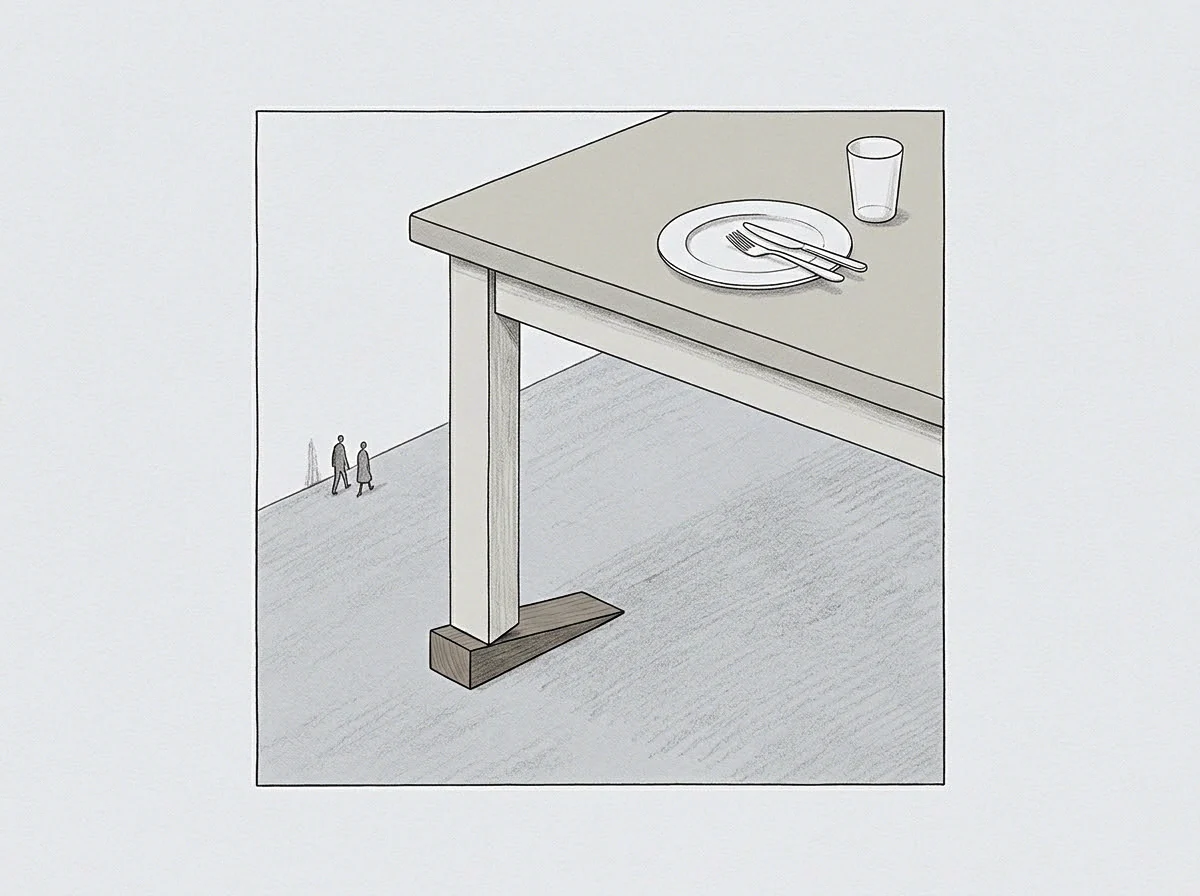
Material science computes the yield strength of an alloy by tracking the threshold where stress induces a 0.2 percent permanent offset. In operational systems, identifying this yield point relies on measuring the recovery deficit: the mathematical delta between pre-surge baseline throughput and post-surge stabilized performance under identical resource inputs. When a department requires thirty percent more managerial oversight and twenty percent more calendar duration to ship an identical deliverable compared to twelve months prior, the component has yielded.
The load did not simply strain the unit; it broke the internal crystalline matrix of trust, standard operating discipline, and cognitive ownership.
Remediating a yielded component consumes compounding resources without altering the structural trajectory. Management introduces supervisory layers to audit quality, yet the audits generate bureaucratic drag that slows execution further. Executive interventions stabilize output temporarily, but the stabilized level remains well below the historical baseline.
The continuous injection of managerial energy acts as an external brace on a cracked beam, preventing immediate collapse while draining energy that belongs to corporate growth. When the capital and temporal expense of running palliative remediation exceeds the cold cost of striking the division from the architecture, localized reform becomes an operational liability.

Hysteresis

Which Operating Signals Reveal Permanent Plastic Deformation?
Hysteresis describes the lag between cause and effect in physical systems, where the state of a material depends directly on its history of strain rather than its immediate environment. An organizational unit subjected to chronic over-demand retains the residual geometry of that trauma. Even if customer acquisition stabilizes and executive mandates clarify, the department continues to behave as if an acute crisis is imminent.
Communication remains defensive, decision rights stay hoarded among burned-out managers, and work velocity reflects protective pacing rather than market capacity.
Material memory degrades under prolonged load. Diagnosing whether an operational division can recover or has suffered terminal fatigue involves evaluating four diagnostic signatures of structural yield:
- Compensatory Routing establishes permanent informal networks around specific individuals or teams whose reliability collapsed during prior execution cycles, ensuring critical assets never cross their desks.
- Cognitive Atrophy settles across the engineering or operational rank, characterized by the systemic refusal to exercise autonomous judgment without defensive written sign-offs from adjacent departments.
- Procedural Sclerosis accumulates as corrective checklists and redundant approvals added during historical failures remain permanently calcified inside daily workflow routines.
- Relational Hysteresis persists between functional leads, maintaining distrust and jurisdictional protectionism long after the initial conflicts that generated them have concluded.
Workarounds consume executive attention rapidly. These four conditions mark the transition from repairable operational friction to systemic structural exhaustion. The founder or operational officer observes that every directive directed toward the yielded component requires hands-on steering.
Delegation ceases to function because the unit has lost its internal elasticity. The team can neither self-correct nor absorb novel constraints without threatening execution failure across the enterprise.

The Accumulated Energy Deficit
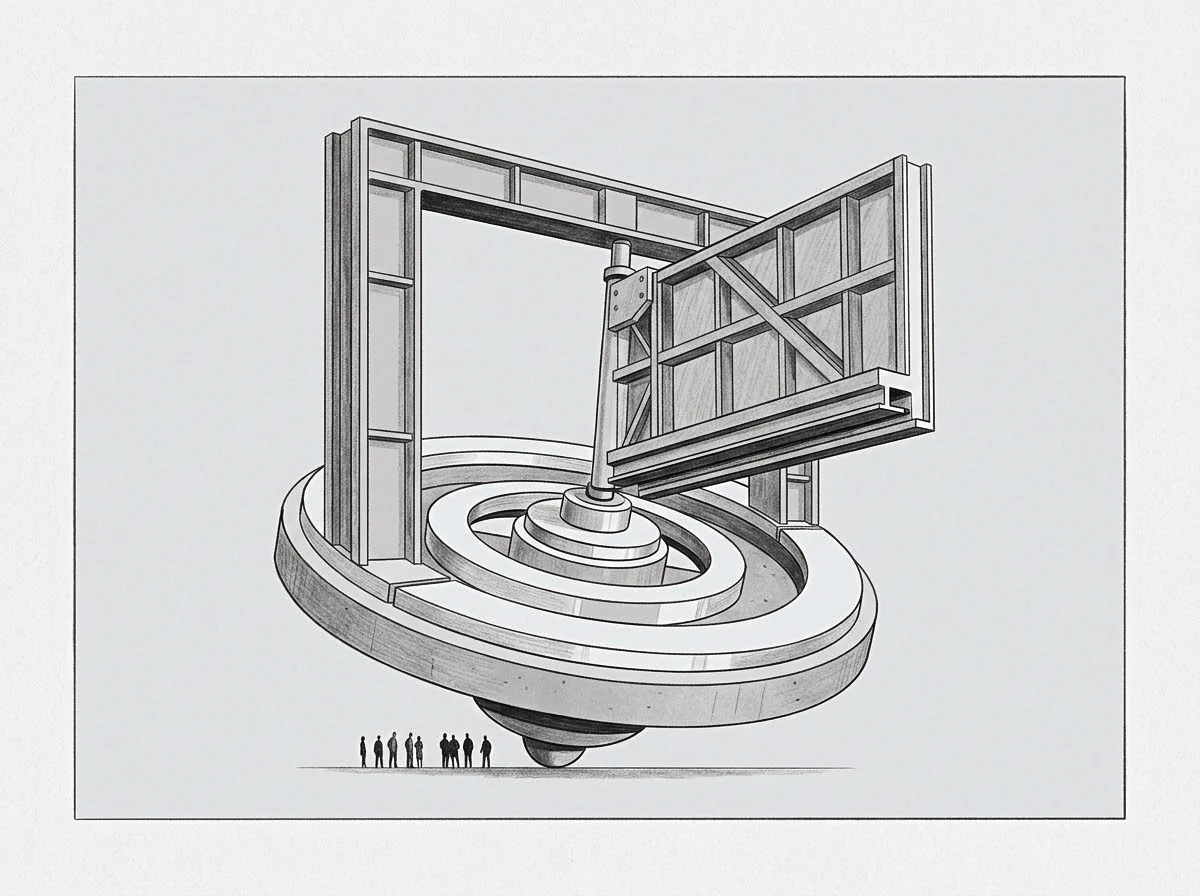
A yielded organization operates inside an energy sink. In mechanical hysteresis, the area enclosed by the loop on a stress-strain graph equals the mechanical energy lost as internal heat during cycling. Within corporate structures, that heat manifests as endless alignment summits, political friction, backchannel politicking, and friction during cross-functional handovers.
The team expends eighty percent of its metabolic capacity managing internal structural tension, leaving twenty percent for customer-facing output.
Settled habits resist superficial adjustments. Once a component reaches this degree of internal dissipation, managerial coaching cannot recover the lost baseline. The operational team has developed an equilibrium optimized for internal survival rather than external throughput.
Demanding higher standards from this unit provokes acute fractures: attrition of the few remaining high performers, total paralysis in product deployment, or uncoordinated resistance to operational standards. At this coordinate on the operational curve, the enterprise must determine whether the latent potential locked behind this structural avoidance can be salvaged through process re-engineering, or if the unit constitutes a dead volume that must be discarded to preserve system survival.
Table
Evaluation of Baseline Restoration Approaches
Evaluating whether to repair an underperforming business unit or execute full component replacement demands an analytical inspection of economic and temporal tradeoffs. Leaders routinely prolong remediation programs because the emotional and friction expenses of component liquidation seem steep in the immediate quarter. This calculation overlooks the cumulative drag of permanent structural fatigue.
A direct comparison between remediation and replacement clarifies the criteria that govern the choice.
| Evaluation Dimension | Remediation of Existing Unit | Full Component Replacement |
|---|---|---|
| Structural Operating Hypothesis | Unit retains elastic recovery capacity; baseline restoration possible via targeted intervention. | Unit has exceeded structural yield point; baseline restoration impossible without clean-slate replacement. |
| Primary Intervention Method | Process optimization, leadership coaching, workflow restructuring, retrospective audits. | Total organizational decoupling, personnel removal, clean architecture rebuild, operational replacement. |
| Executive Energy Allocation | Continuous, escalating managerial attention required to police standards and resolve inter-team disputes. | Acute, bounded executive attention focused on the surgical extraction and subsequent installation phase. |
| Baseline Restoration Timeline | Extended duration with low probability of achieving historical performance markers. | Steep initial disruption followed by rapid stabilization at or above target performance baselines. |
| Cultural and Behavioral Residue | Preserves institutional cynicism, historical grievances, and defensive operating heuristics. | Completely eliminates legacy path dependencies, resetting execution norms to zero-base standards. |
| Systemic Risk Profile | Chronic operational decay, gradual loss of top talent across adjacent high-performing teams. | Acute operational volatility during transition window, manageable via defensive interface design. |
Intervention delays necessary structural demolition. As demonstrated across comparative dimensions, pursuing remediation within a yielded structure yields an asymmetrical downside: the organization expends premier capital and focus to nurse a component that remains fundamentally warped. The replacement pathway, while operationally abrupt, establishes a bounded transition window after which normal operational velocity resumes.
Engineers spent thirty hours each week maintaining manual pipelines that scheduled scripts were written to replace.
Consider a software engineering division responsible for core platform infrastructure. Over three years of frantic product expansion, the team introduced severe technical shortcuts, accumulated unaddressed technical debt, and suffered significant turnover among founding architects. The remaining staff consists of demoralized engineers who have calcified around brittle, manual release processes.
Releases require forty-eight hours of continuous debugging, emergency patches are routine, and product engineering teams must coordinate dependencies through informal backchannels. Management attempts remediation: they introduce agile ceremonies, hire external agile coaches, and mandate retrospective action items. Twelve months later, releases still take forty-eight hours, error rates remain unchanged, and premier product engineers are departing out of sheer exhaustion with platform friction.
The operator faces escalating friction. The infrastructure team has passed its structural yield point. The technical architecture and the human social contract governing its maintenance are plastically deformed.
The procedural changes introduced by coaches did not alter the fundamental reality: the existing engineers possess deeply ingrained habits of learned helplessness and protective obfuscation. Rebuilding preserves existing procedural habits. In this reality, the rational operational move entails freezing the legacy platform, assembling an isolated replacement team with a mandate to construct a parallel modern service, and executing a hard cutover once parity is achieved, followed by the dissolution of the legacy division.
Rupture

Systemic Failure of Compensatory Workarounds
When an organizational component yields, the surrounding organization constructs compensatory mechanisms to prevent systemic operational collapse. If the platform infrastructure team cannot ship reliable code, product teams deploy their own shadow infrastructure. If the enterprise sales leadership yields to complacency, the executive team steps in to negotiate, close, and monitor enterprise accounts directly.
These compensatory moves function as external splints. They mask the underlying structural death of the primary component while transferring its strain onto adjacent healthy systems.
Coupling spreads localized failure outward. Compensatory mechanisms carry extreme operational penalties that degrade the entire enterprise over time. The founder or operational lead can trace this degradation through a specific operational chain:
- The primary operational component yields under sustained strain, permanently reducing its baseline execution velocity.
- Adjacent functional teams construct unofficial internal capabilities to bypass the dead unit and maintain enterprise delivery milestones.
- Top tier operators in healthy divisions divert thirty to fifty percent of their mental capacity to managing workarounds and mitigating friction.
- Executive management accepts these informal splints as standard operations, allowing the primary failed unit to consume payroll while producing negative throughput.
- Systemic organizational throughput decelerates, prompting the most capable operators in healthy units to resign due to uncompensated operational friction.
Retaining a plastically deformed team inside a high-throughput pipeline forces adjacent divisions to construct permanent compensatory buffers.
Fatigued structures break under minimal load. The presence of permanent workarounds signals that the boundary of the operational model has been reached. When an executive finds themselves spending twenty hours each week mediating disputes between a marketing lead and a product director who stopped speaking eighteen months ago, the operational architecture has broken down.
The system routes around the relational rupture, creating redundant communication tracks and administrative friction. The volume of work avoided by these individuals represents dead operational weight, dragging down the ascent gradient of the overall firm.
The Yield Boundary in Human Systems
In technical architectures, engineers understand that a database schema pushed beyond its structural limit cannot be patched indefinitely; write locks accumulate, read latencies spike exponentially, and the service must be entirely replaced with a redesigned data store. Human organizational structures adhere to identical mechanical laws. A department composed of individuals whose psychological contract with the firm has suffered terminal breach will not respond to cultural workshops, comp revisions, or managerial restructuring.
Old dependencies degrade clean interfaces. The baseline cannot recover because the relational graph connecting the personnel is fundamentally corroded. Every new initiative, process reform, or software tool introduced to the yielded team is instantly reinterpreted through their existing defensive heuristics.
The team will reshape any newly introduced workflow into their established pattern of protective lethargy. Full component replacement is the only mechanism that dissolves the accumulated relational calcification, clearing the operational field for baseline restoration.
Splice
Mechanics of Decoupled Component Replacement
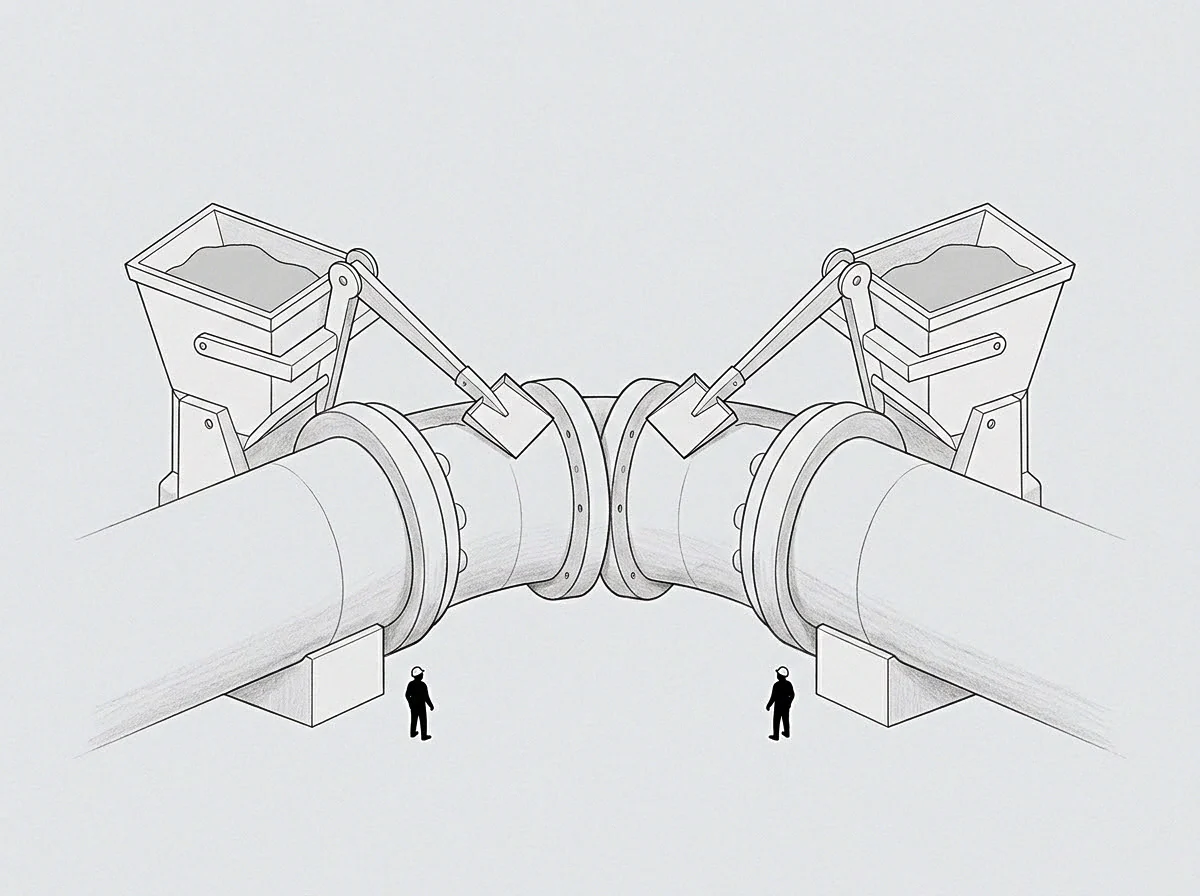
Executing full component replacement requires operational coldness and structural precision. The operation resembles organ replacement: the damaged component must be surgically isolated while the systemic host continues to function, minimizing acute hemodynamic shock to ongoing revenue and customer operations. Attempting to replace personnel one by one within a yielded structure fails reliably because the incoming individuals are socialized into the warped operating patterns of the surviving veterans within ninety days.
Component replacement succeeds when executed as an atomic modular swap.
Fresh components enter without history. The execution begins by establishing a clean boundary interface around the damaged division. All incoming and outgoing deliverables are reduced to rigid, documented specifications.
Once the operational dependencies are stabilized and decoupled from the internal human dynamics of the team, the leadership builds or sources the replacement unit in total isolation from the legacy personnel. The replacement team designs its internal workflows, establishes its operating standards, and builds its culture entirely free from the historical trauma and defensive heuristics that crippled the predecessor unit.
Component replacement succeeds only when the adjacent dependencies treat the new unit as an opaque service.
Once the replacement component demonstrates functional readiness against the defined interface contract, the operational splice occurs. Management executes the transition rapidly: the legacy team is dismantled, their access severed, and the replacement unit spliced directly into the active enterprise workflows. Because the interface was stabilized in advance, the systemic disruption remains confined to the transition window.
The permanent baseline performance recovery manifests almost immediately, as the new unit operates without the heavy energetic sink of hysteresis, political defense, or structural fatigue.
Replacing structural units cleanly restores the organization to its original elastic state, permitting natural operational growth without the parasitic drag of yielded systems.