
Inverting Operational Avoidance Vectors to Map Unspent Capacity Above Baselines
Inverting operational avoidance vectors redirects energy consumed by defensive routines into primary bottlenecks, releasing unspent capacity above baselines.

Trace
A technical document sat untouched in draft form for eleven months while the engineering lead completed six minor interface revisions around it. The interface adjustments consumed four hundred hours of labor. Each adjustment preserved the impression of steady momentum while the core calculation engine remained unaddressed.
That unaddressed calculation engine generated recurring performance errors during peak transaction windows.
Systemic diversion leaves a distinct geometric footprint across operational records. When an operator records activity over consecutive quarters, the recorded actions cluster along lines of minimal friction. The recorded actions reveal a persistent negative slope relative to the core performance axis.
That slope represents the path of least resistance, where effort expends itself on accessible tasks to bypass an expensive friction point.
A negative slope marks the exact coordinate where a system spends energy to evade an uncomputed operational condition.
The path of least resistance operates as an automated optimization routine within an organization. Labor naturally falls down the steepest descent away from acute ambiguity, difficult commercial negotiations, or unvalidated technical assumptions. The volume of activity deployed around the avoided coordinate matches the energetic weight of the obstacle itself.
Recording these diversions creates a directional map. The resulting map exposes the exact contour of whatever demands computational exertion.

Coordination Deficits Across Operational Baselines
Operational records show that evasive routines stabilize into standard operating procedures over extended durations. The established standard operating procedure fixes the daily routine, the routine fixes the output rate, and the output rate defines the baseline performance of the enterprise. Measuring that baseline reveals what an organization routinely delivers while actively routing around unresolved blockages.
- Observed operational baseline captures the sustained volume of commercial output generated under default routines without confronting structural operational drag.
- Avoidance vector magnitude indicates the total labor hours and financial capital systematically diverted into peripheral tasks to circumvent an acute structural friction.
- Deflection angle measures the geometric degree of operational deviation from the direct performance axis toward lower-friction administrative substitutions.
Energy diverted into evasive maneuvers accumulates as latent capability once isolated from routine drift. When an operator identifies where labor pools in repetitive defensive routines, the boundary of the unaddressed operational constraint becomes visible. The baseline stays intact through habitual maintenance.
Every unit of labor spent protecting that baseline from the friction of the unresolved task represents capacity ready for reallocation.

Floor
A baseline functions as an operational safety shelf below which an organization faces acute structural distress. Operating right above this survival margin provides predictability while consuming substantial energetic reserves in defensive containment. The margin absorbs repetitive administrative overhead designed to shield the system from confronting direct commercial realities.
Calculations derived from value clarify operational mechanics without introducing moral condemnation. When an operator assesses performance, the baseline registers merely as an established rate of delivery under current constraints. A low rate of delivery indicates the presence of unaddressed friction rather than personal negligence.
Treating the baseline as an arbitrary standard obscures the defensive stabilization work maintaining it.
A baseline stabilizes precisely at the level where defensive routines successfully insulate the system from unaddressed structural friction.
Unspent capability sits entirely above this defensive plane. Defensive activities, such as redundant audit layers, deferred client reviews, or cyclical roadmap restructuring, absorb surplus energy that could otherwise generate structural expansion. That surplus energy remains tethered to risk mitigation protocols designed around past organizational fractures.

Defensive Allocation of Discretionary Attention
Surplus energy diverted into preventive containment creates an artificial constraint on organizational throughput. An operator frequently perceives this constraint as a deficit in total available labor. Attention remains occupied by synthetic urgency generated to justify avoiding primary structural priorities.
The primary priorities languish because addressing them demands significant computational and emotional exertion.
Discomfort serves as an operational instrument indicating when active computation occurs instead of passive retrieval. Routine tasks rely on automated cognitive patterns that protect existing baselines with minimal discomfort. Moving toward an avoided operational vector immediately produces friction, which signals that the current operating model has reached its perimeter.
The system expends available attention constructing protective procedures rather than absorbing that informational friction.
The stated policy clause governing quarterly task reallocations releases trapped attention only when defensive administrative sign-offs expire automatically after thirty days.

Vector
Directional evasion requires measurable inputs that establish both trajectory and magnitude across operational cycles. When labor repeatedly shears away from a critical commercial deliverable, that shear angle indicates the presence of severe operational resistance. Measuring the trajectory requires tracking where time flows when primary milestones face indefinite delays.
Tracking time expenditures reveals that evasive actions exhibit rigid consistency across successive quarters. An engineering team might consistently refactor deployment pipelines whenever major architectural decisions require client validation. A commercial sales director might repeatedly revise internal collateral to delay confronting an uncertain enterprise pricing structure.
These patterns trace an evasion trajectory with quantitative properties.
| Evaluation Dimension | Evasive Operational Trajectory | Inverted Operational Path |
|---|---|---|
| Primary Resource Allocation | Peripheral maintenance and defensive protocol revision | Direct resolution of primary structural friction |
| Systemic Energy Expenditure | Continuous dissipation through cyclical task deflection | Concentrated application against operational boundaries |
| Baseline Impact | Preserves existing baseline through protective redundancy | Shifts performance baseline upward by absorbing friction |
| Informational Return | Zero novel feedback beyond confirmed habituation | High diagnostic data yield from unvalidated terrain |
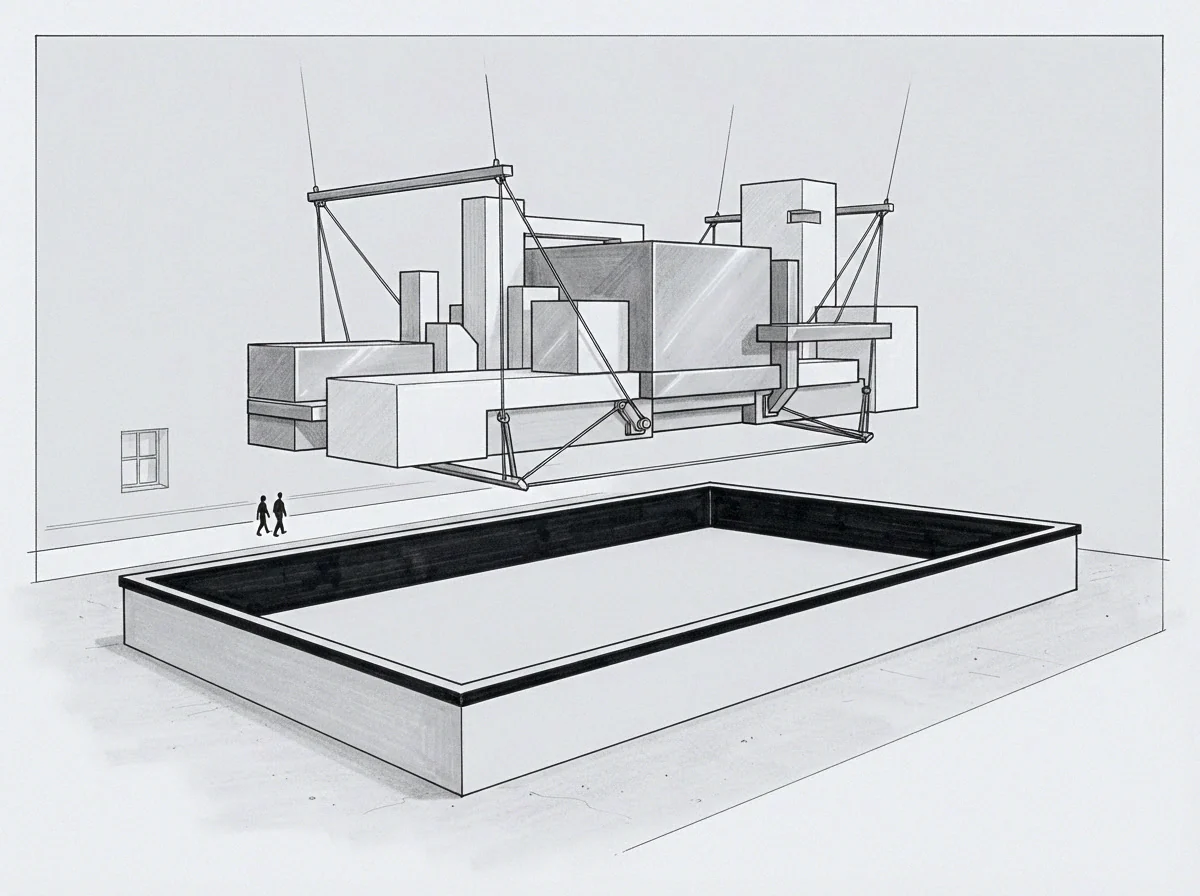
Can Latent Volume Register Without Direct Exertion?
Latent capacity remains unobservable until the system stops deploying defensive compensations. The sheer volume of energy committed to maintaining an evasion trajectory matches the volume available for direct operational application. Inverting the directional vector transforms defensive labor into an exploratory instrument.
The operator maps unspent capacity by plotting the exact inverse of the evasive trajectory.
Direct inversion shifts effort from shielding the baseline to confronting the unaddressed friction point. Because evasion trajectories consume measurable capital and attention, inverting them directs an identical magnitude of force toward the root bottleneck. The magnitude remains identical while the operational sign reverses from negative diversion to positive progression.
Misidentifying an avoidance vector as an absolute organizational boundary locks operational capacity into permanent defensive stagnation while systemic costs escalate unnoticed.
Vault
Consider an enterprise software firm operating with sixteen technical staff and a stable annual revenue profile. Assume the firm spends eighteen months refining automated documentation rather than deploying an updated enterprise integration module. The documentation absorbs thirty hours of collective effort weekly while the integration module represents forty percent of prospective pipeline value.
The avoidance vector points directly away from customer interface risk and toward closed internal tasks.
The volume of unspent capacity in this firm equals thirty hours weekly multiplied across seventy-two weeks. That volume represents over two thousand hours of high-grade engineering labor locked in defensive containment. The unaddressed module sits as an unresolved friction point.
By calculating the labor deployed in circumvention, the leadership reads the scale of latent capability waiting above the revenue baseline.
A structural boundary marks the limits of the current operating model and defines the exact threshold of unspent capacity.
Latent potential operates as a physical quantity rather than an abstract aspiration. When an operator quantifies the resources consumed by defensive avoidance, the resulting figure defines the latent capacity ready for deployment. The firm holds this capacity in reserve through systematic diversion.
The unspent volume sits directly behind the avoided operational task, bounded by the difficulty of the challenge itself.

Structural Boundaries and Model Edge Mapping
An organizational model defines its limits through the specific friction points its staff refuse to confront. Operating within these limits keeps operations stable, predictable, and confined to historical baselines. Moving past the boundary requires accepting the cognitive and operational friction associated with unresolved organizational realities.
- Friction identification isolates the specific operational milestone that triggers avoidance behaviors and administrative diversion.
- Magnitude calculation quantifies the capital, labor hours, and attention redirected into defensive routines to bypass that friction.
- Vector inversion directs that identical quantity of labor straight into the root bottleneck to release trapped capacity.
The operator who built those documentation layers over eighteen months would simply state that the enterprise integration specifications carried ambiguities that made writing code uncomfortable.
Transit
Moving across an operational threshold requires systematic redirection of energy from defensive routines to primary bottlenecks. The transition begins the moment defensive tasks stop receiving administrative protection. Stripping defensive tasks of priority forces the system to confront the friction points that originally generated the avoidance vector.
Friction points yield essential diagnostic data when approached directly. The errors encountered while tackling an unaddressed structural challenge define the exact coordinates where the operational model must adapt. Inverting the avoidance vector converts systemic avoidance into an analytical discovery tool.
Every error encountered during direct engagement marks an accurate parameter of operational capability.
Capacity expands as the organization incorporates the friction it previously circumvented. The baseline moves upward because the energetic output formerly consumed by diversion now supports expanded structural throughput. The unspent volume above the old baseline transforms into active, realized output.
Operating above the baseline ceases to feel like an unsustainable exertion once defensive diversions end.
What remains undetermined is the precise duration an organization can endure high informational friction before reverting to secondary defensive diversions.