
Mapping Avoidance Coordinates To Measure Unspent Capacity Above Stated Baselines
Mapping organizational avoidance coordinates reveals the exact unspent operational capacity sequestered behind maintained performance baselines.

Contour
A founder tracks operating metrics against a projected quarterly target while leaving one operational registry untouched for eleven months. The target represents a stated baseline, establishing an explicit performance threshold that the team reports to capital allocators. Production numbers meet the threshold, cash flow remains neutral, and scheduled deliveries clear the board.
Across the same calendar window, every conversation involving direct field feedback gets reassigned to junior staff or routed through indirect satisfaction forms. The diversion appears as administrative scheduling, yet the directional consistency reveals an underlying expenditure pattern. Energy moves along the path requiring the least immediate expenditure of systemic friction.
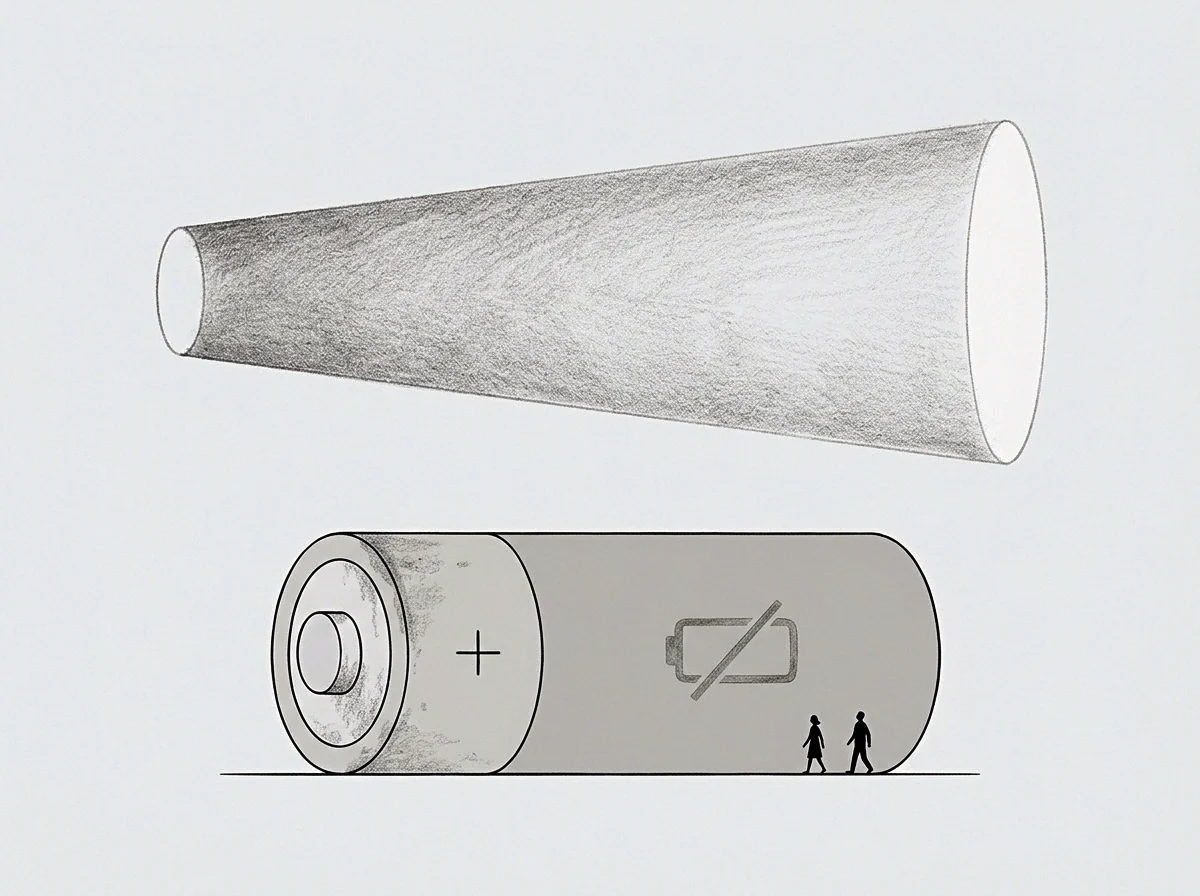
Every operational system establishes baselines to demonstrate minimum competence. The stated baseline functions as a flat reference elevation, recording acceptable throughput, scheduled commitments, and established gross revenues. Unspent operational capacity exists above that reference elevation, remaining invisible to standard variance reporting because the agreed metrics register nominal health.
To detect this latent volume, an operator traces the specific trajectories where organizational attention turns away from high-yield interventions.
A system operating above a verified revenue floor routes its technical talent away from core architectural renegotiation whenever immediate conversion quotas absorb the weekly sprint.
The coordinate structure of avoidance measures the distance between the path a team actually takes and the steepest vector toward value creation. When technical teams repeatedly rewrite functional internal interfaces while declining to publish an external protocol, the diversion marks the boundary of their current operational model. The team remains productive inside its comfort envelope, logging verifiable hours against genuine codebases.
The persistent avoidance of the external interface pinpoints precisely where latent systemic capacity sits unspent.
Measurement requires treating avoidance as a directional coordinate rather than an operational failure. Human systems follow gradients toward minimal computational and emotional tension. When an operator records each incident of work redirection, the resulting log forms an avoidance map.
The volume of capacity held in reserve matches the magnitude of that redirection.

Mathematical Properties of the Operating Gradient
Value serves as an independent operational axis along which capabilities organize. The operating gradient represents the first derivative of value with respect to applied organizational effort. Steep slopes demand intensive resource expenditure, personal exposure, and cognitive strain.
Flat slopes permit frictionless execution through habitual procedures and settled administrative rituals. When a leadership team approaches a steep gradient, the internal friction of execution increases sharply.
Descent along the slope of least resistance happens naturally. Systems settle into local performance pockets where routine activity satisfies stated baselines without triggering systemic stress. A founder who reviews customer churn logs but avoids direct customer exit calls chooses this local minimum.
The action maintains the appearance of diligence while evading the steep informational gradient of unfiltered rejection.
The latent capacity of any organization equals the unspent operational volume lying between its current path and its potential peak vector. Computing this volume requires reading the negative gradient of daily avoidance and mirroring it across the stated baseline. Where the avoidance is sharpest, the latent upside is greatest.
The avoided coordinate reveals the unspent potential directly above it.

Seat
An operator occupies a physical chair at a board table while preserving fifty percent of personal working capacity behind defensive reporting. The weekly operational updates present steady delivery cycles, customer retention curves, and stable team retention. Every attendee at the table reviews these decks, accepting them as evidence of maximum exertion.
The operator knows the stated baseline represents thirty hours of real cognitive labor, leaving thirty additional hours sequestered from scrutiny.
The seat holds formal accountability, fixing the person in place while permitting systemic drift. When founders experience exhaustion, the fatigue often stems from the labor of active diversion rather than the direct demands of production. Guarding an unspent reserve while maintaining the performance of maximum output consumes significant internal energy.
The diversion protects the individual from the acute discomfort of the unknown.
A founder who maintains sixty hours of documented activity while withholding the single confrontation that alters partner equity spends half their working week financing an evasion.
Consider two technical partners who build software for three years without settling commercial equity splits. The commercial metrics show steady growth, paying both founders standard salaries while tracking customer acquisition curves. The software releases ship on schedule every fortnight.
Underneath this productivity, neither partner will initiate the conversation regarding final share distribution, capital dilution, or executive title allocation.
The partners construct elaborate technical initiatives to fill the calendar, preventing open hours where unaddressed legal realities might surface. They debate database indexing strategies, rebuild build pipelines, and rewrite test suites. The unaddressed equity conversation sits as an absolute coordinate of avoidance.
The emotional and operational capital poured into technical diversion represents unspent commercial capacity. If redirected into firm governance, that same energy resolves the corporate foundation within four days.

Divergence in Executive Asset Allocation
The following structural assets show typical redirections where executive capacity sits unspent behind stated operating baselines.
- Capital Structure Negotiations consume enormous avoidance energy through operational overwork while direct partner share distributions remain deferred indefinitely.
- Commercial Distribution Channels encounter systematic avoidance through endless internal product refinements, shielding the commercial lead from external distribution rejection.
- Direct Technical Refactoring yields to trivial interface redesigns, allowing engineering managers to report continuous output while evading architectural debt.
- Executive Performance Reviews generate extensive quantitative scorecards to avoid addressing one persistent personnel deficiency at the operational core.
Executive avoidance carries a specific structural signature. The person in the seat presents quantitative volume to disguise qualitative omission. Activity substitutes for directional exposure.
The stated baseline stays met, yet the business advances solely along safe lines.
A founder who perceives this pattern faces an analytical choice. The baseline can be accepted as total capacity, or the avoidance coordinates can be plotted to identify the unspent reserve. The physical seat remains unchanged, but the allocation of executive will shifts toward the friction point.

Deflection
Organizational deflection operates through repeatable structural patterns that redirect effort away from structural friction. When operational teams identify an insurmountable task, they rarely cease working. They reassign collective attention toward compliant tasks that simulate meaningful output.
The deflection angle measures the divergence between the required vector of growth and the selected vector of safety.
Measuring avoidance requires distinguishing between rational strategic refusal and systemic operational diversion. A strategic refusal preserves capital by rejecting low-yield avenues, producing immediate cost reductions and clearing calendar space. Systematic deflection consumes maximum operational resources to create the illusion of resolution, maintaining calendar density while keeping core variables unchanged.
Strategic refusal creates silence; deflection produces loud, performative activity.
When calendar density rises alongside stagnant commercial velocity, the organization is funding deflection rather than advancement.
The diagnostic table below isolates operational baselines across common corporate functions, mapping the active diversion, the underlying resistance, and the latent capacity revealed by the deflection.
| Operational Domain | Stated Performance Baseline | Active Deflection Vector | Avoidance Friction Coordinate | Unspent Latent Capacity |
|---|---|---|---|---|
| Enterprise Sales | Sustained pipeline outreach volume | Iterative collateral revisions | Direct executive price negotiation | Contract value expansion |
| Software Architecture | Bi-weekly release milestone delivery | Repetitive dependency updates | Core database schema migration | Platform query throughput |
| Executive Governance | Weekly leadership status reviews | Operational micro-management | Underperforming executive transition | Organizational capital reallocation |
| Customer Relations | Standardized ticket resolution times | Automated satisfaction surveying | Unscripted churn post-mortems | Product retention endurance |
In each domain, the stated performance baseline satisfies outside observers. The board reviews the enterprise sales pipeline and praises the collateral revisions. The product committee tracks release milestones and confirms engineering cadence.
The active deflection vector absorbs the available capacity above the baseline, protecting the team from the friction coordinate.
Resolving this deflection demands recognizing that the friction coordinate marks the exact point of maximum return. The software team avoiding database schema migrations loses massive throughput gains. The executive avoiding a personnel change ties up capital that could finance an entire subsidiary.
The diversion preserves emotional comfort while capping institutional velocity.
Which Signals Locate the Latent Capacity?
Deflection generates observable structural exhaust that an auditor can detect without interviewing team members. Work items that cycle repeatedly through status updates without altering enterprise states indicate an active deflection loop. When a document undergoes twelve consecutive editorial passes without external circulation, diversion is occurring.
The team uses refinement to avoid exposure.
Another reliable signal emerges from meeting duration relative to decision velocity. Deflection cultures produce long sessions that end in procedural deferrals. Teams schedule future alignment meetings to handle items that require five minutes of decisive commitment.
The unspent capacity sits locked behind those deferred decisions, waiting for an operator to force the friction point.
An operator traces these deflections to construct an institutional balance sheet of suppressed energy. The total unspent capacity within an enterprise regularly exceeds its deployed operational output. Unlocking that capacity involves dismantling the deflection routes rather than demanding longer working hours.

Span
The distance between a declared baseline and the absolute operating ceiling represents the unspent operational span. In most enterprises, this span remains entirely unmapped because conventional reporting structures measure compliance rather than latitude. Compliance confirms that current operations do not breach agreed boundaries.
It offers zero data concerning how much additional load the infrastructure could sustain if deflection vectors ceased.
Operators frequently assume their teams function at peak load because individual contributors report high exhaustion levels. Fatigue measures internal friction rather than structural throughput. A machine with unaligned gears burns energy through heat dissipation while delivering negligible kinetic drive.
An organization consumed by avoidance burns human stamina through deflection while delivering baseline throughput.
A precision assessment isolates the friction load from the productive drive. The operator establishes fixed reference coordinates across four distinct operational vectors, isolating baseline drift from genuine output limits.
- Baseline Verification Phase establishes the empirical floor of commercial and technical commitments through unvarnished historical output data.
- Deflection Mapping Sequence documents every recurrent operational diversion, tracking hours expended on secondary work items designed to bypass friction coordinates.
- Capacity Mirroring Calculation projects the unspent operational volume directly above the baseline, translating diverted energy into equivalent production scale.
- Friction Engagement Protocol redirects organizational focus into the avoided coordinates, testing structural load capacity against primary real-world constraints.
Executing this sequence alters the operating rhythm of the entire organization. The team stops treating exhaustion as proof of capacity limits. They recognize that significant reserves sit idle behind protective operational habits.
The process reveals that institutional limits are behavioral selections rather than hard operational ceilings.
A team operating at true capacity experiences clean exhaustion from concrete friction, while a team in deflection experiences corrosive fatigue from administrative evasion.
The boundary surveyor maps this span by walking the outer parameter of what the enterprise explicitly refuses to touch. If an enterprise flatly refuses to test automated pricing models because manual configuration feels secure, that specific refusal defines an outer coordinate of the current model. The latent capacity of the pricing engine sits behind that refusal wall.
The wall marks where computing stops and automated retrieval begins.
Expanding the operational span requires breaching those defensive boundaries. The operator selects the most avoided coordinate and directs the team to process it directly. The action eliminates the energy drain of diversion, immediately releasing unspent capacity into productive execution.
The baseline steps upward as a natural consequence.

Residue
Whenever an organization routes around an essential operational challenge, an uncomputed residue settles along the bypass. This sediment consists of unaddressed customer feedback, deferred structural modifications, unexecuted personnel changes, and unstated corporate agreements. The accumulation increases the system mass, requiring progressively greater energy simply to maintain baseline performance.
Systems encumbered by heavy residue eventually stall under their own diversionary architecture.
Consider the cost incurred by maintaining these systemic bypasses over multi-year cycles. An enterprise that constructs secondary reporting software to compensate for an incomplete database migration pays for hosting, software maintenance, and support teams. Those financial and human resources represent pure diversion expenditure.
The baseline remains stable, yet the operational debt consumes an expanding proportion of gross cash flow.
The residue thickens until routine operations grind to a halt. Every new operational initiative must navigate around the accumulated bypasses of past decades. Onboarding new personnel requires explaining unwritten rules regarding which questions cannot be asked and which files cannot be opened.
The avoidance coordinates have hardened into structural corporate architecture.
A founder committed to unspent capacity measurement conducts regular audits of this operational sediment. Tracing the sediment back to its source locates the exact coordinate where the system first turned away from a fundamental friction point. That origin point retains the unspent capacity that was originally diverted.
Clearing the sediment requires facing the primary friction that the organization spent years evading.
The counterpart in this operational dynamic recognizes the avoidance pattern clearly. Investors, strategic clients, and external auditors observe the elaborate mechanisms built to explain why specific metrics remain untouched. When pressed on these points, the defensive operator presents detailed narratives of future roadmaps and planned expansions.
The counterparty understands that until the operator confronts the core friction coordinate, the stated baseline represents the enterprise limit, leaving all latent capacity permanently unspent.