
Mapping Systemic Boundary Limits to Prevent Sudden Failure Across Core Operational Execution Loops
Systemic boundary failure occurs when hidden queue backpressure exhausts latent buffer capacity before operational feedback loops adjust execution throughput.
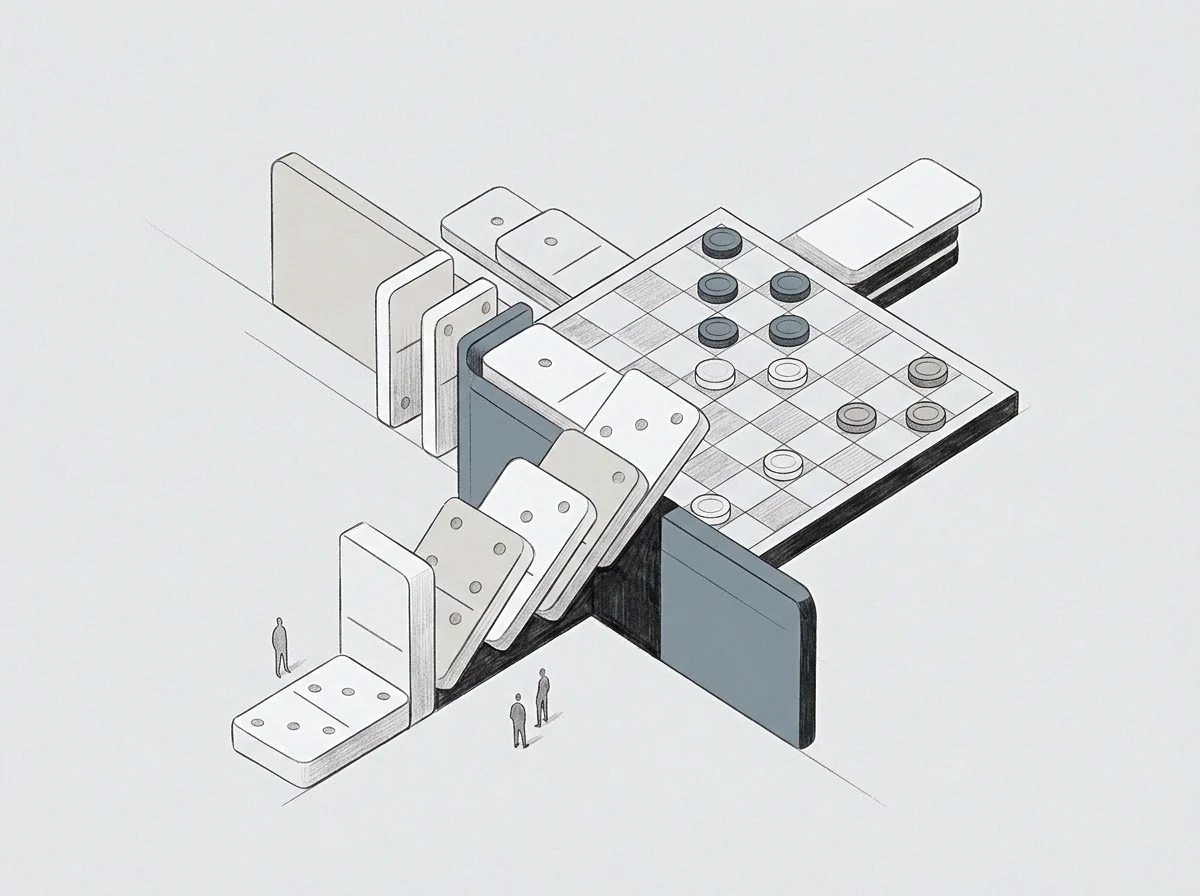
Stress
Operational execution loops encounter boundary limits when processing pressure exceeds designed throughput baseline figures. Software pipelines, administrative workflows, and operational teams appear stable right up to the point of structural stoppage. This operational stability is an illusion produced by internal buffering.
Behind the visible surface, unprocessed tasks collect in peripheral queues, absorbing velocity drops before systemic failure becomes visible on primary monitoring dashboards.

Initial Slope and Silent Buffering
Operations maintain target output rates by expanding execution time windows. As internal load expands, tasks spend longer periods awaiting active processing. Capacity falls.
The queue grows. The loss function of an operational loop tracks the distance between target completion vectors and actual arrival vectors. When this gradient steepens, individual steps inside the loop route around congested checkpoints, creating informal workarounds.
Latency increases. Work halts.
Every operational loop possesses a defined tolerance for unprocessed load. When input vectors arrive faster than the loop can resolve them, the extra load spills into informal storage. Tolerances narrow.
This unseen accumulation hides the true cost of execution, masking structural friction until capacity is entirely spent.
- Queue Backpressure Accumulation occurs when input arrival vectors consistently outpace downstream processing bandwidth.
- Informal Bypass Routing emerges as operational actors seek paths of least resistance around clogged verification gates.
- Signal Processing Lag expands the delay between operational error events and systemic correction responses.
- Unprocessed Latent Task Volume collects behind primary interfaces, creating hidden structural degradation vectors.
Work continues at nominal speed while peripheral queues absorb the unreported operational excess.
Failure in high-throughput environments rarely begins with a dramatic event. Systemic load escalates. It begins with silent queue expansion that degrades response curves over consecutive cycles.
Execution stops. Early detection depends on measuring queue depth directly rather than relying on final output counts.
It remains open whether early queue telemetry alone can differentiate temporary throughput spikes from systemic saturation before operational loops halt completely.

Node
Execution loops intersect at structural convergence points where decisions, data, and resource allocations clear. These control points establish the throughput ceiling for the operational ecosystem. When operational velocity increases, execution units push volume through these primary intersections without adjusting underlying processing capacity.
Vectors shift. Latent strain mounts.

Boundary Limit Mapping Across Execution Intersections
Boundary limits mark the wall where operational fidelity degrades to zero. Mapping these limits involves tracing the exact load state where localized processing delay triggers systemic recalculation. Discomfort within execution teams functions as a spatial measurement of computational load at the boundary wall.
Silence indicates saturation.
Queuing theory research under heavy-tail processing distributions shows that systemic delays expand non-linearly once queue depth crosses eighty percent of total memory ceiling capacity. The baseline model assumes uniform transaction processing times, yet operational reality exhibits high variance. When long-tailed tasks cluster at a convergence point, processing queues backup rapidly, triggering cascading delays across dependent loops.
| Load State | Queue Depth Vector | Processing Latency | Error Propagation Rate | Recovery Overhead |
|---|---|---|---|---|
| Nominal Loop | Stable low volume | Sub-second baseline | Zero systemic spill | Negligible resource spend |
| Buffered Boundary | Linear queue buildup | Extended processing window | Localized containment | Linear intervention cost |
| Saturated Wall | Exponential backlog | Unbounded delay | Cascading failure vector | Exponential capacity spend |
Measuring boundary limits requires evaluating execution stress across multiple operating conditions. The operator monitors processing delays at primary convergence points to identify early capacity walls. When queue depth increases while throughput remains flat, the boundary limit is reached.
Reserves collapse. Continuing to push volume past this point guarantees sudden operational failure.
Operating an execution loop beyond mapped boundary limits converts localized operational delays into sudden systemic collapse.
Systemic boundaries function as hard constraints rather than soft guidelines. Pushing past operational capacity damages downstream processing units, requiring extensive manual effort to restore baseline performance.
Disregarding mapped boundary limits forces execution loops into abrupt failure states, destroying operational throughput and inflating recovery spend by orders of magnitude.

Drain
Unprocessed operational friction continuously extracts energy from execution loops, reducing overall processing velocity. Every unmapped dependency and manual intervention creates a persistent outlet where execution capacity leaks away from main objectives. Over extended cycles, these minor leaks aggregate into severe operational deficits.
Errors accumulate rapidly. Throughput drops.
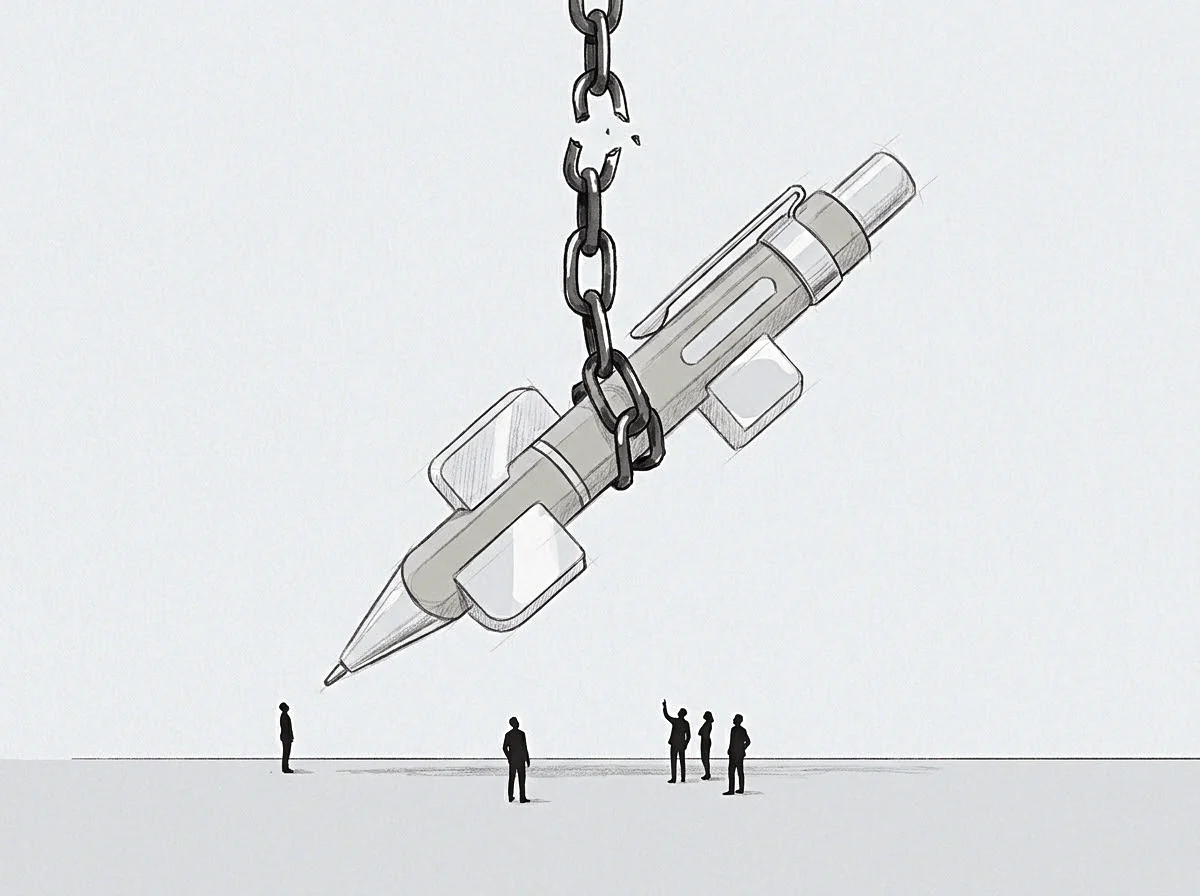
Is Latent Buffer Exhaustion Predictable Before Failure?
Telemetry models derived from queuing dynamics demonstrate that systemic failure arrives non-linearly once buffer capacity drops past twenty percent. In physical hydraulic pipelines, minor thermal expansion creates sudden valve seal ruptures without preceding leakage. Operational execution loops exhibit identical characteristics, maintaining output fidelity until internal storage buffers reach complete exhaustion.
The exact predictive horizon for catastrophic loop breakdown under non-linear scaling remains bounded by systemic feedback delays. Reliable predictions beyond three feedback cycles cannot be defended without empirical load testing. The operator maintains structural buffer margins to absorb unexpected operational variance.
Systemic buffer exhaustion triggers sudden execution failure whenever non-linear input spikes encounter depleted latency margins.
Buffer depletion progresses unnoticed when operational loops evaluate success strictly by output volume. While final metrics appear healthy, the underlying buffer reserves vanish. Buffers clear slowly.
Once latent capacity reaches zero, even routine operational spikes cause immediate stoppage.
Establishing a mandatory clear-buffer clause at twenty percent remaining capacity converts unpredictable loop failure into scheduled maintenance windows.

Joint
Structural linkages between independent execution loops dictate how operational forces transfer across an enterprise network. Handover interfaces between execution teams or automated microservices act as physical hinges. When one loop encounters an operational wall, the resulting backpressure passes directly through these linkages into adjacent processing units.
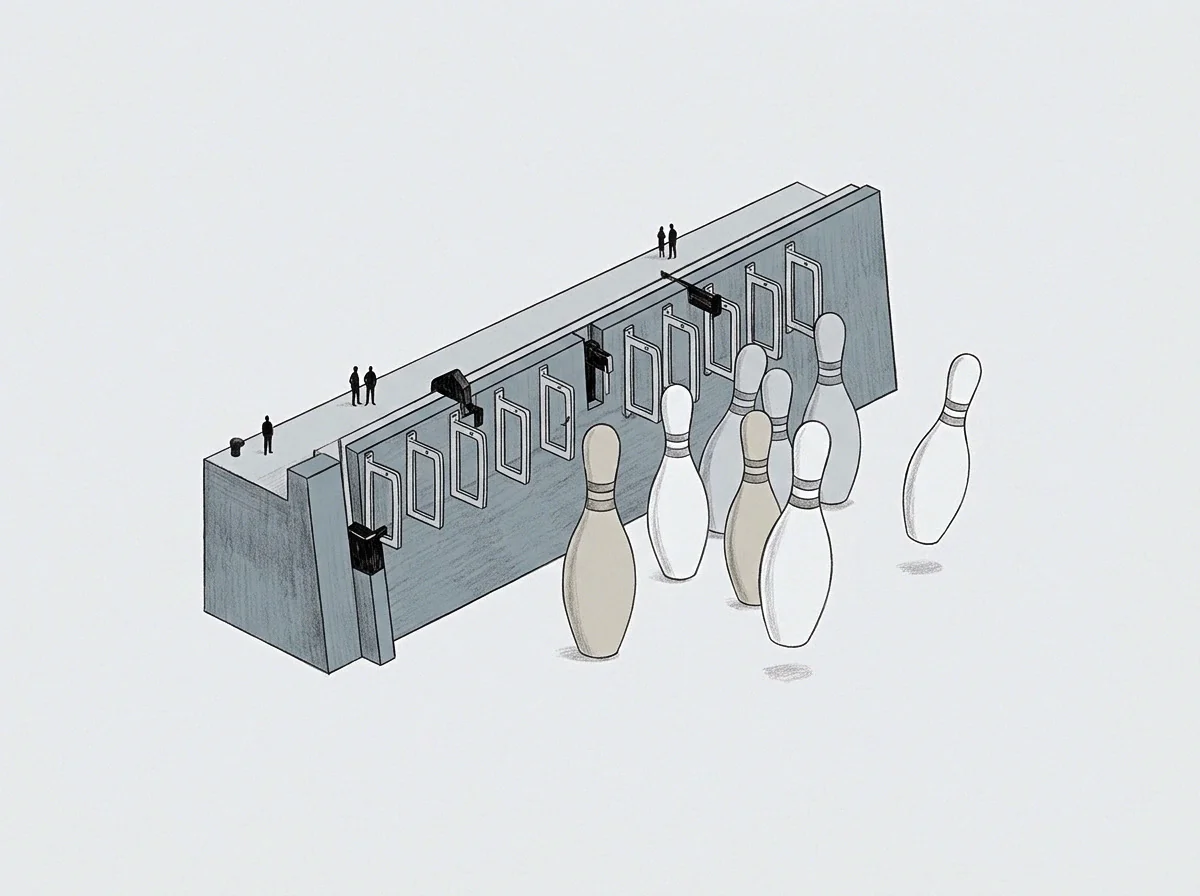
Enforcing Inter-Loop Boundary Protections
Operational stability demands explicit decoupling mechanisms at every handover interface. Circuit breakers, rate limiters, and isolated staging environments prevent failure propagation across execution domains. Without strict boundary protections, localized loop collapse spreads across the organization.
- Establish real-time monitoring of queue depth and processing latency across all handover interfaces.
- Define hard rate limits that restrict upstream volume when downstream processing delays exceed baseline limits.
- Implement isolated fallback execution loops to process critical transactions during primary node congestion.
- Schedule regular load shedding routines to flush secondary queues before total operational buffer exhaustion occurs.
Decoupling loops protects operational integrity by containing localized failures. When an upstream process encounters an unexpected delay, downstream circuits continue operating within isolated safety margins. This isolation prevents single-point disruptions from disabling broader operational networks.
Upstream teams insist that primary performance figures appeared normal until the exact moment downstream processing stopped entirely.

Anchor
Operational stability depends on firm systemic reference points that anchor the operational baseline regardless of real-time volume fluctuations. Establishing hard boundary limits stabilizes core execution loops by bounding maximum queue depth and enforcing minimum execution standards. These structural boundaries convert chaotic operational loops into predictable execution vectors.

Sustained Velocity and Capacity Alignment
Long-term operational throughput rests on continuous alignment between processing capacity and input arrival vectors. When execution limits are mapped and respected, systems operate within calculated efficiency windows, preventing sudden failure events. The capacity left unspent inside execution loops forms the primary buffer against unexpected operational variance.
Maintaining structural headroom inside operational loops costs far less than recovering from total systemic breakdown.
Systemic boundary mapping provides the operational clarity required to maintain high-throughput execution loops under varying load conditions. By monitoring queue depth, mapping boundary walls, and enforcing circuit breakers, organizations build resilient operations capable of absorbing major operational shocks.
The operator who maps boundary limits early maintains steady throughput across every execution cycle, while unmapped loops collapse under normal operational strain.