
Mapping Unseen Spatial Impedance To Isolate True Operational Intent
True operational intent is isolated by measuring work trajectory deviations around unseen spatial friction rather than trusting stated strategic goals.

Signal
A product team spent fourteen months modifying an internal reporting dashboard while a core API integration remained untouched behind three layers of manual authorization. Scheduled release dates moved four times. On paper, capacity was allocated to platform infrastructure, yet daily logs showed engineering hours shifting into secondary interface work whenever a third-party security review approached.
Work moved along the line of least resistance, even as the stated operational objective required climbing an unmapped structural slope.
Operational terrain is rarely flat. When executive directives mandate direct execution, execution paths bend around unacknowledged structural obstacles inside the enterprise topology. This bending is spatial impedance, the invisible friction created by unclear ownership, legacy approval protocols, misaligned incentives, and social exposure costs.
Systems seek the path of least resistance through gradient descent, moving toward local minima where short-term energy expenditure is minimized. The observed path of execution indicates where spatial impedance is highest, rather than where true operational priority lies.
An operational path bends where latent spatial friction exceeds the direct energy required for execution.
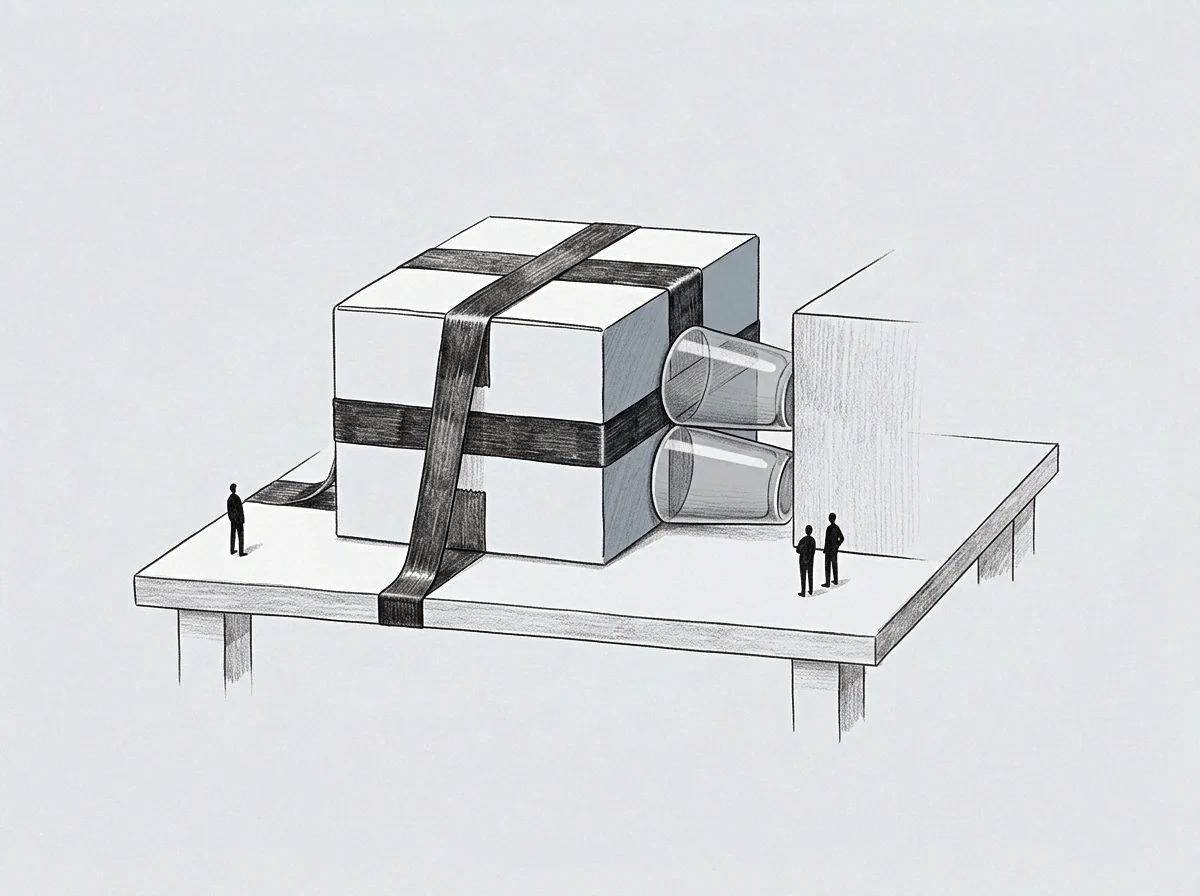
Topological Distortion In Workflow Planning
Project plans treat organizational space as a uniform grid where moving from task A to task B costs a predictable number of labor hours. Reality presents a warped surface where moving between adjacent seats involves traversing deep administrative trenches. A simple database schema change might require four cross-departmental alignment calls, while a complex front-end rewrite requires zero permission from external stakeholders.
The operator naturally chooses the complex rewrite.
The distance between planned trajectory and real progress measures the unseen topological slope. When work repeatedly routes around a specific department, authority boundary, or technical review, that node exerts high spatial friction. Measuring this bending reveals the actual value axis of the organization.
Operators preserve personal energy by avoiding high-impedance coordinates, regardless of quarterly key performance indicators.
This dynamic creates a divergence between explicit mandates and daily output. Stated strategic goals assume an unimpeded straight line, whereas actual output forms a curved trajectory around structural obstacles. By tracing these spatial deviations, an observer isolates the hidden energetic costs governing the execution layer.
When an unstated threshold clause activates after fifty thousand units of production, approval authority transfers automatically to central risk compliance without adjusting the project delivery timeline.

Gate
Administrative checkpoints alter the energetic landscape of an organization long before a team arrives at them. The anticipation of friction alters behavior upstream, causing teams to modify deliverable shapes to bypass structural reviews entirely. What appears to be an architectural decision often reflects a deliberate detour around a known organizational barrier.
Friction accumulates around specific boundary nodes, creating systemic bottlenecks that divert energy across the entire enterprise topology. Identifying these friction nodes relies on observing repetitive operational path deviations.
- Structural Delay Coordinates generate localized holding patterns where decisions park until administrative exposure drops below a personal risk threshold.
- Informal Approval Vectors emerge when informal social capital bypasses formal governance channels to maintain momentum through high-impedance territory.
- Scope Compression Loops occur when project scopes shrink iteratively to avoid triggering mandatory cross-functional security reviews.
- Interface Hoarding appears as teams build redundant internal tooling to eliminate external operational dependencies.

Quantifying Local Minima In Execution Paths
Teams settle into local minima when the energy required to climb over a structural barrier exceeds the visible return on direct execution. The local minimum is a stable state of suboptimal performance. Inside this state, activity metrics remain high because continuous low-friction tasks consume available capacity, preventing total operational standing still.
The operational baseline remains steady under these conditions.
A baseline measurement of velocity inside a local minimum reflects the operational floor of the current model, not the potential output of the team. Attempting to force higher velocity through executive pressure without removing the spatial barrier increases internal system heat. Engineers refactor working code, product managers rewrite documentation, and middle management requests additional status meetings.
The system computes low-value work because high-value execution faces an impassable administrative wall.
These costs accrue immediately across the organization.
Ignoring spatial impedance when assigning operational intent results in capital being redirected toward artificial productivity indicators while primary operational bottlenecks widen, eventually forcing emergency structural reorganization at triple the baseline cost.
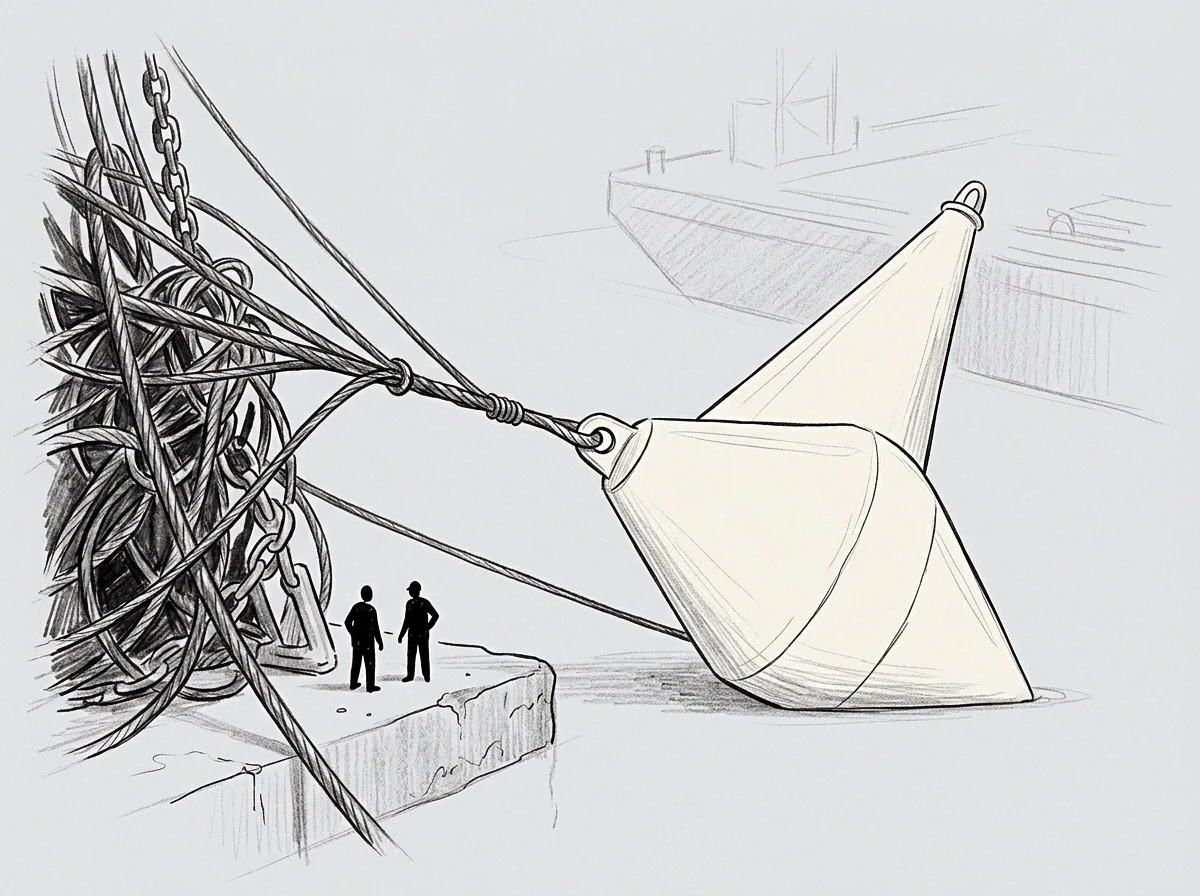
Mass
Unprocessed work does not disappear from an operational environment; it accumulates along the boundaries of high friction. This accumulation represents latent potential, an unspent volume resting on the negative side of the structural slope. Mirroring the negative gradient above the operational baseline reveals the exact shape and magnitude of what the system actively routes around.
Consider two operational models operating under identical strategic mandates across a twelve-month production cycle.
| Evaluation Criteria | Implicit Friction Routing | Explicit Impedance Mapping |
|---|---|---|
| Path Selection Logic | Follows lowest energetic resistance regardless of objective value | Identifies high-friction barriers and allocates targeted structural effort |
| Accumulated Work Profile | Latent potential collects around unaddressed administrative walls | Unspent volume converted into direct execution units through boundary shifts |
| Velocity Trajectory | High initial activity decaying into long-term local minima stagnation | Measured initial progress followed by sustained linear ascent |
| Resource Distribution | Diffused across low-impedance auxiliary tasks to sustain output metrics | Concentrated at mapped friction gates until the spatial barrier breaks |
Capacity drops to zero when high-value initiatives strike an unmapped administrative wall, forcing teams to burn reserves on secondary tasks.
The volume of unprocessed work sitting at an organizational boundary equals the magnitude of the friction holding it there.
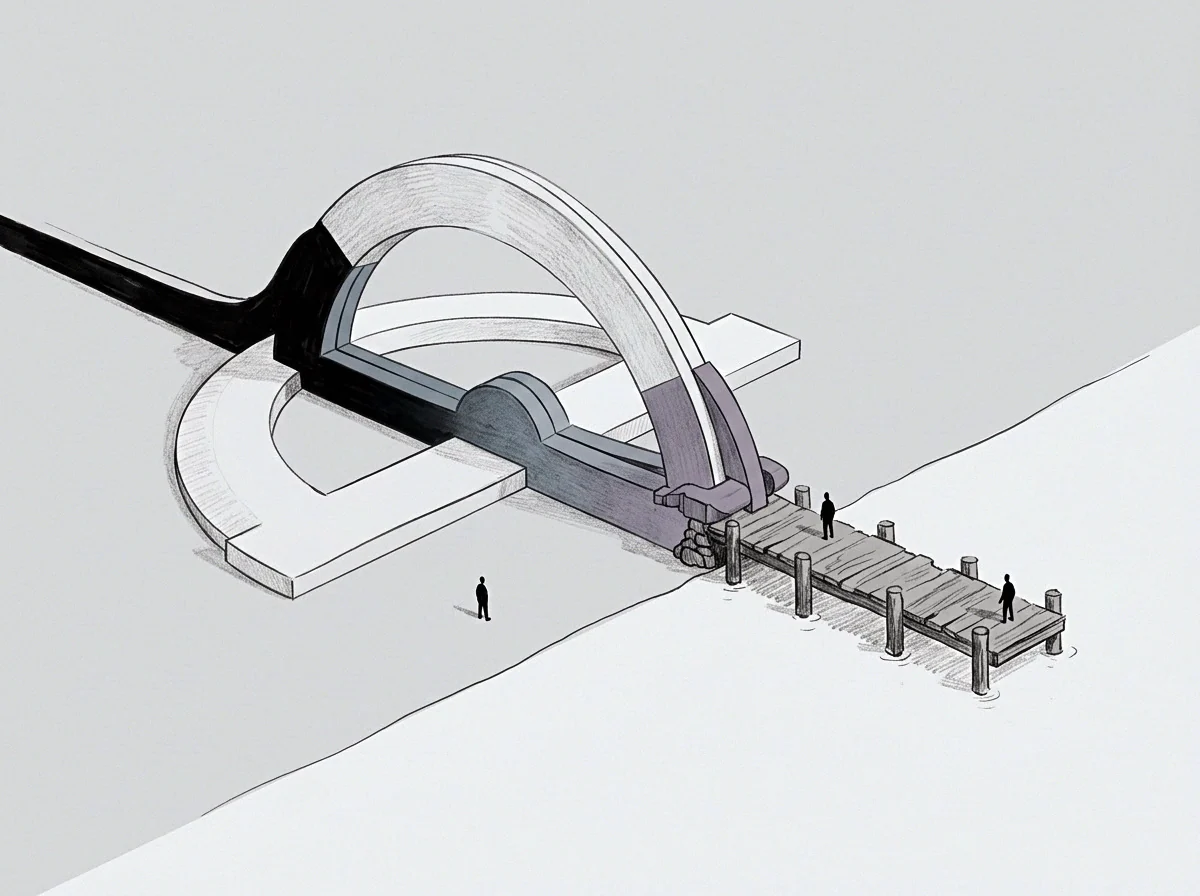
Mirroring The Negative Gradient
To measure true operational intent, an observer maps the negative gradient of work trajectories. Where work stops, bends, or fragments, a coordinate marker emerges. Inverting this contour line generates a mirror profile of latent energy waiting for structural release.
Take an enterprise software business where enterprise sales engineers consistently build custom integration wrappers instead of handing deals to the core product engineering group. The stated reason is client urgency. The structural reason is an eight-week core engineering intake queue governed by rigid quarterly prioritization boards.
The sales team absorbs the local cost of building ad-hoc wrappers to avoid the high spatial impedance of the intake board.
Friction dictates the ultimate route taken.
The total volume of ad-hoc wrappers built over a two-year window represents the latent operational intent for platform extensibility. By measuring the spatial impedance of the intake board, leadership can reallocate core engineering capacity precisely to the coordinates where custom wrappers accumulated, converting latent potential into standardized product capability.
In operational design, the spatial impedance of a governance boundary determines the threshold where informal bypasses become permanent infrastructure.

Drift
Avoidance behavior provides exact coordinate markers for system boundaries. When an operator repeatedly delays a specific task, redirects attention toward routine maintenance, or requests unnecessary data collection, the system signals an impending model boundary. The discomfort felt at this boundary measures active computation rather than failure.
The operational path shifts away from the objective.
Mapping these avoidance coordinates exposes where the system model ends and uncomputed terrain begins. When an organization approaches its model boundary, standard heuristics fail to generate predictable outcomes, triggering defensive operational drift.
- Boundary Contact occurs when a team encounters a problem space where current operational models offer no pre-computed path.
- Impedance Spike follows as the system registers the true energy cost required to compute a new resolution pathway.
- Trajectory Deviation shifts daily work back toward familiar low-impedance operational zones.
- Secondary Model Construction builds rationalizations that frame the deviation as a strategic pivot.
Avoidance behavior marks the boundary where computational retrieval ends and real computational effort begins.

Boundary Mapping Through Error Arithmetic
System failures provide unambiguous coordinates for mapping structural limits. Every operational breakdown records the exact point where internal capabilities failed to match external spatial resistance. Analyzing these error coordinates translates operational failure into a precise structural map.
Resource allocation shifts away from the core bottleneck.
A founder who avoids reviewing direct unit economics while expanding sales capacity isn’t showing random negligence. The financial review represents a high-friction zone where the existing business model may face invalidation. The avoidance behavior maps the precise coordinate where uncertainty exceeds executive risk tolerance.
The true operational intent is not market expansion; it is the preservation of the current operational narrative.
Operational debt accumulates along these boundary lines.
Delivery timelines remain fluid until the internal review committee releases its governance holds on technical architecture access.
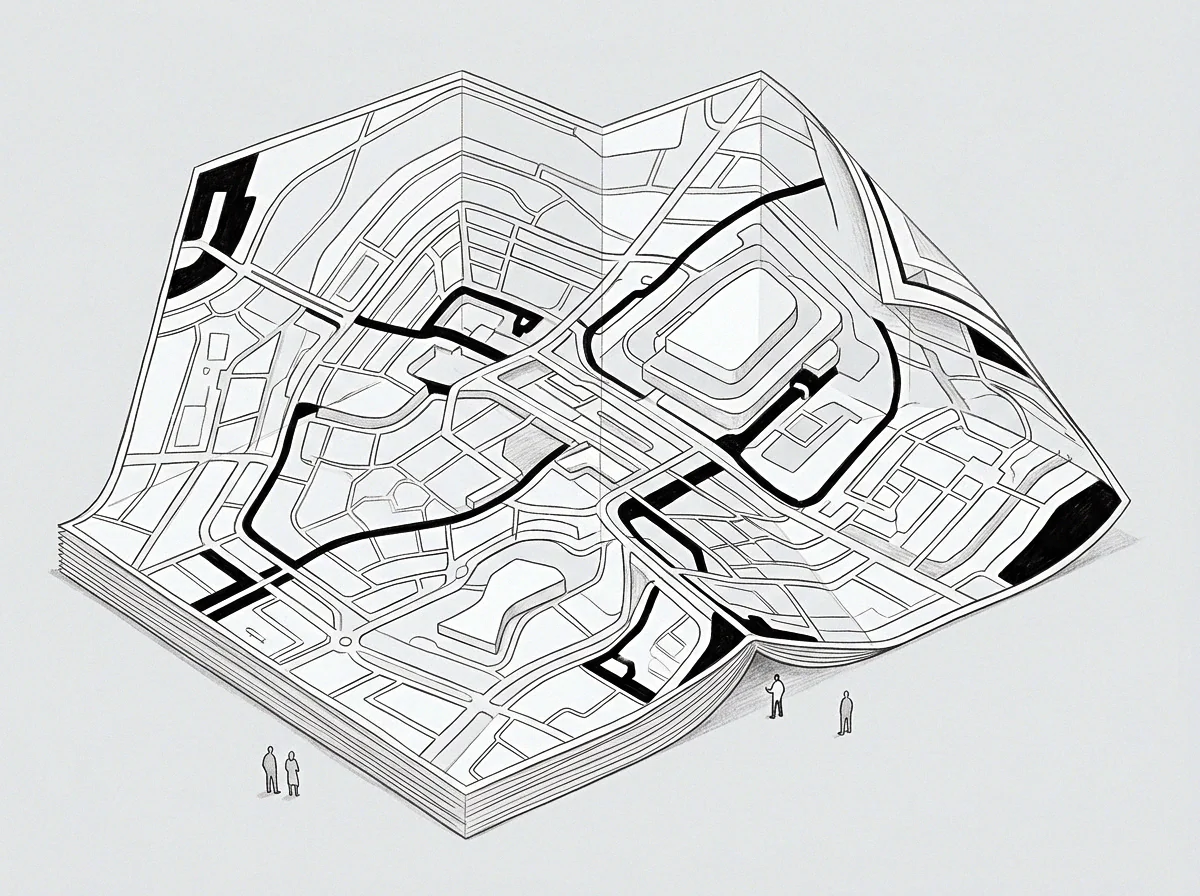
Echo
Isolating true operational intent demands stripping away stated strategic priorities and analyzing the residue of actual energetic expenditure. What remains after subtracting low-friction auxiliary activity represents the system’s real vector. Intent is derived, never declared.
Operational slopes steepen under external pressure.
When external pressure accelerates, systems purge secondary activity and collapse into their baseline operational intent. A company claiming to prioritize customer support that cuts support staff first during a margin squeeze reveals its real value axis instantly. The executive team did not change priorities under stress; the stress simply burned away the low-impedance auxiliary layer that masked the primary operational vector.
Unaddressed operational friction carries significant structural weight.
Understanding this mechanism transforms operational evaluation from a subjective assessment of effort into a precise reading of spatial slopes. By mapping where friction resides, where work bends, and where latent volume sits unspent, leadership can realign organizational structure with real operational intent.
The operational setpoint shifts downward over time.
Systematic measurement must precede operational conversion.
Whether an organization can systematically convert high-friction latent potential into directional operational intent without triggering defensive administrative shielding across its middle management layer remains an open operational question.