
Mathematical Vector Field Analysis For Organizational Alignment
Vector field analysis models organizational alignment by computing divergence, curl, and boundary flux across operational coordinates to eliminate friction.
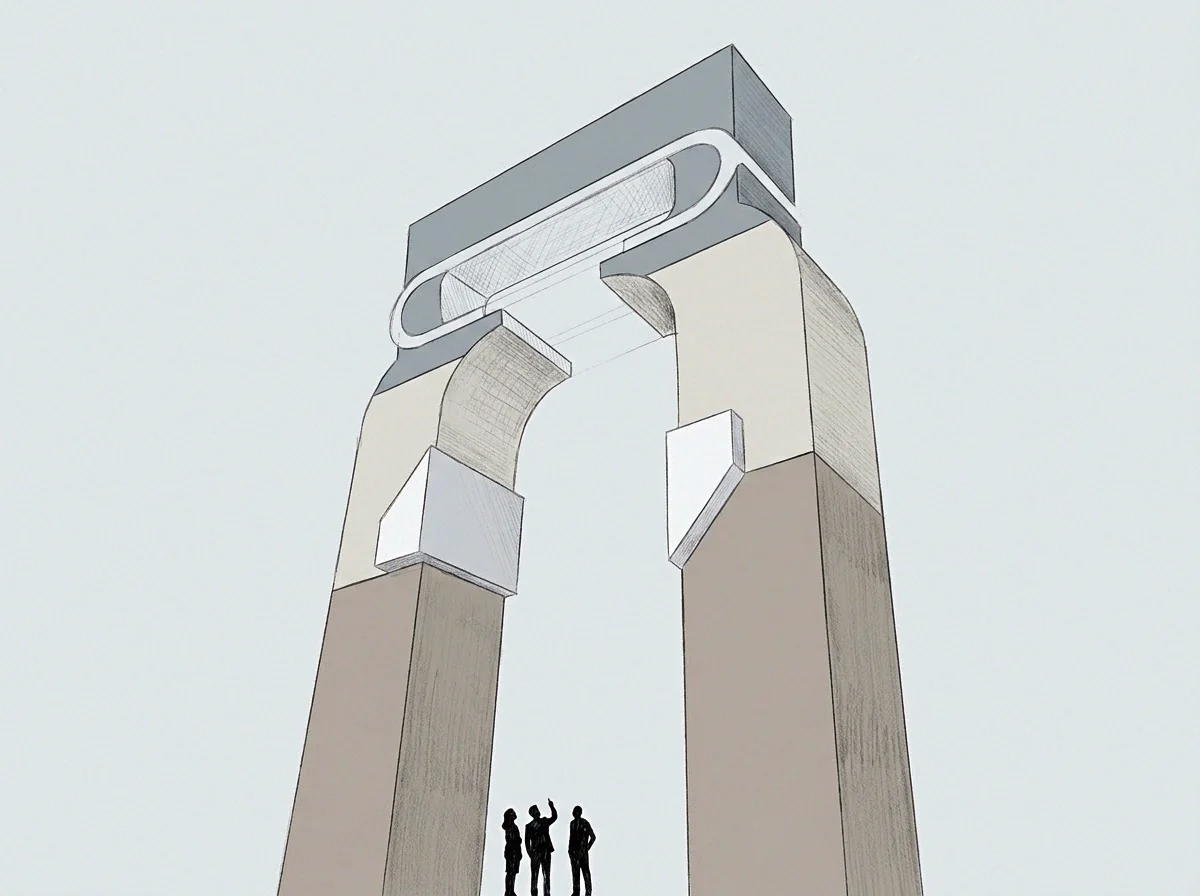
Divergence

Flow Lines Across Operating Space
A coordinate in an operating organization locates capital, headcount, and latency. Every operational unit occupies a position on that coordinate plane, defined by current resource allocation alongside throughput speed. Movement across the space happens along a assigned trajectory, pushed by leadership mandates and local operational friction.
The mathematical representation of this motion across every coordinate is a vector field. To each coordinate, the field assigns an arrow holding magnitude and direction.
When leadership states an institutional priority, it projects a desired velocity. Field teams register this projection through budgets, quarterly milestones, and headcount approvals. At the workstation, local incentives generate another vector altogether.
The resultant velocity at any point represents the vector sum of central directive and local resistance. Vector divergence measures the net expansion or contraction of effort passing through a given volume of operational space. Positive divergence marks an operational zone that disperses force without proportional work output, bleeding momentum into peripheral coordination tasks.
A team operating under contradictory compensation metrics accelerates local throughput while dissipating systemic momentum across adjacent handoffs.
Consider a product group tasked with expanding account retention while sales incentives reward gross new contract values. The directional arrows of those groups point into different quadrants of the coordinate field. In scalar management accounting, both departments register high activity.
Vector analysis records the opposing angular components, revealing that half the total kinetic expenditure cancels out across shared interfaces. The resulting net flux equals zero. Effort increases while movement stalls.
The field maps these collisions before they appear on income statements. By treating operational units as locations within a differential field, divergence calculates the spatial dissipation of resources. Regions of high divergence consume inputs and scatter directionality.
Conversely, regions of negative divergence pull adjacent groups into bottlenecks, concentrating unfinished handoffs into deadweight inventory. The mathematical measurement of this divergence strips moral judgment from operational stalling, showing pure directional cancellation.
Field analysis exposes how conflicting internal incentives produce local accelerations that cancel systemic forward velocity across boundaries.

Curl
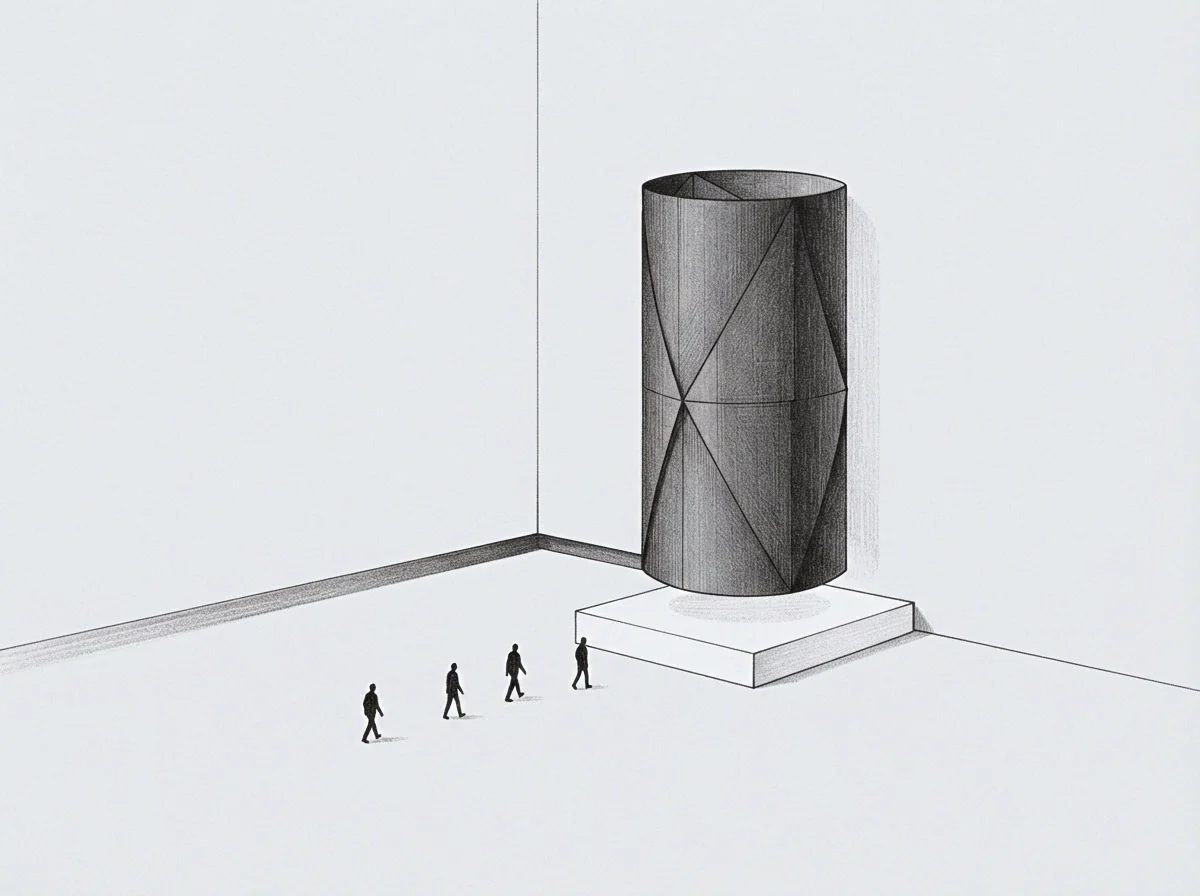
Rotational Forces In Product Delivery
Certain departments consume sustained executive attention without shifting their mean coordinate in the operating landscape. The group holds daily sync meetings, revises backlog tickets, updates shared roadmaps, and records high capacity utilization. Despite this activity, the delivery coordinate remains stationary month after month.
In differential calculus, this state represents non-zero field curl, measuring the rotation of a vector field around a local axis.
Rotational fields trap effort in self-contained feedback loops. When an organizational subfield possesses curl, line integral calculations along a closed path yield non-zero values. Traversing the operational loop consumes measurable engineering hours and budget, yet the starting state and ending state coincide.
Work gets completed, but no net work acts upon external customer contracts. The team orbits an internal dependency rather than progressing along a commercial axis.
Operational curl arises from circular authorization chains and unresolved dependencies between technical teams. Take an infrastructure team awaiting architecture review before releasing an internal build tool, while the review committee awaits stability benchmarks generated exclusively by that same build tool. The vector field between them curls tightly.
Kinetic energy circulates continuously inside the loop, generating heat without translation. Leadership observes continuous hustle and assumes progress must follow, confusing circular velocity with linear displacement.
A closed authorization loop consumes measurable engineering capacity while generating zero net displacement along any commercial coordinate.
The table below compares the spatial properties of progressive alignment against rotational stagnation across typical operating structures.
| Operational Field Type | Mathematical Field Property | Observed Working Dynamic | Systemic Consequence |
|---|---|---|---|
| Conservative Alignment | Zero curl, low divergence | Effort aligns to a single potential function | Work depends on endpoints rather than bureaucratic path taken |
| Rotational Stagnation | High curl, zero net flux | Internal dependency cycles absorb available hours | Persistent motion with zero external coordinate advancement |
| Dispersive Expansion | Positive divergence, low curl | Sub-units pursue divergent functional milestones | Capital scatters into uncoordinated peripheral initiatives |
| Bottleneck Compression | Negative divergence, high sink density | Downstream groups await single-node clearance | Throughput stalls behind an unscalable approval seat |
Eliminating curl demands cutting the loop rather than speeding the traversal. Increasing the velocity of a team trapped in a rotational field merely accelerates exhaustion. The operator cuts the closed path by uncoupling dependencies, establishing singular decision thresholds, and removing cross-departmental approval loops.
Removing curl converts rotational expenditure into conservative field flow, where energy moves straight toward delivered software.
We are doing everything leadership asked on our roadmaps, yet nothing ever ships to customers.

Potential
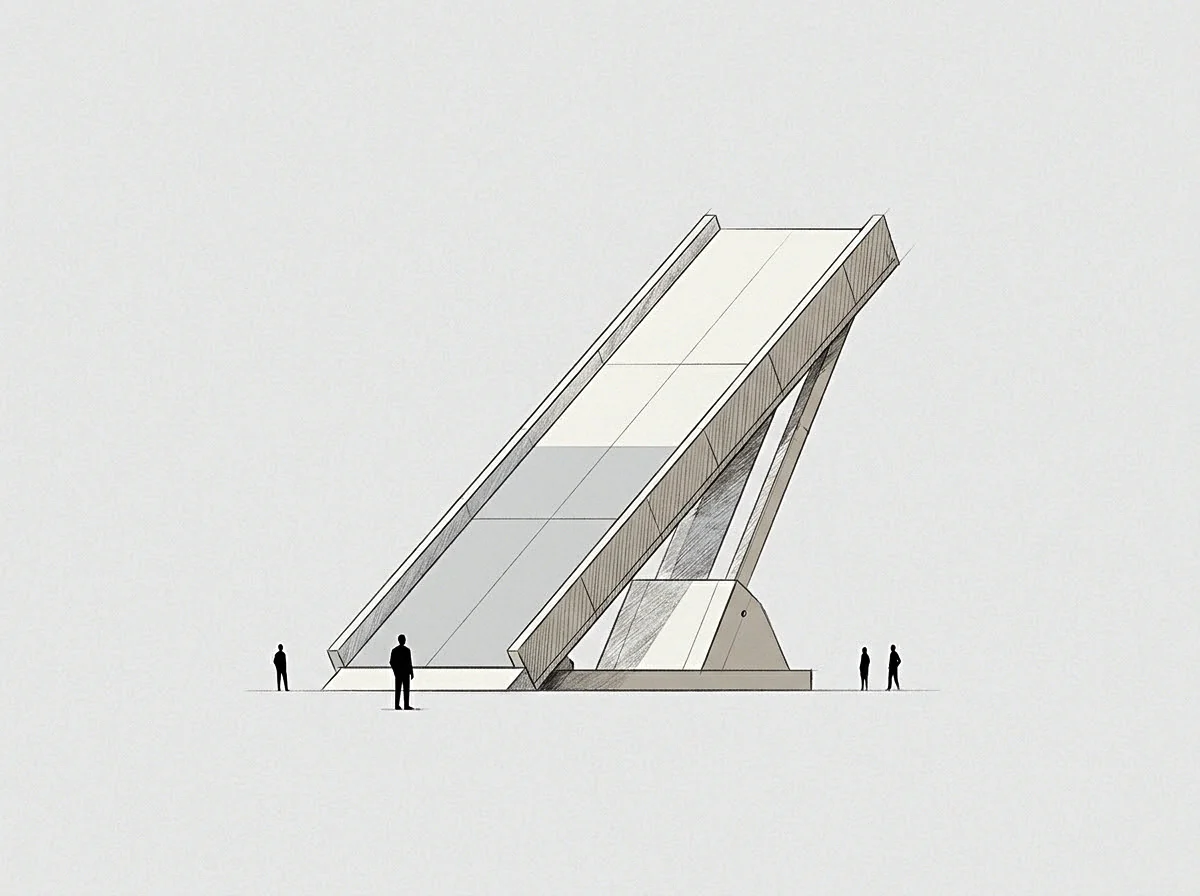
Conservative Surfaces And Organizational Effort
In physical systems, a conservative field allows movement between two coordinates where total work expended depends exclusively on the endpoints, unaffected by the route taken. A company functions as a conservative field only when operational incentives derive strictly from a single, globally visible scalar potential function. In business, that scalar potential is firm value creation.
When an organization lacks a unified potential function, the path taken dictates the cost. Navigating a customer contract through sales, legal, product, and compliance turns into a path-dependent migration where political negotiation dictates transaction costs. Each organizational silo imposes private local potential functions.
A department leader optimizes for group headcount, another for budget defense, and a third for defect minimization. Path dependency compounds. The gradient of one department repels the gradient of another, forcing cross-functional initiatives to crawl across steep institutional friction.
Field analysis resolves this friction by identifying the unspent volume between current execution trajectories and the theoretical gradient descent path. Calculating a line integral across existing company processes quantifies the exact transaction tax imposed by non-conservative field conditions. The operator measures how much total kinetic output goes toward political alignment rather than commercial delivery.
The line integral maps the work done against internal institutional resistance.
- Scalar Potential Derivation establishes global enterprise valuation metrics as the single reference surface, eliminating competing departmental scoring functions.
- Gradient Field Mapping translates organizational goals into explicit downhill trajectories, letting individual units follow clear operational slopes.
- Non-Conservative Dissipation Audit tallies total administrative overhead generated when cross-functional initiatives traverse fragmented local departmental silos.
Does operational friction increase when headcount scales faster than potential alignment?
Friction scales exponentially because every added team introduces a localized potential field with its own coordinate distortion. Left uncalibrated, subfields warp the global surface, turning direct operational descent into a maze of localized ridges and artificial saddles. Teams spend their work climbing administrative elevations constructed entirely by peer departments.
The global trajectory gets lost inside defensive local territories.
Effort expended climbing artificial organizational elevations produces zero external commercial value.
Restoring a conservative field demands collapsing competing metric surfaces into a singular corporate objective function. When every group moves down the same value slope, path dependency vanishes, and cross-functional coordination taxes drop to zero.
The term states that any cross-functional initiative requiring more than three departmental signatures automatically defers authority to the direct operational sponsor.

Wall

Boundary Conditions And Coordinate Compression
Every operational vector field terminates at rigid structural limits. These limits represent the boundary conditions of the business model, encompassing regulatory restrictions, available liquid capital, computing infrastructure ceilings, and human physiological capacity. Within these borders, vectors point along trajectories defined by strategy.
At the outer perimeter stands the structural edge.
When an operating unit accelerates toward an operational limit, the field undergoes severe coordinate compression. In product engineering, pushing release cadence against testing capacity generates an unyielding boundary condition. The vectors cannot penetrate the constraint.
Instead, vector trajectories refract along the perimeter, transforming productive forward momentum into erratic lateral shear stress. Code quality degrades, architectural debt explodes, and senior engineers abandon their posts.
The management instinct during boundary collisions typically pushes teams to work harder, applying scalar pressure against a fixed mathematical edge. Doing so misreads the field geometry. When vectors point perpendicularly into a boundary, kinetic force does not breach the barrier.
The energy compresses the local operating space until the team breaks down under mechanical friction. The operator reads the boundary not as an obstruction to batter down, but as an explicit coordinate condition requiring field re-orientation.
Boundary collisions indicate where the current operating model terminates. When an enterprise attempts to scale sales without expanding technical onboarding capacity, the customer integration team hits an operational perimeter. Vectors representing signed accounts pile up against integration bandwidth.
Latency spikes. Cancellation rates climb. The wall marks the exact coordinates where local assumptions fail reality.
A sudden spike in operational errors signals that effort is compressing against an unyielding mathematical boundary rather than flowing toward delivery.

Flux

Measuring Cross Boundary Momentum
Surface integrals over an organizational boundary yield net vector flux, measuring total throughput crossing from one stage of execution to the next. In traditional operational reviews, managers evaluate departments through isolated scalar production counts. Marketing measures leads generated.
Engineering measures pull requests merged. Sales measures contracts signed. These isolated metrics obscure the spatial health of the enterprise.
Applying the divergence theorem converts the volume integral of internal organizational divergence into a surface integral of flux over the perimeter. If internal divergence remains positive, internal teams generate output that never crosses the commercial boundary to customers. The business produces internal artifacts, memos, documentation, and prototype code that disintegrate inside functional handoffs.
High internal activity paired with low boundary flux proves systemic directional misalignment.
Calculating vector flux requires tracking unit momentum across actual handoffs. Momentum consists of mass, measured in resource cost, multiplied by directional velocity toward commercial delivery. When marketing produces leads lacking purchasing intent, those vectors carry near-zero forward momentum along the sales coordinate axis.
Sales cannot convert them. The leads stall at the interface, generating dead volume. Measuring flux at the boundary separates cosmetic operational motion from true enterprise throughput.
A system routes around unaddressed operational bottlenecks, depositing unprocessed organizational inventory at the perimeter of the weakest team. Bypassed problems accumulate mass. The founder or operator spots these zones by finding where communication detours around a specific desk or review gate.
The avoidance vector marks the precise magnitude of the friction hidden within that node.
Correcting misaligned flux requires continuous real-time recalibration of vector fields rather than static annual planning sessions. Strategy sets the directional coordinate; daily operational mechanics establish the vector magnitude. By tracking field curl, divergence, scalar potentials, and surface flux, leadership treats organizational alignment as an applied problem in differential geometry.
Operational drag ceases to be an intractable human mystery. The system becomes a mapped, measurable, and optimizable field of directional force.
Whether persistent flux deficits stem from inadequate input velocity or fundamental field distortion inside middle management interfaces remains open to rigorous empirical verification across varied organizational topologies.