Meaning
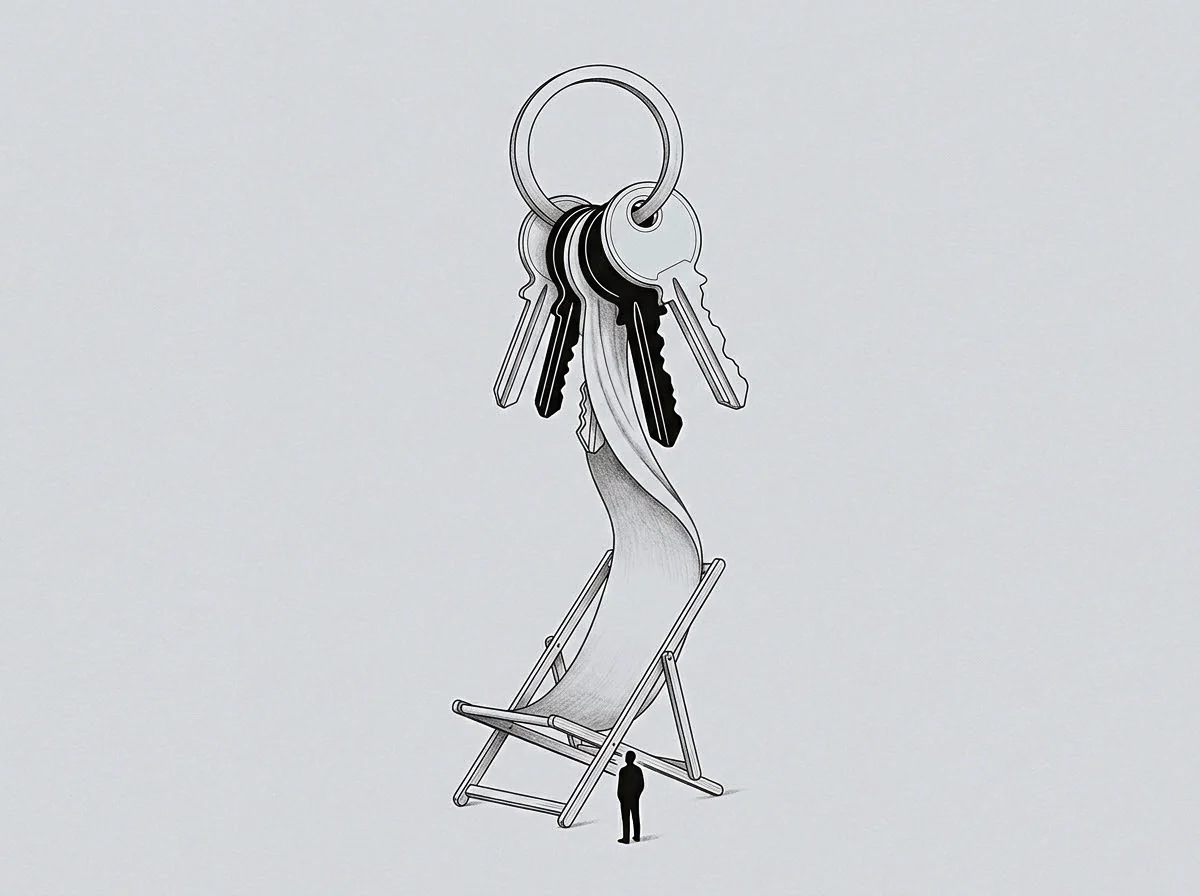
Dynamical state transitions describe the sudden loss of multi-stable operational equilibrium in a system when parameter shifts eliminate alternative functional trajectories. A system undergoing attractor collapse drops into a single, restrictive default state from which routine inputs can no longer dislodge it. This reduction narrows the available behavioral modes to a basic survival pattern.
Boundary conditions occur when external capital or structural forcing reintroduces parameter diversity to restore alternative equilibrium points.
Dynamic Trajectory
Operational systems maintain multiple stable states through balanced feedback loops. When feedback parameters degrade, attractor collapse forces activity into a single narrow corridor. Operating capacity drops because non-routine responses disappear from the execution set.
A post-founding leader observing this transition sees all organizational variance flatten into repetitive baseline tasks.
Decay Mechanism
Parameter drifts push system variables past critical tipping boundaries. Under attractor collapse, structural variance disappears as complex internal sub-routines stop generating independent outputs. The organization loses its capacity to absorb external variance, directing all residual processing power into maintaining a simplified stable state.
Operational feedback loops that previously sustained secondary initiatives fail, leaving only primary survival routines functioning. Rebuilding lost state diversity requires explicit energy injection rather than minor setpoint tweaks, demanding dedicated leadership attention capacity and capital re-allocation.
Systemic Boundary
Boundary limits define where structural collapse transitions into complete breakdown. Before reaching total terminal failure, attractor collapse locks the enterprise into a low-yield state that resists ordinary operational corrections. Measuring the distance between current operational state and baseline equilibrium exposes how deeply the entity has locked into its default trajectory.