Meaning
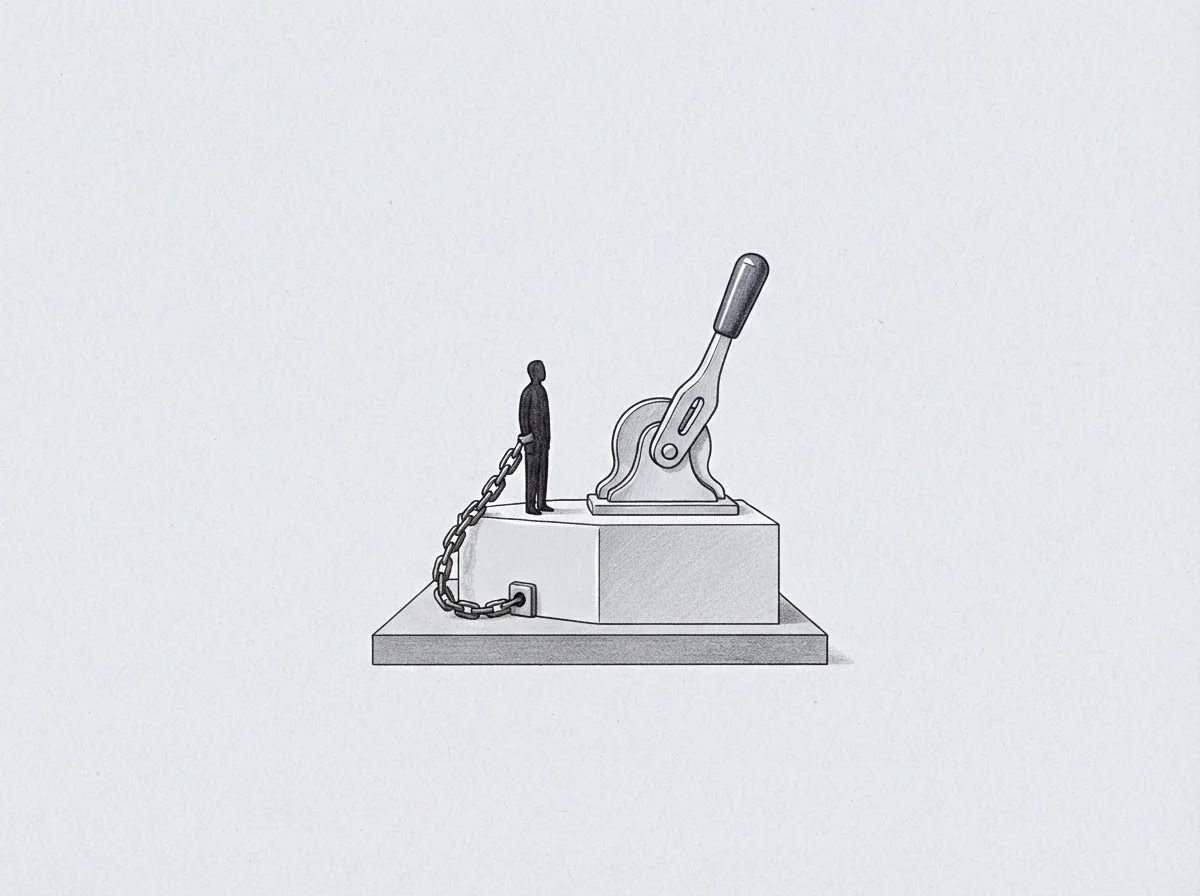
A temporal interval separates the moment an operating assumption fails from the moment an observer adjusts the predictive mental model. When an executive steps away from direct operational control, calibration lag measures the duration required for internal feedback mechanisms to update subject-matter expectations against physical outcomes. This latency creates a structural disconnect where decision parameters reflect historical system states rather than present operational realities.
The boundary of the concept stops at pure information delay, applying specifically to the psychological and administrative period required to register and act upon systemic shifts.
Latency Assessment
Operational feedback loops suffer when formal reporting intervals replace daily personal exposure to field conditions. A founder observing revenue variance or user attrition usually experiences calibration lag because incoming aggregated metrics filter through administrative hierarchies before altering strategic assumptions. Systemic delay becomes acute when early indicators contradict long-held mental models established during initial venture scaling.
Measuring this interval on an ordinal scale allows an individual to track how rapidly personal judgment realigns with objective baseline changes.
Error Amplification
Errors compound continuously during the uncalibrated window. Decisions made while relying on stale baseline assumptions direct capital toward underperforming initiatives or misallocate executive attention across competing divisions. A prolonged duration of calibration lag converts minor operational variances into severe structural misalignments.
The gradient of error steepens as external market velocity outpaces internal mental model adjustment rates.
Structural Boundary
Boundary conditions emerge when automated real-time monitoring replaces human subjective assessment in operational loops. The effect vanishes when feedback triggers instant programmatic corrections without requiring human cognitive realignment.