Meaning
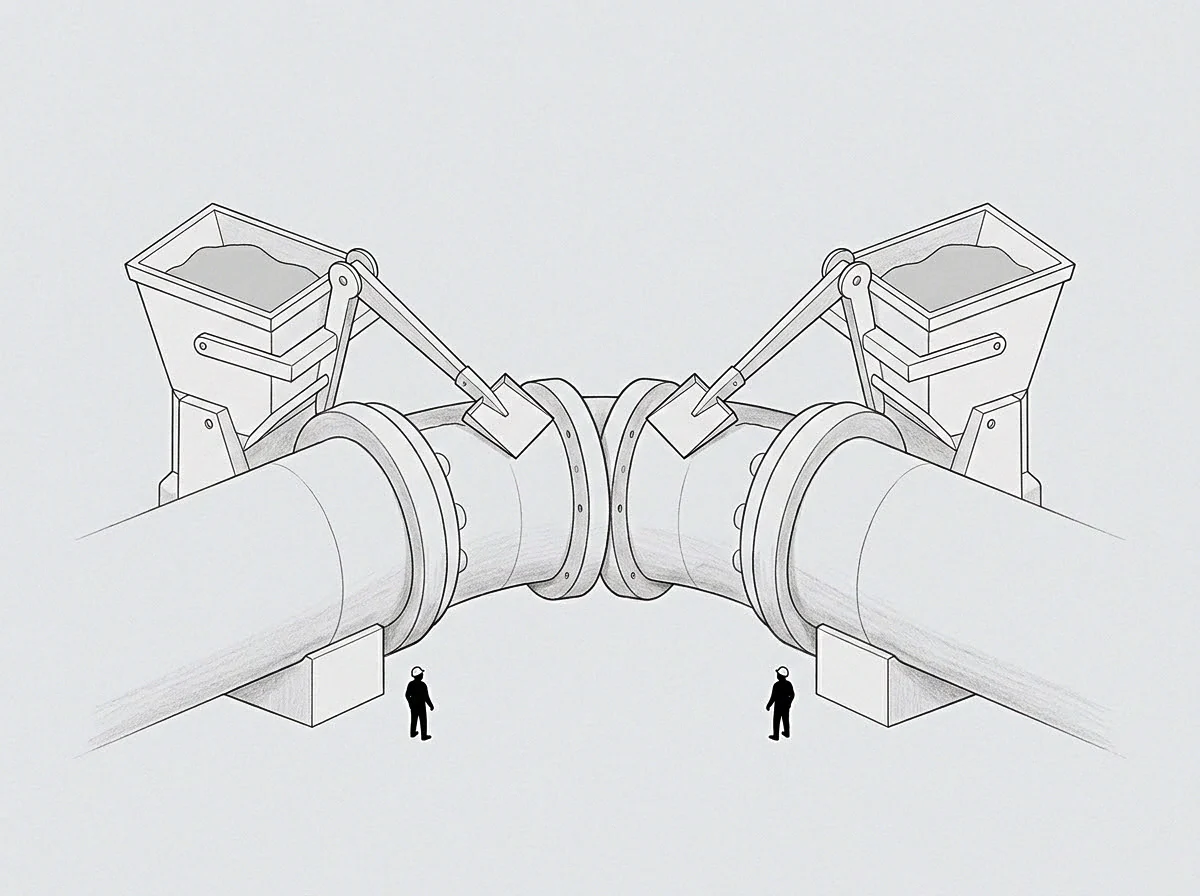
Mechanical transfer rates at which upstream financial or operational input price shifts propagate downstream through organizational tiers define structural enterprise elasticity. A complete cost transmission tracks the pass through ratio between upstream expenditure spikes and subsequent client pricing adjustments or margin contractions. This measurement lives on a continuous dimensionless interval between zero and one.
A value of zero represents total absorption within internal operations, whereas a value of one indicates immediate pass through to final purchasers. The measurement ceases to apply once a business reaches complete market powerlessness and loses operational continuity.
Propagation Dynamic
Upstream expense fluctuations move through enterprise operations along defined procurement and labor pipelines. Analyzing cost transmission requires following an incremental price hike through inventory valuation, processing overhead, and ultimate customer billing. Internal delays in passing along higher expenses result in immediate contractions of operational margins.
When downstream demand displays high price elasticity, the organization must absorb the differential through internal operational compromises. The mechanical sequence reveals whether supplier power or consumer resistance controls enterprise liquidity. Sudden supply disruptions accelerate this financial migration toward downstream accounts.
Absorption Asymmetry
Empirical observations indicate that upward expenditure shocks transfer downstream far more rapidly than downward expense relief. Evaluating cost transmission exposes how contractual delays prevent operational savings from flowing promptly to clients. Organizations usually delay lowering sales rates to rebuild internal cash buffers eroded during previous cost increases.
The magnitude of this structural latency determines the temporal volatility of gross operating margins. Internal operational choices during these cycles determine whether an enterprise maintains customer trust or prioritizes short term solvency. Systematic accounting isolates structural supply costs from temporary distribution surcharges.
Frictional Limit
Structural ceilings limit how much input expense an enterprise can transfer before provoking severe volume reductions. When cost transmission nears unity in a highly competitive market, prospective purchasers rapidly defect to alternative suppliers. The enterprise then absorbs residual expense increases entirely within its operating capital reserves.
Identifying these transmission boundaries prevents destructive pricing adjustments that degrade commercial market share. Robust quantitative tracking measures the elasticity delta between supplier contracts and buyer alternatives. The terminal rate of transfer marks the absolute limits of commercial resilience.