Meaning
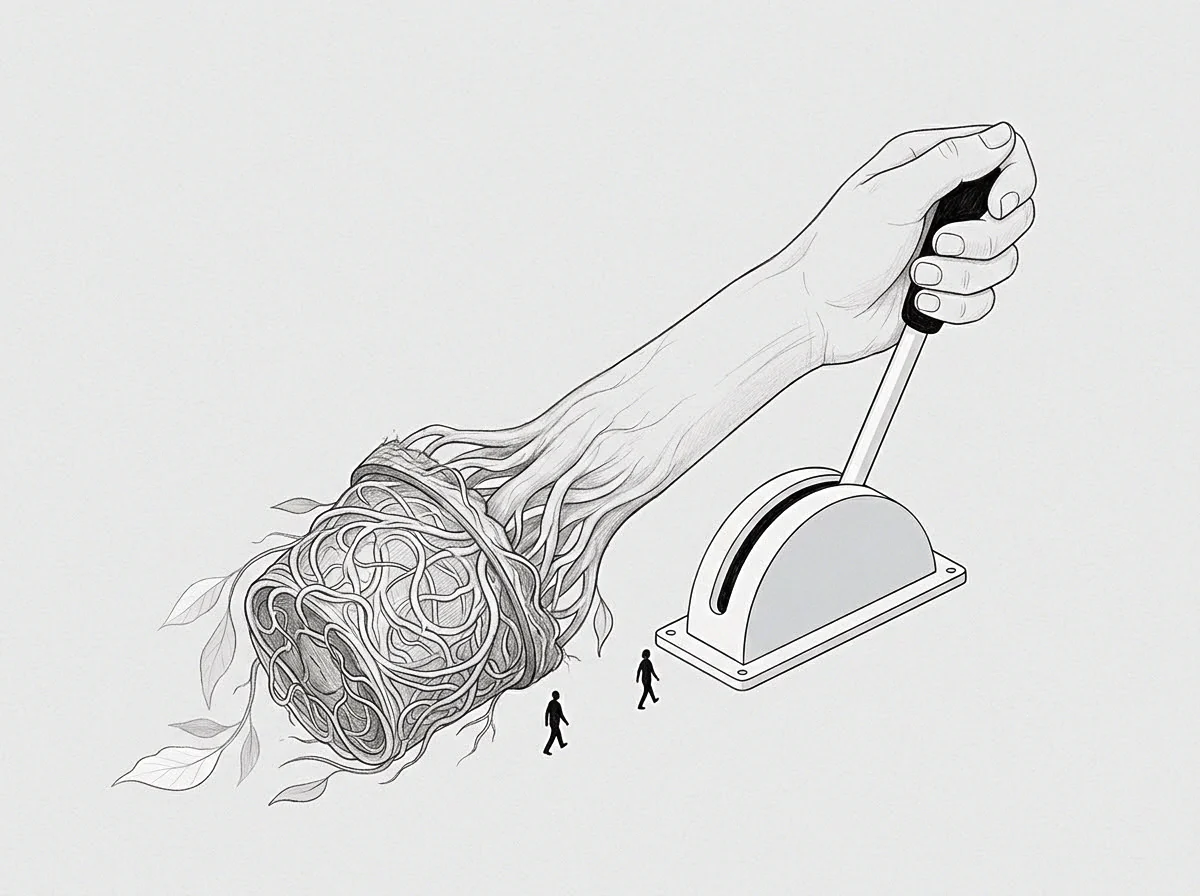
Cumulative inefficiencies arise from the structural or social resistance inherent in any organizational process. A friction tax measures the gap between the theoretical speed of an action and the actual time taken to complete it. It functions as an ordinal indicator of how much energy is wasted on bureaucracy, miscommunication, poor tooling and redundant approvals.
Latency Vector
Delays in decision making create a drag on the entire system. The friction tax is often invisible because it appears as a series of small, mundane hurdles rather than a single large obstacle. Each hurdle adds a few minutes or hours to a task, eventually creating a measurable delta in the timeline.
Energy Dissipation
Work rarely moves through a channel without losing some of its initial momentum. Calculating the friction tax involves identifying where information gets stuck or where approvals stall. High friction levels signal that the internal environment is working against the goals of the founder.
Operational Drag
Excessive procedures turn a simple task into a complex series of handoffs. The friction tax increases exponentially as more people are added to a communication loop without clear protocols. When the cost of doing the work approaches the value of the output, the process must be simplified.
This drag is measured by tracking the lifecycle of a single request from initiation to completion. It reveals the hidden costs of a culture that prioritizes consensus over speed or precision.