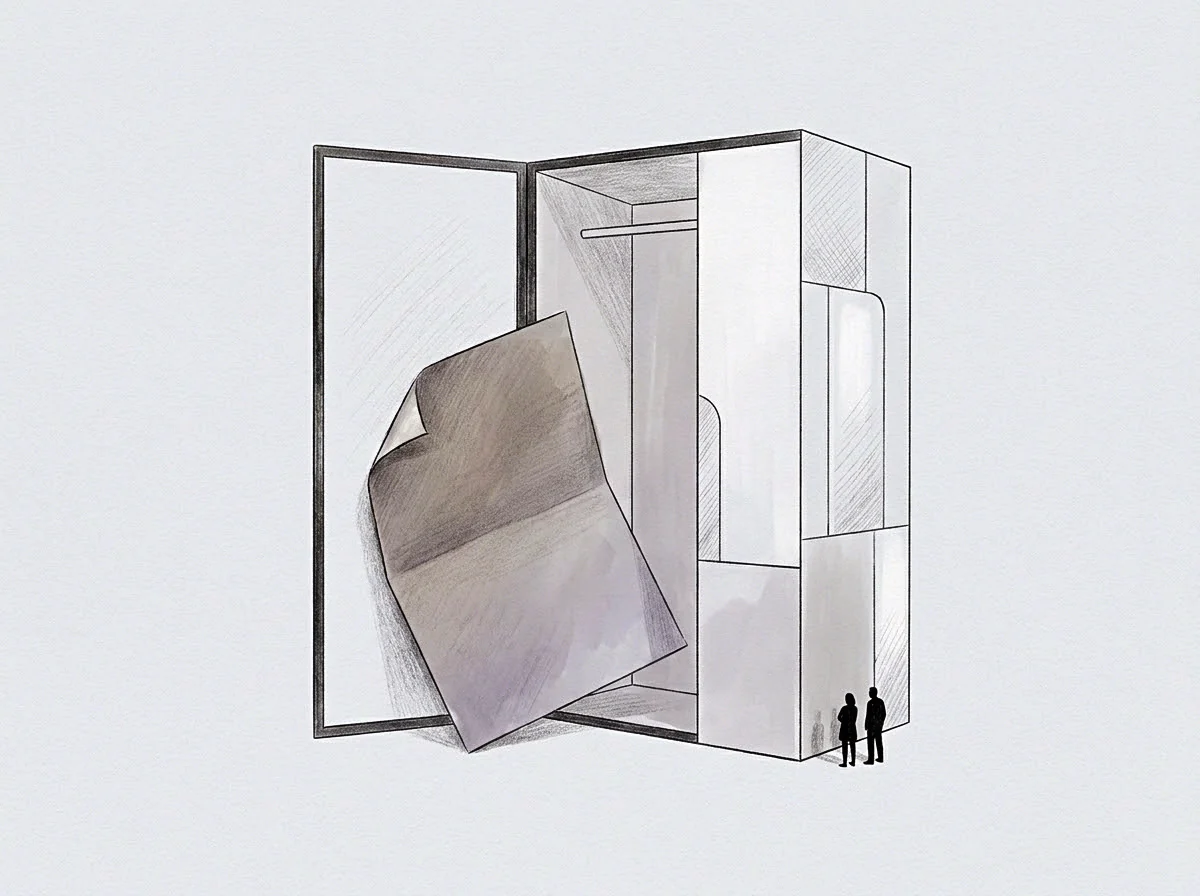
Meaning
Lateral stress zones occurring between organizational layers that operate at differing velocities or operational standards define the boundary where structural friction concentrates. The interface shear plane emerges where fast-moving product teams touch slower regulatory, compliance, or legacy infrastructure layers. Differential velocities across these interfaces generate coordination drag and administrative wear.
The concept ceases to apply when operational layers are fully isolated or merged into a single homogeneous team.
Velocity Gradient
Operational friction intensifies when adjacent functional units execute at sharply different cadences. Across an interface shear plane, an agile development unit releasing daily updates produces continuous friction against a quarterly compliance audit schedule. This mismatch generates administrative backlog and fuels inter-departmental frustration.
The resulting strain degrades operational throughput across both functional groups.
Stress Propagation
Mechanical stress generated at organizational boundaries diffuses into adjacent teams, increasing communication overhead and depleting cognitive capacity. Middle management absorbs the majority of this shear force, spending operational hours manually reconciling mismatched operational timelines. Over time, persistent friction produces turnover in interface-management roles.
Unresolved shear zones eventually lead to functional isolation and defensive information withholding.
Isolation Threshold
Modeling operational boundaries as shear planes becomes irrelevant when interaction frequency between units drops to zero. Complete functional separation eliminates interface friction by removing shared operational dependencies entirely. The construct applies strictly to interdependent units forced to coordinate across mismatched execution cadences.
Complete structural autonomy eliminates the underlying velocity gradient.