Meaning
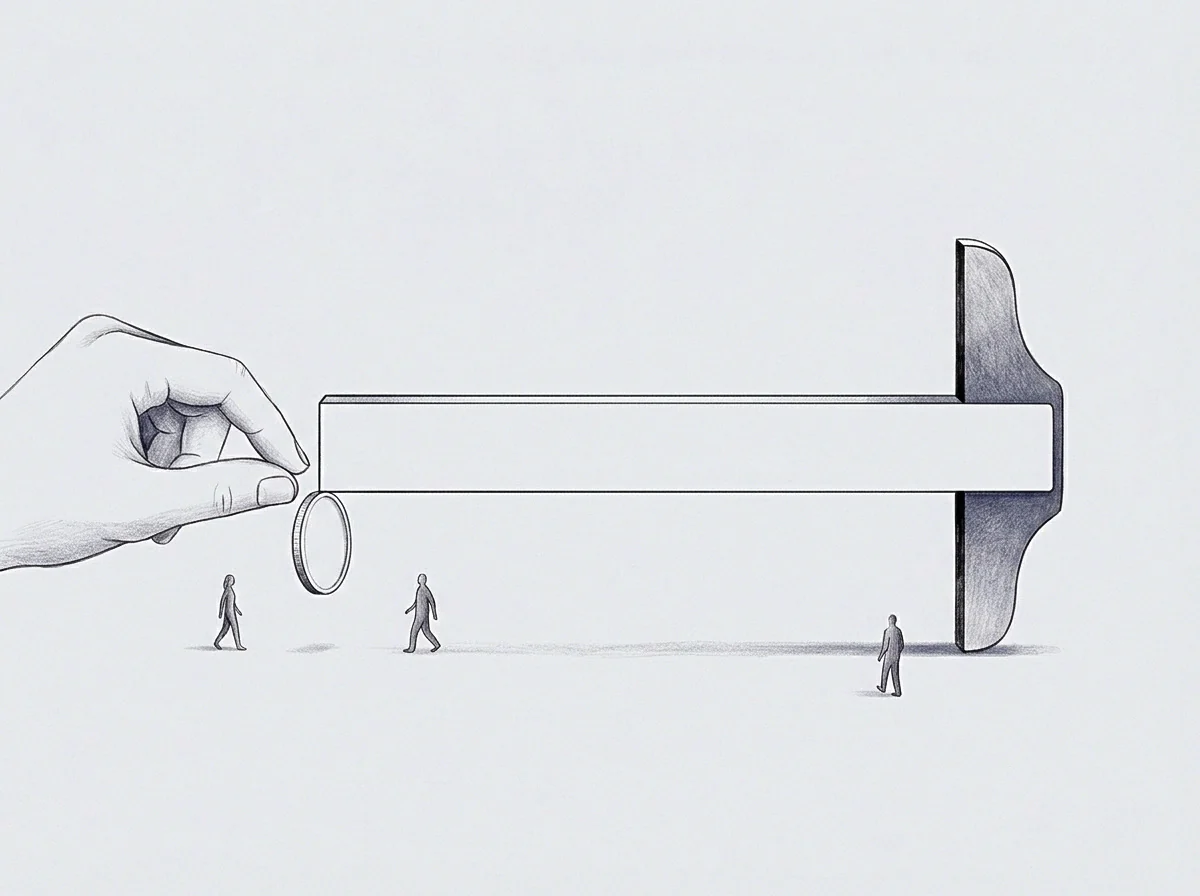
Observation failures arise when the relationship between a measurement and the underlying reality changes over time without the instrument itself being altered. Encountering signal drift means that a metric that once indicated health or risk no longer correlates with the actual state of the business. This phenomenon often happens as a market matures or a process becomes more complex.
It renders old benchmarks useless and can lead to a false sense of security. Without constant monitoring, the data used to guide the company slowly loses its connection to the physical or financial truth it represents.
Baseline Decay
Accuracy wanes as the conditions present during the initial setup disappear. When signal drift takes hold, the original reference point becomes a historical artifact rather than a living guide. This decay forces a person to question if a positive reading is a result of good performance or a failing sensor.
Calibration Cycle
Periodic adjustments are necessary to keep a metric aligned with its target. Correcting for signal drift involves re-testing the correlation between the indicator and the outcome it is supposed to predict. This cycle ensures that the decision makers are not following an outdated map of the operational landscape.
Resulting Variance
Uncertainty increases when the gap between the measured signal and the actual value widens. Without a fix for signal drift, the organization may invest in the wrong areas based on false positives. The process of monitoring for this error is a constant requirement in any system that relies on data to drive strategy.