Meaning
Directional rates of operational progress possessing both cardinal magnitude and defined structural orientation characterize the quantitative trajectory of corporate capital and execution. Across strategic measurement, velocity vectors quantify not merely the speed of task completion, but the precise dimensional alignment of that momentum toward core institutional objectives. The term stops applying when velocity is recorded as a scalar metric, describing raw volume of work completed without reference to directional alignment.
Directional Mechanics
Speed devoid of structural orientation regularly creates organizational illusion. An operational unit may complete engineering tickets or close sales leads at impressive cadences, but if those outputs point away from foundational enterprise strategy, the resulting velocity vectors generate operational drift rather than strategic progress. Momentum must always be evaluated alongside its directional angle.
Speed without alignment burns precious balance sheet reserves while delivering zero durable value. Calculating true velocity demands evaluating both scalar pace and trajectory orientation.
Vector Composition
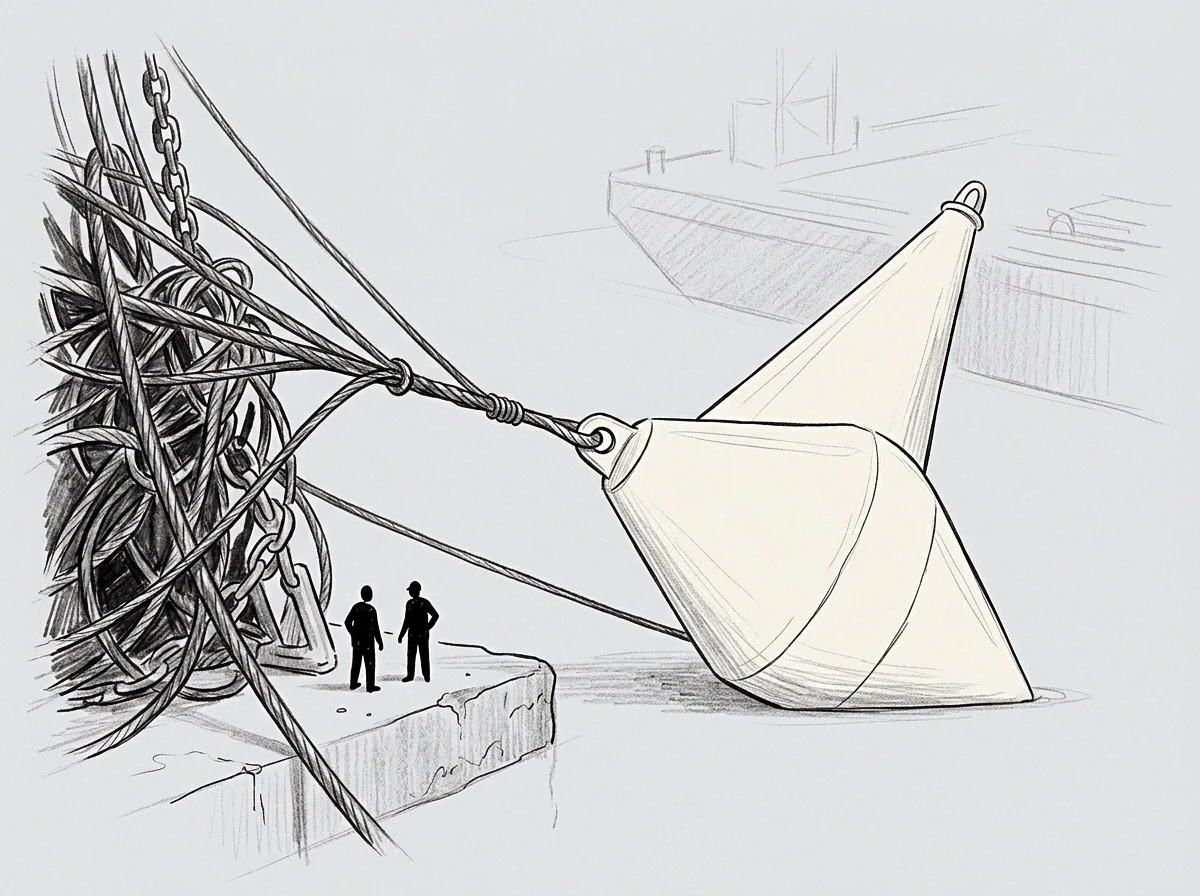
Aggregate institutional progress equals the vector sum of all internal component trajectories. When individual functional cohorts pursue divergent departmental mandates, their respective velocity vectors partially cancel out in the aggregate calculation, dampening the net forward displacement of the enterprise. Two distinct variables govern the resulting product, namely the absolute operational throughput of the functional units and the cosine of the angle between their respective pathways.
Misaligned trajectories consume massive energy while yielding negligible aggregate displacement.
Vector Steering
Leadership involves continuous trajectory alignment rather than crude demands for higher operational speed. Modifying underlying velocity vectors requires adjusting resource inputs, revising strategic constraints, and clarifying foundational goals so that decentralized initiatives naturally orient along parallel paths. When all functional units align along a unified heading, aggregate organizational speed equals the sum of its individual components.
Sustainable enterprise momentum depends entirely on directional discipline.