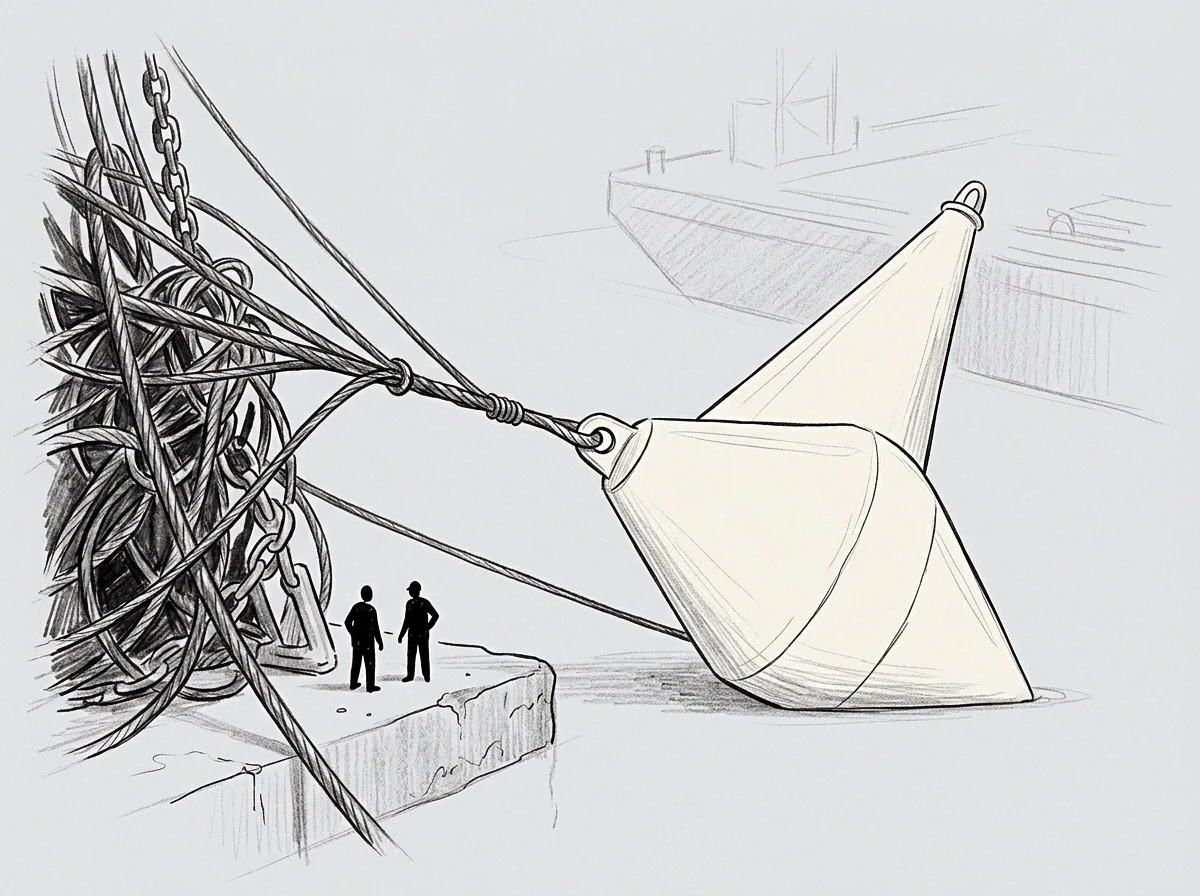
Meaning
Fluid dynamics defines this dimensionless value as a quantity that characterizes the resistance of an object to a flow. The drag coefficient quantifies the aerodynamic or hydrodynamic efficiency of a shape moving through a medium. It integrates the effects of surface friction and pressure distribution to describe how much force the surrounding fluid exerts against the forward motion of a body.
Kinetic Scale
Founders observe this ordinal vector when assessing how operational pivots affect the internal consumption of resources. A lower value indicates a streamlined progression through market environments where high friction drains the energy of a scaling entity. Changes in the geometry of a product or a team structure alter the resistance encountered during rapid growth.
This measurement functions as a proxy for efficiency because it maps the path of least resistance against the momentum of the organization.
Resource Gradient
Calculations of this type allow a practitioner to distinguish between external market headwinds and internal structural inefficiencies. Each reduction in the magnitude of the resistance translates into a smaller amount of energy required to sustain a target velocity. Management of these forces involves modifying the interface between the project and the environment to minimize the impact of surrounding pressures.
Analysis of the flow identifies where the current configuration loses capacity due to turbulence or poor alignment with the directional goal.
Operational Penalty
Decision makers apply this figure to verify whether a change in tactical orientation produces a measurable difference in output velocity. Higher values signal that the current arrangement forces the team to expend excess effort simply to maintain current operations. An increase in this metric denotes a compounding tax on the time of the founders.
A high resistance value marks the boundary where the effort required for growth exceeds the total energy available.