
Decomposing Asynchronous Friction Vectors To Establish Contractual Channel Tariffs
Asynchronous channel tariffs convert multi-attribute operational friction vectors into cardinal surcharge schedules that enforce structured communication boundaries.
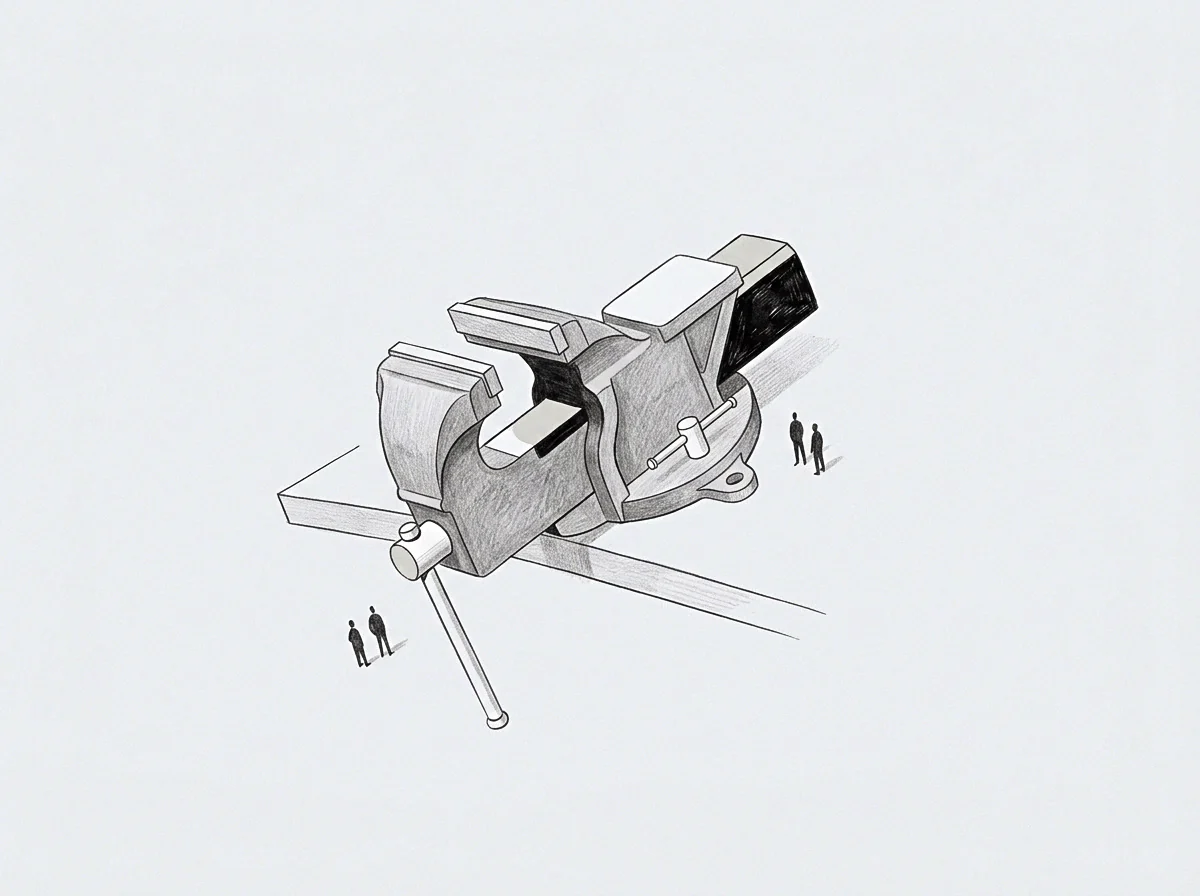
Drag
Response latency measures the elapsed time between a sent message and its reply, whereas operational friction measures the structural capacity consumed while holding context open across that interval. When communication spans asynchronous channels, these two measures diverge. A message sent across time zone boundaries or organizational divisions sits in a queue, but the human capacity attached to that message does not simply pause.
Instead, the receiving node experiences cognitive re-indexing, focus fragmentation, and workflow stagnation while waiting for clarification or authorization. Asynchronous channels hide operational drag. Unpriced delays compound quietly.

Evaluating Operational Interaction Latency
Evaluating operational interaction latency demands looking past simple timestamp differentials. When an operator sends a technical specification to an offsite partner, the elapsed twelve hours before a response arrives carries several distinct friction components. First is the active waiting tax, where downstream tasks remain stalled because key parameters remain unconfirmed.
Second is the re-indexing expense, which occurs when the operator must re-read previous exchanges to regain mental state once the response finally arrives. Third is the serialization penalty, forced upon the team when multi-threaded decisions are compressed into linear, back-and-forth messaging iterations.
In unmanaged channels, counterparties push clarification costs onto each other without penalty. A counterparty sending vague, incomplete instructions incurs minimal effort up front, yet forces the recipient to execute multiple clarification loops. Each loop introduces an asynchronous round-trip delay, multiplying the total project lead time far beyond the actual labor hours spent working on the task.
When channels carry zero explicit pricing for message frequency or payload fragmentation, counterparties naturally default to sending low-effort, unbatched requests.
This operational dynamic creates an implicit commercial subsidy. The party maintaining deep context and structured focus subsidizes the party operating with fragmented attention and unstructured communication habits. Over multi-month engagements, this unpriced subsidy drains senior engineering and managerial bandwidth, quietly shifting team capacity away from core deliverables toward administrative message sorting and context recovery.
A channel running without explicit latency surcharges transfers all context retention overhead to the receiving node.

Quantifying Context Decay in Remote Communication
Context decay accelerates as the time offset between message dispatch and receipt expands. When feedback arrives within minutes, mental state remains active in working memory, requiring negligible recovery time. When feedback arrives eight hours later, working memory has cleared, replaced by intervening tasks and context switches.
Restoring that specific operational state demands reviewing code bases, re-examining project architectures, and reconstructing past logical chains.
Field measurements in engineering operations demonstrate that recovering focus after an asynchronous context switch consumes between fifteen and twenty-five minutes of effective cognitive throughput. If an external counterparty triggers four unstructured asynchronous interruptions throughout a workday, the recipient loses up to an hour and a half of execution capacity purely to state recovery. This loss occurs independently of the time spent actually drafting replies or processing task updates.
Failing to account for asynchronous context decay yields operational margins that collapse under escalating message volume.

Mesh
Communication channels across independent enterprise units operate as a complex topological structure where friction vectors intersect. In a modern service or product development agreement, work rarely flows through a single point-to-point pipe. Information moves across structured ticketing systems, unstructured chat instances, scheduled video briefings, and formal document repositories.
Each medium exhibits a distinct friction profile, varying by context retention demands, serialization rules, and payload clarity.

Mapping Asynchronous Vector Intersections Across Channels
When multiple asynchronous channels operate concurrently without unified governance, vector forces compound at organizational boundaries. A client submitting feature adjustments via chat while sending formal approvals through email creates payload fragmentation. The recipient must aggregate these disconnected inputs into a coherent specification before execution can resume.
This manual aggregation step represents a pure capacity loss, taking skilled labor away from high-value tasks.
Distance alters capacity dynamics. Communication carries hidden structural overhead. Attention shifts incur steep penalties.
Mapping these vector intersections requires categorizing inbound interaction types by their structural demand on team focus. High-frequency, low-clarity messages impose maximum friction, whereas low-frequency, highly structured batch payloads impose minimum friction per unit of work delivered.
| Vector Type | Primary Magnitudes | Impacted Operating Capacity | Transmission Decay Rate |
|---|---|---|---|
| Context Switch Overhead | Re-indexing time, focus recovery hours | Deep work capacity | High decay per interrupt |
| Payload Serialization Friction | Clarification cycles, protocol translation | Engineering throughput | Moderate decay per cycle |
| Time Zone Offset Latency | Idle queue hours, dependency hold | Project velocity | Linear decay with offset hours |

Structural Alignment of Counterparty Interaction Channels
Aligning channel topology requires establishing clear operational boundaries for each medium used in a commercial relationship. Emergency resolution channels demand synchronous access and carry high resource allocation penalties. Strategic decision channels utilize batched asynchronous documentation, allowing counterparties time to review proposals thoroughly before committing execution resources.
Tactical daily updates flow through structured status logs that suppress unnecessary back-and-forth messaging.
A contract that omits batch processing windows permits counterparties to consume operational focus at zero marginal price.
Without structural boundaries, counterparties collapse all communication into whatever channel provides them immediate personal convenience. An offsite manager sends fragmented thoughts into real-time chat streams, expecting immediate acknowledgment while offering sparse context. The receiving operational team becomes perpetually reactive, scanning message channels for critical instructions while deep technical work stalls.
Establishing strict medium-specific protocols restores order to the operational mesh, constraining unstructured queries and enforcing deliberate communication patterns.
A dedicated channel agreement specifying a mandatory four-hour batch processing window converts fragmented inbound queries into predictable processing blocks.

Lag
Quantifying operational friction requires separating multi-attribute cost components from headline hourly rates. A project running at a nominal billing rate often masks massive internal resource consumption caused by channel latency. To decompose this friction accurately, an organization must track distinct operational vectors: hours spent active on tasks, hours lost to queue waiting, cognitive capacity consumed by context switches, and capability gains lost due to interrupted execution streams.

Decomposing Friction Into Quantifiable Component Vectors
Tracking internal costs on an ordinal scale enables managers to order burdens by relative severity without prematurely forcing them into imperfect monetary estimates. The primary component vectors of asynchronous friction include specific operational tax categories:
- Re-indexing Overhead measures the exact allocation of focus spent reconstructing state context when an asynchronous message arrives after an extended delay.
- Dependency Stagnation captures the total hours an operational workflow sits idle while waiting for counterparty input across time zone boundaries.
- Clarification Reciprocation Load quantifies the repeated exchange rounds needed to resolve incomplete or ambiguous initial task payloads.
- Queue Depth Escalation reflects the cumulative backlog of unread operational tickets that degrades cognitive focus during active working hours.
Payload decay degrades execution efficiency. Counterparties optimize for local convenience. Latency absorbs operational bandwidth.
When these component vectors are measured systematically, management gains visibility into the true cost of channel interaction. An engagement that appears profitable on a simple billable-hour invoice may actually consume an unsustainable volume of focus recovery time, eroding team health and starving internal development initiatives.

Translating Ordinal Friction Into Capacity Metrics
Once friction components are ordered by severity, they can be aggregated into composite capacity consumption metrics. If clarification reciprocation load emerges as the dominant vector, governance must target payload structures at the point of submission. If time zone dependency stagnation represents the primary drag, work packages must be redesigned into self-contained modules that permit progress despite missing counterparty feedback.
Converting these multi-attribute vectors into cardinal figures is necessary whenever costs must cross organizational lines. An internal operational team reads friction as an ordinal ordering of exhaustion and lost focus; an external executive reads friction only when presented as a financial sum or explicit schedule penalty. Bridging this gap requires translating lost attention hours and execution delays into concrete baseline monetary values.
“The external team expects immediate answers to individual messages while reserving the right to respond to consolidated blocks once per day.”
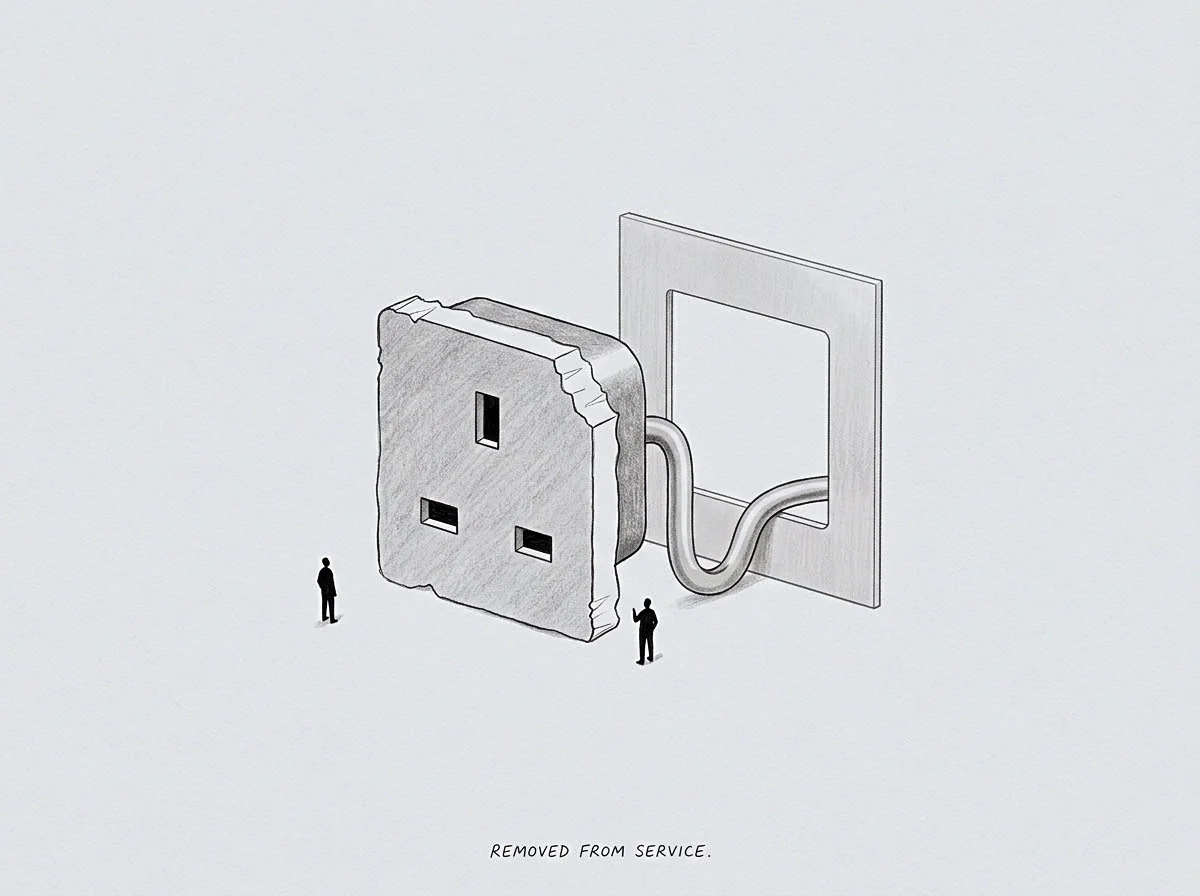
Levy
Translating internal operational friction into financial tariffs converts invisible context drain into visible economic incentives. A contractual channel tariff is a financial surcharge or structured pricing model applied to counterparty communication channels based on interaction frequency, payload quality, and turnaround demands. Applying financial tariffs to unstructured communication alters counterparty behavior, forcing external teams to internalize the operational drag they generate.

Can Offsite Wait Times Convert Into Fixed Tariffs?
Offsite wait times and asynchronous context switches convert directly into fixed contractual tariffs when governed by explicit service level tiers. To build a tariff structure, an enterprise defines baseline interaction standards within its master service agreement. Standard communication—such as daily batched status tickets delivered with complete specifications—incurs no surcharge.
Out-of-band requests, fragmented messaging threads, and demands for accelerated turnaround outside designated processing windows trigger automated financial surcharges.
- Audit all historical communication logs to measure average message frequency, turnaround latency, and thread iteration counts per deliverable unit.
- Calculate the total attention hours lost to context switching by tracking focus recovery time after each inbound counterparty interrupt.
- Group individual context interruptions into ordinal burden tiers based on execution severity and technical domain complexity.
- Convert the aggregate hourly and cognitive impact into a baseline monetary surcharge rate reflecting team capacity consumption.
- Incorporate the calculated surcharge schedule into the master service contract as a tiered contractual channel tariff.
Contractual tariffs alter channel behavior. Batching reduces context fragmentation. Surcharges align channel incentive structures.
Establishing a clear surcharge tariff for out-of-band updates suppresses low-value counterparty messages while preserving operational capacity for complex tasks.

Deriving Cardinal Price Structures From Multi-Attribute Cost Vectors
Price structures must reflect the underlying complexity of the work being protected. A simple flat-fee communication tariff fails because it treats a minor status check the same as an urgent architectural change request. Tiered tariff structures solve this by scaling fees based on cognitive impact.
A low-tier tariff applies to minor clarification loops that fit within existing batch windows. A high-tier tariff applies to emergency synchronous interruptions that force immediate context switches across multiple engineering seats.
By enforcing these pricing models, the receiving organization creates a clear feedback loop for the counterparty. The counterparty can choose to maintain disciplined, batched communication habits at zero extra cost, or continue sending unstructured, high-frequency requests while paying a premium for the operational capacity consumed. In both cases, the receiving team protects its economic margin and operating focus.
Whether counterparties will choose to aggregate their communication into formal daily payloads or continuously pay premium channel surcharges remains an open empirical question across multi-year contracts.

Terms
Formalizing channel pricing mechanisms within commercial agreements transforms abstract operational standards into enforceable legal conditions. Contractual terms must specify not only monetary rates, but also technical delivery parameters, payload validation criteria, and response window expectations. When these terms sit clearly within master service contracts, statements of work, or service level agreements, both parties operate with identical expectations regarding channel conduct.

Contractual Integration Of Asynchronous Friction Tariffs
Integrating channel tariffs into commercial contracts protects relationships from the slow erosion caused by unstated operational resentment. Unstated costs erode long margins. Precision prevents commercial friction.
Channels demand clear financial boundaries. When a service provider suffers unpriced context switching for months, internal teams develop frustration toward the client, leading to passive compliance, reduced technical creativity, and eventual account churn. Stating friction costs early via clear contractual terms keeps commercial dialogue transparent and objective.
Stating channel friction costs at contract inception prevents operational resentment from corrupting counterparty relationships down the road.
Effective contract clauses explicitly detail what constitutes a valid communication payload. Clauses specify that incomplete task submissions pause turnaround timelines until missing parameters arrive, preventing counterparties from shifting specification drafting labor onto execution teams. Furthermore, terms define acceptable communication windows, establishing that messages arriving outside standard hours will sit in queue until the next scheduled batch window without penalty.

Preserving Operational Velocity Through Enforceable Channel Governance
Enforceable governance ensures long-term operational sustainability across extended enterprise boundaries. As teams scale and counterparty networks expand, human memory and informal gentlemen’s agreements fail to maintain communication discipline. Explicit contractual tariffs scale seamlessly, providing automated boundaries that protect focus capacity across changing personnel and evolving project scopes.
Ultimate operational efficiency emerges not from eliminating counterparty interaction, but from pricing that interaction accurately. When channels carry clear financial tariffs derived from deep friction decomposition, organizations retain control over their time, protect team cognitive capacity, and build durable, highly profitable commercial partnerships.
A channel tariff set slightly above the operational friction cost keeps counterparty interactions focused and protects team focus without terminating commercial dialogue.