
Designing Capacity Reservation Tiers to Protect Technical Staff From Exhaustion
Reserving non-preemptible capacity tiers converts hidden cognitive exhaustion into explicit operational friction before engineering output collapses.
Gate
Production queues in growing software engineering organizations expand until every open block of schedule space is filled by reactive work. Unplanned operational tickets, continuous alert noise, and incoming customer requests absorb technical focus when structural limits remain unassigned. An engineering team operating without formal reservation metrics allocates attention to whatever issue surfaces most recently.
This reactive mode creates a hidden cost vector: hours spent under high context switching, attention fragmented across disparate codebases, lost architectural capability, and extended personal recovery time. While monetary expenditure on engineering payroll stays constant on monthly financial ledgers, the internal ordinal cost paid by staff rises continuously until system stability and personal capacity break down simultaneously.
Unreserved Bandwidth and Cognitive Fragmentation
Attention operates as an ordinal vector. When a developer switches context between a complex system refactoring and an urgent production ticket, the internal recovery time does not scale linearly with the duration of the interruption. Field observations in cognitive ergonomics show that recovering full mental context after a brief disruption consumes between fifteen and twenty-five minutes of focused work.
Overcommitment hides systemic strain. When product managers route ad-hoc work into active engineering sprints without boundary checks, the operational queue saturates. Unreserved capacity degrades rapidly.
Engineering throughput relies on uninterrupted cognitive focus. When zero capacity is explicitly reserved for infrastructure health, technical debt accumulates behind feature releases. The operational setpoint shifts from proactive platform design to continuous emergency remediation.
Systemic friction increases across the engineering division, while reported project velocity metrics appear deceptively stable until team burnout forces sudden project delays.
Operating an engineering division without explicit boundary mechanisms transfers system volatility directly onto individual staff members, resulting in compounding turnover and severe operational degradation.
Buffer
Isolating technical bandwidth requires partitioning available working hours into dedicated, non-preemptible allocation blocks. Rather than viewing engineering availability as a single pool of time available for feature requests, structured allocation divides capacity into explicit operational tiers. Each tier carries a distinct priority, preemption policy, and resource cap.
Setting operational boundaries early prevents external demands from consuming baseline engineering slack.
Structuring Bandwidth Tiers Across Technical Roles
A functional reservation model splits capacity into three primary tiers: operational maintenance, infrastructure continuity, and strategic feature development. Operational maintenance absorbs daily alerts, triage duties, and immediate customer bugs. Infrastructure continuity safeguards technical debt reduction, system architecture updates, and internal tooling improvements.
Strategic feature development remains dedicated to roadmap delivery.
Without clear structural firewalls between these tiers, operational noise continuously preempts long-term technical health. Production demands expand continuously. Establishing hard capacity limits ensures that emergency triage work stays confined within its designated allocation band rather than eroding the entire working week.
Reserving dedicated bandwidth bands prevents operational noise from consuming long-term system architecture.
Organizations implementing capacity reservation structures frequently run into operational breakdown patterns when business pressure escalates:
- Preemption Spillover occurs when high-severity operational incidents consume all reserved triage hours and overflow into strategic execution bands without formal rebalancing protocols.
- Unbounded Triage Deficit arises when on-call duties are assigned without reducing sprint commitments, forcing engineers to absorb operational support during evening hours.
- Shadow Operational Work develops when technical debt remediation is omitted from official planning boards, prompting engineers to perform unauthorized maintenance to keep systems operational.
- Cognitive Switching Overload emerges when staff members are expected to oscillate between deep architectural coding and immediate customer support tickets within the same working day.
Slack provides operational resilience. When operational tiers are sized according to historical incident distributions rather than optimistic projections, technical teams retain the baseline capacity required to absorb sudden production spikes without exhausting staff.
A reservation tier that is regularly preempted by product management ceases to function as a reserve and operates as unallocated sprint time.
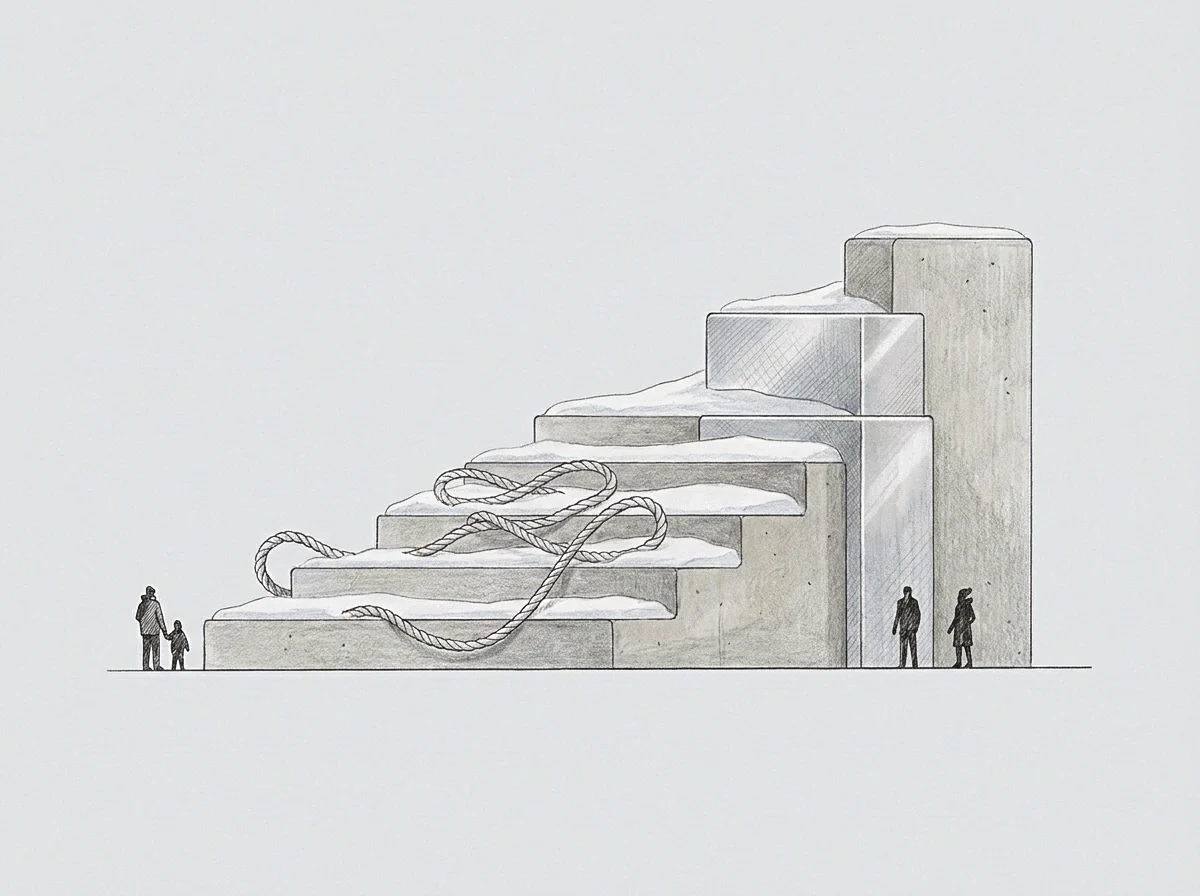
Gradient
Allocating bandwidth across tiers demands a responsive scaling mechanism rather than a static percentage division. As production workload demands fluctuate across execution cycles, capacity shift mechanics govern how resources move between operational support and core platform engineering.

Why Do Static Reservations Fail Under Surge Demands?
Static allocations assume predictable operational load. Take an engineering team of eight staff members operating over a twelve-week development cycle with a fixed twenty percent reservation for system maintenance. During normal operational conditions, this fixed percentage satisfies baseline debt remediation.
During a major database migration or a severe outage event, incoming operational demands exceed the allocated band. If the team enforces a static cap, critical incidents languish in queues. If the team abandons the reservation framework to address the outage, structural refactoring halts indefinitely.
Dynamic gradient allocation solves this tension by setting sliding thresholds. Under elevated incident volume, capacity temporarily shifts from strategic roadmap tasks to operational triage according to predefined preemption rules. Once incident volume returns to baseline parameters, the system automatically redirects bandwidth toward structural debt remediation to restore depleted technical buffers.
Latent debt consumes future bandwidth.
Dynamic capacity allocation rebalances engineering focus automatically when production incident volumes breach established thresholds.
The operational characteristics of capacity reservation tiers vary across priority, execution focus, preemption limits, and failure modes when mismanaged.
| Tier Level | Reserved Allocation | Preemption Rules | Failure Vector |
|---|---|---|---|
| Tier 1: Reactive Triage | 15% to 25% Total Hours | Non-preemptible by feature requests; accepts immediate outages | Queue saturation causes unaddressed customer bugs |
| Tier 2: Debt Remediation | 20% to 30% Total Hours | Preemptible only by critical production incidents | Systemic tech debt growth and platform instability |
| Tier 3: Core Architecture | 45% to 65% Total Hours | Protected work band; zero operational interruption allowed | Product roadmap delays and team turnover |
Converting technical staff exhaustion into explicit operational friction forces leadership to choose between reducing project scope or expanding team headcount. When ordinal internal costs stay hidden, business counterparties assume engineering capacity is infinite. Stating capacity limits in plain operational metrics changes the negotiation from personal resilience to structural availability.
We need all eight engineers focused on the product release this month, so technical debt cleanup must wait until next quarter.

Ceiling
Enforcing reservation integrity requires defining explicit upper limits on work extraction. When business leadership requests additional feature velocity without adjusting capacity tiers, technical leads enforce preemption rules through structured escalation protocols.

Enforcing Hard Capacity Limits
Upper boundaries prevent internal team bandwidth from being oversubscribed during product launch sprints. Setting hard caps on team load protects staff from cognitive exhaustion while maintaining predictable delivery dates. Interruptions destroy deep cognitive focus.
When operational triage tasks cross maximum thresholds, formal escalation pathways trigger scope reductions across parallel roadmap projects.
- The monitoring protocol detects that operational support tickets have exceeded twenty-five percent of total engineering hours over two consecutive weeks.
- The engineering lead flags a capacity boundary breach to product leadership and halts non-essential feature ingestion.
- The technical team redirects all non-protected sprint capacity toward resolving the underlying root causes of the operational surge.
- Product stakeholders select whether to extend feature delivery deadlines or officially adjust project scope commitments.
Setting upper limits on work extraction forces product planning to respect physical engineering availability.
Preemption rules clarify which work streams take precedence under stress, eliminating manual prioritization arguments during production incidents. System stability improves when capacity management operates via structured rules rather than heroic individual effort. Operational availability improves when triage work remains isolated within dedicated operational bands.
The preemption clause activates the moment operational ticket volume exceeds thirty percent of total engineering bandwidth, automatically shifting non-on-call engineers away from feature development until system stability metrics recover.

Shield
Protecting technical staff from exhaustion is an exercise in resource preservation rather than workload optimization. Sustained performance relies on maintaining operational slack inside daily execution routines. When technical organizations view spare capacity as wasted budget, they eliminate the precise margin required to survive unexpected operational failures.

Preserving Long Term Engineering Capability
Engineering output requires structural protection. When reservation structures operate effectively over multiple quarters, team voluntary attrition drops while architectural stability improves. Staff members maintain high focus because cognitive fragmentation is minimized.
Capability gained through deep work stays inside the organization rather than vanishing through continuous staff turnover.
Exhaustion compounds across quarters. When leadership treats capacity reservation tiers as permanent structural firewalls, technical organizations build sustained operational velocity without sacrificing staff well-being.
Operational slack provides the necessary safety margin for software engineering teams to absorb unexpected production shocks.
What systemic metrics can an organization monitor to verify whether capacity reservation tiers effectively prevent hidden cognitive fatigue before staff turnover spikes?