
Measuring Ordinal Resource Expenditure Under Severe Capital Reserve Shortfalls
When capital reserves fail, financial pricing breaks down and resource allocation converts to an ordinal ranking of non monetary operational vectors.

Bench
An operator facing a severe capital reserve shortfall discovers that monetary accounting loses its primary status as a decision tool. Cash balance figures display remaining runway as a simple linear calendar, yet operational reality degrades along multiple axes simultaneously, with cash measuring liquidity while hours measure focus.
When financial reserves drop below a critical threshold, ordinal ranking replaces cardinal pricing for internal decision making. Capital allocation shifts from calculating cash returns to ordering competing non-monetary expenditures. Choices are evaluated by comparing vectors containing hours expended, cognitive bandwidth consumed, operational capability acquired, and internal capacity depleted.
Each operational choice imposes a specific weight across these dimensions, and no single monetary metric can aggregate them without losing the detail that dictates immediate survival.
A severe capital reserve shortfall forces internal accounting to shift from cardinal financial sums to ordinal rankings of competing operational expenditures.
Capital reserves insulate an organization, allowing delayed evaluation of operational mistakes. Once that insulation disappears, every misallocated non-monetary resource lands directly on the remaining team. A decision that saves cash by shifting work onto depleted key operators generates invisible structural debt.
The immediate cash savings appear on financial statements, but the operational vector bends downward as attention fractures under continuous emergency demands. Running an organization through acute reserve shortfalls while assuming monetary calculation remains sufficient leads directly to structural breakdown.

Gradient
Decomposing the resource expenditure vector requires identifying each distinct component that absorbs operational energy. Money represents only one component among several, and under tight capital constraints, it often becomes the least flexible asset available for trade, while attention remains finite and fatigue alters judgment.
The total cost borne by an organization under acute reserve depletion consists of five interrelated non-monetary magnitudes that interact dynamically:
- Hours Vector captures the raw temporal duration devoted to maintaining baseline operations, excluding tactical focus on balance sheet restoration.
- Cognitive Load Magnitude measures the volume of decision latency and context switching imposed on key leaders during operational instability.
- Capability Vector tracks the durable technical or organizational competencies gained through crisis execution that persist after reserves stabilize.
- Capacity Depletion evaluates the permanent or temporary loss of discretionary energy across the operational staff.
- Attention Friction measures the ongoing distraction generated by unstructured counterparty demands and unpaid vendor communications.
Evaluating these magnitudes requires observing how resource priorities shift when capital moves from a solvent baseline to an acute shortfall state. The relative weight of each non-monetary magnitude changes dramatically under financial pressure.
| Resource Axis | Solvent Reserve Baseline | Depleted Reserve Shortfall |
|---|---|---|
| Primary Valuation Scale | Cardinal monetary pricing and expected cash returns | Ordinal vector ranking based on immediate operational survivability |
| Dominant Constraint | Capital allocation efficiency and market return rates | Cognitive bandwidth and key operator endurance limits |
| Opportunity Metric | Foregone financial return on invested capital | Loss of capacity to execute emergency core shifts |
| Transmission Format | Contractual cash rates and precise written budgets | Direct verbal commitments and real-time operational trade-offs |
When financial capital vanishes, the non-monetary components of the resource vector interact in non-linear ways. Spending additional hours on operational work reduces remaining cognitive bandwidth, which increases error rates in contract adjustments. Every resource decision changes the slope of the organizational recovery trajectory.
Index
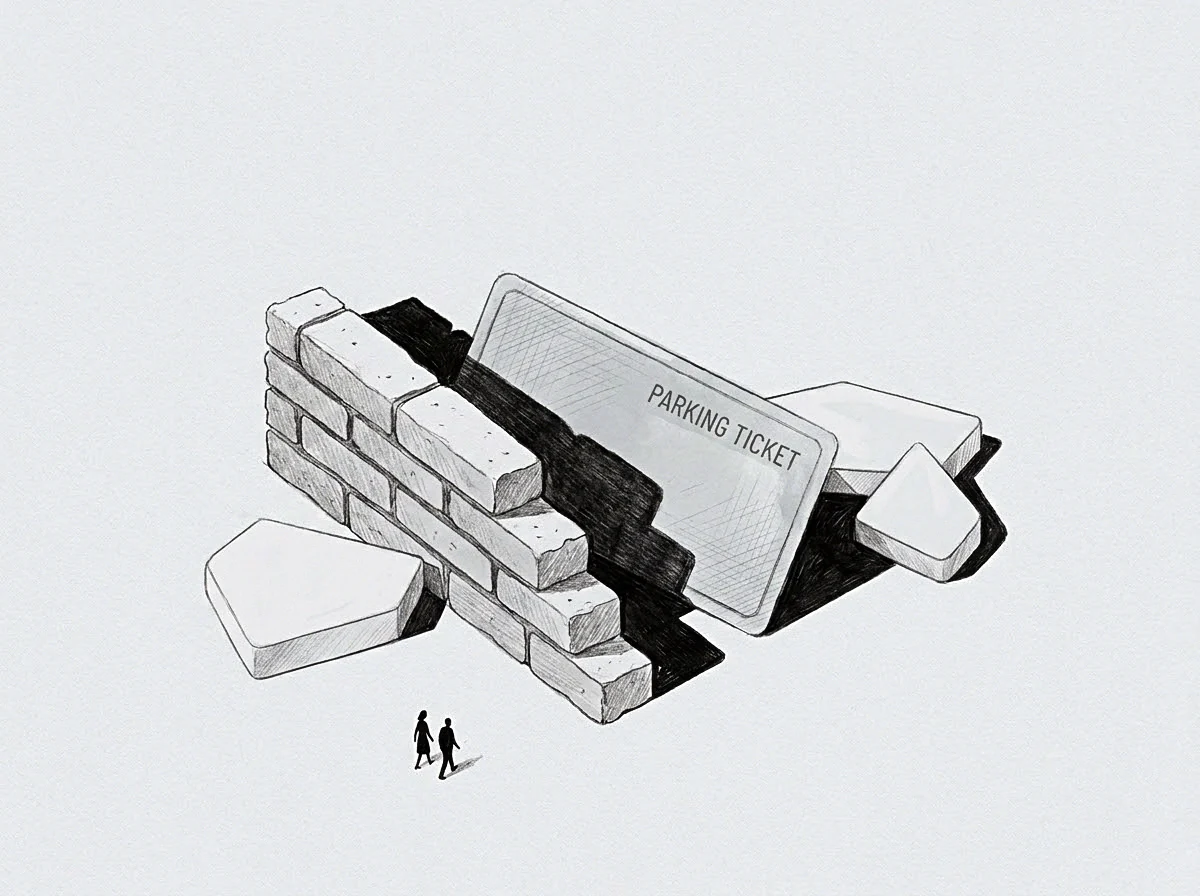
To examine the mechanics of ordinal expenditure under extreme financial pressure, consider a software services firm with six months of operational history experiencing a sudden contract cancellation. Assume two founders hold equal ownership, six engineers form the technical team, and liquid cash reserves fall to twenty-two days of payroll. The firm faces two competing paths: executing a complete technical refactoring to secure a contingent enterprise deal, or offering discounted custom maintenance contracts to local clients for immediate cash flow.

Resource Commitments and Operational Trajectories
Reserves dictate posture. The enterprise refactoring requires forty-five days of total engineering capacity, zero incremental cash expenditure, and approximately eighty hours per week of founder oversight. The local maintenance option yields immediate cash within fourteen days, consumes twenty hours per week of founder attention, but absorbs eighty percent of engineering capacity in routine bug fixing that builds no persistent technical capabilities.
Evaluating these paths through monetary lens alone creates confusion. The local maintenance route offers higher immediate financial survival probability, but its non-monetary cost vector imposes massive capacity depletion and zero capability acquisition. The enterprise refactoring path carries higher financial execution risk, yet its capability vector yields reusable software architecture that raises long-term enterprise valuation even if the specific prospect falls through.
Choosing between short-term capital preservation and technical capability acquisition under severe reserves requires ranking non-monetary vectors rather than comparing uncertain cash forecasts.
The founders choose to divide their technical team, placing four engineers on enterprise refactoring while assigning two to maintenance contracts. This split allocation introduces high attention friction, as the founders spend thirty hours weekly arbitrating priority disputes between the two internal groups while cognitive bandwidth degrades.
By day eighteen, cash reserves drop to four days of operating expense. The engineers working on enterprise refactoring achieve a functional architecture demonstration, raising internal capability metrics despite acute cash distress. The founders renegotiate vendor payment terms by offering future service credits, converting cash obligations into contingent operational deliverables.
The firm survives the immediate reserve shortfall, but the team’s capacity vector reaches full exhaustion, resulting in the voluntary resignation of two senior engineers thirty days later.
The true cost of surviving the cash reserve collapse was paid in human capacity and team cohesion rather than monetary debt. The enterprise option saved the firm, but the unmeasured internal burden carried by the engineering staff created structural turnover that delayed product roadmap goals for two consecutive quarters. The software firm delivered the work on time, but lacked the remaining capacity to take on another project of similar scope.

Transfer
Communicating internal cost vectors to external counterparties requires translating ordinal priorities into cardinal figures. Customers, investors, and vendors operate on monetary pricing models and rarely accept non-monetary cost explanations during contract discussions.
Translating Internal Weight into Market Values
An operator converts internal operational strain into external economic terms through structured steps during crisis negotiations:
- Quantify the total operational hours absorbed by custom counterparty requirements.
- Calculate the foregone revenue resulting from displaced core product development.
- Establish a minimum cash floor for taking on immediate scope additions.
- Add explicit friction penalties to contract amendments that demand key founder bandwidth.
Stating terms early during balance sheet distress protects internal reserves from creeping expansion. When an external partner requests expedited delivery or modified specifications, treating the request as a zero-cost favor destroys remaining team bandwidth. Converting that operational request into a clear monetary fee forces the counterparty to evaluate whether their demand justifies actual capital expenditure.
Stating non-monetary operational costs as explicit monetary price increases during counterparty negotiations preserves internal bandwidth and forces accurate counterparty evaluation.
Unstated internal expenditure operates as a covert subsidy provided to external partners. The partner assumes operational changes carry minimal weight because no cardinal price tag was attached to the adjustment. The contract clause specifying fixed fees for defined scope limits becomes the primary boundary that preserves organizational bandwidth during capital reserve recovery.

Balance
Evaluating operational moves after surviving an acute cash crisis requires analyzing whether the capability vector gained outweighs the structural entropy introduced. Liquid financial reserves eventually rebuild through sustained revenue or equity injections, but damaged team capacity and fractured focus recover on much slower timelines.
Measurement systems designed for stable economic periods fail during acute scarcity because they overcount monetary movements while ignoring operational resource exhaustion. An organization that successfully preserves cash by exhausting its key staff often discovers that its execution speed drops permanently. Tracking non-monetary resource vectors alongside standard balance sheet metrics establishes a complete view of organizational durability.
Long-term organizational survival relies on measuring non-monetary expenditure trends accurately before financial reserve exhaustion reaches critical levels.
The ongoing challenge in non-monetary resource measurement rests in identifying when an ordinal cost vector has crossed from acceptable operational burn into irreversible capacity degradation. Field findings in organizational behavior confirm that individuals underestimate their own cognitive fatigue during prolonged crisis management, leading to sudden operational failures after acute financial threats pass. Establishing explicit non-monetary expenditure limits during stable periods offers the only reliable hedge against structural self-destruction when capital reserves inevitably contract.