
Measuring Ordinal Skill Vectors Against Cardinal Financial Burn Rates
Cardinal burn enforces a rigid temporal ceiling while ordinal skill acquisition advances through non-linear plateaus that resist arithmetic averaging.

Scale
A bank account drops by eighteen thousand dollars in thirty days while the technical lead learns distributed consensus protocols. The monetary loss is absolute, verifiable by any clerk, and expressed on an interval scale where every unit matches the next. Technical capability exists as a sequence of problems the engineer can now solve that were previously out of reach.
Attempting to divide the cardinal dollar figure by this ordinal skill progression produces a mathematical distortion that confounds early capital decisions.
Measurement theory defines levels of measurement by the empirical operations permitted by each mathematical structure. Cardinal scales possess uniform intervals and, in ratio scales, a non-arbitrary zero point. Operations such as addition, division, and calculating rates of change hold mathematical validity across cardinal numbers.
Ordinal scales permit only the evaluation of rank order: greater than, less than, or equivalent to. Assigning integer values to mastery stages does not generate uniform distances between them. Moving an operator from novice to competent involves an entirely different quantity of cognitive load than moving from competent to expert.
A cardinal ledger records the cash depleted while an ordinal rank records solely the sequence of hurdles cleared.
When an operating team compares cardinal burn directly to qualitative growth, they often treat the ordinal sequence as an evenly spaced metric. They assume two months of runway ought to yield two discrete units of technical capability. The internal cost sits in the attention consumed during the intermediate stage.

Mathematical Boundaries Across Measurement Classes
Formal measurement systems set clear boundaries between scale types. Transformations applied to cardinal figures must preserve ratios or intervals to maintain empirical meaning. Data organized on an ordinal scale keeps its meaning under any strictly increasing monotonic transformation.
Taking the mean of ordinal positions yields an artificial figure that corresponds to no empirical attribute of the system.
The cardinal financial balance functions as an external boundary condition. Cash declines cardinally toward zero at a measurable speed denominated in currency per calendar month. Skill acquisition moves along a discrete directed graph where nodes represent operational capacities, without uniform distances between their dependencies.
Bridging these domains requires evaluating the survival of the sequence rather than computing a synthetic efficiency ratio.
The cost landed entirely on the attention consumed during the second phase.
Calculations that average ordinal milestone scores across calendar quarters yield numbers that conceal whether the underlying operational base advanced or stagnated.

Mesh
Skill progression operates as a multi-dimensional state space rather than an isolated scalar trajectory. An operator acquiring mastery in high-throughput network design simultaneously alters proficiency in debugging, systems architecture, and low-level memory allocation. Each component of the skill vector advances unevenly.
One axis moves forward three degrees while another stays static for five months.
Decomposing resource expenditure reveals distinct operational components that burn alongside cardinal funds. The true cost vector contains financial expenditure, direct hours committed, biological capacity consumed, and the latency imposed on concurrent initiatives. Each element possesses a distinct scale.
Financial drawdowns move cardinally. Attention operates as an unquantified biological threshold that degrades under continuous operational friction.

Decomposition of the Skill Vector
Evaluating an operational team requires separating the composite capability into its distinct functional axes. Each axis represents a specific class of execution that can only be verified when the system encounters real mechanical resistance.
- Protocol proficiency advances through exposure to edge-case failures during live deployments and permits the resolution of distributed data synchronization bugs.
- Architectural endurance develops over prolonged architectural iterations, defining how many consecutive months a system structure survives production traffic before requiring complete refactoring.
- Diagnostic speed shortens through the systematic elimination of invalid hypotheses under high-stress system outages.
- Syntactic dexterity reaches mechanical automaticity early in the execution cycle and ceases to provide comparative operational leverage once baseline competency exists.
These components do not advance in lockstep. The architectural axis often lags behind syntactic dexterity by multiple quarters. A team may show rapid motion across mechanical syntax while remaining completely incapable of structuring an enduring data pipeline.
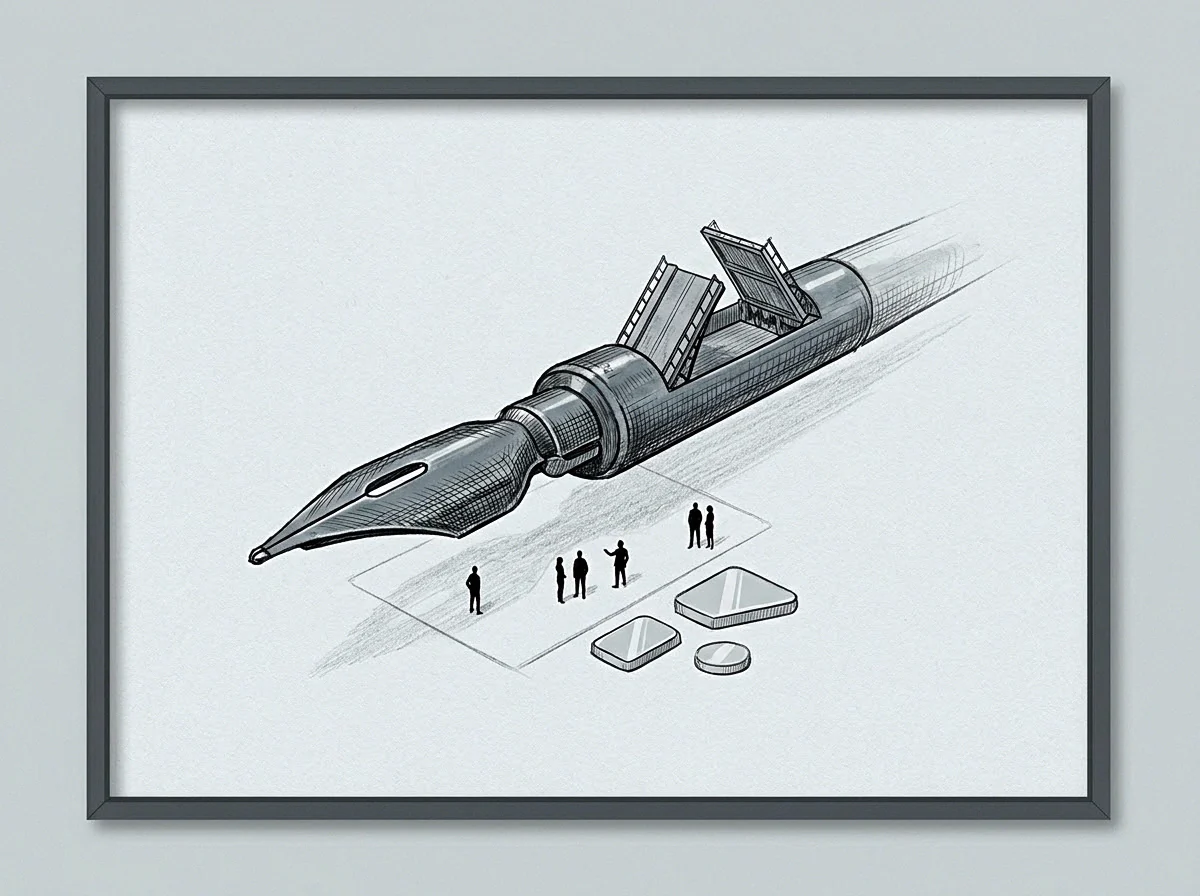
Mapping Burn Against Multi-Dimensional Competency
Financial burn rates impose an unforgiving calendar constraint upon this multi-dimensional advancement. If thirty thousand dollars vanish every thirty days, the runway establishes an absolute temporal horizon. The operator evaluates whether the skill vector moves along the specific axes necessary to achieve system survivability before cash reserves hit zero.
| Dimension | Measurement Scale | Verification Method | Distortion Risk |
|---|---|---|---|
| Capital Outflow | Cardinal Interval | Bank statement audit | Treating flat capital drawdowns as evidence of operational stability |
| Engineering Skill | Ordinal Lattice | Production incident resolution | Assigning uniform values to non-linear cognitive breakthroughs |
| Attention Reservoir | Bounded Ordinal State | Error rate under sustained fatigue | Assuming cognitive focus remains constant across extended sprints |
| System Throughput | Cardinal Ratio | Transaction processing volume | Confusing raw execution speed with architectural resilience |
Comparing these disparate phenomena demands watching the alignment between capability acquisition and systemic bottlenecks. When a company burns capital to learn a capability that does not alleviate the primary operational constraint, that capital is permanently severed from corporate survival.
The operator who pays ten thousand dollars to master an irrelevant protocol exhausts the runway without altering the state of the firm.

Gear
Every operational team functions as an error-correcting control loop governed by feedback cycles. The cardinal burn rate dictates the frequency with which the mechanism can sample reality. When funds deplete too rapidly relative to skill acquisition, the loop runs out of execution cycles before the corrective signal updates the operational pattern.
Under tight capital constraints, the feedback mechanism often experiences severe transmission loss. The operator senses financial pressure and accelerates deployment speed, attempting to force cardinal progress. This acceleration degrades observational capacity.
The team runs more experiments, observes fewer variables, and misinterprets random market fluctuations as validation of newly acquired competencies.
Capital depletion fixes the total count of operational loops available to an operating group before failure.
The error signal must register across the operational vector cleanly. When an operator ships defective software to hit a calendar deadline, the cardinal schedule remains intact, but the capability vector accrues hidden technical drag. The system registers artificial progress on the calendar while degrading the biological capacity of the engineering staff.

Control Loop Dynamics Under Capital Pressure
A closed loop requires a stable setpoint, an accurate sensor, and an actuator capable of executing corrections. In early corporate configurations, the setpoint is operational solvency. The sensor measures customer contracts or system performance.
The actuator consists of the team deploying its newly acquired competencies to clear technical hurdles.
When the cardinal burn accelerates, the actuator is often forced into premature action. The team attempts to apply immature skills to mission-critical infrastructure. The resulting system failure consumes massive blocks of attention, freezing capability acquisition entirely for weeks while the operators extinguish catastrophic fires.
The primary cost landed on the capacity of the team to process subsequent system alerts.
Under sustained pressure, an operating unit will inevitably choose the illusion of mechanical progress over the uncomfortable reality of unproven execution capacity.

Rate
Assume an engineering venture operating with four hundred thousand dollars in liquid reserves and an operational burn rate of forty thousand dollars each month. The temporal boundary is fixed at ten months. The technical objective involves mastering custom low-level database engine development, an ordinal progression spanning four discrete states: architectural design, concurrent memory management, network replication, and fault recovery under disk corruption.
During the first five months, the capital balance drops to two hundred thousand dollars. The team successfully navigates architectural design and concurrent memory management. To an outside observer evaluating only cardinal financial depletion, the company consumed half its total capital without producing a single revenue-generating asset.
The burn appears reckless when evaluated through short-term cardinal balance sheets.

Worked Scenario: The Ten-Month Execution Band
At month six, the team encounters network replication. This node presents substantially higher conceptual resistance than previous phases. The team remains stalled on this single ordinal stage for three consecutive months, consuming one hundred and twenty thousand dollars.
Financial reserves now sit at eighty thousand dollars with two months of runway remaining. At this juncture, conventional management intuition calls for an immediate halt or a complete abandonment of the underlying technical ambitions. The cardinal rate remained constant while ordinal advancement flattened completely.
On week thirty-six, the replication synchronization mechanism stabilizes, unlocking the fault recovery state within fourteen operational days. Because the team mastered memory management and distributed networking thoroughly during the preceding plateau, the final hurdle clears in a fraction of the anticipated time. The capability vector rises sharply in the final sixty days of solvency.
The venture survives if the completed skill vector immediately converts into market-facing operational leverage before the remaining eighty thousand dollars clears the ledger. If the final stage required three months instead of two weeks, the venture collapses with ninety-five percent of the necessary capability acquired. Ordinal progress provides zero salvage value when the cardinal boundary arrives before the loop closes.
The entire loss landed squarely on the financial reserves of the enterprise.
An operator assessing this progression must accept that ordinal breakthroughs rarely follow smooth chronological curves, leaving capital reserves exposed to sudden exhaustion during cognitive plateaus.

Room
Internal execution runs on ordinal capability, but external counterparties accept solely cardinal price. This translation boundary represents the precise zone where early operations often falter. A client, an investor, or an institutional creditor will not accept an explanation of increased cognitive competence in lieu of an audited cash flow statement or a binding delivery schedule.
The internal team measures its capacity through the problems it can reliably solve. The counterparty evaluates the contract through the deliverable price and the contractual penalty terms. Converting an internal cost vector into an external cardinal figure requires stripping out the intermediate nuances of team development and pricing the final risk cleanly.
A counterparty trades exclusively in cardinal deliverables and remains entirely indifferent to the internal cognitive expenditure that produced them.
When an operator states a price to a customer, that price must account for the cardinal burn absorbed during the unbilled training periods. Underpricing occurs when an enterprise bills solely for the execution hours of the final stage, ignoring the hundreds of thousands of dollars consumed while acquiring the operational capability to execute that stage efficiently.
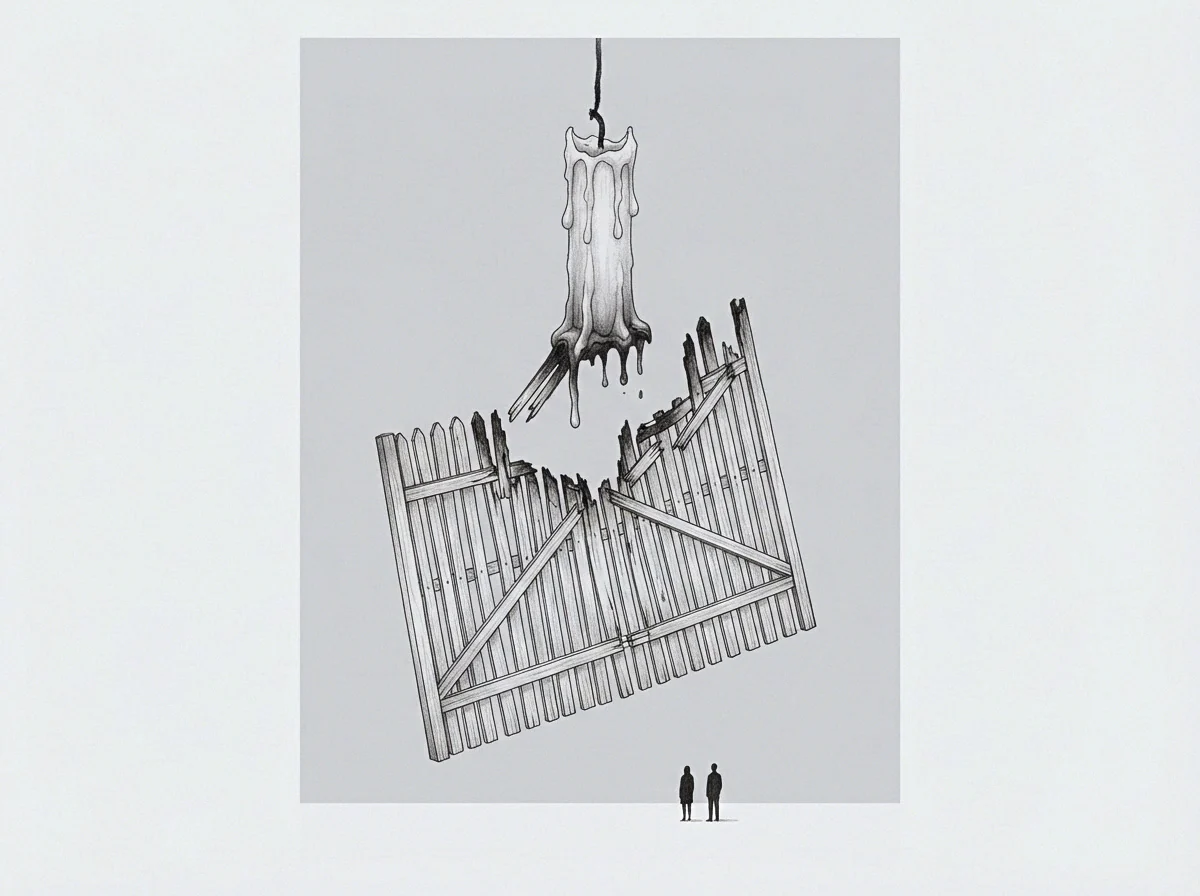
Can Capability Vectors Be Reliably Priced Before Complete Validation?
Attempting to price an incomplete capability vector exposes the organization to massive downside variance. If the enterprise contracts for a cardinal fee based on a skill set it currently holds only at an intermediate ordinal stage, any delay in reaching full competence directly consumes the firm’s equity reserves.
The operator who promises an enterprise client a functional real-time communications architecture while the engineering team is still wrestling with socket concurrency absorbs an unquantified liability. The fixed cardinal contract price remains static while the internal hours vector and financial burn expand uncontrollably to bridge the unforeseen knowledge gaps.
Agreed project milestones pass without delivery, triggering contractual penalties and demands for immediate financial remediation regardless of internal technical breakthroughs.

Drift
A persistent operational pathology involves mistaking psychological comfort for technical advancement. Teams burning capital without shipping functional code often construct elaborate narratives about the profound skills they are acquiring internally. This condition represents cognitive drift, where the lack of external verification allows internal capability claims to float detached from reality.
True skill acquisition generates a clear gradient: the team solves observable failure states with diminishing expenditure of direct attention. When an organization claims its capability is compounding while its systems fail against identical bugs month after month, the capability vector is stationary. The cardinal burn is not financing education; it is subsidizing operational delay.

Distinguishing Validation From Internal Consensus
External validation provides an unyielding, non-negotiable measurement. A distributed database either survives network partitions without dropping committed transactions or it corrupts customer data. The code functions or it fails.
Internal validation, by contrast, relies on narrative consensus among peers seeking to justify their collective burn rate.
Preventing drift requires subjecting ordinal claims to empirical stress tests before cardinal reserves reach terminal depletion. If the engineering group claims mastery over a new infrastructure layer, that infrastructure must face live chaos tests immediately. Deferring the test to protect team morale guarantees that failures occur precisely when the financial runway no longer permits operational recovery.
The definitive condition arrives when an unhandled edge case collapses the production database, revealing that the months spent on architectural exploration yielded zero actual resilience.

Mark
The fundamental discipline of managing an enterprise through early capital depletion rests on decoupling measurement scales while tracking their mutual dependencies. Cardinal burn must be managed as a rigid arithmetic ceiling that ticks downward monotonically with the calendar. Ordinal skill acquisition must be tracked as a discrete series of validated state transitions that cannot be forced through simple financial acceleration.
The operator avoids synthesizing these metrics into unified efficiency ratios that obscure empirical reality. Instead, management consists of monitoring whether the critical path on the skill vector clears each required dependency before the cardinal countdown terminates. Survival is an inequality: the required nodes on the capability graph must be occupied before the cash ledger crosses zero.
When a venture fails, it rarely stems from an inability to spend money or a lack of intellectual ambition. It fails because capital was exhausted while the team occupied an intermediate cognitive plateau, having priced work based on capabilities they had not yet fully consolidated. The cash ran out cardinally while the skill remained trapped ordinally.
Whether an operational group can accurately distinguish between productive plateaus and terminal cognitive stagnation remains an open question for every founding team that balances burn against mastery.