
Resolving Dead Equity Overhang Friction In Common Stock Compensation Refreshes
Dead equity overhang resolves by repurchasing dormant common stock through secondary tenders or restructuring option pools to fund active employee refreshes.
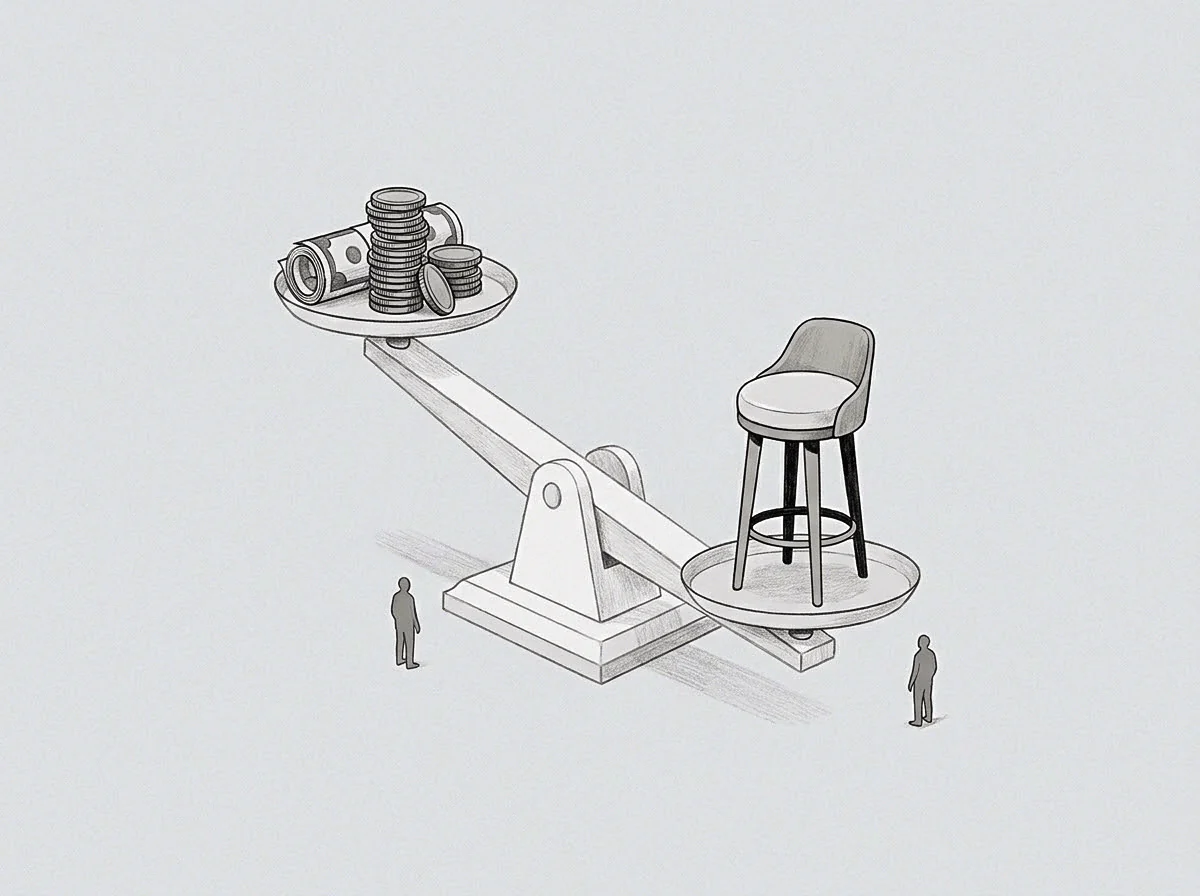
Ballast
Twenty-two percent of the company sits in the hands of three people who left the building thirty-six months ago. The cap sheet registers their common shares as settled property, completely inert, while the engineering leads hired to build the production pipeline hold grants carved out of a depleted four percent reserve. New hires calculate the gap between nominal grant sizes and their true diluted worth within six weeks of arrival.
Equity granted to departed personnel ceases to motivate subsequent output. When an enterprise navigates past its early development, early contributors who departed with vested common stock or long-dated options create a structural friction known as dead equity. Active staff carry the operational burden while dormant holdings absorb the enterprise value created by ongoing work.
The capital structure freezes. Expansion slows down.
A cap sheet laden with inactive ownership forces active staff to fund historical equity through uncompensated dilution.

The Capitalization Ledger Under Inactive Ownership
Departed contributors hold paper that cannot be reclaimed without explicit transactional intervention. In typical early-stage arrangements, founders and first employees secure substantial blocks of common stock, often with standard four-year vesting terms and nominal acceleration clauses. When early personnel depart after two years, their vested percentage remains permanently on the corporate registry.
The company continues to raise capital, issue dilution rounds, and hire replacement operators, yet those departed individuals continue to capture twenty to thirty percent of every marginal increase in equity valuation without supplying labor, strategic direction, or risk coverage.
The operational consequence lands directly on hiring capacity. Prospective executive hires evaluate common stock compensation packages not by the aggregate share count, but by the percentage ownership relative to the total fully diluted capitalization. An incoming senior engineer expects a grant representing one half of one percent.
If the remaining unallocated option pool stands at two percent because departed staff hold a quarter of the equity, the company cannot execute competitive offers without triggering immediate dilutive events for remaining active staff.
Three primary variants of dormant holdings compose this capital weight:
- Vested Common Stock remains the property of departed founders or executives who satisfied their contractual vesting requirements prior to resignation, removing any ongoing service condition from their shares.
- Unexercised Extended-Window Options persist under modern incentive plans that grant ten-year exercise windows following termination, leaving equity reserved on the corporate books for years without yielding cash exercise revenue or active labor.
- Underwater Legacy Options carry exercise strike prices set during peak market valuations, rendering them economically valueless to current employees while legally locking authorized pool reserves against reallocation.

The Math Of The Sunk Allocation
Calculations around refresh grants break down when legacy pools deplete. Consider a company with 10,000,000 shares on a fully diluted basis. Historical departures hold 2,500,000 common shares.
The active founding group holds 4,000,000 shares, preferred investors hold 3,000,000 shares, and the unallocated option pool contains 500,000 shares. To issue refresh grants to seventy active engineers who have vested past their thirty-sixth month, the board must authorize an additional 1,000,000 shares. If the board simply authorizes new common stock without clearing inactive holders, the active staff and the existing option pool bear thirty percent of the dilutive cost, whereas the inactive holders pay nothing in operating hours and forfeit no future claim.
This dynamic introduces an asymmetric vector. The active team spends sixty hours every week maintaining customer systems, raising revenue, and extending runway. The inactive holders contribute zero hours.
Every refresh grant drawn from an expanded pool reduces active ownership percentages while preserving the nominal share count of individuals who bear no ongoing business risk. The cost settles entirely on retention capacity.
Boards that fail to address this imbalance face quiet attrition among essential performers who realize that their personal equity upside subsidizes the passivity of former colleagues.

Squeeze
Market rates for senior engineering talent adjust quarterly, but option refresh budgets remain tied to historical authorizations. When compensation committees assemble to review annual refresh allocations, they face a severe compression between competitor market packages and available equity reserves. The cash balance cannot absorb higher base salaries without compromising eighteen months of operational runway.
Equity remains the primary lever for compensation, yet every available percentage point demands board debate, stockholder votes, and investor friction.
Employees experience equity value through purchasing power and expected liquidity. When a company experiences flat or declining valuation multiples between funding cycles, grants awarded at earlier valuations submerge. An engineer holding options at an exercise price of five dollars watches the latest common 409A fair market valuation drop to three dollars.
The compensatory value of the initial grant collapses to zero. The employee effectively works for base salary alone.
An underwater option grant withholds compensatory value while occupying a legal share reservation that blocks fresh grants.

Retention Decay In Mid Stage Teams
Tenured contributors routinely hit the vesting cliff where four-year grants finish delivering their monthly tranches. A developer at month forty-two has already vested eighty-seven percent of their award. The forward-looking incentive to remain at the company drops with each subsequent month.
If new refresh grants are not layered over the tail end of the original schedule, the employee faces a sharp reduction in forward economic upside.
Competitor companies deliberately target these tenured operators. External offers deliver freshly priced options or restricted stock units with four years of virgin vesting runways and reset strike prices. The internal counter-offer must match this forward economic horizon.
When dead equity locks fifteen to twenty-five percent of the capitalization table, the company simply lacks the unissued common shares required to issue meaningful counter-grants. The internal talent departs. Replacements cost more to hire in cash and recruitment fees.

Option Pool Exhaustion And Compensation Deficits
Authorizing an expanded pool requires investor consent. Preferred stockholders evaluate pool increases as immediate, pre-money dilution that reduces their effective ownership percentage. Consequently, venture investors often demand that pool expansions occur prior to financing events, forcing common holders to bear the entirety of the dilution.
This dynamic pits the interests of the current executive team against preferred shareholders. The executive team identifies the need for a five percent equity expansion to staff a product launch. Investors point to the twenty percent inactive common equity held by former founders and resist authorizing new shares until the inactive equity is cleared.
Operational timelines slip. The room grows cold.
We need you to match the liquid offer from our competitor down the street without cutting our base pay or handing us more out-of-the-money options.

Table
Remediation paths diverge based on corporate liquidity, tax exposure, and the legal posture of dormant equity holders. Boards cannot simply cancel issued shares; property rights in common stock are protected by corporate statutory law and equity incentive contracts. Solving the overhang demands selecting specific legal and financial tools suited to the enterprise stage.
Transactional options balance tax burdens against cash outlays. A secondary tender offer demands corporate or third-party capital to repurchase shares from departed holders. Conversely, recapitalizations wipe or heavily dilute existing common tiers through preferred shareholder drag-along rights, creating significant relational fallout.
Synthetic equity solutions bypass the common cap structure entirely through non-equity cash bonus plans tied to enterprise valuation.
Repurchasing dormant common stock transfers equity back to the company treasury at the cash expense of near-term runway.

Structural Remediation Vehicles Compared
Each tool operates across different regulatory, financial, and tax vectors. Secondary purchases directly extinguish dead stock, returning shares to the corporate treasury where they can be retired or reallocated to the option reserve. Option cancellations with replacement grants refresh active holders directly, but require careful adherence to tax rules governing deferred compensation and repricing disclosures.
The choice among these mechanisms governs whether the solution costs cash reserves, common share dilution, or executive goodwill.
| Remediation Mechanism | Direct Financial Cost | Legal And Tax Vector | Cap Sheet Impact | Execution Complexity |
|---|---|---|---|---|
| Secondary Tender Repurchase | High cash outlay to fund company or investor buyback | Governed by federal tender offer rules; capital gains treatment for sellers | Immediately removes dead shares; replenishes available pool without net dilution | High; demands valuation fairness opinions and shareholder offering documentation |
| Pool Expansion With Investor Dilution | Zero cash; high percentage cost absorbed by existing holders | Simple board and stockholder consent; charter amendment filings | Expands total fully diluted share count; active founders and dead equity dilute equally | Low; straightforward corporate mechanics with high dilution costs |
| Option Exchange Or Surrender | Low cash outlay; nominal administrative filing costs | Requires Section 409A compliance; potential tender offer rules if broadly offered | Cancels high-strike underwater grants; reissues shares at current fair value | Medium; requires voluntary participation by affected grant holders |
| Synthetic Value Carveout (Phantom Units) | Deferred cash liability settled upon exit or liquidity event | Governed under Section 409A as nonqualified deferred compensation | Zero alteration to common stock registry; preserves equity table entirely | Medium; introduces cash obligations that prioritize active staff ahead of common exits |
Secondary tender repurchases offer the cleanest structural resolution when balance sheet capital permits. By deploying excess cash to acquire shares from non-contributing holders at a discount to projected future value, the enterprise recovers cap space without punishing active staff. Many growth companies orchestrate this process alongside institutional investment rounds, allowing incoming growth capital to buy out former founders directly.
In contrast, option exchange programs resolve underwater option debt without addressing issued common stock. When historical options sit thirty percent above the current 409A price, an employee option surrender program permits the company to cancel obsolete grants in exchange for fewer options carrying lower exercise prices. This shrinks the total pool commitment while immediately restoring incentive value to active teams.
A stock purchase agreement containing explicit rights of first refusal and clawback terms for unvested equity ensures that no future departures exit the company with uncontrolled common stock.

Cull
Executing an equity cleanup demands precise corporate hygiene and unwavering adherence to securities regulations. When leadership resolves to eliminate inactive holdings, negotiations with former colleagues frequently become adversarial. Former contributors view their shares as permanent deferred compensation for early personal sacrifice.
Current operators view those same shares as unearned ballast draining the lifeblood of the surviving enterprise.
The corporate secretary reviews all initial stock purchase agreements to confirm whether repurchase rights remain operative. Many early agreements contain company repurchase options on unvested shares that lapse if not exercised within ninety days of termination. Missing that ninety-day window permanently converts provisional holdings into unrestricted common stock.
Once common stock rests unconditionally in private hands, removal demands either voluntary sale, recapitalization dilution, or corporate restructuring.

Which Valuation Baseline Governs The Recapitalization?
Valuing common stock for repurchase creates severe legal exposure if not handled through independent metrics. The board cannot arbitrarily price dead equity down to induce sales. Directors bear fiduciary obligations to all common stockholders, including departed employees.
Repurchasing shares at an artificially depressed valuation exposes the company to subsequent claims of fraudulent inducement or breach of fiduciary duty if the business subsequently completes an initial public offering or lucrative acquisition.
Independent 409A appraisals establish the defensible floor for common stock valuations. When arranging a secondary purchase, boards routinely establish pricing based on the most recent independent 409A report, or negotiate a negotiated discount against preferred financing tiers. Independent valuations account for lack of marketability, enterprise liquidation preferences, and debt overhang.
An objective benchmark protects the board from future shareholder litigation.

Secondary Tender Execution And Surrender Terms
Structured tender offers allow companies to clean their registries systematically. Rather than conducting ad-hoc negotiations with individual ex-employees, the corporation issues a uniform offering document to all eligible inactive holders. This framework complies with securities regulations governing tender offers and ensures fair disclosure across all parties.
A structured tender plan incorporates specific operating conditions:
- Uniform Offering Price sets an identical cash price per share across all participating inactive holders, eliminating preferential treatment claims.
- Pro Rata Allocation Rules govern how capital is distributed if departed shareholders offer more stock than the company intends to repurchase.
- Comprehensive Release Covenants require sellers to waive past, present, and future claims against corporate officers, directors, and intellectual property.
- Treasury Retirement Actions formally cancel repurchased common shares, reducing total issued capital and expanding unallocated option reserves.
The field frequently disputes whether aggressive recapitalization constitutes legitimate corporate hygiene or bad-faith expropriation. In a hard reset recapitalization, preferred investors and active founders vote to amend the corporate certificate of incorporation, executing a reverse stock split that converts existing common stock down to nominal fractions while issuing fresh management incentive pools to active personnel. This move effectively wipes both inactive common holders and historical option pools.
Such interventions permit immediate capitalization restructuring, yet risk protracted litigation if departed founders demonstrate that the maneuver was designed specifically to extinguish their minority ownership interests.
Will the legal exposure of an aggressive recapitalization outweigh the recruiting cost of enduring the equity overhang for another two years?

Pact
Sustainable resolution of dead equity friction requires establishing rigorous future governance structures. Resolving historical overhang achieves little if standard departure terms continue to leak equity into the market over the next three years. Modern equity plans build continuous refresh mechanisms coupled with robust clawback and repurchase rights.
Forward-looking compensation architecture moves away from cliff-heavy four-year grants toward dynamic annual refresh allocations. Instead of granting an employee a single massive block upon hire that exhausts its retention value at year four, the enterprise issues annual grants that vest across subsequent three-year cycles. This boxcar vesting pattern prevents the buildup of massive unvested cliffs, ensuring that compensation stays aligned with contemporary market contributions.
A boxcar refresh schedule layers rolling multi-year vesting tranches to prevent single-event retention collapse.

Dynamic Refresh Schedules And Forfeiture Governance
Modern option contracts incorporate calibrated post-termination exercise windows. Granting a ten-year post-termination exercise period became popular during periods of loose venture capital, but it serves as a primary factory of dead equity overhang. When departed staff hold options for a decade without exercising, the company must permanently maintain those reserved shares on its fully diluted ledger.
A balanced policy scales the exercise window directly to length of service: ninety days for personnel serving less than two years, extending incrementally up to three years for sustained tenures. This design returns unexercised shares to the pool promptly when early departures occur.
Furthermore, early founder arrangements must contain explicit reverse vesting agreements that enforce share forfeiture upon early departure. When founders divide equity at incorporation, all shares should remain subject to repurchase at par value if an individual founder resigns before completing their multi-year commitment. If a co-founder leaves eighteen months into building, the enterprise must exercise its contractual right to buy back eighty percent of their unvested shares immediately.
Failing to assert that repurchase right seeds the cap table with dead weight that will paralyze compensation discussions later.
When compensation structures distribute equity based strictly on forward capability and verified contribution, the capitalization table sustains the active enterprise without relying on uncompensated sacrifices from those who remain.