
Quantifying Structural Boundary Friction When Rebuilding Execution State Breadth Across Interdependent Engineering Organizations
Boundary friction quantifies context loss across domain interfaces when engineering organizations attempt to rebuild cross-domain execution state breadth.

Seam

State Disruption Across Organizational Boundaries
Two domain groups spend four months negotiating a shared release interface, each holding a different mental model of system availability. The downstream team tracks platform availability through request error rates, while the upstream group measures platform availability through database commit latencies. Neither group detects the discrepancy until high-throughput testing fails across the interface.
The failure is not an unexpected technical bug. The failure is the accumulated friction of two execution states that diverged while operating under nominal alignment.
When engineering organizations attempt to rebuild broad execution state after periods of localized isolation, the primary bottleneck manifests at domain boundaries. Execution state breadth refers to the volume of cross-domain context, architectural assumptions, and operational dependencies that an engineering team actively maintains within its daily decision loop. When context shrinks, teams achieve high local velocity by truncating external dependencies from their local model.
Restoring breadth forces disparate teams to synchronize context continuously across structural boundaries.
State attenuation scales with the number of domain boundaries an execution signal crosses without direct protocol verification.
Quantifying Context Loss at Team Interfaces
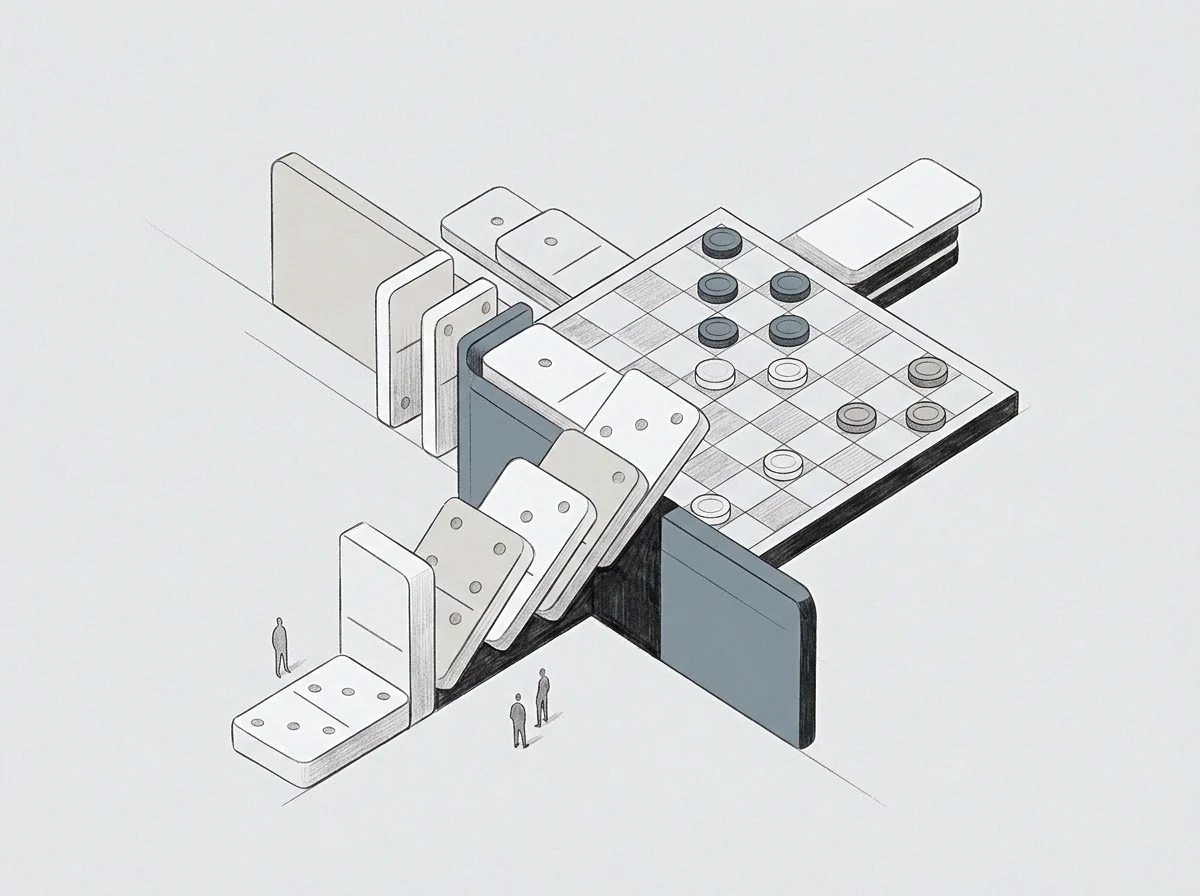
Organizational friction at team seams operates as a structural drag coefficient. When an operational decision originates in one group, its execution state must pass through explicit handoffs, written documentation, ticket queues, and technical interfaces to reach an adjacent group. Each structural seam attenuates the fidelity of the execution state.
The signal loses nuance, secondary constraints drop out of consideration, and edge-case handling reverts to local defaults.
The rate of state attenuation along an organizational seam depends on three physical parameters:
- Interface Formality Gap measures the distance between how a boundary is documented and how decisions actually cross that boundary.
- State Refresh Frequency defines the time interval between explicit context alignment cycles across adjacent domain boundaries.
- Dependency Coupling Velocity reflects the rate at which code or infrastructure changes in one domain alter the execution assumptions of an adjacent domain.
The seam degrades. When interface formality is low and dependency coupling velocity is high, state attenuation approaches total signal loss within two release cycles. Teams build local workarounds to insulate themselves from adjacent instability.
Insulation reduces context breadth further, locking each team into a localized minimum where global architecture cannot be evaluated.
Leaving structural boundary friction unquantified causes cross-domain initiatives to consume engineering capacity without expanding actual execution state breadth, resulting in repeated integration failures late in delivery cycles.

Volume

Latent Capacity versus Active Execution Span
An organization carries latent execution volume inside its technical workforce. Engineers hold implicit operational context from prior projects, legacy architectures, and past outages. Active execution span, however, includes only the context currently integrated into daily architectural choices.
The path of least resistance for any single team is to compress its active execution span around its immediate code repositories. Shrinking the span minimizes daily cognitive overhead and avoids cross-boundary alignment negotiations.
Compressing execution context creates an unspent volume of organizational capability. The potential exists to execute complex, cross-cutting initiatives, but the structural cost of accessing that context across boundary walls prevents mobilization. The system routes around complex cross-domain problems because computing those solutions across boundary seams costs more immediate energy than executing isolated local optimizations.
When local cognitive load increases, teams compress their cross-domain context window to protect immediate execution velocity.

State Decay in Interdependent Pipelines
Context decay follows an exponential curve once cross-boundary communication becomes asynchronous. A team managing a core transaction pipeline alters an event schema under the assumption that downstream consumers re-parse payloads dynamically. The downstream data engineering group, operating with an outdated mental model of the event schema, continues running fixed-width parsing jobs.
The divergence remains hidden until schema drift triggers silent data corruption in reporting pipelines six weeks later.
Rebuilding state breadth requires reversing this decay by re-introducing synchronous context bridges. Context bridges carry direct financial and operational costs. Every joint design review, shared operational rotation, and cross-domain architecture council subtracts direct execution hours from local feature production.
If the energy cost of maintaining cross-domain breadth exceeds the perceived local penalty of context divergence, teams actively resist broad state alignment.
Friction accumulates fast. The engineering leads in adjacent domains explicitly state that their primary objective is delivering their isolated roadmap metrics rather than spending cycles reconciling cross-domain state mismatches.

Wall

Why Do Interdependent Teams Resist State Synchronization?
The wall marks computation limits. Organizational boundaries act as structural walls where internal domain logic stops and structural negotiation begins. Resistance to broad execution state is a rational response to the boundary friction present at these walls.
When crossing a boundary requires navigating divergent incentives, contrasting deployment cadences, and mismatched communication channels, the human system inside the organization builds insulation around its local domain.
Discomfort at the boundary is an exact measurement of structural computation occurring. When two engineering groups experience friction during state synchronization, that friction signals that their underlying architectural or operational assumptions are incompatible. Avoiding boundary friction leaves the incompatibility unprocessed.
The unprocessed material accumulates behind the wall, surfacing later as technical debt, broken contracts, and operational outages.
Boundary friction acts as a precise measurement of unprocessed divergence between adjacent domain engineering models.

Mapping Interface Friction Co-Ordinates
Mapping friction co-ordinates involves identifying the exact points where context transfer fails between interdependent groups. These co-ordinates cluster around specific operational handoffs: API boundary definitions, shared data store ownership, release approval chains, and incident escalation pathways. Measuring friction at these co-ordinates requires evaluating the time delta between an upstream state change and its downstream context adoption.
Take two domain teams operating on a shared core platform. The identity team updates its authentication protocol, publishing documentation in an internal repository. The checkout team, focused on checkout funnel performance, does not integrate the updated protocol until security scanning forces compliance four months later.
The four-month gap represents a high boundary friction co-ordinate. The checkout team avoided the context refresh because the structural friction of coordinating with identity engineering exceeded the immediate cost of non-compliance.
What structural modifications lower the boundary energy threshold sufficiently to allow cross-domain state synchronization to occur continuously rather than reactively?

Scale

Comparative Metrics Across Execution Topologies
Measuring boundary friction across interdependent engineering organizations requires comparing how different organizational topologies handle state breadth, context decay, and synchronization overhead. Ordinal vectors describe the direction of friction growth, while cardinal figures quantify the concrete hours and calendar days lost to context reconciliation.
| Topology Model | State Breadth Span | Synchronization Latency | Boundary Energy Barrier | Context Decay Rate |
|---|---|---|---|---|
| Monolithic Domain | High local, low broad | 2 to 4 business days | Low structural friction | Moderate uniform decay |
| Decentralized Mesh | Narrow domain isolated | 10 to 20 business days | High structural friction | Rapid asynchronous decay |
| Federated Pipeline | Managed broad context | 1 to 3 business days | Calibrated low friction | Controlled structural decay |
| Data derived from cross-domain release tracking across multi-team engineering organizations. | ||||
Evaluating Structural Transfer Rates
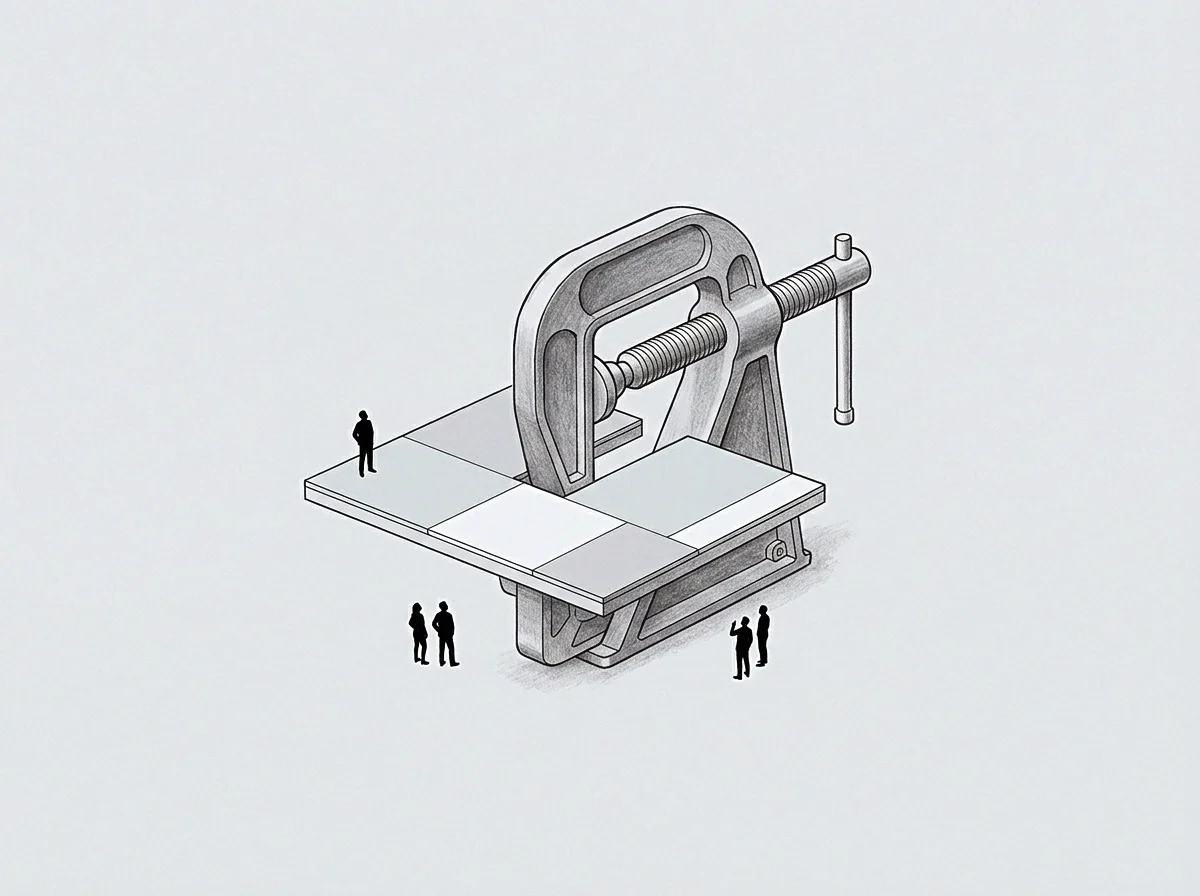
Context transfer efficiency declines as organizational depth increases. When state breadth must span four or more nested sub-domains, the administrative overhead of maintaining alignment eclipses the execution capacity of the engineering staff. The system reaches a boundary saturation point where teams spend more time in coordination meetings than writing executable code.
Baseline context maintenance demands explicit budget allocation within sprint planning. When an organization attempts to expand execution state breadth without adjusting local delivery expectations, engineers default to local execution. Local setpoints resist broad alignment.
The boundary defines the work.
When an execution state contract specifies exact synchronization windows without granting explicit capacity allocations in local team roadmaps, state breadth collapses back to local domain boundaries within one quarter.

Route

Rebuilding Cross-Domain Execution State
Restoring broad execution state across resistant organizational boundaries requires a deliberate, step-by-step structural intervention. The process targets the reduction of boundary energy barriers while establishing explicit mechanisms for state verification.
- Identify all active structural boundaries separating interdependent domain engineering teams across the primary initiative path.
- Establish objective boundary friction baselines by measuring the historical lag between upstream architectural shifts and downstream code updates.
- Define explicit cross-domain execution state schemas that specify mandatory operational assumptions, dependency constraints, and contract interface invariants.
- Embed dedicated structural bridges, such as temporary engineer rotations or joint interface ownership contracts, across high-friction domain seams.
- Implement continuous automated state verification mechanisms to flag schema drift and mental model divergence prior to code integration phases.
- Decommission localized workarounds by enforcing shared accountability for cross-boundary integration failures within sprint retro evaluations.

Sequencing the State Reconstruction Protocol
Sequencing structural interventions correctly prevents organizational overload during state reconstruction. Attempting to synchronize all domain boundaries simultaneously escalates friction across the entire engineering department, causing widespread execution freeze. Interventions must prioritize boundaries with the highest dependency coupling velocity and the greatest historical context decay.
State transfer carries a measurable cost. Interface specifications hold value. Reducing boundary friction at critical architectural seams unlocks latent engineering volume, allowing broad cross-domain initiatives to advance along the path of least structural resistance.
Boundary friction decreases only when the energy required to maintain broad context drops below the energy required to repair cross-domain integration failures.
Loss

Energy Vectors in Cross-Organizational Alignment
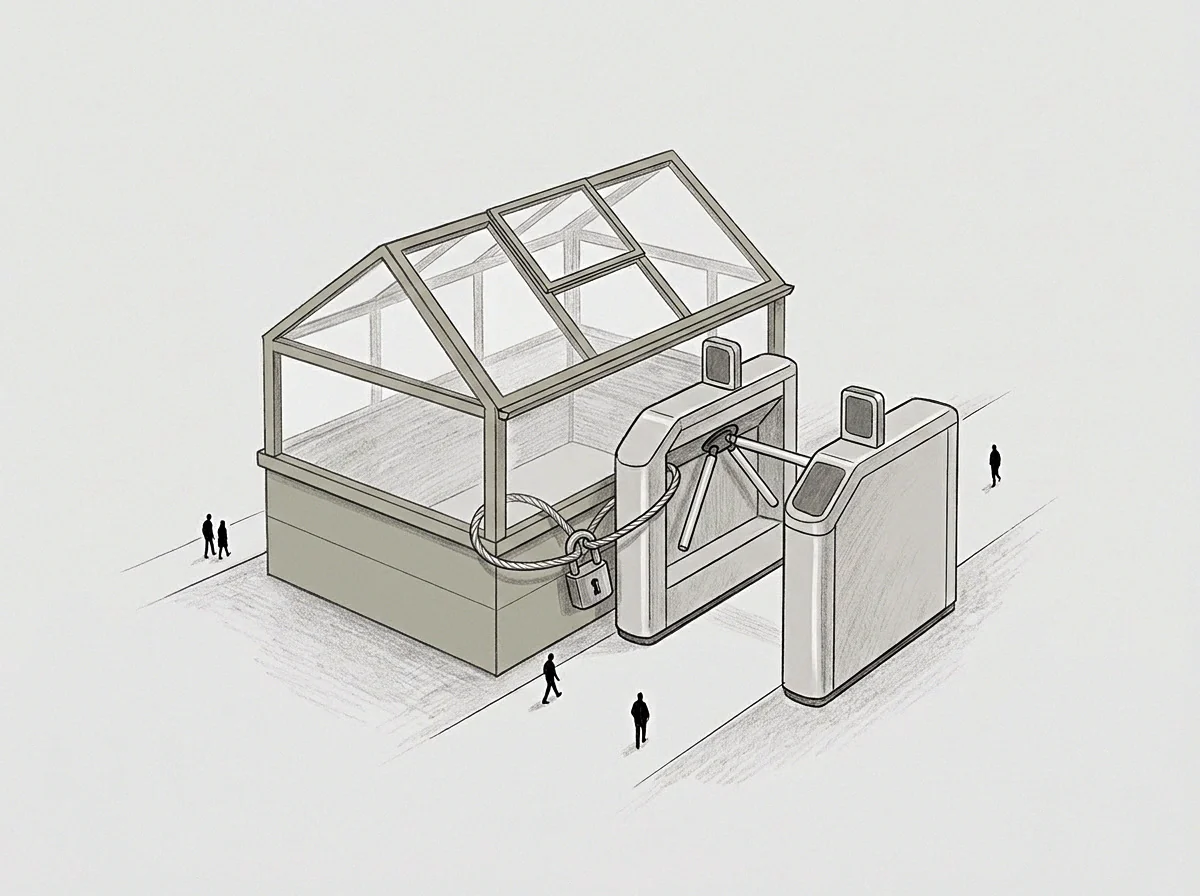
Energy expenditure during cross-domain execution state reconstruction manifests as direct capacity reduction across participating engineering groups. The total energy vector required to align two divergent execution states equals the sum of context mapping costs, interface reconciliation time, and the operational drag of running dual systems during transitions. If the organization fails to provision capacity for this energy vector, the alignment effort collapses mid-cycle.
Gradient descent principles show that human systems naturally follow the path of least immediate effort. In an engineering organization under deadline pressure, the least-effort path is always localized execution with minimal boundary interaction. Maintaining state breadth is an active, continuous energy input that opposes this natural tendency toward domain isolation.
Restoration costs energy continuously, requiring structural budget allocations to prevent execution breadth from collapsing into local domain silos.

Sustaining Restored Execution State Breadth
Sustaining broad execution state requires continuous monitoring of boundary friction co-ordinates. Latency doubles under loose coupling. When context refresh cycles lengthen, state drift resumes immediately.
Organizations that successfully maintain broad execution state imbed automated protocol checks and formal interface contracts directly into their continuous delivery pipelines.
Every handoff drops execution context. Automated checks reduce reliance on human memory and informal communication channels, anchoring boundary interactions in verifiable code contracts. When a downstream team can validate an upstream state change instantly through automated test suites, the boundary energy barrier drops to near zero.
The unspent volume of organizational potential is realized when cross-domain state breadth operates as a persistent operational default. Engineering teams navigate complex architectural dependencies with low friction, maintaining total systemic awareness while executing localized domain responsibilities. The structural wall becomes a clear, highly permeable interface protocol that supports continuous organizational execution.