
Resolving Structural Boundary Limits In Distributed Human Networks Exhibiting Non Linear Coordinate Failure
Coordinate failure resolves by establishing invariant physical verification baselines that eliminate local tangent deviations across distributed working groups.
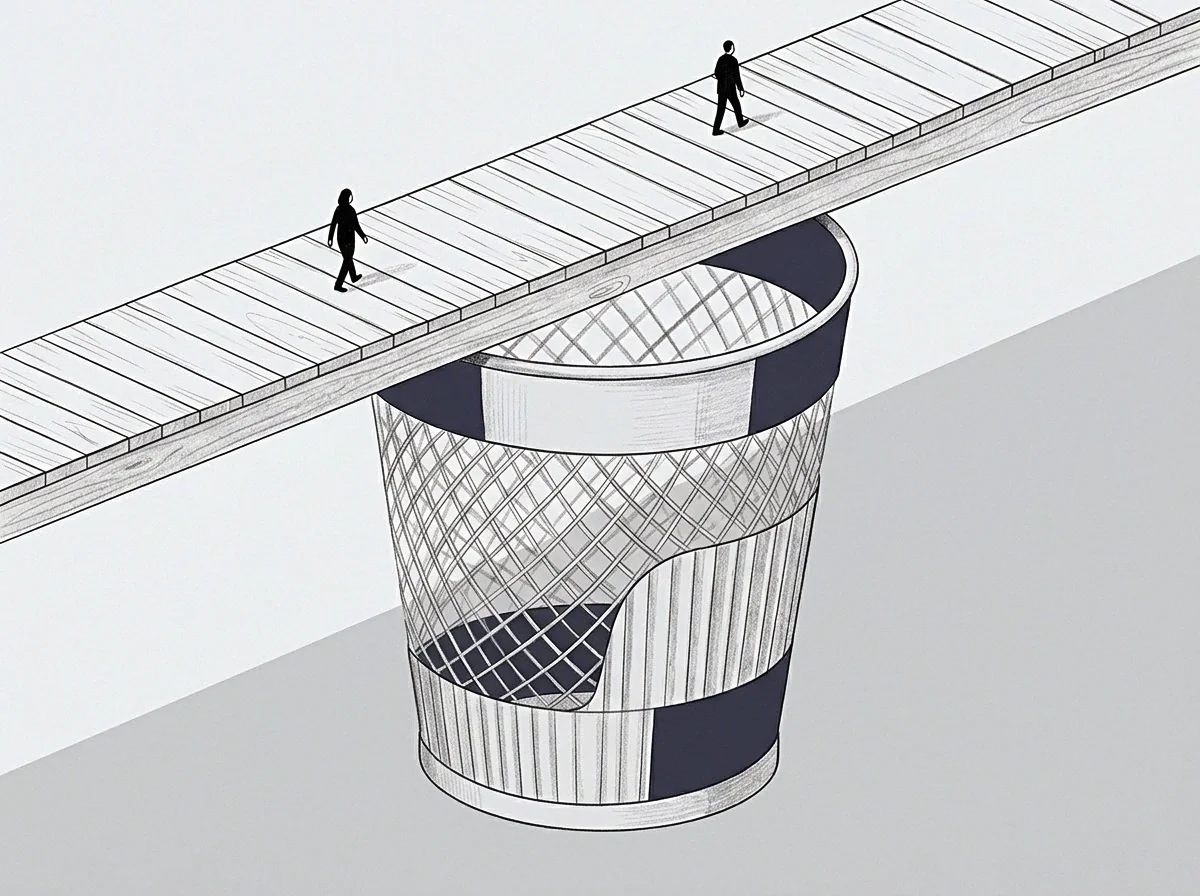
Curvature
Operations run across disconnected participants drift when local steps fail to sum to a planned displacement. A team distributes work across three locations, tracks velocity through weekly output tallies, and observes total milestone delay widening despite each cluster logging complete throughput. The gap appears without warning in cardinal tracking sheets.
The slope steepens immediately.
Each participant computes their next action from immediate adjacent inputs, treating the local surface as flat. When individual groups adjust their pacing or modify task handoffs to bypass local friction, they apply a tangent correction. Summed across twenty nodes, these tangent corrections depart from the global objective plane.
Non linear coordinate failure begins precisely at this juncture: local vectors point toward expected sub-targets, yet their compound path describes an arc away from the operational baseline. The system routes around initial friction, piling uncomputed administrative overhead into the spaces between teams.
A distributed group registers coordinate drift only when local tangent corrections compound beyond the tolerance of global checkpoints.
The founder observes the delay cardinality and attempts to correct output speed. This intervention misreads the terrain. Speed along an arcing trajectory accelerates displacement from the intended terminal state.
The gradient computed from delivered volume shows negative progress along the true primary value axis, even while secondary activity indicators run at capacity. Avoidance functions as the primary positional beacon: whichever joint handoff encounters the least review or the fewest hard criteria becomes the conduit for all deferred operational friction. Work slides down the path of least resistance into unmonitored communication channels.
Silence conceals the actual deficit.
Uncorrected path deviation across distributed nodes forces emergency structural interventions that consume capital reserves and dismantle working goodwill.

Floor
Establishing an operational base requires setting fixed verification coordinates that remain invariant under changing volume. When teams report completion based solely on internal estimates, the absolute reference point dissolves. A baseline holds structural integrity only when performance measures reflect physical delivery rather than relational reassurance.
Distance alters the transmission. Without an unyielding foundation beneath production data, coordinate failure compounds silently across quarters.

Reference Anchors Beneath Production Data
A reference datum anchors shared tasks to unambiguous deliverables. The person directing operations establishes whether a stated completion satisfies the terminal criteria before adjacent workers accept the output. By stabilizing the baseline, the organization exposes the latent variance between reported speed and verified advancement.
The baseline remains flat.
- Stated operational limits prevent task sprawl by barring nodes from redefining scope when local velocity slows.
- Cardinal delivery receipts supersede informal status summaries by requiring third-party verification before next-stage processing initiates.
- Explicit handoff criteria define the exact physical state an asset must inhabit before an adjacent node accepts custody.
Every unstated limit collects interest. When participants lack a rigid ground beneath handoffs, they default to interpersonal diplomacy to bridge missed specifications. That diplomacy carries an ordinal toll.
It consumes operational hours, drains attention, and hides the negative gradient beneath artificial consensus.
A physical receipt terminates relational negotiation between operational handoffs.
The operational agreement remains active only while incoming inputs match the published tolerance limits specified in the original protocol.
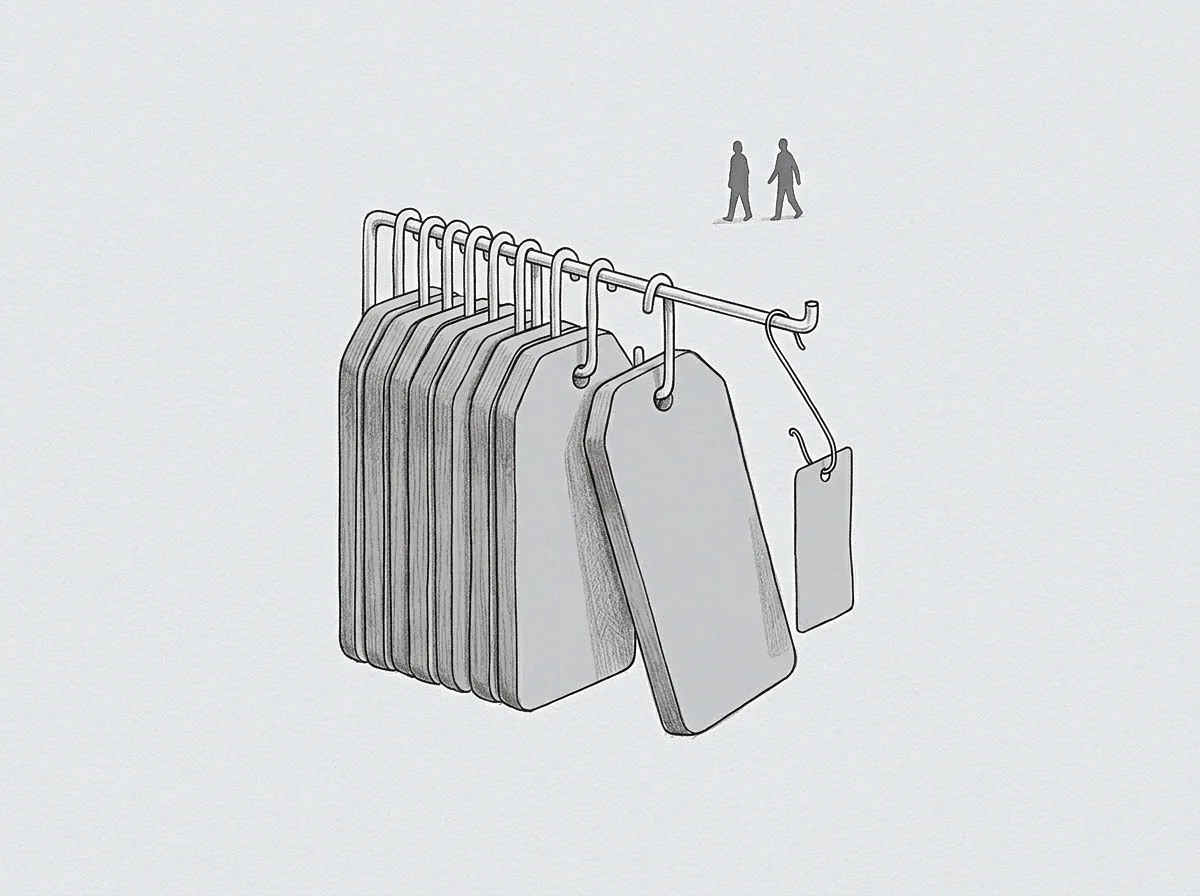
Wedge
Splitting delivery pipelines into isolated functional increments exposes where local coordinates shear under load. Consider two configurations of an enterprise handling remote fulfillment across sixty distributed contractors over twenty-four months. The structural contrast reveals how boundary definitions govern systemic drift.
| Structural Configuration | Coordinate Verification Interval | Boundary Tolerance Definition | Compound Deficit Detection | Operational Remediation Overhead |
|---|---|---|---|---|
| Decoupled Autonomy Model | Monthly self-reported milestones | Subjective team interpretation | Detected at quarterly integration | Extensive re-engineering hours |
| Synchronized Datum Model | Continuous cryptographic check | Cardinal parameter thresholds | Identified within twelve hours | Minimal localized rework |
Local speed conceals systemic drag. Under the decoupled model, each independent group optimizes for its immediate velocity register. When an interface failure occurs, neither party absorbs the discrepancy, projecting the deficit outward into shared white space.
The perimeter contracts under strain. The synchronized model drives a hard wedge between assumption and execution by enforcing continuous coordinate checks across intermediate steps.
Unprocessed operational variance accumulates at the exact point where structural limits remain unstated.
The work matched every specification provided in the original briefing document.

Projection
Translating an intended path into distributed execution requires mapping value vectors without distortion. Planners frequently confuse high operational activity with directional progress along the primary axis. When coordinate metrics detach from the baseline, team members spend substantial energy maintaining the illusion of forward momentum.
Friction compounds silently across groups.

Systemic Vector Realignment Stages
- Baseline calibration establishes an immutable reference point by auditing delivered assets against initial design constraints.
- Gradient calculation measures the true directional slope by subtracting realized displacement from nominal projection targets, exposing latent operational drift.
- Perimeter fortification sets unambiguous structural margins that reject malformed outputs before they reach downstream participants.
The operator records the shift. A second reading confirms the drop. The gradient carries no blame.
It reflects the mathematical difference between intended positioning and actual systemic location. By facing this slope directly, leadership eliminates the need for cosmetic adjustments that merely mask persistent drag. The price stays fixed.
Realignment demands moving up the ascent gradient, absorbing the immediate friction of structural tightening to reclaim control over global trajectory.
A team moving at maximum velocity along an unanchored heading merely accelerates systemic separation.
Progress along an operational plane matches the strict fidelity of its verification points rather than the enthusiasm of its participants.
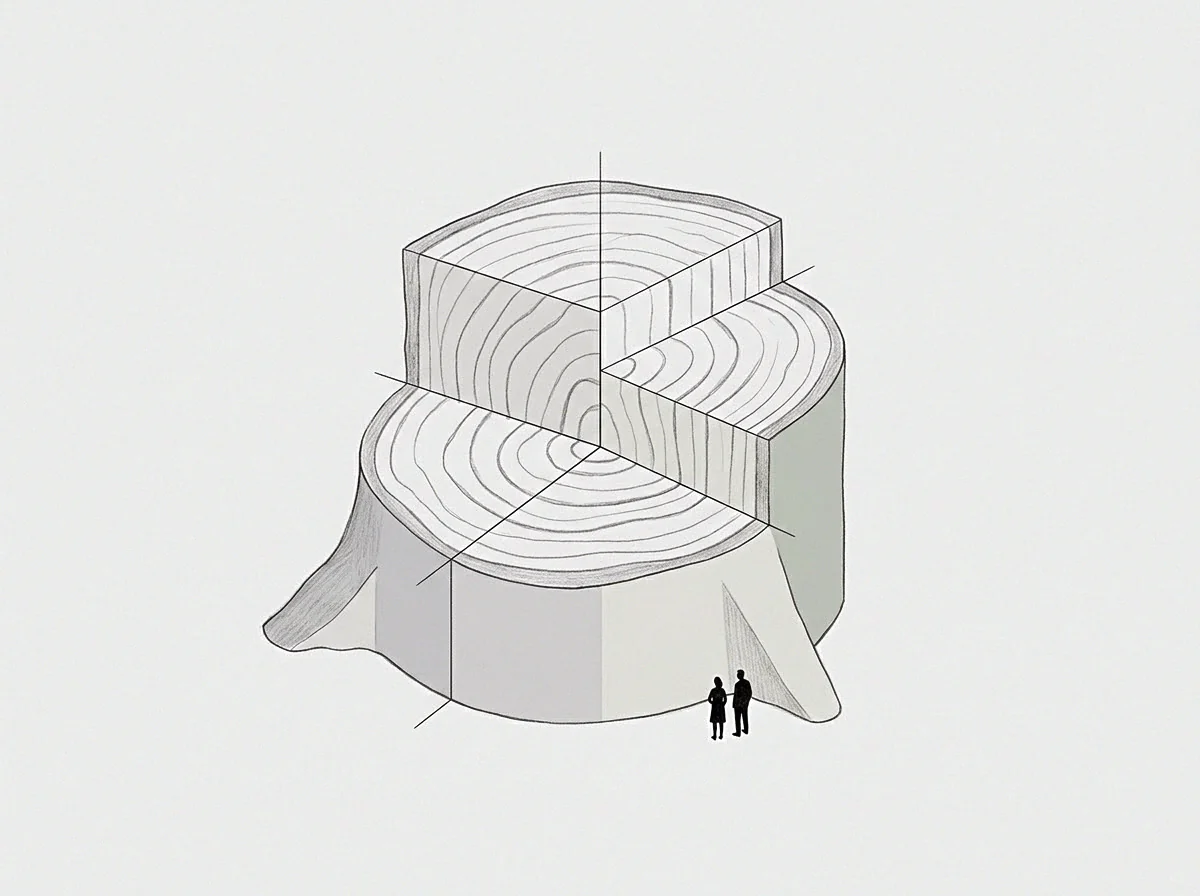
Transit
Passing work across organizational thresholds reveals the true structural limits of any enterprise arrangement. The person managing distributed participants recognizes that coordinate failures are not personal deficiencies; they are geometric realities born from unanchored communication topologies. As work moves across functional divisions, slight angular errors in early specifications expand exponentially across distance.
Unrecorded debts alter execution.
The founder frequently hesitates to introduce rigid constraints, fearing that strict parameters will suppress creative initiative among senior contributors. This posture miscalculates the structural trade-offs. Fluid parameters do not liberate participants; they force workers to spend energy guessing the invisible boundaries of acceptable execution.
When an organization fails to state limits clearly, it forces its most capable operators to construct defensive buffers. The ledger accepts no sentiment.
When coordinate drift is arrested through explicit boundary terms, the accumulated unprocessed backlog becomes visible as latent volume waiting for conversion. Mirroring that negative slope above the baseline provides the exact geometry of the unspent organizational capacity. Resolving non linear failure requires holding every operational node accountable to the same rigid grid, ensuring that individual velocity translates directly into collective advancement.
What structural mechanism preserves local initiative when verification constraints are tightened to absolute precision?