
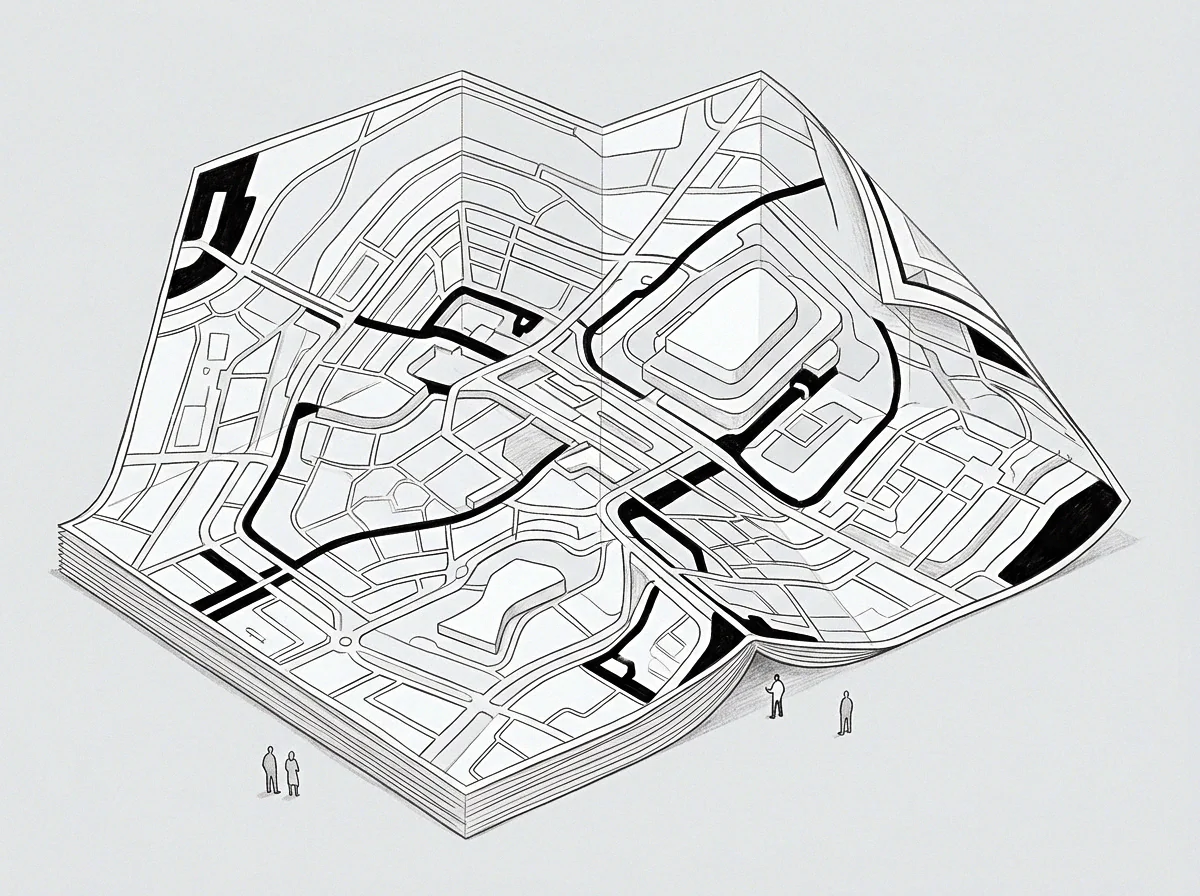
Mapping Ordinal Performance Vectors Across Federated Business Structure Boundaries
Mapping relative performance across autonomous business units converts local ordinal rank into unified directional vectors without forcing cardinal metric alignment.
Mapping relative performance across autonomous business units converts local ordinal rank into unified directional vectors without forcing cardinal metric alignment.

Covariance shrinkage early warning signals appear as spectral eigenvalue compression and matrix condition deterioration before scalar variance degradation registers.

Continuous stress locks latent manifold boundaries, converting operational inputs into non-linear trajectory decay through accumulated internal friction.

Operational alignment vectors across organizational reporting layers require shared baselines to prevent localized metrics from canceling systemic momentum.

Resolving structural deflection requires isolating unmeasured friction vectors and anchoring primary metrics directly to derived operational baselines.
The terms are written where they belong. Each field holds three desks, and every entry a desk writes raises the terms it uses, each term given a meaning, a mechanism and the places it appears. The record on these pages stays first person and hand made; the fields grow the nomenclature.