Meaning
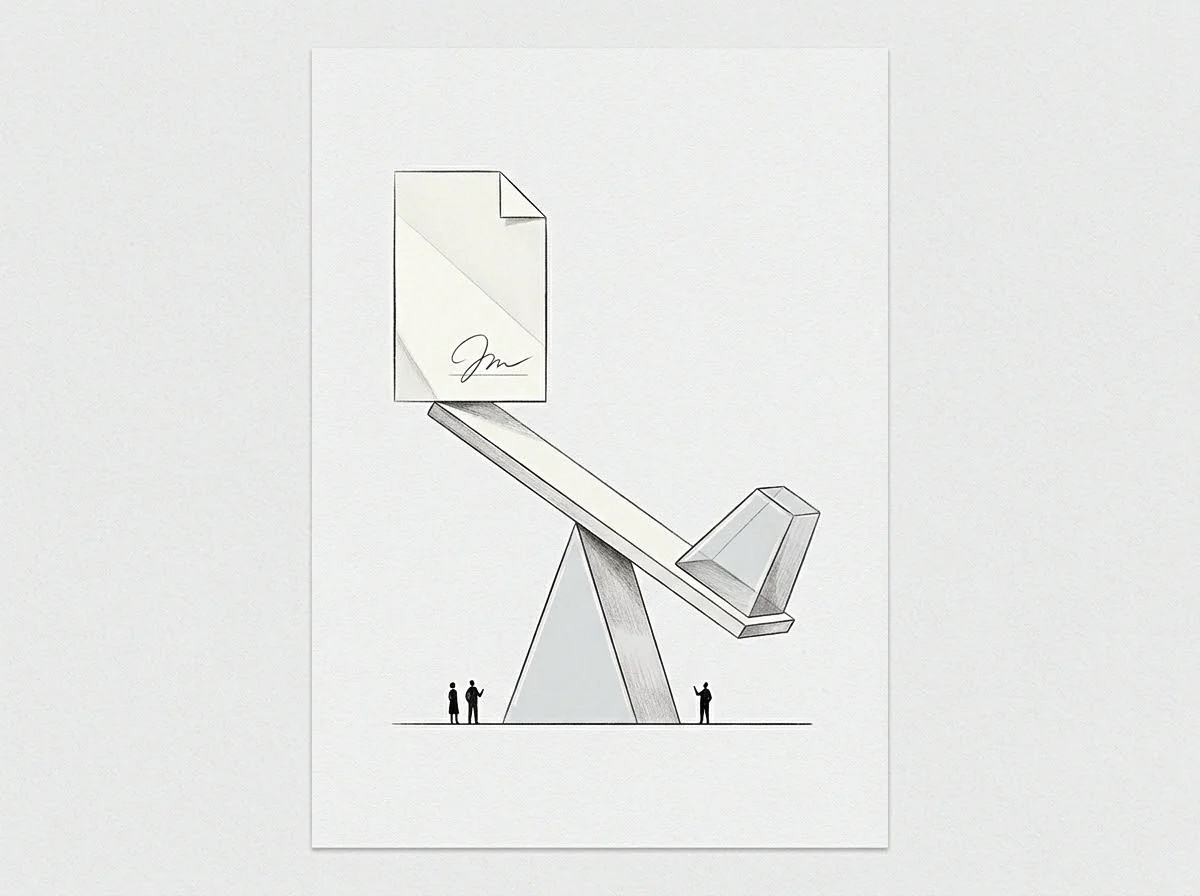
Dynamic vector metrics evaluating both execution speed and adherence to a specified operational vector indicate an organization’s structural resistance to unintended deviation. In physics-informed organizational models, directional momentum represents the combined mass of deployed capital and operational cadence moving along an unswerving strategic trajectory. Post-founding executives rely on this metric to gauge whether current initiatives possess sufficient mass to break through market inertia or counter-competitive pressure.
The scope of this vector measurement ends when exogenous regulatory or technological shocks fundamentally invalidate the trajectory itself, transforming steady commitment into obstinate misallocation.
Vector Inertia
Assessing the mass of ongoing workflows demonstrates how reliably a company maintains progress despite operational setbacks. Strong directional momentum ensures that short-term vendor delays, technical regressions and personnel turnover fail to stall strategic milestones. The accumulated weight of aligned departmental routines preserves the forward heading through operational disruption.
Establishing this structural inertia requires sustained resource allocation along a single path over multiple consecutive fiscal cycles. Once established, this momentum minimizes the day-to-day managerial energy needed to preserve operational velocity.
Steering Resistance
Modifying the operating heading becomes increasingly resource-intensive as the physical scale of commercial commitments expands. High directional momentum inherently penalizes sudden maneuvers, forcing management to expend substantial reserves to execute intentional strategic shifts. Teams accustomed to rapid deployment along a singular path experience friction when forced to retool workflows for an adjacent category.
Leaders measure this resistance by recording the calendar duration and administrative effort required to redirect resource allocation across all functional units. The structural resistance generated by accumulated operational weight sets absolute physical limits on executive steering agility.
Deflection Threshold
External market friction continuously exerts lateral force against a company’s chosen operating vector. When directional momentum drops below a calculable baseline, transient customer demands or competitor announcements deflect the organization from its strategic roadmap. This unwanted drift manifests as bespoke engineering cycles that dilute core product architecture for marginal immediate returns.
Preserving vector integrity necessitates rejecting inbound opportunities that fall outside the defined trajectory. Deflection thresholds mark the precise mechanical boundary where operational focus either maintains its course or splinters into reactive compromise.