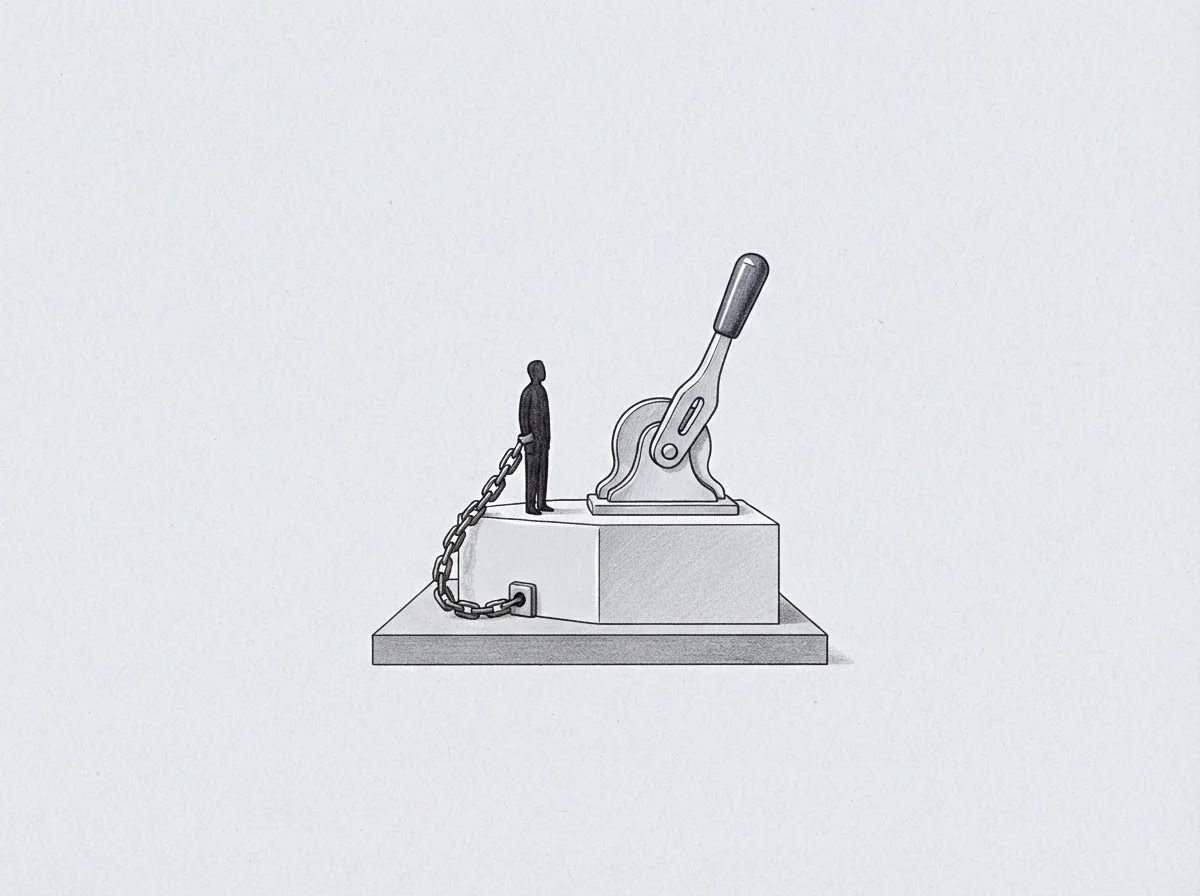
Meaning
Structural reliance of subsequent processes on the output or timing of a preceding event defines the flow of operational risk. A downstream dependency identifies the specific points where a delay or error in an earlier stage of a workflow forces an equivalent disruption in later stages. It governs the sequence of production.
The concept stops applying when a process step is modularized such that it can proceed regardless of prior results, effectively breaking the chain of causality.
Input Coupling
Tight integration increases the sensitivity of the entire chain to small variances. When a downstream dependency is rigid, the secondary actor cannot start until the primary actor finishes. This coupling creates a bottleneck.
Efficiency is limited by the slowest part of the sequence.
Propagation Risk
Failures move through the system along the path of these links. A downstream dependency acts as a conductor for errors. If the first station produces a defect, every subsequent station inherits that flaw.
Prevention requires validation at every handoff point.
Buffer Allocation
Strategic placement of inventory or time can decouple the stages. Managing a downstream dependency involves calculating the amount of slack needed to prevent a stoppage. These buffers absorb the shocks of minor delays.
Correct sizing ensures that a temporary halt at the start does not immediately stop the end of the line.